bg image
bg image

Serving Chesapeake VA

Reduce support load in Chesapeake in 2026 with AI chatbots

Teams in Chesapeake lose hours every week to repeat questions, missed leads, and after-hours requests that sit until the next shift. We build AI chatbots that answer common questions, collect the right details, and hand off to a person when it matters. Your customers get faster replies, and your staff gets fewer interruptions during peak hours. This is for owner-operators, operations leaders, and product teams who want measurable change, not a demo bot. Start small with one workflow, then expand to more channels and departments once results are clear. Get AI Chatbots cost estimate in 24 hours.

Discuss Project

Overview

Stop losing leads after hours in Chesapeake

Chesapeake businesses in 2026 compete on response time. If a customer waits, they call the next provider in Norfolk or Virginia Beach. The same pattern shows up in healthcare scheduling, property leasing, and ecommerce order questions across Hampton Roads. A conversational bot can absorb the repeated work and keep staff focused on exceptions. That is the practical reason ai chatbot development is now an operations decision, not a marketing experiment.

Trusted AI Chatbots Partner for Chesapeake Businesses means we start from your queue, not from a template. We map the top intents that drain time and revenue, then decide what should be automated versus routed to a person. You get a customer service chatbot that asks for missing details and records them in your system. That reduces back-and-forth and prevents tickets that cannot be acted on. We work with US-based clients, including companies operating in Virginia.

Our approach looks simple on the surface. Under the hood, reliable chatbot development services require strict content boundaries and predictable handoff rules. We use approved sources like your help center, PDFs, and policies so answers stay consistent. When you need a build plan, our chatbot development team scopes channels, integrations, and guardrails before code starts. That is how you avoid a bot that sounds confident but cannot complete a task.

Proof matters more than promises, so we point to shipped work. We built an AI Beauty Client Support and Personalized Recommendation Agent that combined customer support automation with product recommendation logic. The solution used an LLM agent that could answer support questions and guide product selection from defined rules. That experience informs how we separate factual support answers from persuasive recommendation flows. It also sets expectations for how much testing is needed before a bot touches customers.

Local rollouts work best when you choose the first workflow carefully. Chesapeake teams often start with website chat for contact capture, appointment requests, or order status, then expand to WhatsApp or internal agent assist. If you serve Suffolk or Portsmouth, you can keep the same content base while routing to the right location. The goal is not to automate everything on day one. The goal is to remove the highest-volume work first, then add deeper automation as data and confidence improve.

Talk to an Expert
Workflow discovery

Workflow discovery

Pick a measurable first workflow, map intents, define refusals & handoff rules.

Content grounding

Content grounding

Retrieval from approved pages/PDFs/policies so answers stay consistent.

Integrations & handoff

Integrations & handoff

CRM/ticketing/scheduling tool calls + structured human takeover with context.

Production launch & tuning

Production launch & tuning

Versioned prompts, monitoring (latency/handoff), and cost controls for stable ops.

Architecture first

A production chatbot stack built for real operations

A production chatbot for Chesapeake has to do more than talk. It needs clear boundaries on what it is allowed to answer, and it needs a path to complete tasks in the systems you already run. We build bots as a set of components that can be tested and replaced independently. That keeps technical debt down when policies change, inventory changes, or staffing changes. It also keeps your operating cost predictable when traffic spikes during storms or seasonal demand.

For conversational behavior, we implement a conversational ai chatbot layer that separates intent detection, response generation, and tool execution. LLMs are useful because they can handle phrasing variance from real customers. They are not reliable on their own, so we constrain them with retrieval from approved content and explicit tool schemas. In the beauty support agent case, we paired an LLM agent with product recommendation logic so suggestions followed defined rules. That same pattern applies to regulated answers where the bot must only speak from sources you control.

Integrations decide whether the bot saves time or creates more cleanup. We connect to CRMs, ticketing, ecommerce platforms, and scheduling tools through APIs when they exist. If you run older systems, we can use middleware or database access patterns that keep reads safe and limit write operations to verified steps. A website chatbot can create a lead with validated fields, then notify staff with context instead of a vague chat transcript. A WhatsApp chatbot can collect order identifiers, confirm identity, and route the case to the right queue. This is where an ai chatbot developer Chesapeake VA needs to think like an integration engineer, not just a prompt writer.

Security/compliance is designed in, not added later. We set data retention rules and restrict which fields can be collected in chat. We design safe fallbacks so the bot refuses sensitive requests and routes to a human flow. For healthcare appointment chatbot work, that means controlling what the bot stores and how it references patient details. We document these controls so your internal review and vendor risk process has something concrete to evaluate.

DevOps keeps the service stable after launch. We deploy with environment separation, versioned prompts, and release gates for new flows. We set logging that captures intent, tool calls, and error states without exposing sensitive text to the wrong audience. Monitoring focuses on response time, handoff rate, and failure reasons so you can act on problems quickly. This is how an AI chatbot becomes a maintained system, not a one-off build.

plavno logo

Build your first
Smart AI project today!

Just tell the Plavno AI Agent about your project - it will ask questions, gather requirements, and propose a tailored solution

AI Chatbots Solutions for Chesapeake Industries

Local use cases that pay back fast

Chesapeake has a mix of logistics, healthcare, real estate, retail, and public services. We shape each bot around the workflows those teams already run, so the automation connects to the work instead of creating a new inbox.

Appointment Intake

Appointment Intake

Reminders

Healthcare appointment intake and reminders

Clinics and specialty practices around Chesapeake spend staff time on scheduling calls that follow the same script. A healthcare appointment chatbot can collect visit type, preferred provider, insurance basics, and availability before a human confirms. A practical ROI example is simple: if the bot prevents 10 missed appointments per month at $150 each, that is $1,500 in recovered revenue. We implement a guided flow that asks only what is needed, then routes edge cases to staff. The technical core is intent routing plus a scheduling integration through API or secure workflow middleware. We also add clear refusal paths for clinical advice requests, so the bot stays in an administrative scope.

Leasing Chat

Leasing Chat

Showings

Real estate leasing and showing coordination

Property managers in Chesapeake and nearby Suffolk handle constant questions about availability, fees, pet policies, and showing times. A real estate leasing chatbot can answer from approved listings and policy docs, then schedule a showing request with validated contact details. A concrete ROI example: if it captures 15 additional leads per month and 20% convert at a $1,200 lease fee, that is $3,600/month in expected fee value. We design the bot to collect the same fields your leasing team needs, not just a chat name. The technical summary is retrieval from listing content plus forms that create a lead in your CRM. Handoff rules ensure a human steps in when credit checks, special accommodations, or exceptions appear.

Returns Support

Returns Support

Order Status

Ecommerce support and returns for Hampton Roads

Online sellers in Hampton Roads get repeat questions about shipping, returns, sizing, and order status. An ecommerce chatbot can answer policy questions and guide customers through returns steps without tying up your team. An ROI example: deflecting 300 chats per month at $5 per agent-handled chat saves about $1,500/month in support cost. We implement order lookups through secure APIs so customers see accurate status instead of generic replies. The bot can also collect return reasons and photos, then create a ticket with the right tags. This reduces long email threads and improves the quality of data you use to fix product issues.

Freight Tracking

Freight Tracking

Dispatch

Logistics customer support for carriers and warehouses

Logistics teams in Chesapeake answer the same tracking and appointment questions while trying to keep freight moving. A logistics customer support chatbot can handle shipment status requests, pickup windows, and documentation questions, then route exceptions to dispatch. A concrete ROI example: reducing 2 minutes from 500 weekly calls saves about 16.6 labor hours per week. We build tool calls that query tracking systems and return only what the customer is authorized to see. The technical summary is intent detection plus API integration to TMS or WMS endpoints, with strict validation on identifiers. We also design escalation paths for delays, claims, and safety incidents where human action is required.

Bilingual Support

Bilingual Support

ES/EN

Bilingual Spanish and English customer service

Many Chesapeake businesses serve customers who switch between Spanish and English in the same conversation. A bilingual spanish english chatbot can reduce misunderstandings and keep data capture consistent. An ROI example: preventing 20 misrouted tickets per month at $25 rework cost saves $500/month, and it also speeds response time. We implement language detection and maintain a single source of truth for policies so translations stay aligned. The technical summary is a language-aware conversation layer plus retrieval from the same approved knowledge base. We also add human review hooks for high-risk replies, so tone and correctness stay consistent.

Service Triage

Service Triage

Permits

City services information and request triage

Residents ask repeat questions about permits, payments, service schedules, and reporting issues. A city services chatbot City of Chesapeake pattern can answer from published pages and route requests with the right category and location. An ROI example: if it deflects 1,000 monthly inquiries that would otherwise take 2 minutes each, that is about 33 staff hours saved monthly. We implement strict content boundaries so the bot only answers from approved sources and always provides official links when needed. The technical summary is retrieval from public content plus form-based triage that creates a ticket in the city system. Escalation rules route sensitive issues directly to a person with a complete intake.

What you get

Five deliverables that keep bots useful

Intent map tied to revenue and workload

Intent map tied to revenue and workload

Chesapeake teams often start by automating the loudest requests, not the most expensive ones. We build an intent map that ranks topics by volume, handle time, and business impact. That lets you target support deflection, lead capture, or appointment intake as a first win. We implement this with structured conversation logs and a clear taxonomy, not guesswork. When we use analytics tooling, it is to identify failure modes and training gaps fast. The outcome is a backlog that your operations team can agree on before engineering starts.

Website chatbot that captures qualified leads

Website chatbot that captures qualified leads

A website chatbot should do more than greet visitors. We design it to ask the questions your team would ask on the phone, then store the answers in your CRM. That reduces incomplete leads that your sales team cannot follow up on. We often use API integrations because they avoid manual re-entry and keep timestamps correct. For chat UI, we choose proven web widgets because they load fast and support accessibility. The result is a bot that increases conversion without pushing staff into a new tool.

WhatsApp chatbot for fast customer updates

WhatsApp chatbot for fast customer updates

For service businesses in Chesapeake, WhatsApp can be the fastest path to reduce inbound calls. We build a WhatsApp chatbot that answers common questions, shares status updates, and collects identifiers like order numbers. The bot can confirm identity with simple verification steps, then call your system for current data. We pick WhatsApp when customers already use it, not because it is trendy. The technical work centers on message templates, rate limits, and reliable retries. The business outcome is fewer missed calls and more consistent status communication.

Knowledge base pipeline with approval control

Knowledge base pipeline with approval control

Bots fail when content drifts and nobody owns updates. We build a pipeline that ingests approved documents and web pages into a searchable store with change tracking. That supports retrieval-based answers where the bot cites the right policy and does not invent details. We choose this approach because it turns content updates into a routine task, not an engineering project. The same pipeline can serve internal teams, not just customers. The outcome is faster updates when pricing, hours, or regulations change.

Human handoff and QA gates for risk control

Human handoff and QA gates for risk control

Automation without a safe handoff increases risk and frustrates customers. We implement clear escalation rules based on intent, confidence, and customer sentiment. When a human takes over, they receive a structured summary, not a raw transcript. We choose this design because it reduces handle time and prevents repeated questions. QA gates include scripted test sets and review checklists so releases do not break key flows. The outcome is a bot that stays helpful as you expand use across departments.

Case Study

We help customers cut
down on development

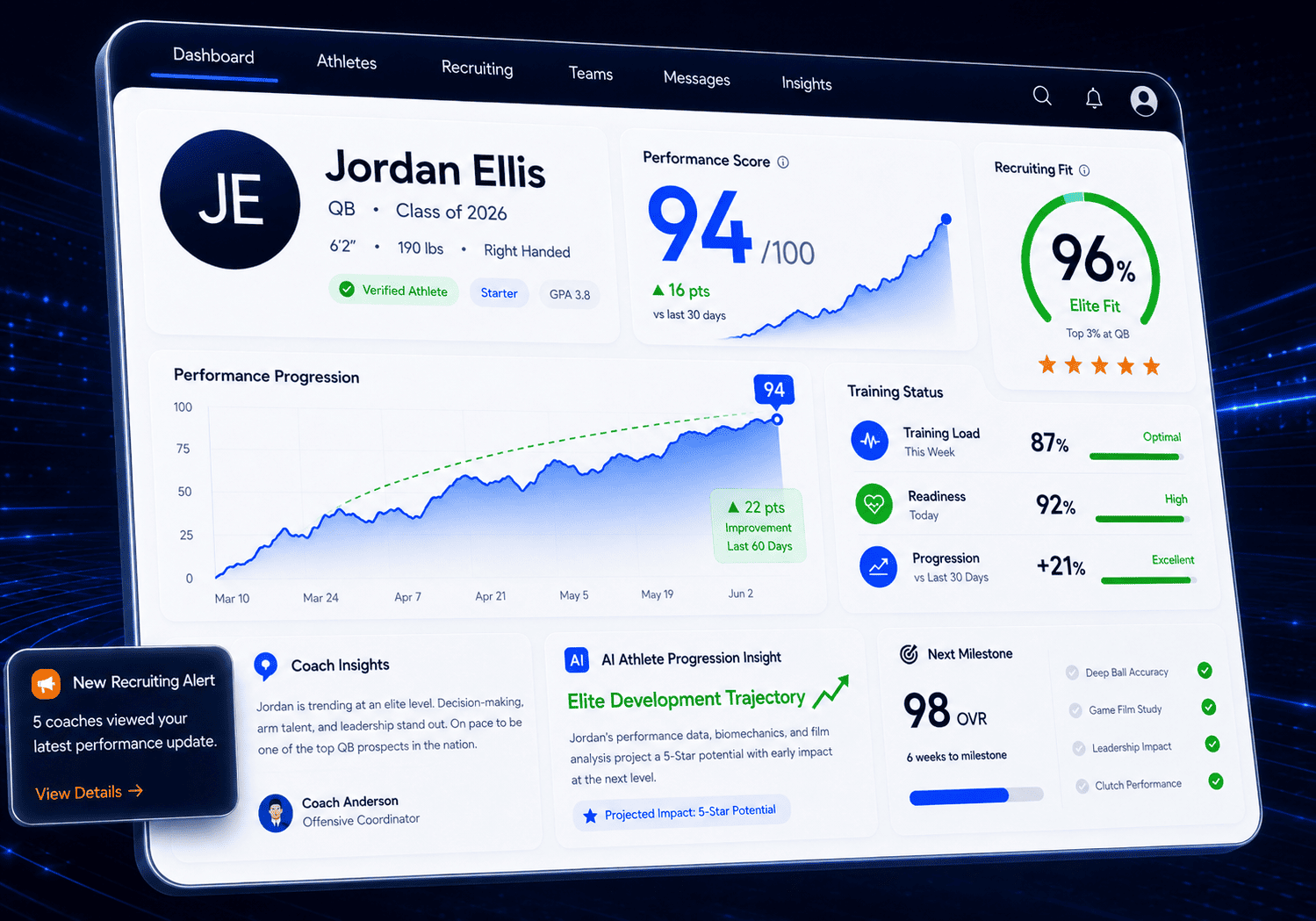
AI-Powered Sports Performance & Recruiting Platform for Virginia Clubs, Academies & Youth Programs

Plavno developed a custom sports technology platform for Virginia-based clubs and academies to combine athlete performance tracking, coach communication, recruiting workflows, and mobile engagement in one ecosystem.

Read More
3x

faster recruiting pipeline

AI-Powered Sports Performance & Recruiting Platform for Virginia Clubs, Academies & Youth Programs

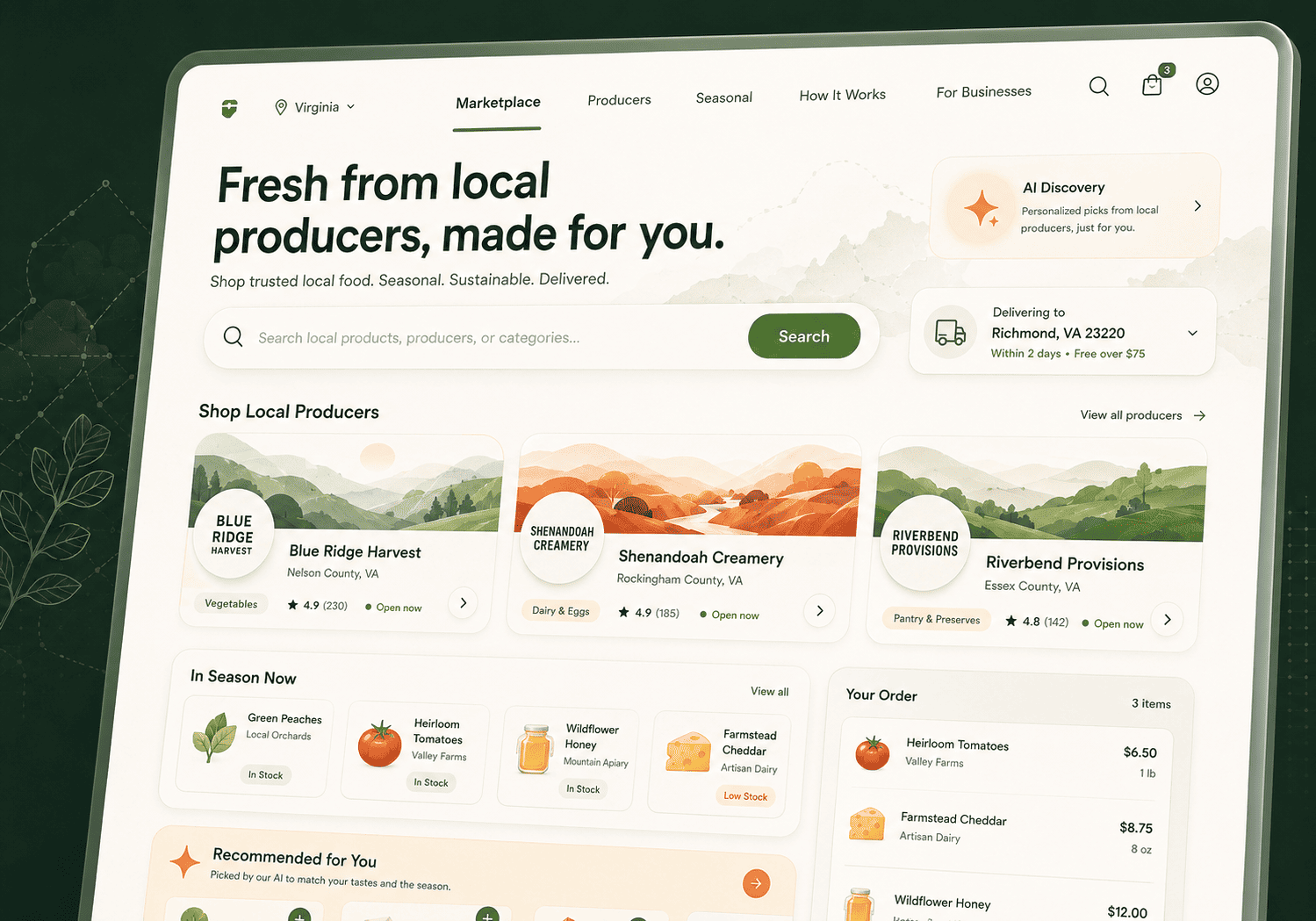
Digital Marketplace for Virginia Farmers, Local Producers & Direct-to-Consumer Food Sales

Plavno developed a custom multi-vendor marketplace for Virginia-based farmers, food producers, and regional sellers to unify product listings, vendor operations, customer ordering, and local fulfillment workflows.

Read More
3x

increase in product discovery relevance

Digital Marketplace for Virginia Farmers, Local Producers & Direct-to-Consumer Food Sales

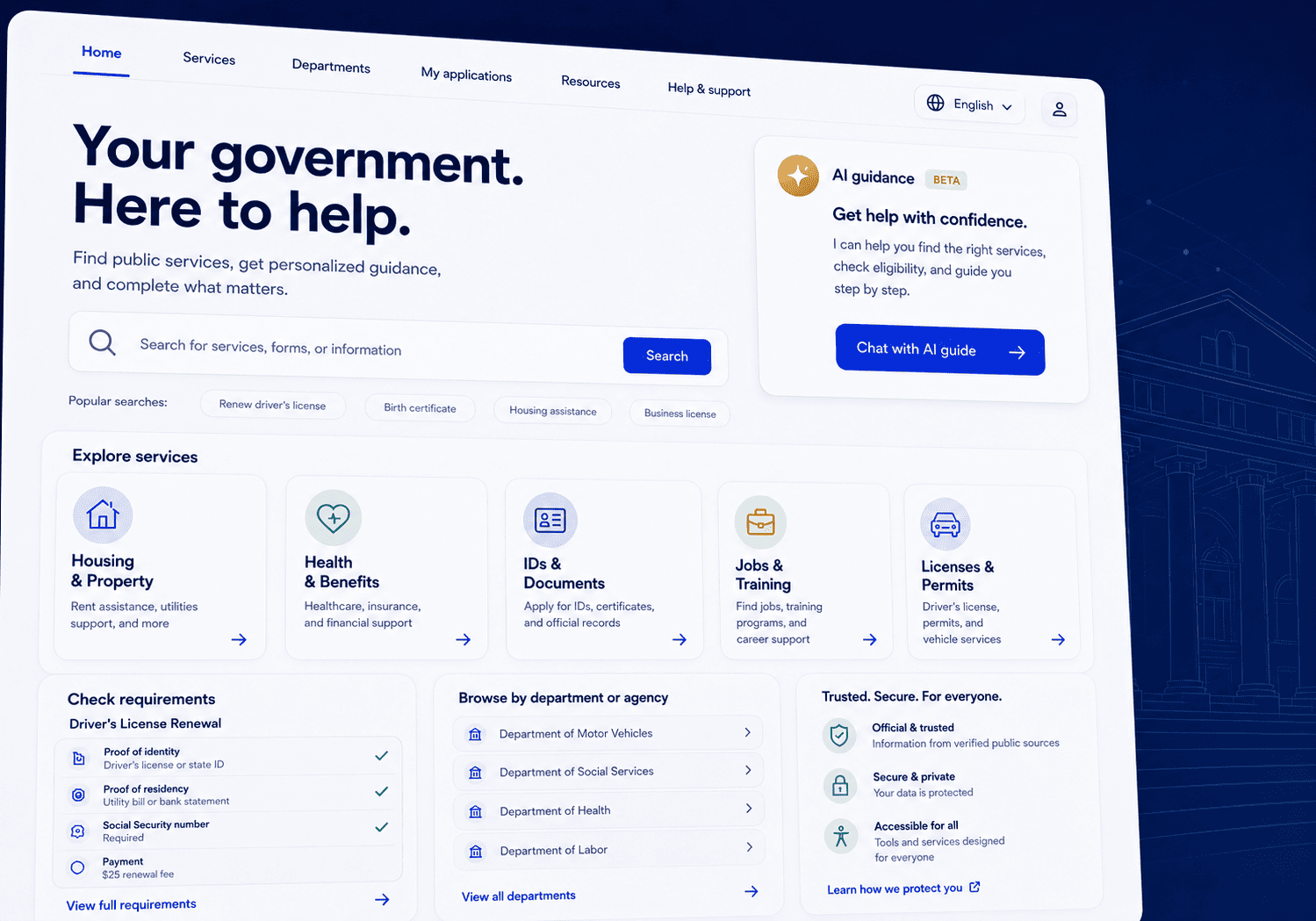
AI-Powered Citizen Services Website Platform for Virginia State Agencies

Plavno developed a modern eGovernment website platform for Virginia state agencies that centralizes citizen services, public information, department content, and an AI-powered guidance agent in one scalable system.

Read More
70%

reduction in routine citizen inquiries to agency staff

AI-Powered Citizen Services Website Platform for Virginia State Agencies

Delivery plan

From first workflow to live traffic

We ship in small, testable increments so Chesapeake teams see impact early. Each phase produces artifacts you can keep, even if priorities change later.

Clipboard
Team
01

Step 1: Workflow discovery (1–2 weeks)

In 1–2 weeks we pick the first workflow that will change a measurable business metric in Chesapeake. We review your current chat, email, or call transcripts to see what customers actually ask. Then we define what the bot must answer, what it must refuse, and when it must hand off. You get an intent list, sample dialogs, and a list of required integrations. We also agree on acceptance tests so the launch decision is clear. This phase reduces rework by preventing a bot that cannot complete the real task.

02

Step 2: Prototype and content grounding (2–3 weeks)

Over 2–3 weeks we build a working prototype that uses only approved Chesapeake business content. We connect the bot to your knowledge sources and set retrieval rules so answers stay inside your boundaries. We also implement basic analytics so you can see what people ask and where the bot fails. You receive a demo in your chosen channel, usually web chat first. We document gaps in content and decide who will own updates. This phase proves feasibility without committing to a large integration build.

Search in doc
Rocket
03

Step 3: System integration and handoff (2–4 weeks)

In 2–4 weeks we add the integrations that turn conversations into completed work. That can mean creating a CRM lead, booking an appointment request, or opening a support ticket with structured fields. We implement human handoff paths so staff can take over with context and without delays. You get an integration map, error handling rules, and a staging environment for testing. We run scripted test cases and review edge cases specific to your Chesapeake locations. This phase is where most chatbot projects succeed or stall, so we keep it explicit and test-driven.

04

Step 4: Production launch and tuning (1–2 weeks)

The 1–2 week launch phase focuses on reliability, cost control, and measurable results. We deploy with version control so prompt and content updates can be reviewed and rolled back. We monitor response times and handoff rates during the first live traffic window. You receive a tuning plan based on real sessions, not assumptions. We also train your team on updating content and reviewing flagged conversations. This phase ends with an agreed operating cadence, so the bot keeps improving after the first month.

Vendor fit

Why engineering depth matters in 2026

Chatbots touch your data, your brand voice, and your workflows. We focus on integration correctness, guardrails, and operations so Chesapeake teams can run the bot long-term.

Generic Agencies
Our Platform (Deep Engineering Expertise)
Integration plan before UI polish
checkmark
Retrieval from approved sources by default
checkmark
Human handoff with structured summaries
checkmark
checkmark
Security review artifacts and data retention rules
checkmark
Release gates and rollback for prompt changes
checkmark
Fixed template bot with minimal customization
checkmark

Architecture & Engineering Overview

How we keep answers accurate and costs stable

Deflect repeat work

Deflect repeat work

Clean intake that creates usable tickets/leads so staff stops re-asking basics.

Approved-source accuracy

Approved-source accuracy

Knowledge-base retrieval + explicit refusals to avoid invented policies and brand risk.

Stable monthly spend

Stable monthly spend

Intent routing, caching, rate limits, and graceful degradation for traffic spikes.

Constrained recommendations

Constrained recommendations

Separate support vs upsell flows; rule-based suggestions + test coverage for trust.

For Business: Technical ROI & Risk Mitigation

The business win comes from deflecting repeat work while controlling risk from wrong answers. In Chesapeake, the biggest cost is not the bot. It is the staff time spent re-answering questions and fixing partial requests. We focus on workflows where the bot can complete a clean intake, not just chat. When the bot creates a ticket or lead with the right fields, your team stops re-asking the same basics. That is the fastest path to visible ROI without changing your entire operation.

We reduce risk by limiting where the bot can pull facts from. If answers come from an approved knowledge base, you avoid brand damage from invented policies. This matters for city services, healthcare scheduling, and regulated customer communications. The bot also needs refusal behavior that is consistent and auditable. That keeps your staff from inheriting a mess of escalations caused by overconfident replies. It also makes internal stakeholder approval faster because boundaries are explicit.

Cost control is a design problem, not a billing surprise. We reduce unnecessary model calls by using intent routing and caching for common responses. For high-traffic pages in Chesapeake retail and services, we can route simple FAQs to lower-cost handling and reserve deeper reasoning for complex cases. We also add rate limits and graceful degradation so traffic spikes do not create runaway spend. That keeps the monthly budget stable while still serving customers quickly. Finance teams can plan around it, and operations teams can grow usage with fewer surprises.

Finally, we treat recommendations and support as different risk profiles. In the beauty support agent case, product recommendation logic was paired with an LLM agent to keep suggestions inside defined rules. The same pattern prevents a bot from pushing the wrong product, the wrong service, or the wrong next step. A recommendation system can be useful, but it needs constraints and test coverage. That is how you get upsell value without introducing compliance or customer trust issues.

1

Scoped MVP baseline

One workflow + one channel + limited data sources that becomes your test & monitoring foundation.

2

Governance decisions

Channel choice, content authority owner, and integration depth documented for security/legal/ops alignment.

3

Release gates & failure tracking

Acceptance tests from real intents; prompt/content changes ship like code with measurable failure modes.

4

Expand to transactions & assist

Move from FAQ to scheduling/ticket/lead flows and optionally agent assist, each with metrics + rollback.

For CTOs: Architecture & Technical Lifecycle

A chatbot is a living system, so the lifecycle must include governance for content, prompts, and integrations. We start with a scoped MVP that targets one workflow, one channel, and a limited set of data sources. That MVP is not a throwaway. It becomes the baseline for test cases, monitoring, and change control. As usage grows in Chesapeake across departments, the same governance prevents unreviewed changes from breaking production behavior. This reduces churn between teams and prevents a slow drift into inconsistent answers.

Key decision points happen early. One is channel selection, because web chat, WhatsApp, and internal tools have different latency and compliance expectations. Another is content authority, because you need a single owner for the approved knowledge base. A third is integration depth, because writing data back into systems requires stronger validation than read-only lookups. We document these choices so security, legal, and operations understand the boundaries. That prevents last-minute blockers late in the launch cycle.

We plan releases as small, verifiable increments. Each increment has acceptance tests based on real intents from Chesapeake customers. Prompt changes and content updates go through the same release gate, because they can change outcomes as much as code changes. We also track failure modes, like the bot asking the same question twice or failing tool calls. Those signals become tickets in the engineering backlog, not anecdotes in a meeting. This is how the bot improves without losing reliability.

As the system matures, we expand the bot from FAQ to transactional flows. That can include scheduling requests, ticket triage, or lead qualification that feeds downstream systems. We also decide when to introduce agent assist for staff, which can reduce handle time without exposing automation to customers. Each step has a clear success metric and a rollback plan. This keeps technical risk aligned with business value as adoption grows across Hampton Roads.

Versioned prompts & intent schemas

Versioned prompts & intent schemas

Treat prompts like code (reviews/tests); structured intents map to validated tool calls.

Retrieval from approved sources

Retrieval from approved sources

Controlled chunking/indexing so the model sees the right context and hallucinations drop.

Tool execution guards

Tool execution guards

Validate identifiers, require confirmation for writes, retries + idempotency + correlation IDs.

UX latency & scenario tests

UX latency & scenario tests

Streaming + timeouts + WhatsApp rules; regression set for edge cases, failures, and bilingual switching.

For Engineers: Implementation Details & Stack

Implementation quality comes from strict interfaces between dialog, retrieval, and tool execution. We keep prompts versioned and treat them like code, with reviews and test cases. Retrieval is built around approved sources, and we control chunking and indexing so the model sees the right context. This reduces hallucinations and improves repeatability across sessions. We also design intent schemas that map to specific tool calls, so outputs are structured and validated. That keeps the bot from calling the wrong API with a guessed parameter.

Tool execution needs guards. We validate identifiers, enforce required fields, and check user confirmation before any write operation. For Chesapeake ecommerce or logistics flows, that means confirming order or shipment IDs and limiting what can be displayed. We implement retries and idempotency so a transient failure does not create duplicate tickets. We also store correlation IDs across chat and backend logs. That makes production debugging possible without reading entire transcripts by hand.

Latency and user experience require a plan. We use streaming responses where it improves perceived speed, and we send intermediate status messages when tool calls take longer. We also implement timeouts that trigger a handoff instead of waiting indefinitely. For WhatsApp, we respect template rules and message windows so replies are delivered reliably. For web, we keep the widget lightweight and avoid blocking page load. These details are where a prototype becomes a usable product.

Testing is scenario-driven, not unit-only. We build a regression set from real intents, including adversarial prompts and ambiguous phrasing. We test tool failures, empty retrieval results, and policy edge cases. We also test bilingual switching when required, because it breaks naive intent logic. The output is a bot that behaves consistently under real Chesapeake traffic. Engineers can iterate safely because they have a baseline to compare against.

Observability by intent

Observability by intent

Track latency, tool-call errors, handoff frequency, and token spend to prevent drift.

Data handling & access

Data handling & access

Retention windows, restricted sensitive fields, transcript vs admin permissions, audit trail.

Compliance-ready artifacts

Compliance-ready artifacts

Documented data flows + safe defaults (refuse medical/legal advice; route clinical to humans).

Incident response & tuning

Incident response & tuning

Paging + rollback for prompt regressions; periodic reviews for new intents and content updates.

Infrastructure, Observability & Security

Production chatbots need monitoring for quality, latency, and cost, plus security controls that match your data sensitivity. We set up observability that tracks response time, tool-call error rates, and handoff frequency by intent. That lets you see where customers get stuck and where the bot saves time. We also monitor token usage and model call volume so spend does not creep upward unnoticed. When usage grows across Chesapeake locations, these signals help you plan capacity and budgets. Alerts are tied to user impact, not vanity metrics.

Security starts with data handling. We restrict the bot from collecting unnecessary sensitive fields and we define retention windows for logs. Access controls separate who can view transcripts versus who can update content or prompts. For healthcare-related scheduling, we treat administrative and clinical intents differently and route clinical questions to humans. We also keep an audit trail of content changes, because content is part of the system behavior. That supports internal reviews and external audits if needed.

Compliance expectations vary by industry, and we plan for that at design time. We align controls to common standards used by US-based clients, including HIPAA-driven behavior where applicable and SOC 2 style operational controls. We document data flows so you can answer vendor-risk questionnaires without guesswork. We also implement safe defaults, like refusing to provide legal or medical advice. Clear refusal is better than a confident wrong answer. That is how you protect trust while still automating the high-volume work.

Incident response is part of operations, not a one-time plan. We define who gets paged, what logs are reviewed, and how rollbacks happen if a prompt update causes regressions. We also schedule periodic reviews of new intents and drift, because customers change how they ask questions over time. Post-launch, we run a regular tuning cadence that includes content updates and test set expansion. This keeps the bot accurate as your Chesapeake business changes. It also keeps the system maintainable for years, not just the first quarter.

Testimonials

We are trusted by our customers

“They really understand what we need. They’re very professional.”

The 3D configurator has received positive feedback from customers. Moreover, it has generated 30% more business and increased leads significantly, giving the client confidence for the future. Overall, Plavno has led the project seamlessly. Customers can expect a responsible, well-organized partner.

Sergio Artimenia

Commercial Director, RNDpoint

Sergio Artimenia

“We appreciated the impactful contributions of Plavno.”

Plavno's efforts in addressing challenges and implementing effective solutions have played a crucial role in the success of T-Rize. The outcomes achieved have exceeded expectations, revolutionizing the investment sector and ensuring universal access to financial opportunities

Thien Duy Tran

Product Manager, T-Rize Group

Thien Duy Tran

“We are very satisfied with their excellent work”

Through the partnership with Plavno, we built a system used by more than 40 million connected channels. Throughout the engagement, the team was communicative and quick in responding to our concerns. Overall, we were highly satisfied with the results of collaboration.

Michael Bychenok

CEO, MediaCube

Michael Bychenok

“They have a clear understanding of what the end user needs.”

Plavno's codes and designs are user-friendly, and they complete all deliverables within the deadline. They are easy to work with and easily adapt to existing workflows, and the client values their professionalism and expertise. Overall, the team has delivered everything that was promised.

Helen Lonskaya

Head of Growth, Codabrasoft LLC

Helen Lonskaya

“The app was delivered on time without any serious issues.”

The MVP app developed by Plavno is excellent and has all the functionality required. Plavno has delivered on time and ensured a successful execution via regular updates and fast problem-solving. The client is so satisfied with Plavno's work that they'll work with them on developing the full app.

Mitya Smusin

Founder, 24hour.dev

Mitya Smusin

Integration and ops

Data, integrations, and cost control after launch

Once the first chatbot workflow is live in Chesapeake, the next constraint is usually data quality. Customer requests arrive with missing identifiers, inconsistent addresses, or vague descriptions that do not map cleanly to your systems. We design the bot to ask clarifying questions that reduce downstream rework. That includes validation for emails, phone numbers, order IDs, and service locations. Good intake is a cost reducer because it cuts the time staff spends on follow-up. It also improves analytics because you can trust the fields in your CRM or ticket system.

Integration complexity is where many projects get stuck, so we treat it as a first-class deliverable. We create a system map that shows what the bot reads, what it writes, and what it must never touch. For older platforms used by Chesapeake businesses, we may place an integration layer in front of the system to control access and normalize data. This reduces the blast radius if the legacy system is slow or unstable. It also gives you a single place to enforce logging and access rules. That matters when multiple channels, like web and WhatsApp, share the same backend actions.

Performance and latency are operational requirements, not engineering preferences. When an API call is slow, the chat experience feels broken even if the answer is correct. We implement timeouts, retries, and user-visible progress messages so customers do not abandon the session. We also design fallbacks that switch to a handoff or a form when a dependency is unavailable. This keeps customer experience stable during peak periods in Hampton Roads. It also prevents staff from being surprised by a wave of failed conversations after an outage.

Cost control continues after you ship. We set budgets and alerting for model usage so monthly spend aligns with your Chesapeake forecast. We review logs to find intents that can be answered with simpler handling and reduce unnecessary reasoning calls. We also track which content chunks are retrieved and which are never used, then clean up the knowledge base. This reduces noise and improves answer quality. A chatbot should get cheaper to run per conversation as it matures, not more expensive.

Maintenance is a managed routine. We set a cadence for content refresh, test set updates, and periodic security review. We also plan for seasonal changes, policy updates, and new products so you are not scrambling before a release. In the beauty support and recommendation agent work, recommendation rules were a controlled layer, not free-form text. That same control model applies when pricing or eligibility rules change in your business. The result is a system your team can operate with confidence instead of fearing every update.

Adoption path

Roll out automation without breaking trust

After launch, the goal is to expand coverage while keeping quality steady. We use a maturity path that matches how Chesapeake teams actually adopt new customer support systems.

Clipboard
Team
01

Step 1: Assisted support (2–4 weeks)

For 2–4 weeks, we run the bot in an assist mode that drafts replies and suggests next steps. Staff stays in control of what gets sent to customers. This creates fast feedback loops and exposes missing content in your knowledge base. You get a report of common intents, draft acceptance rates, and the top failure reasons. We also capture which integrations are needed next, based on real conversations. This phase builds confidence without customer-facing risk.

02

Step 2: Limited self-service (3–6 weeks)

In 3–6 weeks, we enable self-service for a narrow set of low-risk topics like hours, location info, and simple policy questions. We keep escalation rules strict so customers can reach a human quickly. You receive weekly metrics on deflection, handoff, and customer satisfaction signals. We also add targeted test cases based on new intents that appear in Chesapeake traffic. The goal is stable performance, not maximum automation. This phase expands coverage while protecting trust.

Search in doc
Rocket
03

Step 3: Transactional workflows (4–8 weeks)

Over 4–8 weeks, we add workflows that write into systems, such as creating leads, booking appointment requests, or opening tickets. We enforce validation and confirmation steps before any write happens. You get updated integration documentation, error handling rules, and rollback plans. We also introduce role-based access so only approved staff can change prompts or content. This phase is where operational savings become clear. It is also where governance matters most.

04

Step 4: Multi-channel expansion (2–6 weeks)

In 2–6 weeks, we expand from one channel to others like WhatsApp, SMS, or internal portals. We reuse the same intent taxonomy and knowledge base so answers stay consistent. You receive channel-specific playbooks for message limits, templates, and escalation handling. We also measure channel-by-channel conversion and support outcomes, because Chesapeake customer behavior differs by channel. This phase increases reach without duplicating maintenance work. It also helps you standardize service quality across locations.

Eugene Katovich

Eugene Katovich

Sales Manager

Need a custom software solution? We’re ready to help!

Plavno has a team of skilled developers ready to tackle the project. Ask me!

Get a Free Quote

Before we start

Chesapeake chatbot readiness checklist

  • Pick one workflow with a clear owner — Choose a single use case like appointment requests, lead capture, or order status, and name the business owner who signs off on outcomes. Define what success means in plain terms, such as fewer calls or more qualified leads. Confirm the operating hours and escalation coverage, because handoff must be real. Collect the top 20 questions your Chesapeake customers ask, not what internal teams assume they ask. Decide what the bot must refuse and what it must always route to a person. This prevents scope creep and reduces launch risk.

  • Inventory your approved content — Gather the pages, PDFs, scripts, and policy docs that the bot is allowed to quote. Identify content that is outdated or inconsistent across locations like Chesapeake, Norfolk, and Virginia Beach. Decide who can edit content and how often updates happen. If content lives in multiple tools, choose a single source of truth and document it. Create a short glossary for product names and common abbreviations used by customers. This reduces wrong answers caused by messy inputs.

  • List the systems the bot must read and write — Write down every system involved in the workflow, like CRM, ticketing, scheduling, or ecommerce. Note which systems have APIs, which are manual, and which are legacy. Define what data the bot may read and what it may write, down to specific fields. Add validation rules for identifiers, because that is where most automation breaks. Confirm who can provide credentials and who approves access. This speeds up integration and prevents last-minute security blocks.

  • Define quality tests before production — Create a set of test conversations that represent real customer phrasing from Chesapeake channels. Include ambiguous questions, bilingual switching if needed, and cases where the bot should refuse. Decide how you will score responses, such as correctness, completeness, and escalation timing. Set a minimum pass rate for launch and a plan for what happens when the bot fails. Add regression tests for key flows like scheduling and ticket creation. This keeps improvements from breaking what already works.

  • Plan operations for monitoring and cost control — Decide who reviews logs, who handles incidents, and how fast issues must be addressed. Set a budget threshold for model usage and define alerts when usage changes. Agree on a weekly or biweekly tuning cadence for new intents and content updates. Document rollback steps for prompt and content changes so you can react quickly. Confirm who owns customer feedback collection and how it feeds back into improvements. This makes the bot a managed service, not a fragile experiment.

Vitaly Kovalev

Vitaly Kovalev

Sales Manager

Request a Chesapeake chatbot scope and cost estimator

Ask for our estimator for Chesapeake businesses. Send your budget range, timeline, current tech stack, and a short description of your dataset or workflow scope.

Talk to Experts

FAQ

AI chatbot development questions

Answers based on what it takes to run chatbots in real Chesapeake operations. We focus on integration, risk, and ongoing ownership.

What drives the cost of AI chatbot development in Chesapeake, VA?

Cost comes from the scope of workflows, the number of channels, and how deep the integrations go. A simple website chatbot that answers approved FAQs costs less than a bot that writes into your CRM and schedules appointments. Data work also matters. If your policies and product info are scattered across PDFs and pages, it takes time to clean and structure them. That is usually the hidden cost that local teams underestimate.

Chesapeake market realities also affect cost drivers. Many businesses serve multiple nearby areas like Suffolk, Portsmouth, and Virginia Beach, so routing and location-specific policies add complexity. If you need bilingual Spanish and English support, testing and quality review expand because you must validate both languages. WhatsApp chatbot work adds channel constraints, template approvals, and message window rules. Those are solvable, but they are real engineering tasks.

Finally, operational requirements change the budget. Monitoring, incident response, and cost controls are not optional if the bot touches customer service. We include analytics, test sets, and a release process so changes can be reviewed and rolled back. If you want a tighter estimate, share your budget range, timeline, current stack, and the first workflow you want automated. That information lets us scope integration points and define a realistic MVP.

How long does it take to build AI Chatbots software?

Timeline depends on what you mean by "built". A working prototype that answers from approved content can be ready in a few weeks, because it mostly involves intent mapping, content grounding, and a basic chat UI. That is often enough for Chesapeake teams to validate demand and see what customers actually ask. It also exposes content gaps early. Those first weeks are about learning fast without taking on irreversible integration work.

An MVP that completes a business task usually takes longer. If the bot must create CRM leads, open tickets, or request appointments, you need integration design, validation rules, and error handling. Testing expands because you must verify tool calls, not just text responses. You also need a handoff flow so staff can take over with context. For many businesses in Hampton Roads, this stage is where launch dates slip if access to systems is delayed.

A full deployment is an ongoing rollout, not a single date. Multi-channel expansion to WhatsApp and internal tools adds channel-specific requirements and more QA. Post-launch tuning should be planned from day one, because new intents appear once real customers use the bot. If you share your first workflow and systems, we can propose a phased timeline that delivers a usable result early while keeping risk controlled.

Do you work with startups in Virginia?

Yes. Startups in Virginia often need a bot that handles customer questions and qualifies leads without hiring a full support team. In the Hampton Roads area, we often see early-stage companies connected to 757 Collab, 757 Accelerate, and local Small Business Development Center programs. Teams also recruit from nearby universities and technical communities. That mix produces strong product ideas but limited time for building internal tooling. A focused AI chatbot can reduce noise so founders stay on sales and delivery.

For startups, we scope the first bot around a narrow workflow that affects revenue or support load. That might be website lead capture with structured fields, onboarding Q&A, or basic order and account questions. We keep integrations minimal at first, then add depth once the workflow proves value. This reduces technical debt because you avoid building a wide bot that nobody maintains. It also controls cost because model usage stays aligned with early traffic.

We also help startups plan governance early. Even a small bot needs content ownership, release gates, and basic monitoring. If your startup later goes through a security review for enterprise deals, these artifacts matter. Share your timeline, current stack, and your first customer journey touchpoint. We will propose an MVP plan that can ship quickly without painting you into a corner.

Can AI Chatbots integrate with my existing system?

Yes, and integration is usually the deciding factor for ROI. We start by listing the systems the bot must read, such as order status, inventory, ticket history, or appointment slots. Then we define what it can write, such as creating a lead, opening a ticket, or requesting an appointment. Reads are easier than writes because writes require stricter validation and confirmation steps. We design tool calls with explicit schemas so the bot cannot guess parameters. That improves correctness and makes debugging possible.

Most modern systems expose APIs, which is the cleanest path. When APIs are not available, we can use middleware or controlled database access patterns for read-only use cases. For older systems common in Chesapeake small business environments, we often add an integration layer that normalizes data and enforces access rules. This prevents the chatbot from becoming tightly coupled to a fragile backend. It also makes it easier to add channels later, like WhatsApp and web, without duplicating integration logic.

We also plan for failure states. Systems go down, credentials expire, and rate limits are hit. The bot must handle these cases with graceful messages and human handoff. If you share your tech stack, we can outline the integration approach, the access requirements, and a testing plan that verifies real tool execution before production.

What industries in Chesapeake benefit most from AI Chatbots?

Industries with high-volume repeat questions see the fastest gains. In Chesapeake, healthcare offices benefit when a bot handles appointment intake, insurance basics, and directions while routing clinical questions to staff. Real estate and property management also benefit because leasing questions are repetitive and lead qualification can be structured. Logistics and warehousing teams gain when tracking, pickup windows, and documentation questions are handled consistently. These areas often have after-hours demand, which is where bots reduce missed opportunities.

Ecommerce and local retail across Hampton Roads also see strong outcomes. Customers ask the same order status, return policy, and product questions, and a chatbot can reduce ticket volume. Service businesses like home repair and field services gain when the bot collects job details and schedules callbacks. Bilingual Spanish and English support is another strong use case, because it reduces miscommunication and rework. City and public service workflows can also benefit when residents need fast answers from published content and clear routing for requests.

The best fit is not industry alone. It is the presence of a repeatable workflow, an owner who can maintain content, and a clear handoff process. If your team can define the first workflow and the system it should connect to, we can recommend the right channel mix and rollout plan for Chesapeake traffic patterns.

Contact Us

This is what will happen, after you submit form

Need a custom consultation? Ask me!

Plavno has a team of experts ready to start your project. Ask us!

Vitaly Kovalev

Vitaly Kovalev

Sales Manager

Schedule a call

Get in touch

Fill in your details below or find us using these contacts. Let us know how we can help.

No more than 3 files may be attached up to 3MB each.
Formats: doc, docx, pdf, ppt, pptx, xls, xlsx, txt.
Send request