bg image
bg image

Serving Blacksburg & Virginia

Give Blacksburg operators agents that own the busywork in 2026

Blacksburg teams waste hours on tickets, handoffs, and status chasing that never needed a person. Autonomous agents take those repeats and run them with clear rules, logs, and stop conditions. This is for founders, ops leads, and product owners near Virginia Tech who need fewer manual steps without losing control. You keep policy, approvals, and data ownership. We design the agent jobs around real queues and systems you already use. Results show up as shorter cycle times and fewer after-hours fires. Get AI Agents Development cost estimate in 24 hours.

Discuss Project

Overview

Why Blacksburg teams automate agents in 2026

Blacksburg sits at the center of a dense tech corridor fed by Virginia Tech, corporate research, and early-stage product shops. Founders in Christiansburg, Radford, and Roanoke face the same bind: growth adds ticket volume faster than headcount. Manual routing, status updates, and data entry eat the calendar while product work waits. AI agents development turns those repeat paths into owned workflows with guardrails, not chat demos. Trusted AI Agents Development Partner for Blacksburg Businesses, we map jobs to systems you already run and measure time returned per week.

Local operators need agents that respect security reviews, budget caps, and audit trails common in university spinouts and contractor-heavy teams. We work with US-based clients, including companies operating in Virginia. That means data stays in approved regions, secrets stay out of prompts, and every action leaves a trail your leads can read. The goal is fewer swivel-chair tasks across support, onboarding, and internal ops, not another dashboard nobody opens.

Our delivery model is practical. Discovery captures the queue as it really happens, including the messy edge cases staff already paper over. Design defines tools, memory boundaries, and human checkpoints. Build ships a thin vertical first so you see value before broad rollout. We have 10+ AI agent oriented programs delivered in the US market, and we ground UI and content systems in work like our self-hosted public services portal with structured pages and secure forms.

Nearby demand spans the Virginia Tech Corporate Research Center, manufacturing ops around Salem, and multi-site service firms that run thin admin staff. If you need deeper service detail on how we build AI agents from discovery through production, that path is documented on the main service page. The local angle is simple: shorter recovery from backlogs without hiring a full nighttime ops desk.

Risks stay explicit. Poor data quality stalls agents. Chatty models inflate cost. Unscoped tools create technical debt. We set budgets, latency targets, and kill switches before go-live so Blacksburg teams keep control after launch. That frame is how agent programs survive first contact with real queues in 2026.

Talk to an Expert
Discovery

Discovery on real queues

Map jobs, edge cases, and data readiness before any model runs

Design

Design with guardrails

Tools, memory bounds, human checkpoints, and kill switches

Build

Thin vertical first

Ship one owned workflow so value shows before broad rollout

Control

Audit-ready control

US regions, secret hygiene, budgets, and trails leads can read

plavno logo

Build your first
Smart AI project today!

Just tell the Plavno AI Agent about your project - it will ask questions, gather requirements, and propose a tailored solution

Agent architecture, not chat toys

Runtime patterns Blacksburg teams can own in 2026

Clients in Blacksburg get agents built as controlled workers, not free-form chat windows. Each agent has a job contract: inputs, tools, memory scope, success checks, and a human exit path. We separate planning from execution so a model can propose steps while deterministic code performs side effects. That split cuts surprise writes into CRM, ERP, or ticketing systems. It also makes failures readable for on-call staff who are not ML specialists.

Core runtime choices favor inspectable components. Orchestration lives in service code you can debug. Tool calls go through typed adapters with allow lists. Prompts stay versioned next to tests. When we need structured content or admin surfaces, we reuse patterns proved on a self-hosted public services portal: Strapi for structured content models, Next.js for the operator UI, and secure form workflows for human handoff. Static generation keeps public pages fast while authenticated tools stay dynamic. Those choices exist because clients needed bilingual content and form security without a heavy monolith.

Integration is the real product. Agents call what your company already trusts: Slack or Teams for interrupts, internal APIs for records, and warehouses for read models. We add queue buffers so bursty loads from campus demos or seasonal spikes do not melt rate limits. Idempotency keys stop double bookings and double refunds. For commerce-adjacent flows we apply lessons from building an online pet supplies storefront with catalog and checkout discipline: clear state machines, inventory checks before commits, and human review on high-value exceptions.

Security/compliance is designed in the first week, not bolted on. Secrets never enter prompts. PII is redacted or tokenized before model calls. Role maps match least privilege in your IdP. Audit logs capture who approved what tool path and when. For Virginia teams under procurement or research rules, we document data flows in plain language so legal review is not stalled on jargon. Encryption in transit and at rest follows your cloud baseline.

DevOps keeps agents boring in production. We ship containerized workers, infrastructure as code, staged rollouts, and feature flags per tool. Observability covers token spend, tool error rates, latency budgets, and human takeover frequency. Cost alerts fire before a runaway loop burns the month. Sandboxes replay production traces with scrubbed data so engineers can fix drift without guessing. The outcome for Blacksburg operators is an agent fleet you can firm-up, freeze, or expand without rewriting the company.

From manual to autonomous

Maturity path for Blacksburg agent programs

A four-stage model that moves teams from scripted assist to supervised autonomy without skipping governance.

Clipboard
Team
01

Step 1: Map the job (1–2 weeks)

We sit with operators in Blacksburg and nearby sites to record the true path of work. Shadowing captures exceptions that SOPs ignore. Deliverables include a job catalog, risk score per step, and a data readiness sheet. You receive a ranked backlog that shows which tasks return hours fastest. Timeline is one to two weeks so scope stays tight. No models run yet. Clarity first.

02

Step 2: Assisted drafts (2–3 weeks)

Agents draft actions while people approve. We wire read-only tools and a review queue. Metrics track acceptance rate and edit distance so quality is visible. Clients get a sandbox and short training for reviewers. This phase builds trust and surfaces missing fields in source systems. Plan two to three weeks depending on integration wait times. Savings appear as shorter write-ups, not yet full autopilot.

Search in doc
Rocket
03

Step 3: Bounded autonomy (3–5 weeks)

Approved low-risk steps run without a person in the loop. High-risk steps still require sign-off. Guardrails enforce spend caps, rate limits, and tool scopes. You receive runbooks, alerts, and a rollback plan. We load test with realistic Blacksburg volume mix. Expect three to five weeks for the first autonomous slice. Business outcome is fewer overnight backlogs on routine tickets.

04

Step 4: Multi-agent fleet (2–4 weeks)

Related jobs coordinate through a shared bus and memory policy. Ownership charts assign each agent a product owner. Cost reports land weekly. We expand monitoring and chaos tests for tool outages. Timeline runs two to four weeks after the first autonomous slice stabilizes. You leave with a governance board process that still works when teams rotate after graduation cycles near Virginia Tech.

What ships for operators

Capabilities Blacksburg companies use weekly

Ticket triage that holds SLA lines

Ticket triage that holds SLA lines

Support queues in Blacksburg startups fill during campus peaks and partner pilots. Agents classify intent, pull account context, and draft first replies with citations. Humans approve edge cases only. We use structured classifiers plus retrieval so answers stay grounded in your docs. The stack favors typed tools over free text writes. Result is fewer abandoned tickets and cleaner handoffs to specialists.

Ops runners for internal handoffs

Ops runners for internal handoffs

Finance, HR, and facilities still bounce forms across email. Agents check completeness, open tasks, and nudge owners with calm reminders. Rules block incomplete records from moving forward. Workflow engines keep state honest when people travel. Integrations use existing identity providers so access follows role changes. Hours return to the managers who were chasing status by hand.

Research agents for product evidence

Research agents for product evidence

Virginia Tech adjacent teams need market and paper scans without drowning staff. Agents collect sources, score relevance, and produce structured briefs with links. Human editors keep claims honest. We store embeddings with strict retention so IP policy is clear. Citations stay attached to every summary. Product managers get faster discovery cycles without unpaid intern years of manual reading.

Data quality sentries before models act

Data quality sentries before models act

Bad fields break agent actions faster than weak prompts. Sentries validate schemas, flag drift, and quarantine suspicious records. Alerts hit Slack with sample rows and owner tags. We pick lightweight validators so runs stay cheap. Fixes route to the system of record, not a side spreadsheet. Downstream agents then act on cleaner inputs and fewer rollbacks.

Cost and latency controllers

Cost and latency controllers

Token spend and slow tools sink agent programs after the demo glow fades. Controllers cap model tiers, cache stable answers, and drop low-value retries. Dashboards show cost per successful job, not vanity chat counts. Alerts fire when a tool latency spikes past budget. Blacksburg CFOs get a number they can plan around. Engineers get knobs they can turn without redeploy drama.

Case Study

We help customers cut
down on development

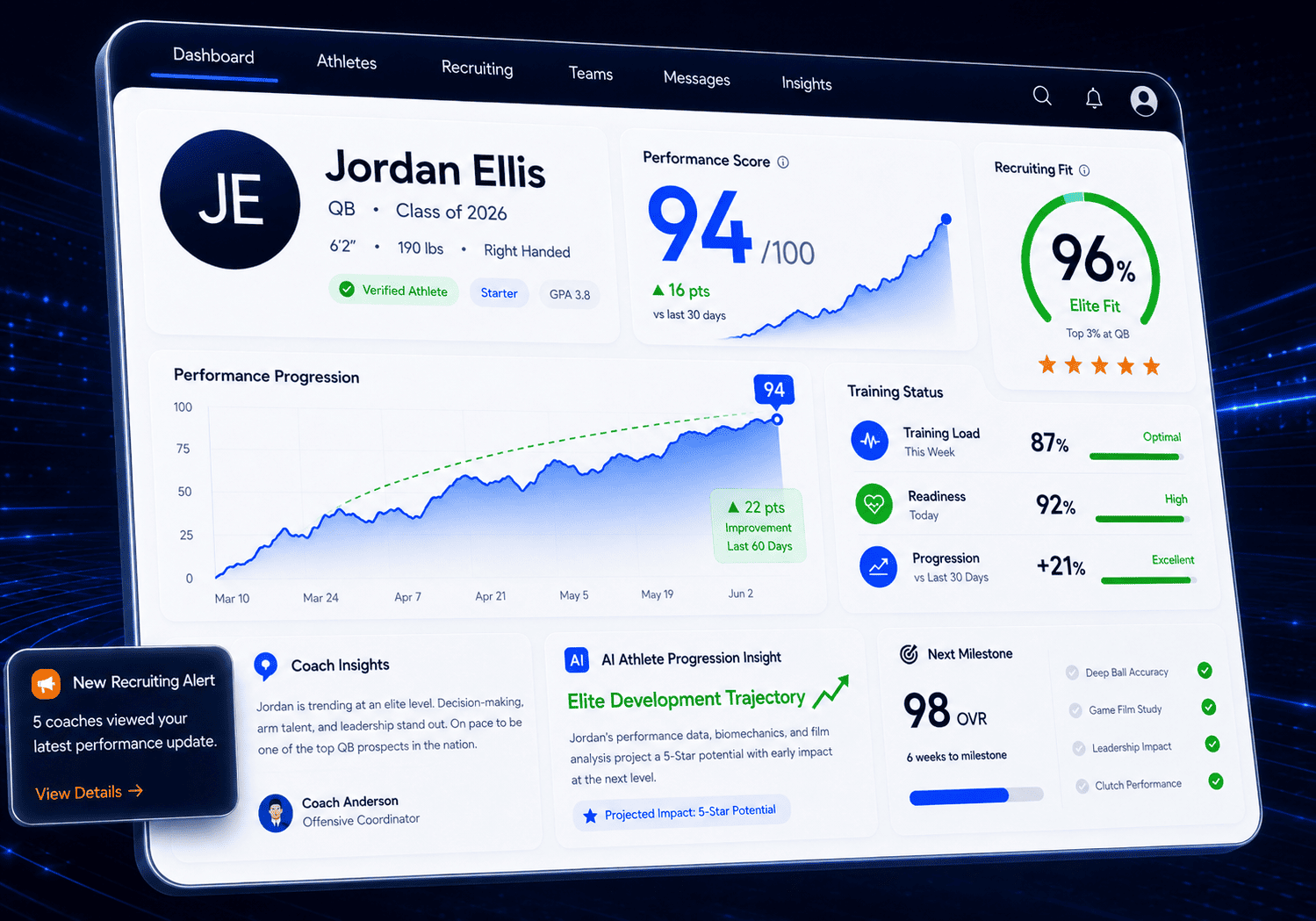
AI-Powered Sports Performance & Recruiting Platform for Virginia Clubs, Academies & Youth Programs

Plavno developed a custom sports technology platform for Virginia-based clubs and academies to combine athlete performance tracking, coach communication, recruiting workflows, and mobile engagement in one ecosystem.

Read More
3x

faster recruiting pipeline

AI-Powered Sports Performance & Recruiting Platform for Virginia Clubs, Academies & Youth Programs

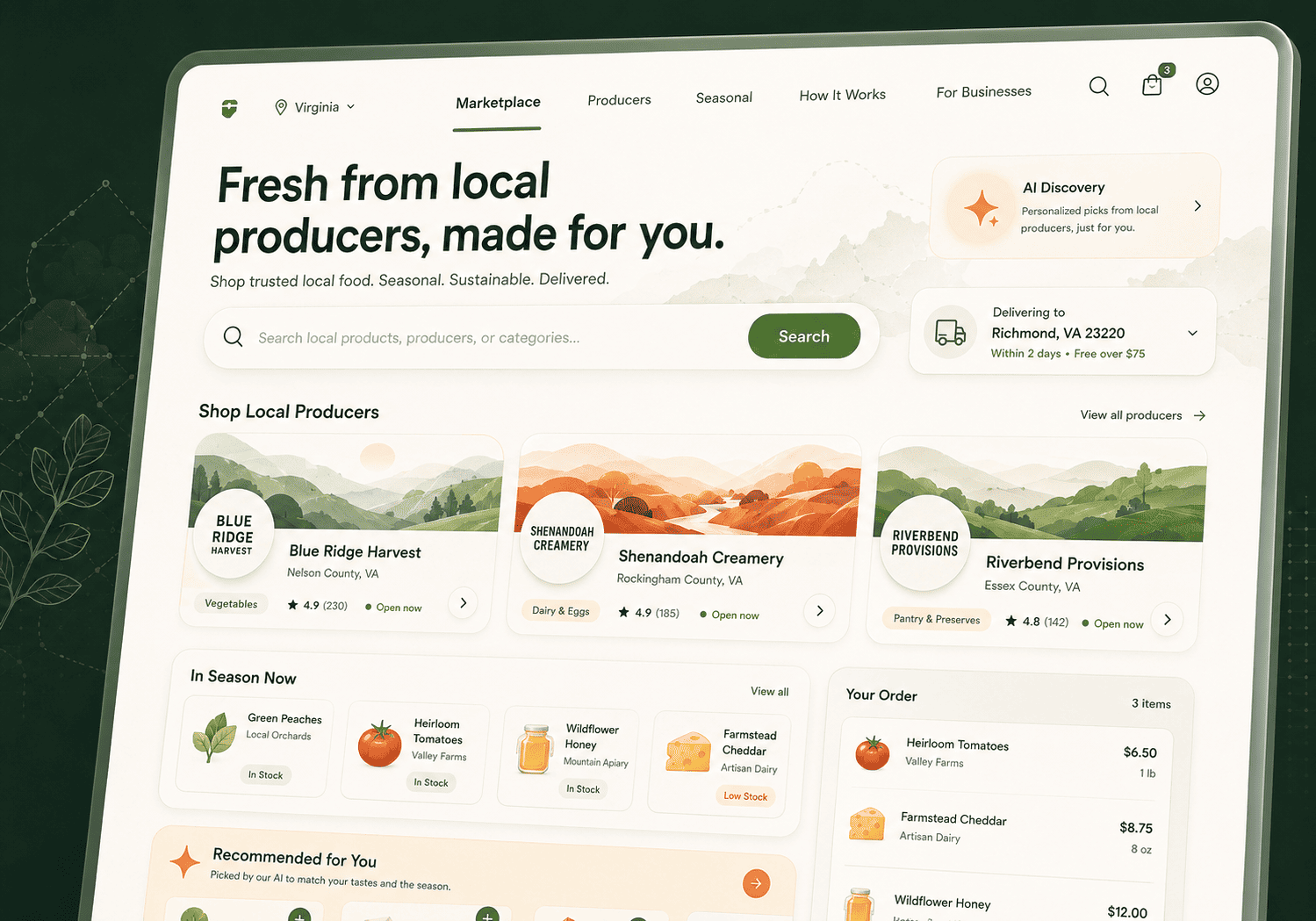
Digital Marketplace for Virginia Farmers, Local Producers & Direct-to-Consumer Food Sales

Plavno developed a custom multi-vendor marketplace for Virginia-based farmers, food producers, and regional sellers to unify product listings, vendor operations, customer ordering, and local fulfillment workflows.

Read More
3x

increase in product discovery relevance

Digital Marketplace for Virginia Farmers, Local Producers & Direct-to-Consumer Food Sales

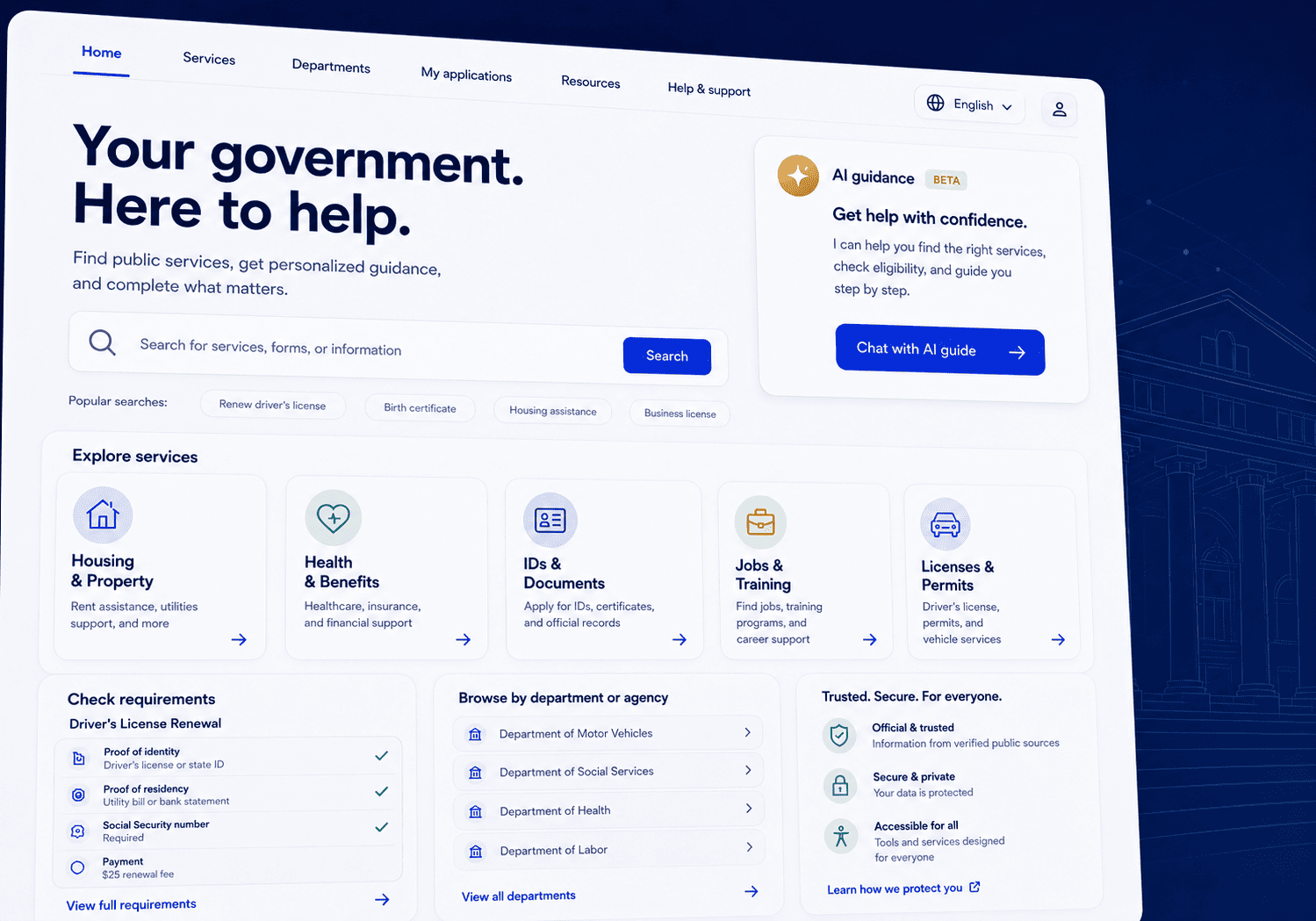
AI-Powered Citizen Services Website Platform for Virginia State Agencies

Plavno developed a modern eGovernment website platform for Virginia state agencies that centralizes citizen services, public information, department content, and an AI-powered guidance agent in one scalable system.

Read More
70%

reduction in routine citizen inquiries to agency staff

AI-Powered Citizen Services Website Platform for Virginia State Agencies

AI Agents Development Solutions for Blacksburg Industries

Local industries where agents pull real load

Use cases mapped to the Virginia Tech corridor economy, from research spinouts to multi-site operators near Roanoke and Christiansburg.

Startup Support

Startup Support

Tier-one triage

Virginia Tech CRC product startups

Early teams near the Corporate Research Center drown in support and onboarding while shipping features. Agents handle tier-one questions, environment setup checks, and status digests for advisors. We bind tools to issue trackers and knowledge bases with strict write scopes. A typical ROI frame is reclaiming 12–18 engineering hours per week once triage stabilizes. Technically, a planner routes intents to read tools first, then draft replies with retrieval. Human review stays on refunds and security topics so trust holds during fundraise seasons.

Manufacturing Ops

Manufacturing Ops

Packet closeout

Manufacturing ops around Salem and Radford

Plants still lose shifts to missing paperwork and late maintenance notes. Agents watch incoming forms, fill known fields from ERP, and escalate only true exceptions. Shift leads get a morning brief instead of a folder hunt. Measured gains often land near 20% faster packet closeout on pilot lines when data quality is already fair. Implementation uses secure connectors, offline-tolerant queues, and reverse sync once a human signs. Safety-critical edits never auto-apply.

Healthcare Admin

Healthcare Admin

Intake packets

Healthcare admin near Roanoke networks

Clinics and service partners battle intake gaps and prior-auth stayups. Agents assemble packets, check missing fields, and schedule follow-ups under policy. PHI stays redacted before any model call. Programs target reduced denial loops and cleaner first submissions. Controllers log every access for audit. Staff keep final send authority. The ROI story is fewer rework loops per claim set, not replacing clinicians.

Public Services

Public Services

Form intake

Public-facing service programs

Municipal and campus-facing portals still depend on repetitive form intake. Drawing on our digital public services portal work, agents pre-validate submissions, route bilingual content needs, and open secure workflows for staff. Citizens get clearer status. Staff see fewer incomplete packets. Static generation keeps public pages fast while agents operate behind auth. Result targets lower phone volume during peak enrollment weeks and cleaner case diagrams for supervisors.

Ecommerce Catalogs

Ecommerce Catalogs

Order exceptions

Ecommerce and supply catalogs

Regional retailers and specialty shops struggle with catalog hygiene and order exceptions. Lessons from an online pets supply storefront guide catalog checks, checkout edge handling, and agent-drafted customer updates. Agents flag broken attributes before ads spend. Exception queues hold fraud risk items. Concrete gains show as fewer cancelled orders after address or stock mismatches. Tech path couples storefront events to agent runners with strict commit gates.

Professional Services

Professional Services

Engagement kits

Professional services boutiques in New River Valley

Consultancies bill less when staff chase scheduling, file packaging, and client updates. Agents assemble engagement kits, propose timelines, and nudge missing inputs. Partners approve in one glance. Time returned often funds an extra billable day per month for small teams. Stack uses calendar APIs, document templates, and approval webhooks. Nothing leaves the firm without human stamp on external share.

3.5w

Median weeks to first autonomous slice

Measures kickoff to a production path that runs without a person on low-risk steps. Achieved by freezing scope to one job and one system of record. Matters because Blacksbury teams need visible relief inside a quarter, not a year-long platform program.

-28%

Handle time on assisted tickets

Compares average handling time before and after assisted drafting on the same queue. Gains come from retrieval grounded replies and auto-pulled account context. Bottom line impact is more tickets per agent without adding headcount during campus peaks.

1.2x

Cost variance vs token budget

Tracks monthly model and tool spend against the agreed ceiling. Controllers cache stable answers and downshift models on simple intents. Finance teams near Virginia Tech like predictable variance more than headline model hype.

Architecture & Engineering Overview

How Blacksburg agent builds stay fundable in 2026

Measurable jobs

Jobs over platforms

Baseline cycle time, named verifier, and stop rules per release

Dual control

Isolated write paths

Money, PHI, and deploys need approval or dual control

Cost control

Burn vs success

Weekly token, storage, and people cost tied to jobs completed

Change management

Reviewer playbooks

Takeover rate and policy misses freeze autonomy when quality drifts

Vendor churn

Model-swap ready

Abstract adapters and golden tests keep the case when vendors change

For Business: Technical ROI & Risk Mitigation

Agent spend fails when leaders cannot tie outputs to recovered hours or reduced delay. We price and sequence work around measurable jobs, not abstract platform dreams. Each release names a baseline cycle time, the owner who verifies it, and the stop rule if quality falls. That frame keeps Virginia boards calm when model vendors change prices mid-quarter.

Risk drops when tools cannot touch money, PHI, or production deploys without a second key. We isolate write paths behind approval or dual control. Insurance and buyer questionnaires get real answers because logs exist from day one. You avoid the silent failure mode where a clever demo becomes a liability review nightmare.

Cost control is part of the business case. Budgets include model tokens, vector storage, observability, and the people who maintain prompts. We publish weekly burn versus successful jobs completed. If a tool saves ten minutes but costs twelve in tokens, it leaves the fleet. That honesty protects margins for startups still raising or living on contracts.

Change management is treated as product work. Reviewers get short playbooks, not multi-day workshops. Metrics include takeover rate and blatant policy misses. When numbers drift, we freeze autonomy and fix data or prompts. The ROI story stays true because we stop before bad automation multiplies errors across Christiansburg and Roanoke sites.

Finally, we plan for vendor churn. Model providers swap names and rate limits. Your business case should still hold if a model is swapped within a tier. Abstract adapters and golden tests make that swap a checkout, not a rewrite. Leaders get continuity. Engineers get less weekend firefighting.

Kickoff

Thin vertical kickoff

One job, two tools, frozen metrics and data classes

Design gates

Threat & ADR design

Tool misuse models, memory scope, retrieval vs fine-tune

Build

Flagged canary ship

Feature flags, scrubbed staging traces, rate-limited writes

Operate

Weekly dual view

Error classes, cost per completion, and named on-call owner

For CTOs: Architecture & Technical Lifecycle

Lifecycle starts with a thin vertical: one job, two tools, complete observability. Governance gates ride the same path as code, not a parallel committee track. Kickoff freezes success metrics and data classes. Design reviews cover threat models for tool misuse. Build ships behind feature flags. Production entry requires budget alerts, rollback, and an on-call owner named in writing.

Decision points stay explicit. Do we store memory per session or per account? Prefer shorter sessions until privacy counsel signs longer retention. Do we multi-agent or single worker? Prefer single worker until handoffs prove costly. Do we fine-tune or retrieve? Prefer retrieval with evaluation harnesses until volume justifies training ops. Trade-offs get a one-page ADR your future hires can still read after graduation turnover.

Environment strategy mirrors product apps. Dev uses synthetic fixtures. Staging replays scrubbed production traces. Canaries take a percentage of live jobs with hard kill switches. We refuse to let agents write continuous jobs without human-rate limited tools. That discipline is how CTOs avoid thrash when a prompt change cascades into CRM pollution.

Integration governance beats bespoke glue. API adapters own retries, schema checks, and idempotency. Secret rotation follows your cloud standard. SAML or OIDC maps roles into tool allow lists. When a contractor leaves, access dies with the IdP, not a forgotten token in a notebook. Lifecycle ends only when decommission scripts retire agents and their data footprints cleanly.

Reporting closes the loop weekly. CTOs see error classes, latency budgets, human takeover counts, and cost per completion. Product owners see job success from the user view. That dual view prevents pure ML vanity scores from dominating. Architecture remains a means to stable ops in Blacksburg, not a research exhibit.

Planning layer

LLM plans, typed side effects

Python/TS services with strict schemas — free-form tool calls stay out of regression paths

Retrieval

ACL-scoped retrieval

Small embedding indexes, heading chunking, offline evals before prompt ships

CMS UI

Strapi + Next.js surfaces

Structured policies, operator consoles, static public pages, secure forms

Queues

Queues outside the model

Redis/cloud job state, human-wait workflows, DLQ tags, chaos-safe degrade

For Engineers: Implementation Details & Stack

Implementation favors boring, testable pieces. Planning may use an LLM, but side effects stay in typed Python or TypeScript services with strict schemas. We choose this because free-form tool calling is hard to regression test when tickets hit weird states after Virginia Tech move-in week. Function signatures mirror internal domain language so new engineers can read intent fast.

Retrieval stacks vary by delay tolerance. For operator tasks we use small embedding indexes with document ACLs, not a giant shared cornucopia. Chunking follows heading structure from source systems. Evaluations run offline on labeled pairs before prompt changes ship. Caching hits first for FAQ class things. Live calls remain for account-specific questions only.

When UI or content admin is required, we reuse proved patterns from a public services portal: Strapi structures content types for policies and help articles, Next.js serves operator consoles, and static generation keeps public pages quick while forms stay secure. Bilingual content fields reduce fork risk. Engineers start from known CMS patterns rather than inventing admin mid-project.

Queueing and workflow state live outside the model. Redis or cloud queues hold job state. Workflow engines encode human wait doses. Timeouts escalate. Dead-letter queues get owner tags. Chaos tests splat tool failures so agents degrade to safe messages, not infinite retries that nuke rate limits. Logs carry correlation IDs from the first user click or webhook.

Local developer experience matters for university-adjacent hiring. Containers boot with fixture data. Prompt snapshots sit next to unit tests. Contract tests pin third-party payloads. CI refuses merges when eval scores drop. Production edge cases like partial outages, daylight shifting schedules, or double submits are scripted. That is how agent code survives real on-call, not only demo day.

Observability

First-class signals

Completions, refusals, tool errors, token burn, takeover rate

Security

Data-class security

Tokenized PHI, runtime secrets, injection strips, output filters

Delivery

Progressive delivery

Canary paths, versioned prompts, IaC parity, tested restores

Cost

Per-agent budgets

Daily ceilings, anomaly alerts, spend tagged by product line

Compliance

Paperwork with ship

Data-flow diagrams, retention, DPIA notes, training logs for audits

Infrastructure, Observability & Security

Infrastructure defaults to your preferred US regions with private networking wherever possible. We monitor completions, refusal reasons, tool errors, token burn, and human takeover rate as first-class signals. Latency budgets sit beside accuracy scores so slow tools cannot hide behind clever answers. Incident response ties agents into the same pager path as other services, with runbooks that include prompt freezes and feature flag kills.

Security policies cover data classes before model selection. PHI and student data stay tokenized. Secrets inject at runtime. Prompt injection defenses strip untrusted instructions from retrieved docs. Output filters catch tempo attempts to exfiltrate keys. Access audits feed your SOC2 evidence vault if you hold that control set. HIPAA style controls apply when healthcare partners are in scope in the Roanoke market.

Deployment uses progressive delivery. Blue-green or canary paths reduce blast radius. Config for model endpoints and temperatures is versioned. Rollback restores both code and prompt packages. Infrastructure as code keeps environments equivalent so staging lies less. Backups cover vector stores and job histories with tested restores. Blacksburg clients operating multi-site get explicit RPO and RTO statements.

Cost observability is not optional. Per-agent budgets, daily ceilings, and anomaly alerts stop a recursive tool loop from becoming a finance ticket. We tag spend by product line so leaders see which jobs earn keep. Unused agents get parked after notice periods. That habit keeps post-launch operations lean.

Compliance paperwork ships with the system, not after. Data flow diagrams, DPIA style notes when needed, retention schedules, and third-party inventories are part of acceptance. Training logs show who can approve autonomous writes. This package shortens vendor risk reviews for Virginia enterprises and makes annual audits less painful for internal owners.

Testimonials

We are trusted by our customers

“They really understand what we need. They’re very professional.”

The 3D configurator has received positive feedback from customers. Moreover, it has generated 30% more business and increased leads significantly, giving the client confidence for the future. Overall, Plavno has led the project seamlessly. Customers can expect a responsible, well-organized partner.

Sergio Artimenia

Commercial Director, RNDpoint

Sergio Artimenia

“We appreciated the impactful contributions of Plavno.”

Plavno's efforts in addressing challenges and implementing effective solutions have played a crucial role in the success of T-Rize. The outcomes achieved have exceeded expectations, revolutionizing the investment sector and ensuring universal access to financial opportunities

Thien Duy Tran

Product Manager, T-Rize Group

Thien Duy Tran

“We are very satisfied with their excellent work”

Through the partnership with Plavno, we built a system used by more than 40 million connected channels. Throughout the engagement, the team was communicative and quick in responding to our concerns. Overall, we were highly satisfied with the results of collaboration.

Michael Bychenok

CEO, MediaCube

Michael Bychenok

“They have a clear understanding of what the end user needs.”

Plavno's codes and designs are user-friendly, and they complete all deliverables within the deadline. They are easy to work with and easily adapt to existing workflows, and the client values their professionalism and expertise. Overall, the team has delivered everything that was promised.

Helen Lonskaya

Head of Growth, Codabrasoft LLC

Helen Lonskaya

“The app was delivered on time without any serious issues.”

The MVP app developed by Plavno is excellent and has all the functionality required. Plavno has delivered on time and ensured a successful execution via regular updates and fast problem-solving. The client is so satisfied with Plavno's work that they'll work with them on developing the full app.

Mitya Smusin

Founder, 24hour.dev

Mitya Smusin

Rolling agents across teams

How Blacksburg groups expand after the pilot

A separate rollout sequence focused on people, permissions, and multi-team ownership once the first job is stable.

Clipboard
Team
01

Step 1: Anchor owners (1 week)

Name a business owner and a technical owner for every new agent job. Clarify who can change prompts and who can expand tools. Deliverables are an ownership matrix and a change calendar. This week prevents orphan automations after staff rotate. Training is short and role based. Timeline stays near one week deliberately so momentum does not stall.

02

Step 2: Permission hardening (1–2 weeks)

Align IdP groups with tool allow lists and environment scopes. Turn off personal API keys. Add dual control for financial or privacy sensitive writes. Clients receive a permissions report and cleanup tickets. Nearby sites like Christiansburg and Salem often share identity tenants, so we verify cross-site bleed. Expect one to two weeks depending on IT response times.

Search in doc
Rocket
03

Step 3: Playbook transfer (2 weeks)

Convert tribal knowledge into operator playbooks and on-call cards. Include failure modes and who to page. Run tabletop drills using past incident samples. You leave with living docs in your stack, not a deck. Two weeks covers review cycles with real staff shifts. New hires can run the agent without hunting Slack history.

04

Step 4: Portfolio review cadence (ongoing, first gate 2 weeks)

Stand up a biweekly portfolio review that kills low-value agents and funds winners. Score on cost, quality, and hours returned. The first formal gate lands about two weeks after multi-team access opens. Finance sees forecasts. Engineering sees debt. Product sees backlog. This cadence keeps the fleet honest beyond launch week enthusiasm.

plavno logo

Build your first
Smart AI project today!

Just tell the Plavno AI Agent about your project - it will ask questions, gather requirements, and propose a tailored solution

Before you start

Readiness checks for Blacksburg agent projects

  • Define the job boundary — Write the single workflow the agent must own, with start trigger, end state, and explicit non-goals. List systems touched and which writes are banned. Name the human fallback path for exceptions. Capture volume by hour and seasonal spikes near campus calendars. Attach sample tickets or forms so ambiguity dies early. Without this sheet, scope expands into a chatbot nobody trusts. Bring it to the first working session.

  • Inventory data honesty — Score source fields for completeness, freshness, and owner. Mark fields agents must never invent. Identify free-text chaos that needs structure first. Note retention rules for student, health, or customer data under Virginia expectations. Plan scrubbing for staging fixtures. Dirty inputs will make perfect prompts look broken. Fix or quarantine before autonomy. Put a name on each critical table.

  • Set cost and latency budgets — Decide max tokens per successful job and max seconds to first useful action. Include tool fees and logging storage in the same budget. Choose alert thresholds finance will actually read. Define what happens when the ceiling is hit for a day. This prevents surprise bills after a viral internal rollout. Budgets also guide model tier choices without sacred cows.

  • Prepare security reviewers early — Share intended data flows and tool list before build week three. Map controls to your policies for access, logging, and third parties. Decide who can approve higher-risk autonomy later. Confirm region and residency requirements for US hosting. Unblock legal questionnaires with diagrams, not vibes. Early review saves clone rework after launch stress. Book the meeting now.

  • Pick success metrics and exit criteria — Choose two outcome metrics and one quality metric with baselines. Agree on a kill line if quality regresses. Document the pilot window and who can call stop. Connect metrics to a calendar window, not forever. That keeps the program honest for founders and boards. Celebrate only against the baseline you recorded. Archive the scoreboard with the release notes.

Vitaly Kovalev

Vitaly Kovalev

Sales Manager

Request a Blacksburg agent readiness audit

Share budget range, timeline, current stack, and dataset scope. Receive a Blacksburg-focused readiness audit and cost estimator packet within one business day.

Talk to Experts

Practical answers

AI agents development questions from Blacksburg teams

Straight answers on cost, timing, data, quality, security, and life after launch for Virginia operators.

What drives cost for AI agents development in Blacksburg?

Cost tracks three things first: integration depth, risk level of writes, and evaluation rigor. Connecting to one modern API is cheap. Bridging three legacy systems with weak docs is not. Higher risk writes need dual control, richer logs, and longer test cycles. Those controls add engineering days but protect you from expensive mistakes. Local market rates sit near other US tech corridors, with modest savings when teams co-locate workshops around the Virginia Tech calendar rather than endless travel. Model spend is real but smaller than people think when jobs are narrowed. A focused triage agent with caching often costs less per month than a single contractor day. Broad open chats cost more and solve less. We size token budgets against job volume estimates from your queues. Cost also includes observability, staging data work, and post-launch tuning hours. Ignoring those lines creates fake low bids and loud invoices later. Blacksburg startups often ask about remaining in budget during fundraising. We phase delivery around a thin vertical that proves hours returned before expanding tools. That sequence keeps cash burn intentional. Enterprise buyers near Roanoke care more about audit packs and SLA language, which add fixed documentation effort. Both buyer types get a transparent sheet: discovery, build, integrations, security review support, and run support. Hidden costs appear when data is messy. Cleaning pipelines or human labeling can exceed model fees. We flag that in week one with sample quality scores so you can choose to fix sources or pick a different job. Another driver is multi-language content or public-facing forms. Patterns we used on a structured bilingual portal add content modeling time but reduce long-term forks. Finally, ownership model changes cost. If your team will maintain agents, we invest in training and ADRs. If we stay on shared operations, you pay a lean retainer for monitoring and prompt change control. Choose deliberately. The right number is the one that buys reliable hours back without trapping you in a demo.

How long does it take to build AI agents software?

A credible MVP agent for one bounded job commonly lands in four to seven weeks. That assumes data access is available in week one and a single system of record. Full multi-job fleets with hardened permissions and portfolio governance often span three to five months. Timelines slip when stakeholders cannot agree on write authorities or when staging data is blocked. We publish a calendar with freeze points so scope does not thrash weekly. MVP means assisted or lightly autonomous action on a real queue, with logs, budgets, and a human escape hatch. It is not a manicured slide deck. You should see measurable handle time change or packet completeness gains in production-like traffic. Full deployment adds multi-environment promotion, deeper integrations, chaos tests, and on-call handoff. It also adds the rollout path across teams so the second department does not start at zero. Blacksburg teams can sometimes compress calendars by colocating discovery near campus or CRC offices. Access to operators for shadowing saves remote endless interviews. Holiday and academic breaks still matter; plan around them. External vendor lead times for API credentials remain the usual clot. We file those requests on day one. Phases stay even and named. Discovery and design occupy early weeks. Build and eval middle weeks. Security review and pilot hard gates follow. Expansion is a separate plan after metrics prove out. Parallelizing more jobs before the first works is the most common way teams waste two months. Resist that temptation even when executives want a wide blast. If you already have clean APIs, strong identity, and a documented SOP, you sit on the fast side of the range. If you only have inboxes and heroics, expect data and workflow shaping first. That preparation is still part of shipping AI agents, not a detour. We will tell you which boat you are in after a short technical scan.

Do you work with startups in Virginia?

Yes. We work with US-based clients, including companies operating in Virginia, from pre-seed product teams to later-stage operators. The Blacksburg and Virginia Tech ecosystem produces deep-tech, enterprise SaaS, and hardware-adjacent software that needs disciplined automation rather than novelty chat. We also support teams in Richmond, Northern Virginia, and the Roanoke metro when they share stack patterns or secondary offices. Startup constraints shape delivery. Runway is finite, so we aim for a single job that returns hours quickly. Founders often wear security and finance hats, so documents stay short and factual. We integrate with tools startups already use instead of forcing enterprise suites. When fundraising calls for demos that do not lie, we show production metrics, not scripted theater. Regional ecosystems we engage include the Virginia Tech Corporate Research Center, accelerator cohorts tied to university research, and remote-first Virginia LLCs hiring across the New River Valley. Manufacturing-linked startups near Radford and Salem need agents that respect shop floor realities. Health and climate startups need stricter data handling. We adjust controls without inventing new religion each time. Startups sometimes fear lock-in. We keep prompts, adapters, and infra definitions in your repos with clear licenses. You can run them without us. Retainers exist for teams that want shared on-call brains, not for hostage taking. Hiring graduates from local programs becomes easier when architecture is readable and tests exist. If you are two founders and a contractor, say so. Scope will match. If you are fifty people with SOC2 underway, say that too. The engagement shape changes. The constant is outcome first language and engineering you can maintain after the project invoice ends.

Can AI agents integrate with my existing system?

Yes, if the system exposes a stable API, events, database views, or even a carefully designed RPA path as a last resort. Native APIs are preferred. We build typed adapters with retries, schema validation, and idempotency keys so double posts die. Legacy ERPs and ticket tools are common in Virginia mid-market firms. They integrate. They just need patience, staging mirrors, and honest rate limit handling. Integration starts with a contract test, not a hopeful weekend hack. We capture sample payloads, auth modes, and failure codes. Read paths come first when risk is high. Writes follow once dry runs match expected side effects. Message queues buffer spikes so campus-day traffic surges do not collapse third-party limits. Observability traces each tool call with correlation IDs back to the user or webhook origin. Identity matters as much as endpoints. Agents should act under service accounts mapped to least privilege groups in your IdP. When a person leaves, permission dies centrally. For systems without modern auth, we isolate credentials in a vault and rotate on a schedule. Secrets never sit in prompts or notebooks. That rule protects campus-adjacent startups sharing laptops during crunch weeks. We have bridged content and form systems using headless CMS patterns similar to a Strapi and next-generation frontend portal, which is useful when agents must create structured service pages or open secure workflows for staff. Ecommerce style carts and catalogs follow storefront event models we used on a pet supplies checkout build. Catalog agents reject incomplete attributes before they reach ads or customers. Different domain, same discipline. If your estate is a maze of spreadsheets, integration still starts by deciding the system of record. Agents should not become yet another diverging copy. We will help you pick the source of truth and migrate steps into it. That work is part of making agents trustworthy, not optional polish after go-live.

What industries in Blacksburg benefit most from AI agents development?

Three local anchors benefit first: university-adjacent product startups, advanced manufacturing and industrial suppliers, and professional or technical services firms supporting those clusters. Startups near Virginia Tech bleeding into Christiansburg gain from support triage and research briefs that free scarce engineers. Manufacturers around Radford and Salem gain from packet assembly, maintenance note hygiene, and shift briefings that reduce downtime chatter. Services firms gain from packaging, scheduling, and client update runners that protect billable hours. Secondary wins appear in healthcare administration tied to regional networks and in public-facing program offices that process repetitive forms. Those domains need stricter privacy and clearer audit trails, so agents shine when intake is high and policy is stable. Ecommerce and specialty retail operations that manage catalogs also benefit when attribute quality and exception handling lag growth. We saw similar catalog and checkout discipline needs on an online pets supply storefront, where structure before cleverness matters. Not every industry should automate agents first. If work is bespoke artistry with no repeating structure, agents mostly add review overhead. If leadership will not own a metric, the project becomes theater. We help you avoid those traps. The best fit has clear volume, painful cycle time, available data, and a manager who wants the hours back. Blacksburg specifics include surge patterns around academic calendars, generous contractor mixes, and IP sensitivity from research origins. Agents must throttle during demo days and respect export or sponsor constraints. That local texture changes prompt and access design more than generic city pages admit. We write those constraints into the job contract. Across these industries the technical pattern is consistent: narrow job, typed tools, human exits, measured outcomes. Domain language changes. Engineering honesty does not. That is how AI agents development lands as an operations upgrade rather than a science fair booth.

Contact Us

This is what will happen, after you submit form

Need a custom consultation? Ask me!

Plavno has a team of experts ready to start your project. Ask us!

Vitaly Kovalev

Vitaly Kovalev

Sales Manager

Schedule a call

Get in touch

Fill in your details below or find us using these contacts. Let us know how we can help.

No more than 3 files may be attached up to 3MB each.
Formats: doc, docx, pdf, ppt, pptx, xls, xlsx, txt.
Send request