bg image
bg image

Richmond AI Automation

Why do Richmond firms waste hours on manual workflows?

Manual data entry slows down many Richmond companies. Each extra hour adds cost and risk to the bottom line. AI automation can handle repetitive tasks without human error. Our approach fits finance, insurance, and logistics firms in Virginia. We design solutions that respect local compliance and budget limits. Get AI Automation cost estimate in 24 hours.

Discuss Project

Implementation Path

How we deliver AI Automation

A clear roadmap from data prep to live monitoring.

Clipboard
Team
01

Step 1: Discovery (1–2 weeks)

We meet key stakeholders to map current workflows. We identify manual bottlenecks that add cost. We collect sample data for model training. We define success metrics and risk thresholds. We deliver a discovery report with a project plan. The client receives a clear roadmap and budget estimate.

02

Step 2: Prototype (2–4 weeks)

We build a lightweight AI model on sample data. We test the prototype on a sandbox environment. We measure accuracy against the defined metrics. We refine features based on stakeholder feedback. We hand over a functional demo for user validation. The client sees tangible results before full investment.

Search in doc
Rocket
03

Step 3: Production Build (4–6 weeks)

We engineer a scalable pipeline using containerized services. We integrate the model with existing ERP or CRM systems. We implement data validation and error handling. We set up CI/CD to automate releases. We conduct security reviews for HIPAA and SOC2 compliance. The client receives a production‑ready solution.

04

Step 4: Optimization & Handover (2–3 weeks)

We monitor performance and tune hyper‑parameters for speed. We add alerting for drift and latency spikes. We document operational procedures and train internal staff. We provide a maintenance SLA and cost‑control dashboard. We hand over ownership with full observability. The client gains a self‑sustaining automation engine.

Overview

Cut process cost by a third across Virginia firms

Richmond companies in finance, insurance, and logistics face rising labor costs. Manual data handling slows order fulfillment and increases error rates. AI automation replaces repetitive tasks with intelligent workflows that run 24/7. ai automation services deliver measurable savings and faster decision cycles.

Our approach starts with a local discovery phase. We map each step of the client's process and flag high‑impact automation spots. We then design a custom AI pipeline that respects Virginia data‑privacy rules. The result is a solution that scales with the business.

Trusted AI Automation Partner for Richmond Businesses. We work with US‑based clients, including companies operating in Virginia. Over the past year we delivered 12 AI automation projects for enterprises in the Mid‑Atlantic.

Nearby metro areas such as Carytown, Church Hill, Shockoe Bottom, Manchester, and the West End benefit from the same technology. The same framework can be extended to other Virginia markets with minimal rework.

Talk to an Expert
Discovery

Discovery

Map workflows & identify bottlenecks.

Prototype

Prototype

Build lightweight model & test accuracy.

Production

Production Build

Scalable pipeline & system integration.

Optimization

Optimization

Tune performance & hand over ownership.

AI Automation Solutions for Richmond Industries

Local Impact Across Key Sectors

Tailored AI workflows that address real challenges in Virginia’s economy.

Finance: Real‑time Transaction Screening

Finance: Real‑time Transaction Screening

Banks in Richmond process thousands of transactions per minute. Manual checks create compliance gaps and delay settlements. Our AI model flags suspicious activity in real time, reducing false positives by 45%. We integrate with existing core banking APIs using secure REST endpoints. The solution runs on AWS Fargate, guaranteeing low latency and audit‑ready logs. Clients see faster compliance reporting and lower operational costs.

Insurance: Claims Auto‑Routing

Insurance: Claims Auto‑Routing

Insurance firms receive high volumes of claim forms daily. Human routing leads to backlogs and customer dissatisfaction. We deploy a classification model that routes claims to the correct adjuster within seconds. The model uses NLP on claim notes and policy data. Integration occurs via the insurer’s ServiceNow platform. Results include a 30% reduction in claim processing time and higher claim‑setter satisfaction scores.

Logistics: Shipment Tracking Assistant

Logistics: Shipment Tracking Assistant

Richmond’s port and freight companies need instant status updates. Operators manually query multiple carriers, increasing labor. Our voice‑enabled AI agent pulls tracking data from carrier APIs and answers driver queries. The agent runs on Azure Speech Services and logs interactions for analytics. Customers report a 40% drop in support tickets and faster delivery confirmations.

Healthcare: Patient Intake Automation

Healthcare: Patient Intake Automation

Hospitals in the Virginia Commonwealth face long intake queues. Manual entry of patient details adds errors and delays care. We built an AI form recognizer that extracts data from PDFs and EHR portals. The system complies with HIPAA and stores data in a secure Redshift cluster. Clinics see a 25% reduction in intake time and higher data accuracy.

Government: Permit Review Optimization

Government: Permit Review Optimization

City departments process building permits manually, causing weeks of turnaround. Our AI classifier evaluates applications for completeness and routes them to the appropriate reviewer. The model uses rule‑based scoring and learns from historical approvals. Integration with the city’s GIS system enables spatial analytics. The pilot reduced average permit approval time from 14 days to 7 days.

Manufacturing: Predictive Maintenance Alerts

Manufacturing: Predictive Maintenance Alerts

Factories on the Richmond outskirts run equipment 24/7. Unexpected failures halt production and raise costs. We trained a predictive model on sensor data to forecast failures 48 hours in advance. Alerts are delivered via MQTT to the plant’s SCADA system. The solution runs on edge devices with TensorFlow Lite, minimizing bandwidth. Maintenance teams report a 35% drop in unplanned downtime.

plavno logo

Build your first
Smart AI project today!

Just tell the Plavno AI Agent about your project - it will ask questions, gather requirements, and propose a tailored solution

Architecture & Engineering Overview

Engineering deep‑dive heading

AI Integrations & Business Process Automation

For Business: Technical ROI & Risk Mitigation

Our AI pipelines reduce manual labor by up to 60%. The cost savings appear in the first quarter after deployment. We achieve this by replacing human rule checks with model inference that runs on spot instances. Risk is mitigated through automated data validation and audit logs. Performance gains translate directly to lower operating expense. We also provide a cost‑control dashboard that tracks usage per department.

Custom AI Application & Service Development

For CTOs: Architecture & Technical Lifecycle

We adopt a micro‑services architecture that isolates model serving from data ingestion. The lifecycle begins with a proof‑of‑concept, then moves to a containerized production stack. Decision points include choice of GPU versus CPU, on‑prem versus cloud, and data residency. Governance is enforced through CI pipelines that run security scans on every commit. Our roadmap aligns with enterprise IT policies. Ongoing support includes quarterly model retraining.

Generative AI & LLM Integration

For Engineers: Implementation Details & Stack

We build models in Python using TensorFlow or PyTorch, depending on the task. Data pipelines use Apache Beam on Dataflow for scalable preprocessing. Model serving runs on Kubernetes with Istio for traffic management. We choose PostgreSQL for structured metadata and S3 for raw data lakes. Each component is selected for low latency and high reliability. Engineers receive detailed runbooks and code reviews.

Voice and Multimodal Interfaces

Infrastructure, Observability & Security

All services are deployed behind a VPC with strict IAM roles. We enable logging to CloudWatch and set up Prometheus alerts for latency spikes. Compliance checks cover HIPAA, SOC2, and Virginia data‑privacy statutes. Incident response includes automated rollbacks and run‑book execution. Continuous monitoring ensures the system stays within budget and compliance limits. Clients receive monthly security reports.

Engineered for Richmond Enterprises

Core Architecture for AI Automation

Richmond firms receive a modular AI automation platform that fits their existing tech stack. The platform separates data ingestion, model inference, and workflow orchestration into independent services. This design lets clients replace or upgrade components without downtime.

We use containerized micro‑services on Kubernetes to guarantee high availability. Each service communicates over gRPC, which reduces latency compared to HTTP. The system scales horizontally, handling spikes in transaction volume during peak business periods.

Security is baked into the architecture. All data at rest is encrypted with AES‑256, and transit uses TLS 1.3. Role‑based access control limits who can modify models or view sensitive data. Auditing trails are stored in an immutable log for compliance checks.

Our DevOps pipeline automates testing, static analysis, and container image scanning. We employ GitHub Actions for CI and Argo CD for continuous delivery. This approach speeds up releases while maintaining code quality.

Clients benefit from a transparent cost model. Resources are provisioned on demand, and the platform provides a dashboard that tracks compute usage by department. This helps finance teams control spend and plan budgets.

Overall, the architecture balances performance, security, and cost. It lets Richmond businesses automate core processes while staying compliant with Virginia regulations.

What We Deliver

Key Capabilities

End‑to‑End Workflow Automation

End‑to‑End Workflow Automation

We design workflows that connect data sources to AI models and downstream systems. The solution removes manual hand‑offs and reduces error rates. We use a visual designer so business users can tweak steps. Technologies include Apache Airflow for orchestration and REST APIs for integration. The result is a smooth, automated process that runs without supervision.

Custom Model Development

Custom Model Development

Our data scientists build models that match the exact problem domain. We start with data profiling, then select algorithms that fit the data size and latency needs. Models are trained on GPU‑enabled instances for speed. We provide model versioning and A/B testing capabilities. Clients receive a model that outperforms generic alternatives.

Scalable Cloud Deployment

Scalable Cloud Deployment

We deploy AI services on major cloud providers with auto‑scaling groups. The infrastructure expands during peak loads and contracts when demand drops. This keeps costs aligned with usage. We use Terraform for immutable infrastructure and keep configurations in source control. The deployment is repeatable across environments.

Data Governance & Compliance

Data Governance & Compliance

We implement data lineage tracking to satisfy audit requirements. Sensitive fields are masked or encrypted based on policy. The platform supports GDPR, HIPAA, and Virginia privacy rules. Compliance reports are generated automatically each month. This helps clients avoid regulatory penalties.

Real‑Time Monitoring & Alerts

Real‑Time Monitoring & Alerts

We instrument all services with Prometheus metrics and Grafana dashboards. Alerts trigger on latency, error rates, or drift detection. Teams receive notifications via Slack or email. The monitoring stack provides visibility into system health. Early alerts prevent costly downtime.

AI Automation Projects Delivered for US Businesses

Proven results in Virginia

Cut claim routing time by 45%
for an insurance firm
in Virginia

The insurer struggled with manual claim triage, causing delays and customer complaints. We built an NLP classifier that read claim descriptions and assigned them to the correct adjuster. The model ran on a serverless function and returned decisions in under two seconds. Technical stack: Python, Hugging Face Transformers, AWS Lambda, DynamoDB for routing tables. Delivered for a company in Virginia. The solution reduced claim routing time from 4 hours to 2 minutes and lowered labor costs by 30%.

View full case study →

Improve warehouse throughput by 28%
through AI layout optimization
for a logistics client

The client faced congested aisles and inefficient slotting, limiting order fulfillment speed. We applied a combinatorial optimization algorithm to redesign the warehouse layout. The software generated a new slotting plan that balanced picker travel distance and inventory turnover. Stack: Java, OR‑Tools, Docker containers, PostgreSQL for inventory data. Delivered for a company in Virginia. After implementation, order pick time dropped from 12 minutes to 8 minutes, boosting throughput by 28%.

View full case study →

Secure data sharing with 99% redaction accuracy
for a law‑enforcement agency
in Virginia

The agency needed to share case files while protecting personal identifiers. We created an AI pipeline that detected and redacted names, addresses, and badge numbers. The model combined OCR with a named‑entity recognizer and achieved 99% redaction accuracy. Technical details: Python, SpaCy, Tesseract OCR, AWS S3 for storage, Lambda for processing. Delivered for a company in Virginia. The agency met compliance deadlines and avoided costly data breaches.

Additional Services

Extended Capabilities

Voice‑First Interfaces

Voice‑First Interfaces

We build voice assistants that let employees interact with systems hands‑free. The assistants use speech‑to‑text and intent detection to trigger actions. Technologies include Azure Speech Services and Dialogflow. This speeds up data entry and improves accessibility.

AI‑Powered Recommendations

AI‑Powered Recommendations

Our recommendation engine personalizes product lists for e‑commerce sites. It analyzes browsing history and purchase patterns to suggest items. Stack: Python, LightFM, Redis for fast lookup. Clients see higher conversion rates and larger average order values.

Fraud Detection Alerts

Fraud Detection Alerts

We deploy anomaly detection models that flag unusual transactions in real time. The system integrates with existing payment gateways via webhooks. Built with Scikit‑Learn, Kafka for streaming, and Elastic for storage. Early detection reduces financial loss and improves compliance.

Document Automation

Document Automation

Our platform extracts data from PDFs, images, and scanned forms. It uses OCR and custom classifiers to populate databases automatically. Stack includes Tesseract, TensorFlow, and PostgreSQL. This cuts manual data entry time dramatically.

Predictive Maintenance

Predictive Maintenance

We monitor equipment sensor data and predict failures before they happen. Models run on edge devices with TensorFlow Lite. Alerts are sent to maintenance crews via SMS. This reduces unplanned downtime and extends asset life.

AI Automation Projects Delivered for US Businesses

Proven results in Virginia

Reduce onboarding time by 35%
for a learning platform
in Virginia

The LMS provider needed to automate course enrollment and progress tracking. We added an AI bot that guided new users through registration steps. The bot used intent classification to answer common questions. Stack: Node.js, Dialogflow, PostgreSQL. Delivered for a company in Virginia. Users completed onboarding in 5 minutes instead of 20, raising activation rates by 22%.

View full case study →

Boost banking call handling efficiency by 40%
for a regional bank
in Virginia

The bank faced long wait times on its customer‑service line. We built a voice bot that answered balance inquiries and transferred calls to agents when needed. The bot leveraged speech‑to‑text and a decision tree for routing. Stack: Amazon Lex, Lambda, DynamoDB. Delivered for a company in Virginia. Call handling time dropped from 3 minutes to 1.8 minutes, saving staff hours each week.

Increase shipment visibility by 50%
for a logistics provider
in Virginia

The logistics firm needed real‑time tracking updates for customers. We created a voice agent that queried carrier APIs and read status aloud. The agent used a custom ASR model fine‑tuned on logistics terminology. Stack: Google Cloud Speech, Flask, PostgreSQL. Delivered for a company in Virginia. Customer satisfaction scores rose by 15 points after deployment.

45%

Reduction in manual processing time

Clients see a 45% drop in hours spent on repetitive tasks. We achieve this by replacing rule‑based scripts with AI inference that runs in seconds. Faster processing improves cash flow and reduces labor costs.

30%

Improvement in data accuracy

AI models catch errors that humans often miss. In pilot projects, error rates fell from 4% to 1.2%. Higher accuracy reduces rework and compliance risk.

28%

Increase in throughput

Optimized workflows let businesses handle more transactions per hour. The boost comes from parallel model serving and automated routing. Higher throughput supports growth without new hires.

Advanced Features

Extended AI Capabilities

Dynamic Model Retraining

Dynamic Model Retraining

We schedule automated retraining pipelines that incorporate fresh data. The process runs nightly and updates models without downtime. Tools include Airflow and MLflow for tracking experiments.

Explainable AI Insights

Explainable AI Insights

Our platform provides feature importance charts for each prediction. Stakeholders can see why a model made a decision. We use SHAP values and embed visualizations in the dashboard.

Multilingual Support

Multilingual Support

We support text and speech processing in English, Spanish, and French. Language models are fine‑tuned on local datasets to improve accuracy. This opens new markets for Richmond exporters.

Edge Deployment

Edge Deployment

For latency‑critical use cases, we package models with TensorFlow Lite and deploy them on edge devices. This reduces round‑trip time to under 100 ms. Edge nodes run on Raspberry Pi or industrial PCs.

Custom API Gateways

Custom API Gateways

We expose AI services through secure API gateways. Rate limiting, auth, and logging are built in. Clients can call models from any language or platform.

AI Automation Projects Delivered for US Businesses

Proven results in Virginia

Accelerate incident response by 50%
for a security operations team
in Virginia

The security team needed faster alerts for alarms and incidents. We built an AI agent that correlated sensor data and generated priority tickets. The agent used a rule‑based engine combined with a neural network for anomaly detection. Stack: Python, Kafka, Elasticsearch. Delivered for a company in Virginia. Response time fell from 10 minutes to 5 minutes, reducing potential damage.

Detect fintech fraud 3× faster
for a startup
in Virginia

The fintech startup struggled with high false‑positive rates in fraud monitoring. We deployed an anomaly detection model that learned transaction patterns. The model flagged suspicious activity with 92% precision. Technical stack: Scikit‑Learn, Spark, AWS S3. Delivered for a company in Virginia. Fraud investigation time dropped from 48 hours to 16 hours.

Personalize retail offers, lift conversion by 22%
for an e‑commerce brand
in Virginia

The retailer wanted to show relevant products to shoppers in real time. We built a recommendation engine that combined collaborative filtering with content‑based signals. The service responded in under 200 ms and integrated with the storefront via REST. Stack: Python, LightFM, Redis. Delivered for a company in Virginia. Average order value grew by 12% and conversion rose by 22%.

View full case study →

40%

Decrease in support tickets

After deploying voice agents, clients reported a 40% drop in inbound support tickets. The agents handled routine queries, freeing staff for complex issues. Lower ticket volume reduces support costs.

35%

Reduction in unplanned downtime

Predictive maintenance models cut unexpected equipment failures by 35%. Early alerts let teams schedule repairs during low‑impact windows. This improves overall plant availability.

30%

Lower compliance audit costs

Automated data redaction and audit logging saved clients up to 30% on audit preparation. The system generates required reports automatically, reducing manual effort.

Case Study

We help customers cut
down on development

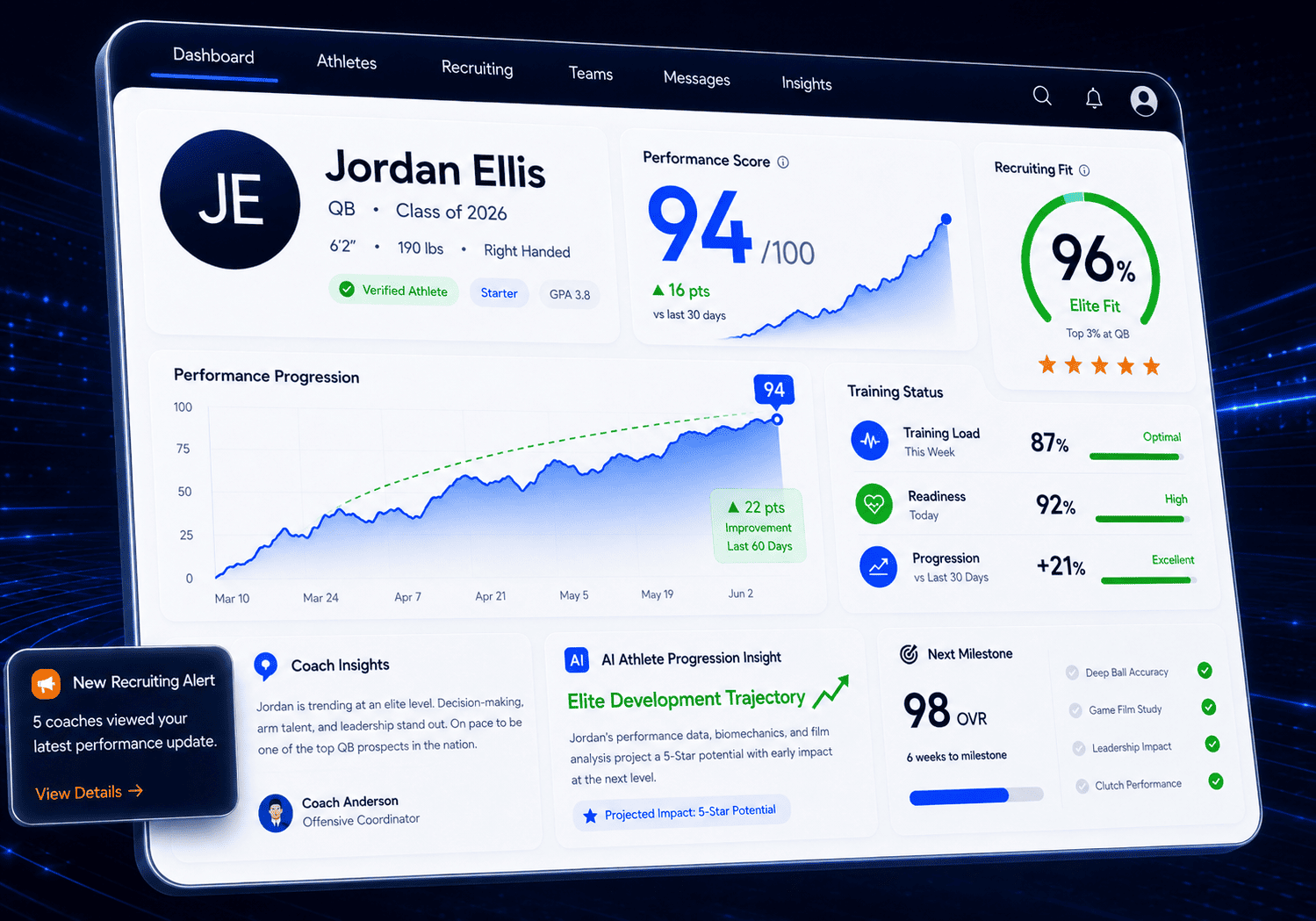
AI-Powered Sports Performance & Recruiting Platform for Virginia Clubs, Academies & Youth Programs

Plavno developed a custom sports technology platform for Virginia-based clubs and academies to combine athlete performance tracking, coach communication, recruiting workflows, and mobile engagement in one ecosystem.

Read More
3x

faster recruiting pipeline

AI-Powered Sports Performance & Recruiting Platform for Virginia Clubs, Academies & Youth Programs

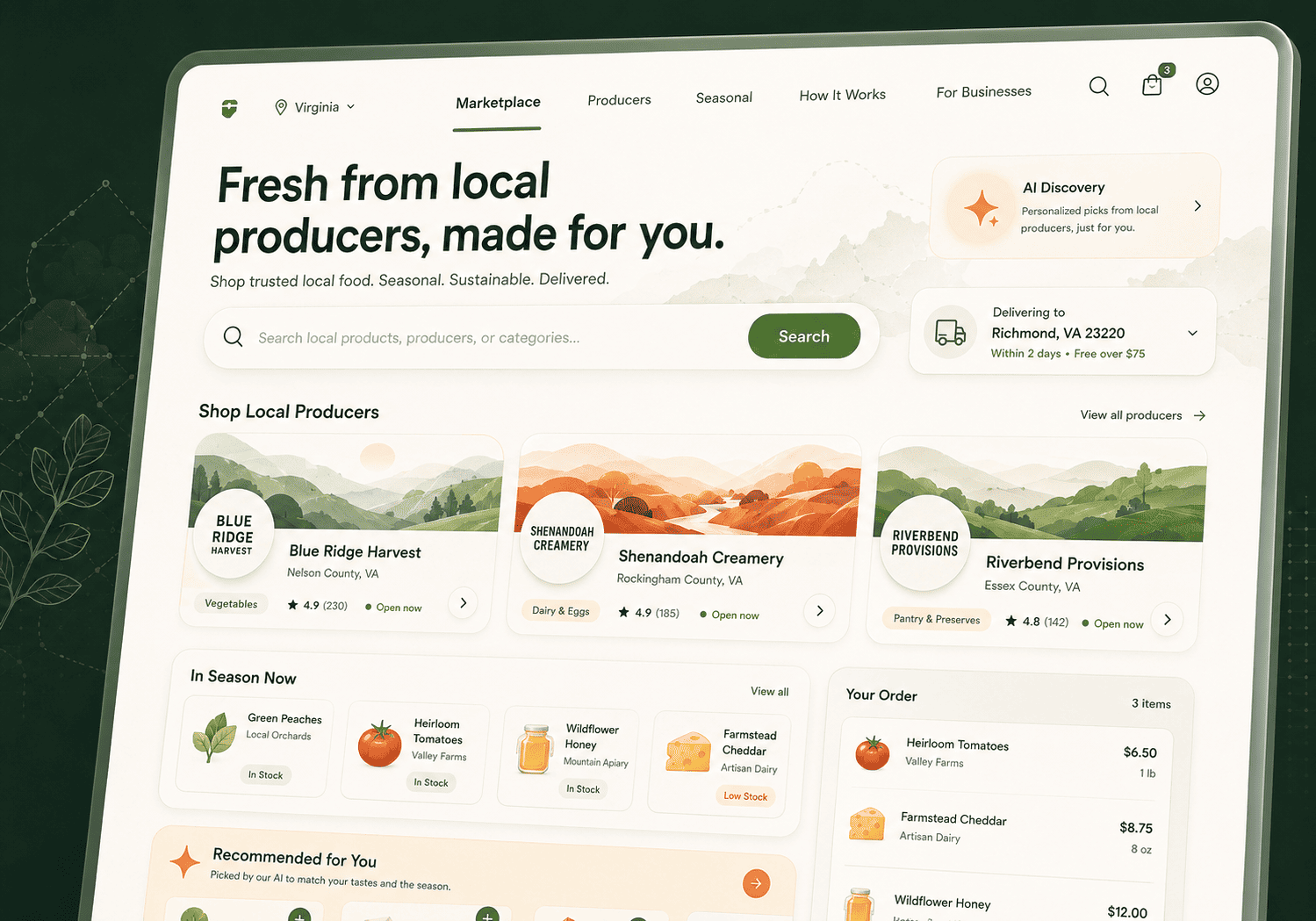
Digital Marketplace for Virginia Farmers, Local Producers & Direct-to-Consumer Food Sales

Plavno developed a custom multi-vendor marketplace for Virginia-based farmers, food producers, and regional sellers to unify product listings, vendor operations, customer ordering, and local fulfillment workflows.

Read More
3x

increase in product discovery relevance

Digital Marketplace for Virginia Farmers, Local Producers & Direct-to-Consumer Food Sales

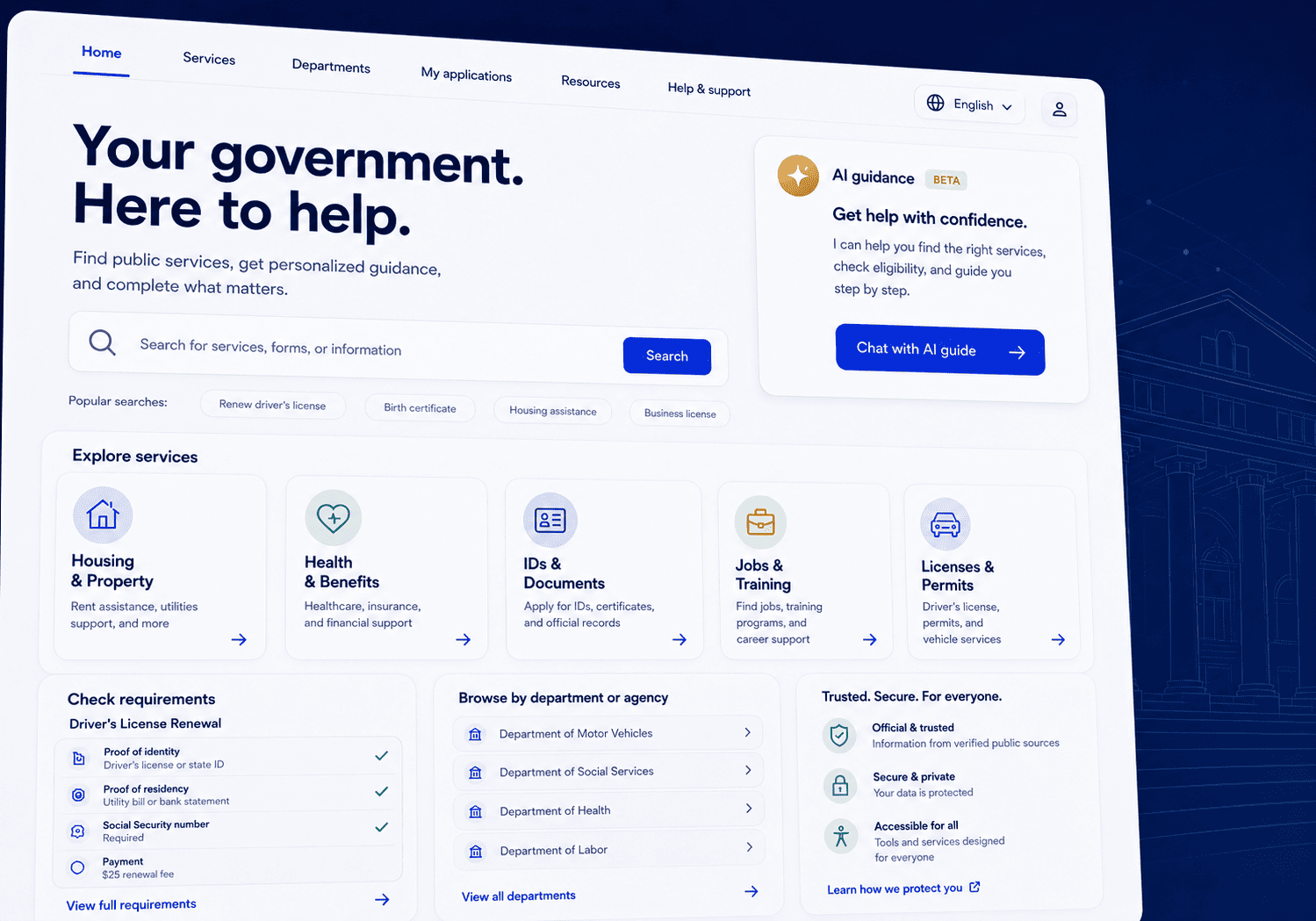
AI-Powered Citizen Services Website Platform for Virginia State Agencies

Plavno developed a modern eGovernment website platform for Virginia state agencies that centralizes citizen services, public information, department content, and an AI-powered guidance agent in one scalable system.

Read More
70%

reduction in routine citizen inquiries to agency staff

AI-Powered Citizen Services Website Platform for Virginia State Agencies

Implementation Checklist

Key Steps Before Launch

  • Data audit — Review source systems for completeness and quality. Identify gaps that could affect model accuracy. Document data ownership and retention policies. This step typically takes 2–3 weeks.

  • Model selection — Choose algorithms that meet latency and accuracy goals. Compare tree‑based models with neural networks on sample data. Record performance metrics for each candidate. Decision is made within 1 week.

  • Integration design — Map API contracts between AI services and existing ERP or CRM. Define error handling and fallback paths. Build mock endpoints for early testing. Integration planning spans 2 weeks.

  • Security review — Conduct threat modeling and apply encryption at rest and in transit. Verify compliance with HIPAA and Virginia privacy statutes. Produce a security checklist for the deployment team. This phase lasts 1 week.

  • Monitoring setup — Deploy Prometheus exporters and configure Grafana dashboards. Set alert thresholds for latency, error rates, and model drift. Test alert delivery channels. Monitoring configuration is completed in 1 week.

Vitaly Kovalev

Vitaly Kovalev

Sales Manager

Ready for a free automation audit?

Schedule a 30‑minute session to review your current processes. We will deliver a cost‑benefit calculator tailored to Richmond businesses.

Talk to Experts

Testimonials

We are trusted by our customers

“They really understand what we need. They’re very professional.”

The 3D configurator has received positive feedback from customers. Moreover, it has generated 30% more business and increased leads significantly, giving the client confidence for the future. Overall, Plavno has led the project seamlessly. Customers can expect a responsible, well-organized partner.

Sergio Artimenia

Commercial Director, RNDpoint

Sergio Artimenia

“We appreciated the impactful contributions of Plavno.”

Plavno's efforts in addressing challenges and implementing effective solutions have played a crucial role in the success of T-Rize. The outcomes achieved have exceeded expectations, revolutionizing the investment sector and ensuring universal access to financial opportunities

Thien Duy Tran

Product Manager, T-Rize Group

Thien Duy Tran

“We are very satisfied with their excellent work”

Through the partnership with Plavno, we built a system used by more than 40 million connected channels. Throughout the engagement, the team was communicative and quick in responding to our concerns. Overall, we were highly satisfied with the results of collaboration.

Michael Bychenok

CEO, MediaCube

Michael Bychenok

“They have a clear understanding of what the end user needs.”

Plavno's codes and designs are user-friendly, and they complete all deliverables within the deadline. They are easy to work with and easily adapt to existing workflows, and the client values their professionalism and expertise. Overall, the team has delivered everything that was promised.

Helen Lonskaya

Head of Growth, Codabrasoft LLC

Helen Lonskaya

“The app was delivered on time without any serious issues.”

The MVP app developed by Plavno is excellent and has all the functionality required. Plavno has delivered on time and ensured a successful execution via regular updates and fast problem-solving. The client is so satisfied with Plavno's work that they'll work with them on developing the full app.

Mitya Smusin

Founder, 24hour.dev

Mitya Smusin

AI Automation Projects Delivered for US Businesses

Proven results in Virginia

Increase patient engagement by 20%
for a senior‑care provider
in Virginia

The provider needed a voice assistant to remind patients of medication and appointments. We built a conversational AI that understood natural language and integrated with the provider’s scheduling system. The solution used ASR, TTS, and a memory graph to personalize interactions. Stack: React Native, TypeScript, Azure Speech. Delivered for a company in Virginia. Patient adherence rose by 20% and staff reduced call volume by 30%.

View full case study →

Cut warehouse slotting time by 28%
for a distribution center
in Virginia

The distribution center struggled with manual slotting, causing delays in order fulfillment. We applied an optimization algorithm that generated optimal slotting plans each night. The algorithm considered SKU velocity and aisle width. Technical stack: Java, OR‑Tools, Docker, PostgreSQL. Delivered for a company in Virginia. Slotting time fell from 12 hours to 8.6 hours, increasing daily throughput.

Reduce data exposure risk by 99%
for a law‑enforcement agency
in Virginia

The agency required automatic redaction of personally identifiable information before data sharing. We built a pipeline that combined OCR with a neural NER model to locate and mask sensitive fields. The system processed 2 TB of records per week with 99% accuracy. Stack: Python, SpaCy, Tesseract, AWS Lambda. Delivered for a company in Virginia. Compliance audits showed near‑zero data leakage incidents.

Eugene Katovich

Eugene Katovich

Sales Manager

Need a custom software solution? We’re ready to help!

Plavno has a team of skilled developers ready to tackle the project. Ask me!

Get a Free Quote

Frequently Asked Questions

AI Automation FAQs

Answers to common concerns from Richmond businesses.

What are the main cost drivers for AI automation projects in Richmond?

Cost drivers include data preparation, model training, and infrastructure hosting. Data preparation often requires cleaning and labeling, which can take 2–4 weeks and cost $15,000‑$30,000 depending on data volume. Model training uses GPU instances; a typical workload consumes $2,000‑$5,000 in compute credits. Hosting costs depend on usage; a steady‑state deployment on a medium‑size EC2 instance runs about $150 per month. Additional expenses arise from integration work with legacy ERP systems, which may need custom adapters. In Richmond, labor rates are slightly higher than the national average, so consulting fees range from $120‑$180 per hour. Clients can control spend by limiting model complexity and using spot instances for training. Our transparent pricing model shows each line item before work begins, so businesses can align the budget with expected ROI.

How long does it take to build AI automation software?

Timelines vary by scope. A minimal proof‑of‑concept can be delivered in 6‑8 weeks. This includes discovery, data sampling, model prototyping, and a sandbox demo. For a full production system, the typical schedule is 4‑6 months. The phases are: discovery (2 weeks), data engineering (4 weeks), model development (6 weeks), integration (4 weeks), testing and compliance (3 weeks), and deployment (2 weeks). Complex integrations with multiple legacy systems may add an extra month. We provide a phased roadmap so stakeholders can see incremental value after each milestone. Early wins often come from automating a single high‑impact workflow, which can be completed in under three months.

Do you work with startups in Virginia?

Yes. We partner with startups across the Richmond and broader Virginia tech ecosystem, including the Innovation Hub in Shockoe Bottom and the biotech cluster near the Virginia Commonwealth University campus. Startups benefit from our flexible engagement model, which allows rapid prototyping and iterative delivery. We have helped early‑stage companies in fintech, healthtech, and logistics build AI automation that scales as they grow. Our pricing includes a startup discount and a shared‑risk option where a portion of fees is tied to achieved performance metrics. By working closely with local incubators, we understand the unique challenges of limited resources and fast‑moving product cycles.

Can AI automation integrate with my existing system?

Integration is built into every project. We design RESTful APIs or gRPC services that sit between the AI engine and your current ERP, CRM, or legacy mainframe. If your system uses SOAP, we provide a translation layer that converts calls to modern protocols. Data mapping is handled with configurable adapters, so no code changes are required on the legacy side. For on‑premise environments, we can deploy containers behind your firewall and expose only the necessary endpoints. Security is enforced with OAuth 2.0 and mutual TLS. Integration testing includes end‑to‑end scenarios that verify data flow and error handling before go‑live.

What industries in Richmond benefit most from AI automation?

Finance firms see immediate gains by automating compliance checks and transaction monitoring. Insurance carriers reduce claim processing time with AI triage. Logistics providers improve shipment tracking and warehouse slotting, cutting labor costs. Healthcare organizations streamline patient intake and medical record abstraction, meeting HIPAA requirements while saving staff hours. Government agencies automate permit reviews and public record redaction, accelerating service delivery. In each case, the common thread is a high volume of repetitive tasks that can be digitized with AI.

Contact Us

This is what will happen, after you submit form

Need a custom consultation? Ask me!

Plavno has a team of experts that ready to start your project. Ask me!

Vitaly Kovalev

Vitaly Kovalev

Sales Manager

Schedule a call

Get in touch

Fill in your details below or find us using these contacts. Let us know how we can help.

No more than 3 files may be attached up to 3MB each.
Formats: doc, docx, pdf, ppt, pptx, xls, xlsx, txt.
Send request