bg image
bg image

Serving Herndon & Virginia

Reduce Operational Overhead with AI Automation in Herndon by 2026

Your team loses hours every week on repetitive manual tasks that machines should handle. We build custom AI automation systems that integrate directly into your existing workflows to cut costs and eliminate errors. This service is for operations leaders in Virginia who need to scale without adding headcount. Get AI Automation cost estimate in 24 hours.

Discuss Project

Overview

Why Herndon Companies Need AI Process Automation in 2026

Herndon sits at the center of Northern Virginia's data corridor yet many local firms still rely on manual data entry and disjointed legacy systems. This friction slows down logistics operations and increases overhead for service providers across Fairfax and Loudoun counties. We implement specific ai automation services that target these bottlenecks directly rather than applying generic tools. For example, our AI automation projects have optimized warehouse slotting logic and automated voice agents for local logistics firms.

Trusted AI Automation Partner for Herndon Businesses. We work with US-based clients, including companies operating in Virginia. We have delivered 10+ AI automation projects in the US market helping clients in Reston, Sterling, and Chantilly reduce operational costs. By integrating custom agents with your current stack we ensure immediate ROI without the disruption of a full platform migration. Our approach focuses on measurable outcomes like reduced handling time and higher accuracy in data-heavy tasks.

Local industries such as government contracting and logistics require strict adherence to compliance standards which manual processes often fail to meet consistently. Our solutions enforce these rules automatically at the point of data entry significantly reducing risk. We built a data anonymization system for California law enforcement that processes sensitive info without human intervention ensuring compliance at scale. This level of rigor is necessary for any business operating in the regulated environments of the DC metropolitan area.

Moving to AI-driven operations is not just about speed but about freeing your human workforce to focus on high-value strategic activities. We analyze your current workflows to identify the highest-impact opportunities for automation. Our team then deploys systems that learn and adapt to your specific business context over time. This results in a smarter organization that can scale its capabilities without linearly scaling its headcount.

Talk to an Expert
Local Friction

Local Friction

Manual data entry bottlenecks in logistics & service providers.

Specific Services

Specific Services

Voice agents & warehouse slotting logic for immediate ROI.

Compliance

Compliance

Strict adherence to regulatory standards & risk reduction.

Workforce Freedom

Workforce Freedom

Focus on high-value strategic activities instead of repetitive tasks.

plavno logo

Build your first
Smart AI project today!

Just tell the Plavno AI Agent about your project - it will ask questions, gather requirements, and propose a tailored solution

Core Architecture

Core Architecture for Intelligent Automation

We build modular automation architectures centered around robust orchestration layers that connect large language models to your business data. Our stack typically utilizes React and TypeScript for front-end interfaces that allow your team to monitor and intervene in automated processes. This choice ensures high performance and type safety across web and mobile dashboards used by human operators. On the backend we deploy Python-based microservices that handle complex logic such as optimization algorithms and retrieval augmented generation pipelines.

This structure was proven effective in our AI warehouse optimization software where we calculated efficient layout plans dynamically. The system used advanced algorithms to determine optimal slotting logic which reduced travel time for pickers. By running these calculations on a dedicated backend service we ensured the main application remained responsive under heavy load. We replicate this pattern for other compute-intensive tasks like fraud detection and recommendation engines.

Security is baked into the core with role-based access control ensuring sensitive actions remain auditable. We utilize DevOps best practices to deploy these services as scalable containerized workloads in the cloud. This allows your infrastructure to handle spikes in demand such as those seen in retail recommendation systems during peak seasons. We also implement automated testing pipelines to ensure that updates to your AI models do not introduce regressions.

Our architecture supports gradual rollouts allowing you to test new automation features on a subset of users or data. This mitigates risk by catching anomalies in production before they affect your entire operation. We prioritize observability giving your engineering team full visibility into the performance and accuracy of the automation agents. This data-driven approach facilitates continuous improvement and faster iteration cycles.

Implementation Process

Deployment Process for Automation Systems

We follow a structured four-phase approach to transition your operations from manual to autonomous workflows.

Clipboard
Team
01

Step 1: Discovery & Audit (1–2 weeks)

We analyze your current operational data and workflow logs to identify high-impact automation opportunities. This phase involves mapping existing business processes and documenting technical constraints. You receive a comprehensive audit report detailing potential cost savings and technical feasibility. We define clear success metrics and KPIs to measure the impact of the automation project.

02

Step 2: Prototype & Design (2–3 weeks)

Our team builds a functional prototype that demonstrates the core automation logic on a limited dataset. We design the user interfaces and system architecture required for full-scale deployment. Clients get to test the prototype in a sandbox environment to validate the workflow logic. This step ensures the final solution aligns perfectly with your business requirements before full development begins.

Search in doc
Rocket
03

Step 3: Integration & Development (3–4 weeks)

We develop the full production system integrating it with your existing CRM, ERP, or database systems. This involves building custom API connectors and setting up the necessary data pipelines. We conduct rigorous unit and integration testing to ensure system stability and data integrity. You receive a stable release candidate ready for pilot testing within your live operations.

04

Step 4: Launch & Optimization (1–2 weeks)

We deploy the automation system to your production environment and monitor its performance closely. Our team fine-tunes the AI models based on real-world feedback and usage patterns. We provide training sessions for your staff to manage and oversee the automated workflows. The project concludes with a handover of documentation and a long-term maintenance plan.

Case Study

We help customers cut
down on development

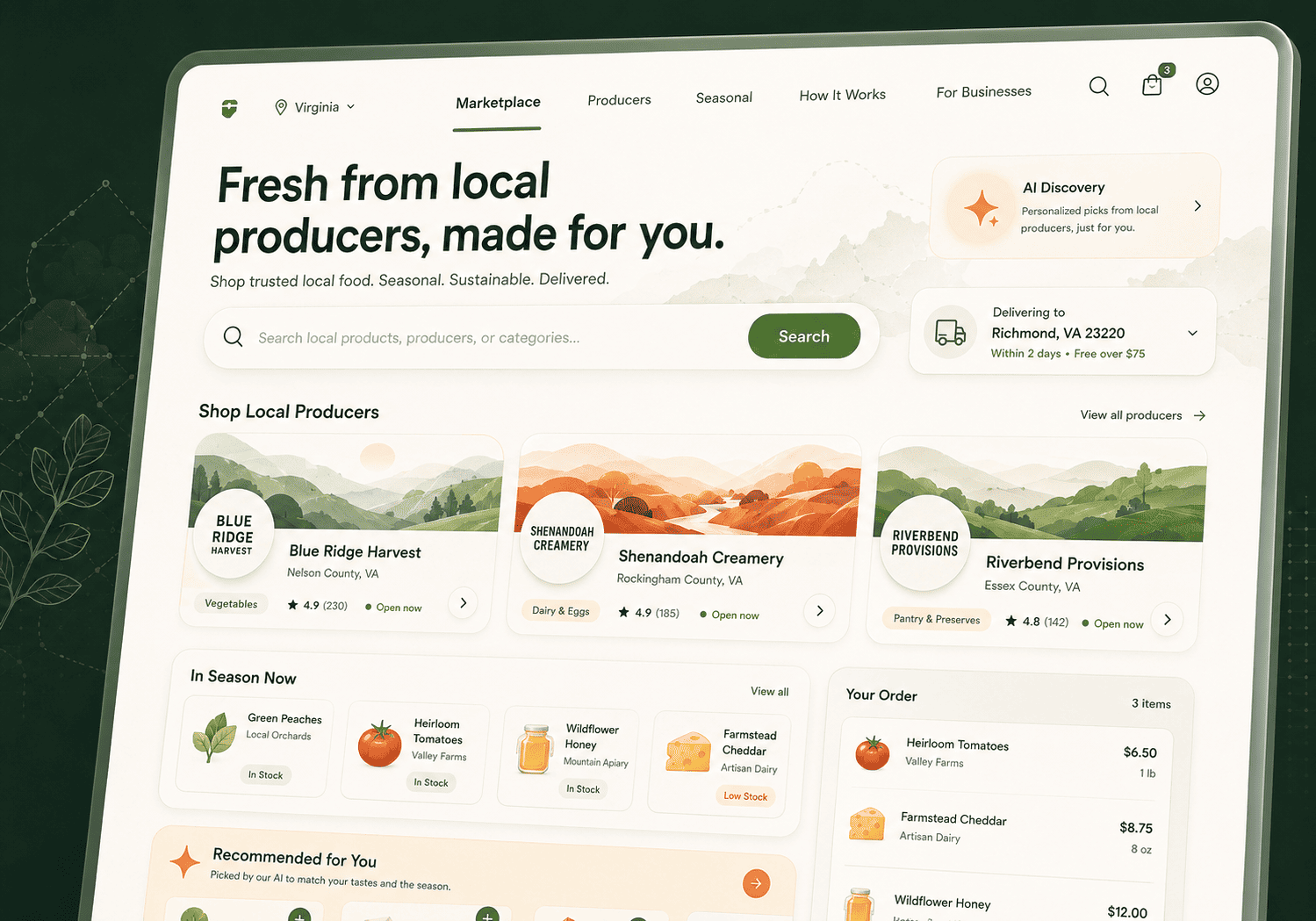
Digital Marketplace for Virginia Farmers, Local Producers & Direct-to-Consumer Food Sales

Plavno developed a custom multi-vendor marketplace for Virginia-based farmers, food producers, and regional sellers to unify product listings, vendor operations, customer ordering, and local fulfillment workflows.

Read More
3x

increase in product discovery relevance

Digital Marketplace for Virginia Farmers, Local Producers & Direct-to-Consumer Food Sales

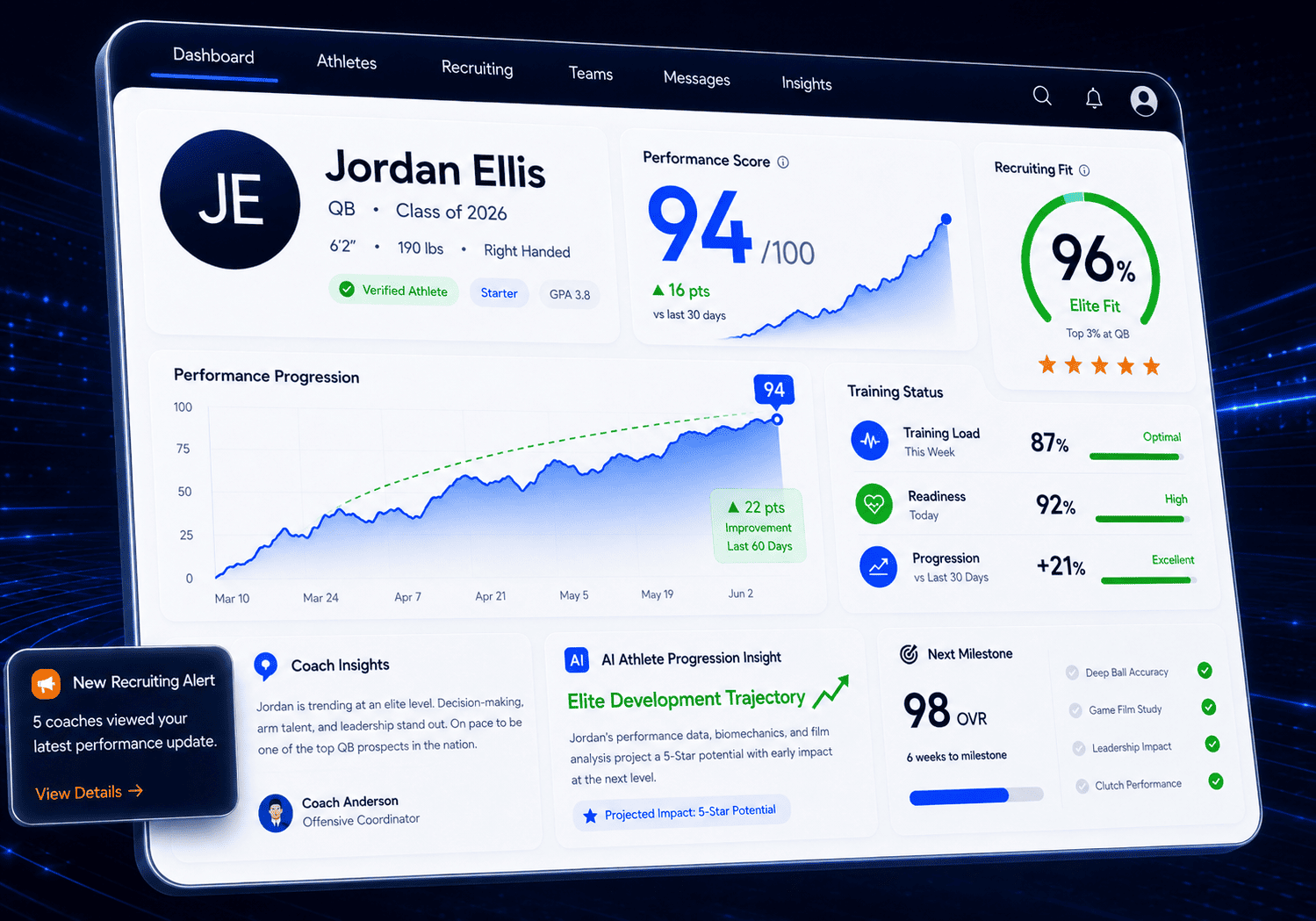
AI-Powered Sports Performance & Recruiting Platform for Virginia Clubs, Academies & Youth Programs

Plavno developed a custom sports technology platform for Virginia-based clubs and academies to combine athlete performance tracking, coach communication, recruiting workflows, and mobile engagement in one ecosystem.

Read More
3x

faster recruiting pipeline

AI-Powered Sports Performance & Recruiting Platform for Virginia Clubs, Academies & Youth Programs

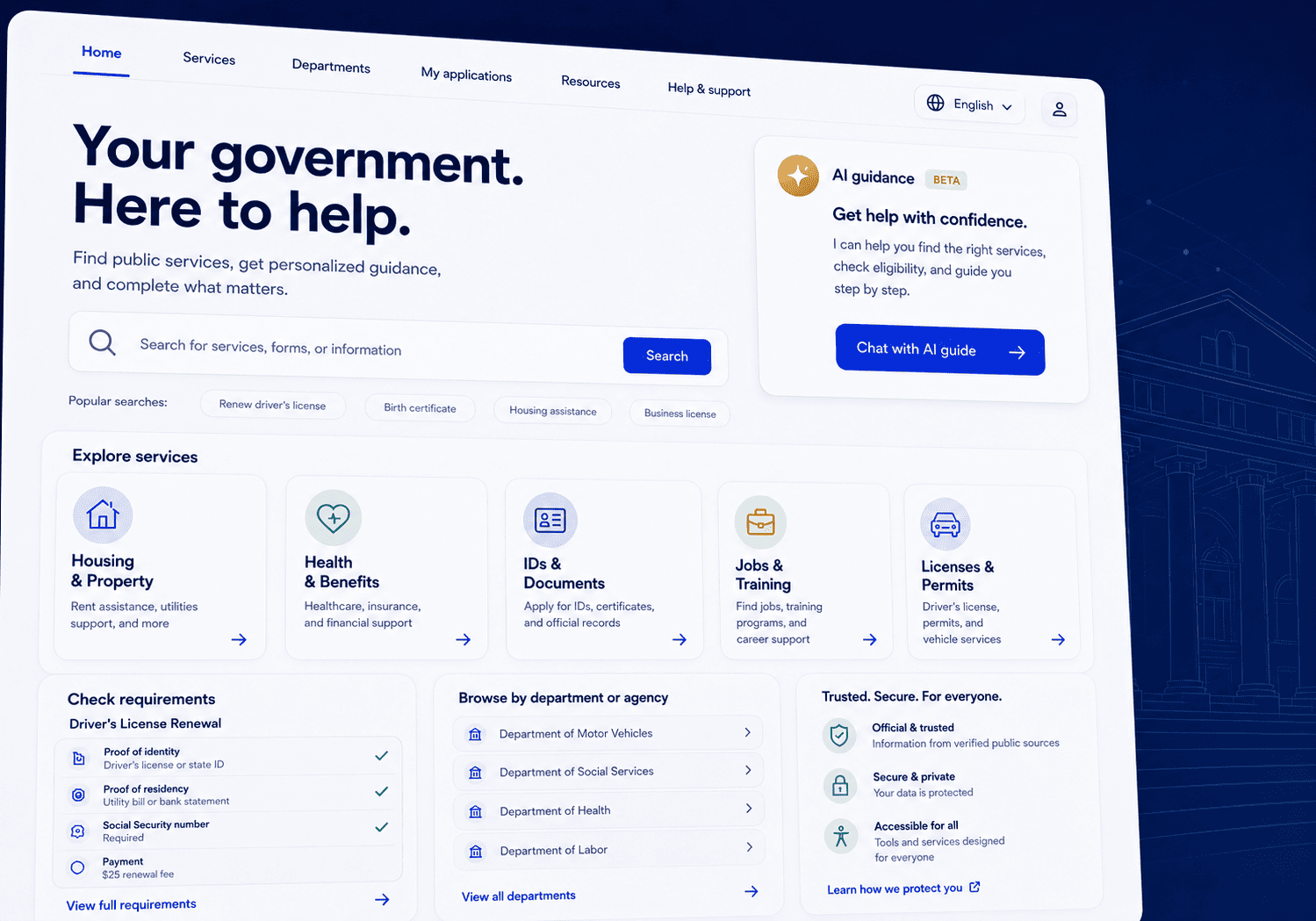
AI-Powered Citizen Services Website Platform for Virginia State Agencies

Plavno developed a modern eGovernment website platform for Virginia state agencies that centralizes citizen services, public information, department content, and an AI-powered guidance agent in one scalable system.

Read More
70%

reduction in routine citizen inquiries to agency staff

AI-Powered Citizen Services Website Platform for Virginia State Agencies

Readiness Check

Readiness Checklist for AI Automation

  • Data Availability — Ensure your historical data is digitized and accessible in a structured format like SQL or CSV. Unstructured data such as PDFs or images requires preprocessing pipelines before AI models can utilize it effectively. You must verify that you have at least six months of clean historical records to train accurate models. Assess the quality of your data for missing values or inconsistencies that could skew automation results.

  • API Access — Confirm that your core software systems have documented APIs for reading and writing data. Automation agents require real-time access to trigger actions in your CRM or inventory management systems. If your legacy systems lack modern APIs we may need to build middleware connectors. Check rate limits and authentication protocols to ensure they support the volume of automated requests.

  • Compliance Framework — Identify the specific regulatory standards such as HIPAA or SOC2 that apply to your automated data processes. You must establish clear data governance policies regarding how AI handles personally identifiable information. Our engineering team implements technical safeguards but your legal team must define the compliance boundaries. Documenting these requirements early prevents expensive re-architecture later in the project.

  • Process Definition — Document the exact step-by-step logic of the manual process you intend to automate. Ambiguities in human judgment calls are difficult to translate into code without clear decision trees. Identify the exception handling steps currently used by your staff when edge cases occur. This documentation serves as the blueprint for the automation logic and ensures no critical steps are missed.

  • Success Metrics — Define quantitative metrics such as time saved or error rate reduction that will signal project success. You need baseline measurements of your current performance to calculate the ROI of the automation initiative. Establish how these metrics will be tracked and reported over time post-launch. Clear metrics help in tuning the AI models and justifying the investment to stakeholders.

Vitaly Kovalev

Vitaly Kovalev

Sales Manager

Get Your Automation Readiness Score

Complete our quick audit to receive a custom readiness report and an automation roadmap for Herndon businesses.

Talk to Experts

Key Capabilities

Key Capabilities We Deliver

Conversational Voice Agents

Conversational Voice Agents

We build intelligent voice assistants that can handle inbound and outbound calls for customer support or logistics. Our systems use ASR and TTS technologies to understand natural speech and respond with human-like cadence. These agents reduce call center hold times by resolving common queries instantly without human intervention. We deployed similar solutions for insurance and logistics clients to automate appointment setting and shipment tracking.

Process Optimization Engines

Process Optimization Engines

Our team develops algorithms that analyze complex logistical data to determine optimal layouts and schedules. We build systems that automatically adjust warehouse slotting based on product velocity and dimensions. This reduces travel time for workers and increases the throughput of your facility. The optimization engine we built for a US client significantly improved warehouse efficiency by dynamically recalcuating paths.

Fraud Detection Systems

Fraud Detection Systems

We implement real-time anomaly detection models that monitor transactions to identify suspicious activities instantly. These systems learn from historical fraud patterns to flag potential risks before financial damage occurs. By automating this review process you reduce the operational cost of manual transaction monitoring. Our work with FinTech startups involves building models that adapt to evolving fraud techniques.

Data Anonymization Pipelines

Data Anonymization Pipelines

We create automated pipelines that scan documents and databases to redact sensitive information like names or social security numbers. This ensures compliance with data privacy laws without slowing down your data processing workflows. The system we built for law enforcement uses advanced pattern matching to identify PII across unstructured text. Automating this process eliminates the risk of human error during manual redaction.

Recommendation & Discovery

Recommendation & Discovery

We engineer personalization engines that analyze user behavior to suggest relevant products or content. These systems increase engagement by presenting the most relevant items to each user dynamically. Our retail recommendation systems utilize collaborative filtering and content-based algorithms to drive sales. We integrate these engines directly into e-commerce platforms to provide real-time suggestions.

Testimonials

We are trusted by our customers

“They really understand what we need. They’re very professional.”

The 3D configurator has received positive feedback from customers. Moreover, it has generated 30% more business and increased leads significantly, giving the client confidence for the future. Overall, Plavno has led the project seamlessly. Customers can expect a responsible, well-organized partner.

Sergio Artimenia

Commercial Director, RNDpoint

Sergio Artimenia

“We appreciated the impactful contributions of Plavno.”

Plavno's efforts in addressing challenges and implementing effective solutions have played a crucial role in the success of T-Rize. The outcomes achieved have exceeded expectations, revolutionizing the investment sector and ensuring universal access to financial opportunities

Thien Duy Tran

Product Manager, T-Rize Group

Thien Duy Tran

“We are very satisfied with their excellent work”

Through the partnership with Plavno, we built a system used by more than 40 million connected channels. Throughout the engagement, the team was communicative and quick in responding to our concerns. Overall, we were highly satisfied with the results of collaboration.

Michael Bychenok

CEO, MediaCube

Michael Bychenok

“They have a clear understanding of what the end user needs.”

Plavno's codes and designs are user-friendly, and they complete all deliverables within the deadline. They are easy to work with and easily adapt to existing workflows, and the client values their professionalism and expertise. Overall, the team has delivered everything that was promised.

Helen Lonskaya

Head of Growth, Codabrasoft LLC

Helen Lonskaya

“The app was delivered on time without any serious issues.”

The MVP app developed by Plavno is excellent and has all the functionality required. Plavno has delivered on time and ensured a successful execution via regular updates and fast problem-solving. The client is so satisfied with Plavno's work that they'll work with them on developing the full app.

Mitya Smusin

Founder, 24hour.dev

Mitya Smusin

Data Integration

Data Integration and Workflow Connectivity

Successful automation requires deep integration with the tools your team already uses daily. We build custom connectors that bridge the gap between AI decision engines and legacy CRMs or ERP systems. For our insurance phone agent project we established seamless telephony integration that routes calls based on real-time AI analysis. This capability extends to logistics tracking where our voice agents query shipment databases to provide live updates to customers.

We prioritize asynchronous data pipelines to ensure that high-volume automation tasks do not block your primary application performance. Our experience with California law enforcement data anonymization demonstrates our ability to handle sensitive data streams securely. We implemented a redaction pipeline that scrubs PII automatically before data leaves your secure environment. This architecture is applicable to healthcare providers in Virginia needing to process patient communications securely.

Integrating with existing systems often involves dealing with inconsistent data formats and outdated API protocols. Our engineering team specializes in building adapter layers that normalize this data for consumption by modern AI models. We used this approach for our AI voice assistant for learning management systems to synchronize student progress across different platforms. This ensures that your automation layer provides a unified view of your data regardless of source.

We also focus on the feedback loops where human inputs correct or refine the AI's output. These interactions are captured and fed back into the system to improve model accuracy over time. For instance our banking voice assistants learn from corrections made by human supervisors during complex customer service calls. This creates a self-improving system that becomes more valuable the longer it operates within your specific business context.

Architecture & Engineering Overview

Engineering Deep Dive

Labor Savings

Labor Savings

Convert fixed labor costs to variable computing costs.

Error Reduction

Error Reduction

Fewer costly exceptions and rework.

Revenue Growth

Revenue Growth

Higher conversion rates via personalization.

For Business: Technical ROI & Risk Mitigation

Implementing AI automation directly addresses the bottom line by reducing the labor hours spent on repetitive tasks. In our warehouse optimization projects we significantly cut down the time required for layout planning which translates to faster fulfillment cycles. For fraud detection systems the immediate reduction in false positives saves substantial revenue that would otherwise be lost to manual review. These gains are not theoretical but are measured against specific baselines established during the discovery phase. Investing in automation yields a clear path to higher margins by converting fixed labor costs into variable computing costs. Furthermore the reduction in human error leads to fewer costly exceptions and rework. Clients in the retail sector have seen improved conversion rates through personalized recommendations that drive higher average order values. The technology pays for itself by finding efficiencies that human operators simply cannot sustain over long shifts.

Assessment

Assessment

Data readiness & infrastructure check.

Proof-of-Concept

Proof-of-Concept

Validate technical feasibility.

Pilot & Governance

Pilot & Governance

Integrate workflow & establish protocols.

Handoff

Handoff

Documentation & team training.

For CTOs: Architecture & Technical Lifecycle

The lifecycle of an automation project begins with a rigorous assessment of data readiness and infrastructure capacity. We move from a proof-of-concept that validates the technical feasibility to a pilot that integrates with one specific business workflow. This staged approach allows CTOs to demonstrate value to stakeholders early before committing to full-scale production deployment. Governance is established early with clear protocols for data access model versioning and rollback procedures. A structured lifecycle ensures that automation initiatives remain aligned with broader business goals rather than becoming isolated science experiments. We establish clear handoff points between our data scientists and your internal engineering teams for long-term maintenance. The transition phase includes comprehensive documentation and training sessions to ensure your team owns the solution. This reduces vendor lock-in and empowers your internal staff to manage the system effectively post-launch.

Python Backend

Python Backend

ML libraries (Pandas, NumPy) & logic.

React & TS

React & TS

Responsive interfaces & visualizations.

Containers

Containers

Orchestration for independent scaling.

Message Queues

Message Queues

Decouple services & improve resilience.

For Engineers: Implementation Details & Stack

Our engineering stack is chosen for its robustness ecosystem support and ability to handle concurrency at scale. We use Python for the backend logic due to its extensive libraries for machine learning and data processing such as Pandas and NumPy. For the user-facing components we utilize React and TypeScript to create responsive interfaces that can render complex data visualizations in real-time. This combination was essential for our memory care voice assistant which required a seamless React Native mobile experience for caregivers. We select technologies that ensure long-term maintainability and performance under the high-throughput conditions typical of Herndon data centers. On the infrastructure side we leverage container orchestration to manage the deployment of microservices. This allows us to scale individual components independently based on demand such as scaling up the ASR engine during peak call hours. We also implement message queues like RabbitMQ or Kafka to decouple services and improve system resilience against failures.

Zero Trust

Zero Trust

Network segmentation & blast radius limits.

Anonymization

Anonymization

Redact PII before storage.

Observability

Observability

Prometheus & Grafana for health tracking.

Automated Scanning

Automated Scanning

Prevent vulnerable code in production.

Infrastructure, Observability & Security

Infrastructure security is paramount especially when dealing with sensitive data in sectors like law enforcement and healthcare. We enforce strict network segmentation and employ zero-trust principles to limit the blast radius of any potential breach. Our anonymization pipeline for California law enforcement was designed to meet stringent compliance standards by redacting PII before storage. We implement comprehensive logging and monitoring using tools like Prometheus and Grafana to track system health and performance metrics. Rigorous observability allows us to detect anomalies such as model drift or latency spikes before they impact business operations. We conduct regular penetration testing and vulnerability assessments to ensure the infrastructure remains hardened against new threats. Our deployment pipelines include automated security scans to prevent vulnerable code from reaching production. This focus on security and compliance ensures that your automation initiatives are sustainable and legally sound.

plavno logo

Build your first
Smart AI project today!

Just tell the Plavno AI Agent about your project - it will ask questions, gather requirements, and propose a tailored solution

Common Questions

Frequently Asked Questions

Technical answers to common questions about AI automation implementation.

What factors drive the cost of AI Automation services?

The cost of AI automation is primarily driven by the complexity of the logic required and the state of your existing data integrations. Simple rule-based automation that connects two well-documented APIs is generally less expensive than systems requiring custom LLM training or complex computer vision. Data preparation is a significant cost driver; if your data is unstructured or scattered across silos we must invest engineering hours in building ETL pipelines. The volume of transactions also impacts infrastructure costs as high-throughput systems require more robust server clusters. Additionally regulatory requirements such as HIPAA or CJIS compliance necessitate extra security layers and auditing features which increase development time. We provide a detailed breakdown after the discovery phase so you understand exactly what you are paying for. Finally the level of ongoing support and model retraining required post-launch affects the total cost of ownership over the system's lifespan.

How long does it take to build AI Automation software?

The timeline for building AI automation software varies significantly based on the scope of the project and the readiness of your data. A minimum viable product (MVP) focused on automating a single specific workflow can typically be delivered within 8 to 12 weeks. This timeline assumes your data is accessible and the integration points are clearly defined from the start. More complex systems that involve training custom models on proprietary datasets or integrating with multiple legacy systems can take 4 to 6 months. We follow an agile development process that allows us to deliver working components in stages so you can see value early. The discovery and design phase usually takes the first 2-3 weeks to ensure we are building the right solution. Development and integration follow with rigorous testing to ensure reliability before the final launch. We also account for time spent on training your team and documenting the system for handover.

Do you work with startups in Virginia?

Yes we actively work with startups throughout Virginia particularly those in the Dulles Technology Corridor and the broader DC metro area. We understand that startups require agility and a focus on speed-to-market that differs from large enterprise engagements. Our engineering teams are structured to support rapid prototyping and iterative development cycles which are essential for startup growth. We have helped multiple FinTech and logistics startups build their core automation infrastructure from the ground up. These engagements often involve building scalable architectures that can grow from a proof-of-concept to a production system handling millions of events. We are familiar with the local venture capital requirements and can help you build technical roadmaps that support your funding milestones. Whether you are in Reston, Arlington, or Tysons we can provide the technical expertise you need to scale.

Can AI Automation integrate with my existing system?

Yes integration with existing systems is a core competency of our automation practice. We specialize in building middleware and API gateways that allow modern AI agents to communicate with legacy software. If your system has a REST or SOAP API we can connect directly to it to push and pull data in real-time. For older systems that lack modern APIs we can implement robotic process automation (RPA) techniques or database connectors to bridge the gap. Our experience includes integrating with CRMs like Salesforce ERPs like SAP and custom-built legacy databases. We ensure that data flows securely and that the automation logic respects the constraints of your source systems. During the discovery phase we audit your integration points to identify the most efficient and stable connection methods.

What industries in Herndon benefit most from AI Automation?

Herndon's economy is heavily concentrated in technology government contracting logistics and professional services all of which benefit immensely from AI automation. Logistics and supply chain companies can automate route planning and warehouse management to handle the high volume of e-commerce traffic in Northern Virginia. Government contractors can use automation to process vast amounts of data for compliance reporting and document management. Financial services firms and FinTech startups in the area utilize automation for fraud detection and customer onboarding. Healthcare organizations nearby use automation for patient scheduling and record management to improve care delivery. Even retail and hospitality businesses in the Dulles area benefit from automated customer support and inventory management. Any industry with high-volume repetitive data entry or decision-making processes stands to gain significant efficiency from these technologies.

Contact Us

This is what will happen, after you submit form

Need a custom consultation? Ask me!

Plavno has a team of experts that ready to start your project. Ask me!

Vitaly Kovalev

Vitaly Kovalev

Sales Manager

Schedule a call

Get in touch

Fill in your details below or find us using these contacts. Let us know how we can help.

No more than 3 files may be attached up to 3MB each.
Formats: doc, docx, pdf, ppt, pptx, xls, xlsx, txt.
Send request