The recent news of Peet’s Coffee deploying SoundHound AI for in-store employee support signals a quiet but massive shift in enterprise AI. While the market obsesses over customer‑facing chatbots and generative customer service agents, the real operational leverage is moving to the backend of the counter—empowering the frontline workforce with voice‑enabled operational intelligence. This isn’t about taking orders; it’s about giving a barista instant, hands‑free access to SOPs, inventory data, and troubleshooting guides without breaking their workflow.
Introduction
The risk for businesses ignoring this shift is operational obsolescence. In high‑turnover environments like retail and hospitality, the traditional “read the manual” approach to onboarding and daily operations is broken. If your staff relies on static paper binders or slow text‑based search to solve a problem during a morning rush, you are bleeding efficiency. This technology matters now because the latency of cloud‑based speech‑to‑text has dropped, and the accuracy of Automatic Speech Recognition (ASR) in noisy environments has crossed the threshold of utility. It is no longer a gimmick; it is a control surface for physical operations.
Plavno’s Take: What Most Teams Miss
Most engineering teams misunderstand the problem entirely. They treat voice AI in retail as a simple wrapper around a Large Language Model (LLM). They assume that if they pipe audio into Whisper and feed the text into GPT‑4, the problem is solved. This is a fundamental architectural error. The core challenge in physical retail environments is not model intelligence; it is the Signal‑to‑Noise Ratio (SNR) and Contextual Awareness.
At Plavno, we see teams fail because they underestimate the acoustic complexity of a cafe, a factory floor, or a warehouse. The model might be brilliant, but if the input audio is distorted by the hiss of an espresso machine, the clatter of a grinder, or background chatter, the system fails. A 95% accuracy rate in a quiet office drops to below 60% in a noisy retail environment, rendering the tool useless. Furthermore, teams miss the importance of session continuity. An employee asking a follow‑up question 30 seconds later, while walking to the stockroom, expects the system to remember the context. If the architecture treats every utterance as a stateless API request, the friction kills the adoption. The “how it breaks” moment is almost always when the network hiccups or the audio stream lags, leaving the employee staring at a dead device while a line of customers waits.
What This Means in Real Systems
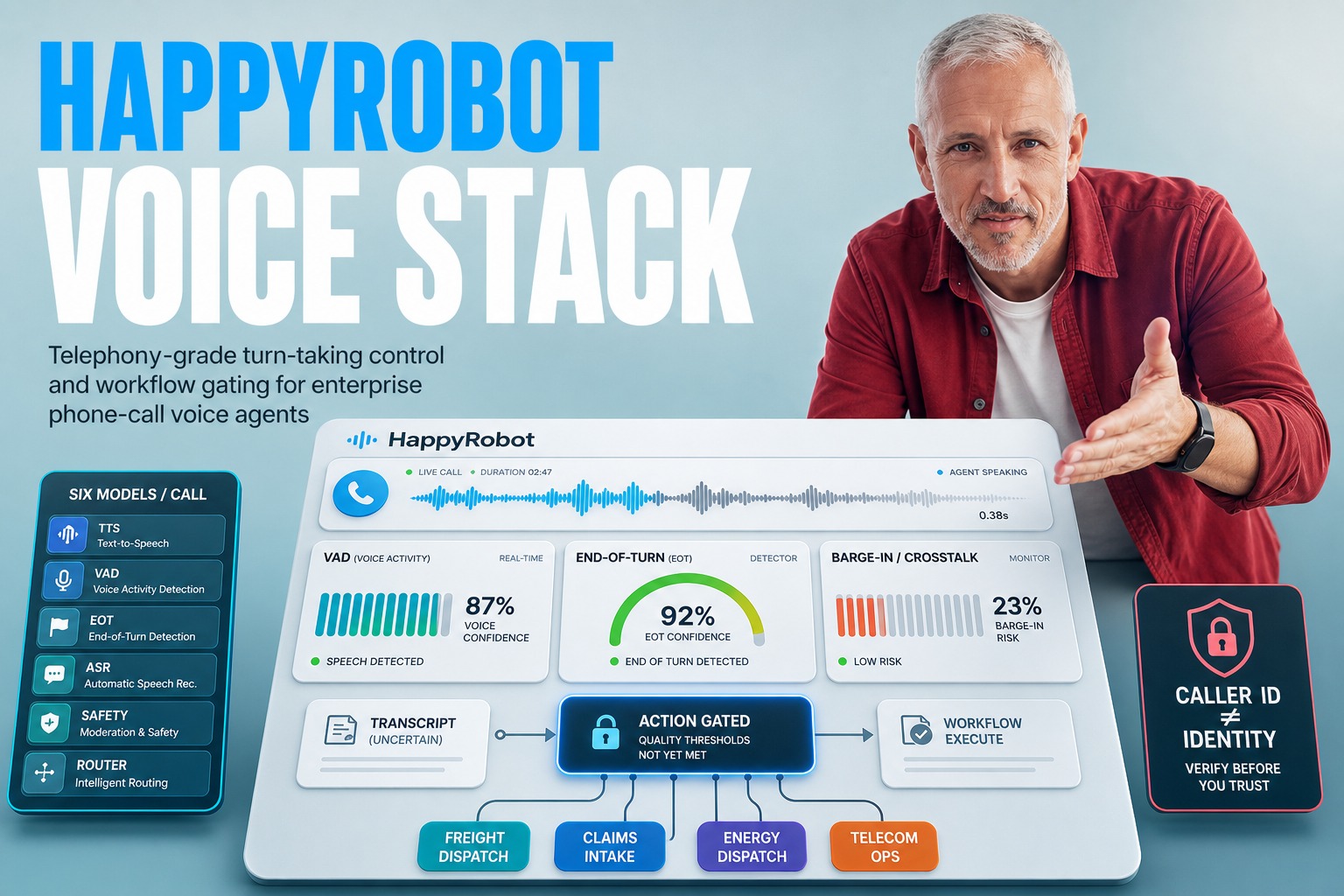
The Audio Pipeline: You cannot rely on raw microphone input. The architecture must include a Digital Signal Processing (DSP) layer on the edge device (the tablet or kiosk). This involves noise suppression, echo cancellation, and automatic gain control before the audio ever touches the network.
Streaming Protocols: Standard REST APIs are too slow. You need WebSocket connections or gRPC streams to push audio chunks to the inference engine in real‑time. This reduces the Time‑to‑First‑Token (TTFT) latency. In a production setting, we target a “listening latency” of under 200ms—the time it takes for the system to acknowledge it heard something. If the latency exceeds 500ms, the user starts repeating themselves, creating a feedback loop of noise.
The Orchestration Layer: Once the ASR converts speech to text, you need an orchestration layer—often built with frameworks like LangChain or custom Python services—that routes the query. Is this a question about inventory? It hits the ERP API via GraphQL. Is it a question about a recipe? It queries a vector database containing the latest PDF manuals.
The Trade‑off: The primary trade‑off here is Edge vs. Cloud processing. Running ASR on the edge (the device) drastically reduces latency and keeps data private, but the models are smaller and less accurate. Cloud processing offers state‑of‑the‑art accuracy but introduces network dependency and recurring costs for data egress. For a coffee chain, the hybrid approach is often best: lightweight wake‑word detection on the edge, heavy processing in the cloud.
Why the Market Is Moving This Way
The market is pivoting toward employee‑facing voice AI because the economics of labor have changed. In the US, the retail and hospitality sectors are facing chronic staffing shortages and turnover rates often exceeding 60‑80% annually. The cost of training a new employee is substantial, often estimated between $3,000 and $5,000 per hire in lost productivity and direct training costs.
Technologically, the barrier to entry has lowered. Vendors are now offering “voice‑optimized” models that are fine‑tuned for specific domains (e.g., food service terminology). Additionally, the commoditization of Vector Databases allows companies to easily index their unstructured internal documents—handbooks, safety guides, troubleshooting wikis—and make them queryable via voice. This shift isn’t just about cool tech; it is a response to the “Knowledge Access Gap.” A new hire knows nothing; the institutional knowledge is locked in the head of the store manager. Voice AI bridges that gap instantly, democratizing access to operational truth.
Business Value
Onboarding Velocity: By providing a real‑time AI assistant that answers “how do I do X?” instantly, you compress the time‑to‑competency. In typical pilots, we see a reduction in onboarding time by 30–50%. A barista who might take 4 weeks to feel confident can be operational in 2 weeks because they have a safety net.
Error Reduction: In regulated environments like food safety or hazardous material handling, voice guidance ensures steps aren't skipped. If a system can walk an employee through a complex cleaning procedure via voice, ensuring they confirm each step, compliance rates improve. We estimate a 20–40% reduction in reportable safety incidents in environments where audio checklists are enforced.
Operational Throughput: During peak hours, managers are often pulled away to answer basic questions. Offloading these queries to an AI system frees up high‑value labor. If a store manager saves 1 hour per day on micro‑questions, that translates to roughly 5–7% of their labor capacity being reallocated to higher‑value tasks like customer experience or inventory management.
Real‑World Application
Scenario 1: Inventory Lookup and Ordering
A store clerk notices they are running low on oat milk during the rush. Instead of logging into a clunky inventory terminal on a separate computer, they tap their badge or a wall‑mounted tablet and ask, “How many units of oat milk are in the back?” The system parses the query, checks the real‑time inventory database, and replies via text‑to‑speech: “You have 4 units. The par level is 10. Would you like to add a case to the order?” The clerk says “Yes,” and the system triggers a webhook to the supply chain software. This reduces stockouts and the time spent on manual ordering.
Scenario 2: Equipment Troubleshooting
An espresso machine displays an obscure error code. Traditionally, the barista would find the manual or call the manager. With voice AI, they ask, “What does error code E04 mean on the Mastrena?” The system retrieves the specific troubleshooting guide from the manufacturer’s PDF, summarizes it, and reads the steps: “Check the steam wand valve. If it is stuck, turn off the machine and wait 10 minutes.” This reduces machine downtime and prevents unnecessary service calls.
Scenario 3: Compliance Auditing
In a pharmacy or healthcare setting, an employee needs to dispose of hazardous waste. They initiate a voice‑guided protocol: “Start waste disposal protocol.” The system walks them through the steps, requiring verbal confirmation for each one (“Did you seal the bag?” “Yes.”). This creates an immutable log of the event for compliance audits, reducing liability.
How We Approach This at Plavno
At Plavno, we don’t just “plug in” a voice API. We approach this as a digital transformation of the physical workflow. We start by mapping the “noise profile” of the environment. We record ambient noise in the client’s facility to train our DSP filters effectively. We are obsessed with Idempotency and Fallbacks. What happens if the Wi‑Fi cuts out? Our systems are designed with local caching so that critical SOPs are available offline, syncing back to the cloud once connectivity is restored.
We also focus heavily on Integration Security. A voice interface that can query inventory or place orders is a powerful attack vector. We implement strict Role‑Based Access Control (RBAC) within the voice logic. A barista should be able to ask about inventory but perhaps not approve a $5,000 capital expenditure order. We treat the voice intent as a command that must be validated against the user’s permissions in the backend system before execution. This ensures that the convenience of voice does not compromise security.
What to Do If You’re Evaluating This Now
- Audit Your Acoustics: Do not buy software before you test the hardware. Record audio in your actual work environment during peak hours. Test your chosen ASR engine against this dataset. If the Word Error Rate (WER) is above 15%, the UX will fail.
- Define the Escape Hatch: Voice will fail. Design the UI so that if the AI misunderstands, the user can seamlessly switch to a touch interface or text input without losing context. Do not force voice as the *only* input modality.
- Beware of Latency: Insist on streaming APIs. If your vendor uses a “record‑then‑upload” model (file‑based), the latency will be unacceptable for operational queries. Target end‑to‑end latency (speech to answer) of under 1.5 seconds.
- Start with “Read‑Only” Use Cases: Do not start with voice commands that modify data (like “delete the user”). Start with information retrieval (“what is the price?”). This builds trust and limits the blast radius of errors.
- Plan for PII: Voice data often contains sensitive information. Ensure your pipeline redacts PII (Personally Identifiable Information) before logging or storing audio for training purposes.
Conclusion
The deployment of voice AI in places like Peet’s Coffee is the canary in the coal mine for a broader industrial shift. We are moving away from screens as the primary interface for frontline work and toward audio‑first, ambient computing. For the CTO or Operations Lead, the message is clear: the keyboard is not the right tool for someone whose hands are full or whose eyes are on a task. The technology is finally ready to handle the noise, but only if you architect for the reality of the physical world. This is about building systems that hear the signal through the noise—literally and figuratively.