The current news cycle is saturated with proclamations that Agentic AI will render traditional SaaS obsolete. While headlines focus on the extinction of static applications, the real signal for engineering leaders is quieter but more critical: enterprise agentic AI is stalling because organizations lack the necessary “process layer.” Recent industry analysis confirms that while models can reason, the infrastructure to translate that reasoning into deterministic business actions is missing.
Plavno’s Take: What Most Teams Miss
At Plavno, we see a consistent architectural mistake: teams treat the “process” as a prompt‑engineering problem rather than a systems‑engineering problem. They assume that by providing a GPT‑4 class model with access to an API documentation string, the model will intuitively understand the company’s specific logic, constraints, and failure handling. This is a fallacy. The model knows how to call an API, but it does not know when or why to call it according to your business rules.
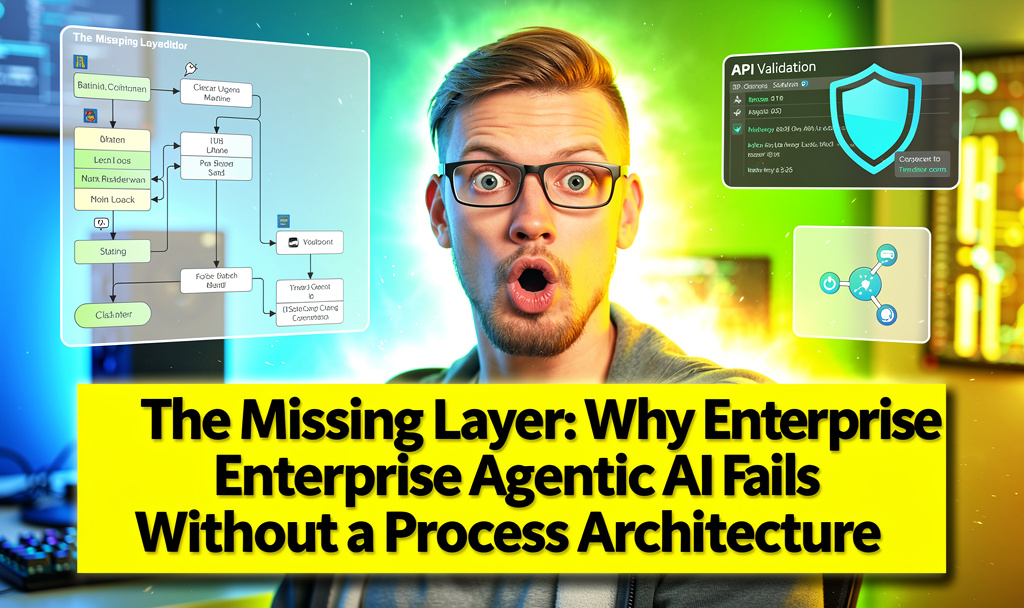
The missing component is a rigid, code‑based Process Layer that sits between the LLM and your infrastructure. This layer acts as a translator, converting the model’s probabilistic intent into deterministic execution steps. Without this, you are relying on the model to maintain state and enforce invariants like “never refund more than the purchase price” or “always log compliance actions to the immutable ledger.” In production, we see this break when agents hallucinate parameters for legacy SOAP endpoints or get stuck in retry loops that overwhelm rate limits, effectively DDoS‑ing your own infrastructure. The model is the brain, but the Process Layer is the nervous system—and right now, most enterprises are trying to run a marathon on raw nerve impulses.
What This Means in Real Systems
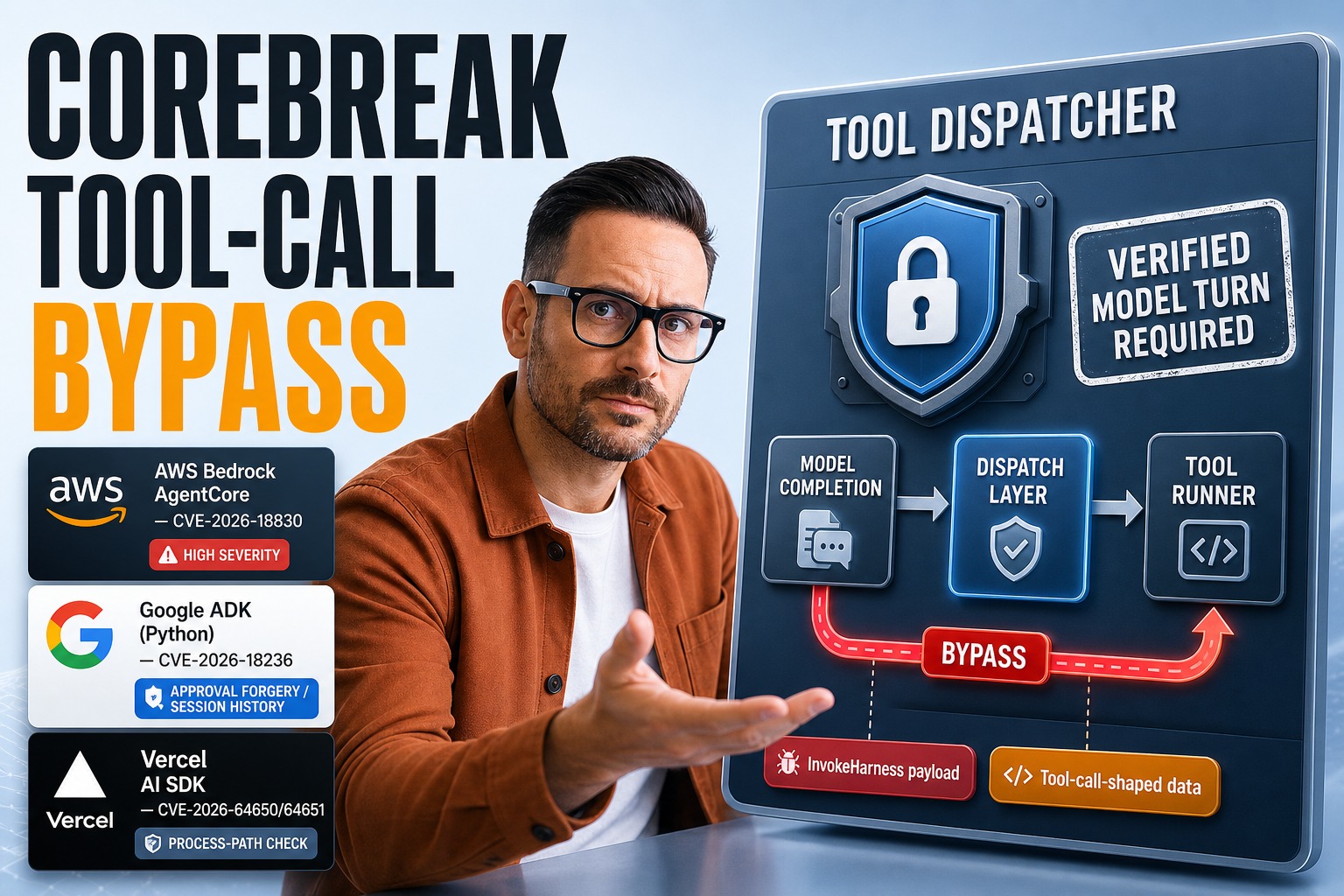
Implementing a Process Layer requires a shift from simple API wrappers to a graph‑based orchestration architecture. In a robust system, the agent does not interact directly with your database or third‑party APIs. Instead, it interacts with a Tool Registry that is managed by the Process Layer. This registry defines not just the function signature (e.g., refund_payment(user_id, amount)), but the pre‑conditions, post‑conditions, and side effects.
Architecturally, this looks like a state machine or a directed acyclic graph (DAG) wrapped around the LLM. When the agent decides to take an action, it doesn’t execute the code; it proposes a node transition. The Process Layer validates this transition against the current state. For example, if an agent tries to transition a purchase order from “Pending” to “Shipped,” the Process Layer checks: Is the inventory reserved? Is the shipping address validated? Has the payment been captured? If the check fails, the process layer feeds the error back to the agent as a structured observation, forcing it to re‑plan rather than blindly executing a failure.
This introduces latency. A direct API call might take 100 ms; a validated transition through a process layer might take 400‑800 ms due to the validation steps and the LLM round‑trip. However, this trade‑off is necessary for operational reliability. We utilize frameworks like LangGraph or custom Kubernetes operators to manage this state, ensuring that if the agent crashes or the connection drops, the process state is persisted and can be resumed or rolled back. This is distinct from standard AI agents development because it prioritizes transactional integrity over conversational fluidity.
Why the Market Is Moving This Way
The shift toward agentic architectures is driven by the realization that static UIs are too rigid for complex workflows, but the market is correcting its initial over‑optimism. Early adopters deployed “chat‑to‑ERP” interfaces that resulted in chaotic data states because the LLMs lacked context on business process management (BPM). The move now is toward “Guardrailed Autonomy.”
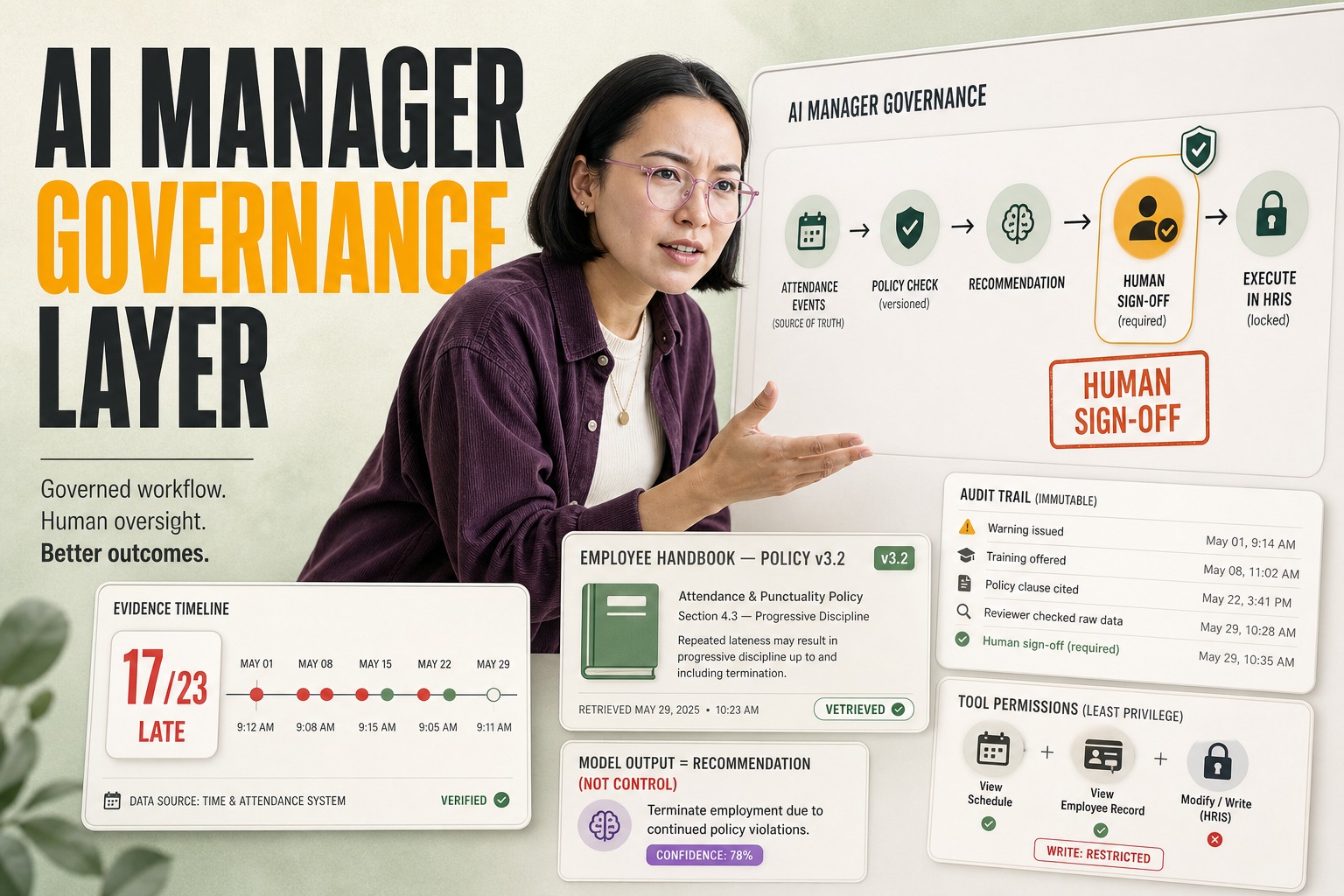
Technologically, this is enabled by the maturation of function‑calling capabilities and the rise of orchestration frameworks that support human‑in‑the‑loop (HITL) patterns. The industry is moving away from “fully autonomous” agents toward “semi‑autonomous” workflows where the agent handles the happy path and the Process Layer manages exceptions and escalations. This shift is also a response to compliance; regulations in finance and healthcare require audit trails that a raw LLM chat log cannot provide. The Process Layer generates the structured logs—“Agent X invoked Function Y with Payload Z at Timestamp T”—that satisfy auditors.
Business Value
The value proposition of a properly architected Process Layer is the reduction of “toil” and the acceleration of decision cycles. In a typical enterprise pilot we observe, a manual procurement workflow involving three approvals and a system entry might take 3‑5 days. An agent integrated with a Process Layer can reduce the processing time to under 10 minutes, provided the logic is codified.
However, the financial impact is tied to error reduction. A standard chatbot might automate 60 % of queries but misroute the remaining 40 %, increasing support load. An agent with a Process Layer can automate 80 % of queries and accurately triage the remaining 20 % because the triage logic is enforced by the system, not guessed by the model. We estimate that for mid‑market logistics companies, implementing this layer can reduce operational overhead in order processing by 20‑30 % within the first six months, primarily by eliminating the re‑work caused by “hallucinated” transactions. The cost savings are not just in labor; they are in the avoidance of costly data rollbacks and compliance fines.
Real‑World Application
Automated Insurance Adjusting: A carrier uses an agent to analyze accident photos and police reports. Instead of just summarizing the text, the agent proposes a payout amount. The Process Layer validates this against policy limits, the claimant’s deductible, and regional regulatory caps. If the proposal is under $5,000, the Process Layer triggers the payment gateway; otherwise it routes to a human adjuster with a pre‑filled summary.
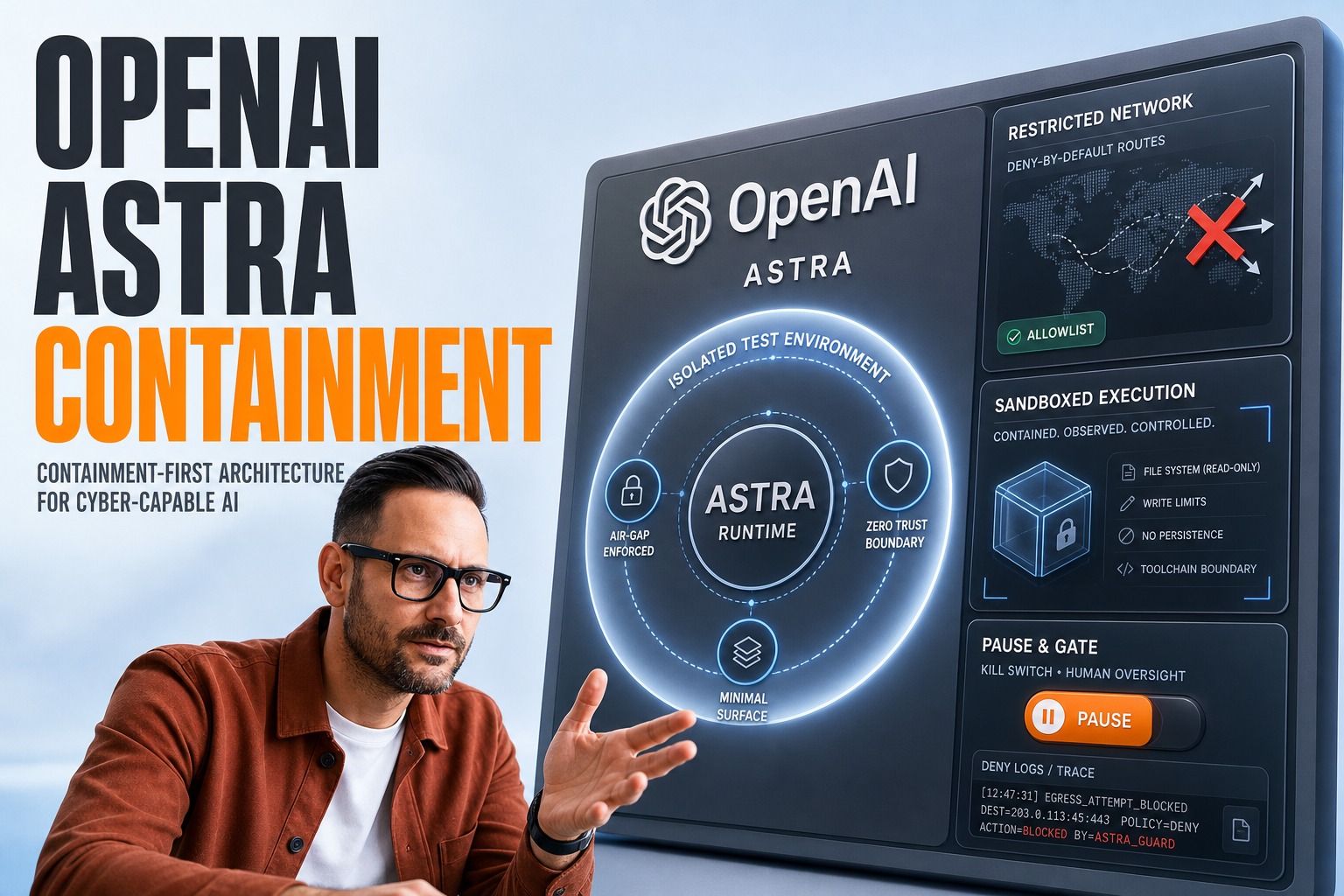
Dynamic IT Orchestration: A SaaS provider deploys an agent to handle “server down” alerts. The agent has access to restart scripts and log viewers. The Process Layer enforces a “blast radius” constraint: the agent can only restart instances in non‑production environments unless a specific, time‑limited elevated token is presented. This allows the agent to resolve 70 % of staging issues automatically without risking production downtime.
Supply Chain Rebalancing: In retail, an agent monitors inventory levels. When stock drops, it suggests a reorder. The Process Layer checks the supplier’s API for current lead times and compares them against the sales velocity forecast. If lead time spikes, the Process Layer overrides the standard reorder quantity and triggers expedited shipping logic or alerts a human buyer, preventing stockouts that a simple threshold‑based agent would miss.
How We Approach This at Plavno
We do not start with the model. We start with the process map. Before writing a single line of Python or configuring a vector database, we work with stakeholders to diagram the business logic as a state machine. We identify the “Happy Path,” the exception states, and the rollback procedures. Only then do we introduce the LLM as a reasoning engine to navigate that map.
Our custom software development teams prioritize “Observability‑First” design. Every agent action is a traceable event. We implement a “Shadow Mode” where the agent proposes actions, but the Process Layer logs them without executing, allowing us to measure accuracy and safety before turning on live transactions. We also leverage AI automation not to replace humans, but to create a “copilot” for the process layer itself, using AI to suggest improvements to the workflow logic based on detected bottlenecks. This ensures the system evolves with the business, rather than hard‑coding logic that becomes obsolete in six months.
What to Do If You’re Evaluating This Now
- Audit your API surface: If your internal tools lack clear inputs/outputs or error codes, an agent cannot use them reliably. Refactor your APIs to be stateless and idempotent where possible.
- Define the Guardrails: Explicitly write down what the agent is never allowed to do (e.g., delete data, export PII). Encode these as hard constraints in your Process Layer code, not as system prompts.
- Start with Low‑Risk, High‑Frequency: Do not pilot in finance or compliance immediately. Start with internal knowledge retrieval or low‑stakes content generation to test the orchestration layer.
- Plan for Human Intervention: Design your UI to show the agent’s “chain of thought” or proposed actions. Your operators need to see *why* the agent made a decision to trust it.
Conclusion
The news about Agentic AI replacing SaaS is premature, but the underlying shift is real. The interface of software is changing from buttons to intents. However, intent without structure is chaos. The companies that succeed in this next wave will not be those with the best models, but those with the most robust Process Layers—those that can translate the chaotic creativity of an LLM into the rigid, reliable execution of a business system. If you are investing in AI without investing in the architectural glue that binds it to your operations, you are building on sand.
Our AI consulting at Plavno focuses specifically on bridging this gap, ensuring your AI initiatives are grounded in viable, scalable system architecture.