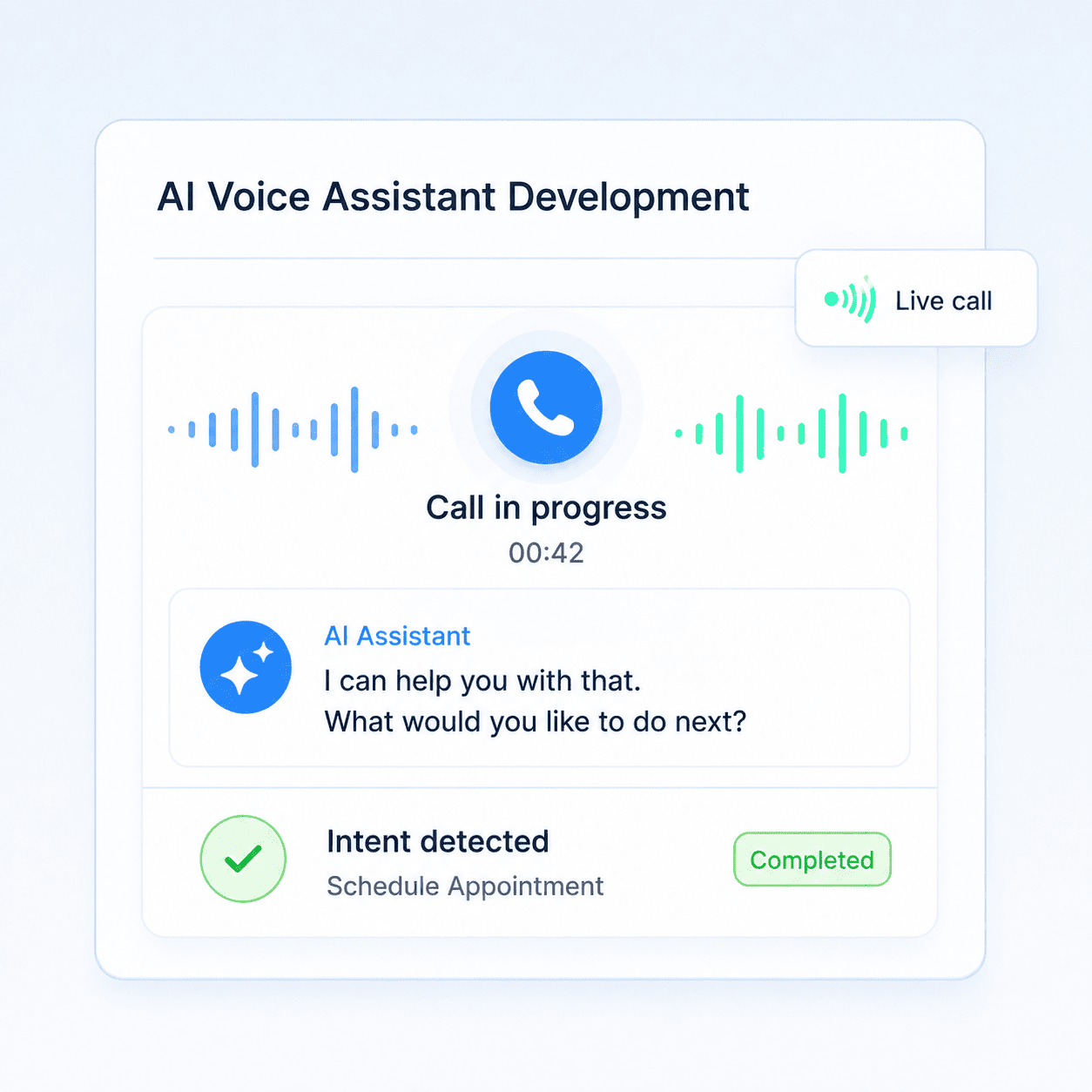
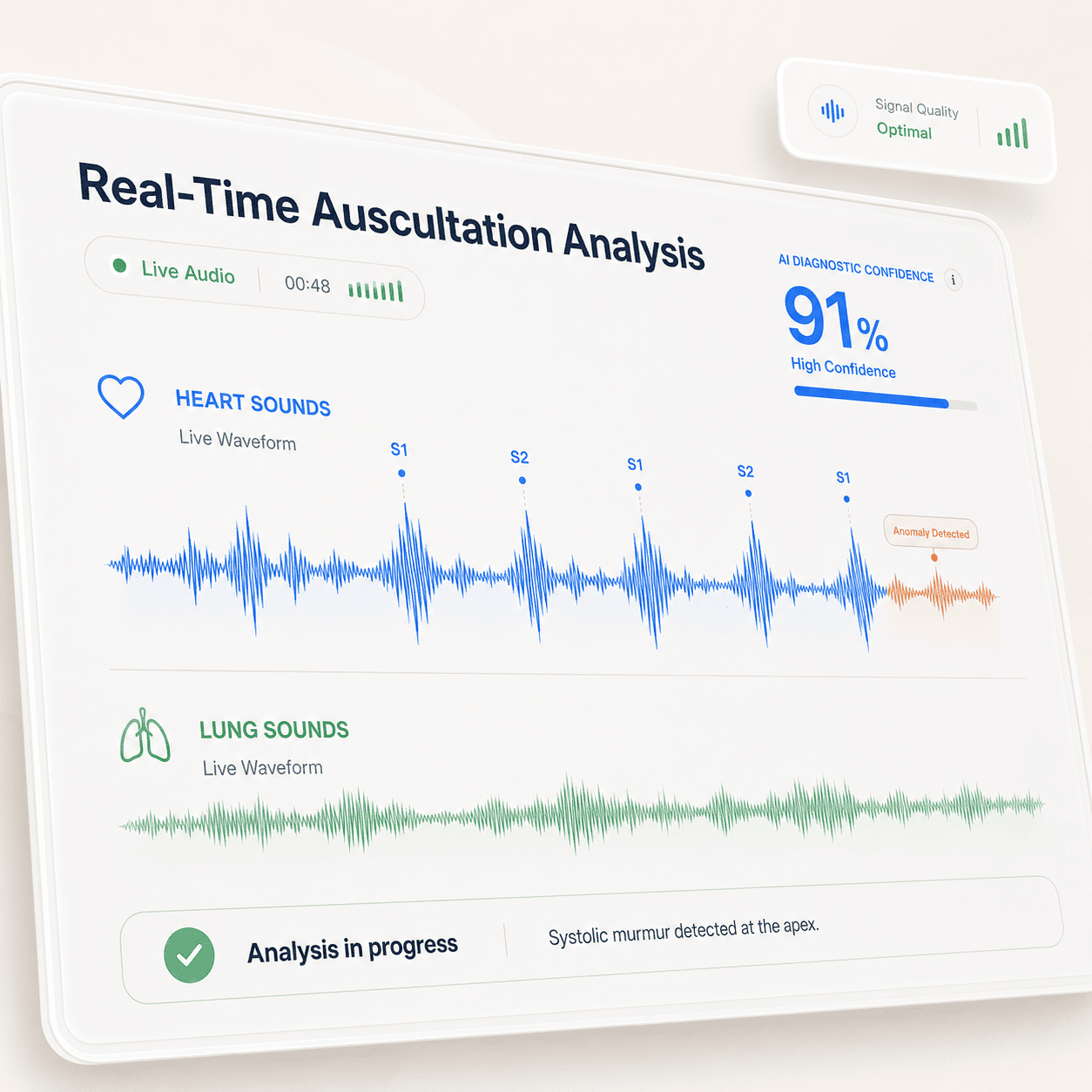
Plavno developed an AI-powered platform for digital stethoscopes that analyzes heart and lung sounds in real time, detects potential anomalies, and gives clinicians a stronger decision-support layer during auscultation.
Overview
The solution was designed to transform a standard digital stethoscope from a listening device into an intelligent diagnostic support tool. The platform connects to a digital stethoscope, processes the incoming audio stream, removes noise, segments the signal, applies AI models, and presents results to the clinician through a clear medical interface. It was architected as a modular component that can be embedded into HIMS, EHR/EMR systems, telemedicine platforms, mobile applications, or cloud-based healthcare services.
Faster identification of potentially abnormal heart and lung sounds during auscultation.
Reduced dependence on subjective interpretation alone in primary diagnostics.
Better support for young clinicians and non-specialist environments through AI-assisted interpretation.
Expanded diagnostic reach for telemedicine and remote healthcare settings.
Stronger foundation for reusable AI-assisted diagnostic modules in broader healthcare ecosystems.
Auscultation remains one of the most basic and widely used methods in clinical diagnosis, but its quality depends heavily on physician experience. Even experienced doctors can face practical difficulties caused by noisy environments, subtle pathological sounds, human factors, high workload, and the need to make quick decisions. For younger clinicians, interpretation is even harder because meaningful recognition of murmurs, wheezes, crackles, and other anomalies requires substantial experience.
The client needed a way to:
Standardize the quality of primary auscultation-based diagnostics
Reduce dependence on purely subjective interpretation
Accelerate detection of potential pathologies
Improve access to high-quality diagnostics in remote regions and telemedicine workflows

The platform needed to:
Process streaming heart and lung sounds in real time
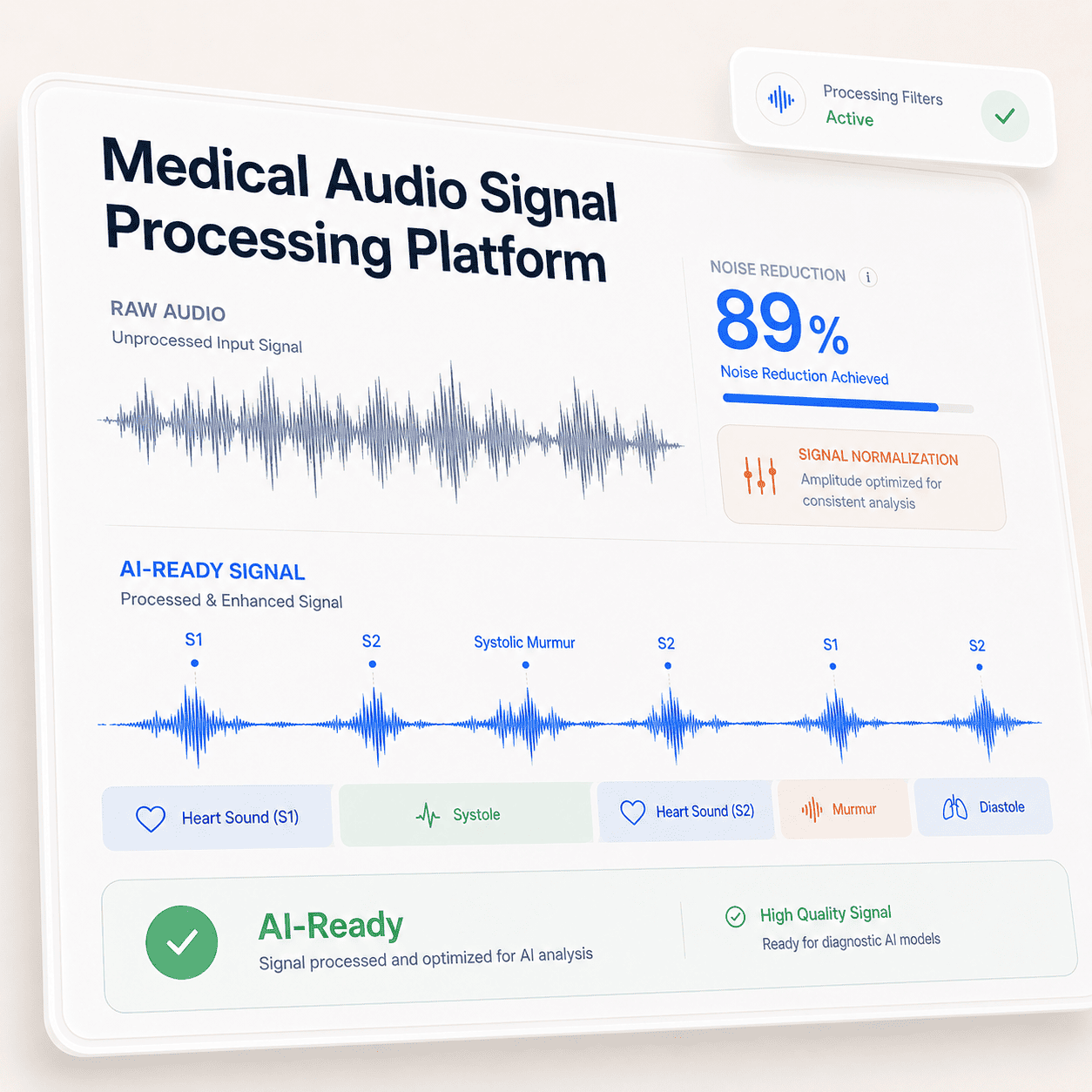
Improve signal quality through denoising and normalization
Segment audio streams into diagnostically useful fragments
Apply AI models with very low latency
Present results in a way that clinicians could understand quickly
Remain flexible enough for local, cloud, or hybrid inference modes
There were also important implementation constraints:
Sound quality varied significantly depending on environment and device usage
The system had to work in telemedicine and mobile scenarios where noise is more common
The platform needed to support recording, storage, export, and re-review of sessions
Integration with existing medical systems had to be possible through APIs and modular embedding

Solution
From live heart and lung audio ingestion to AI-based anomaly detection — Plavno delivers intelligent signal enhancement, noise reduction, waveform visualization, and seamless healthcare API integration, giving clinicians an extra layer of analytical confidence during every examination.
Real-time analysis of heart and respiratory sounds.
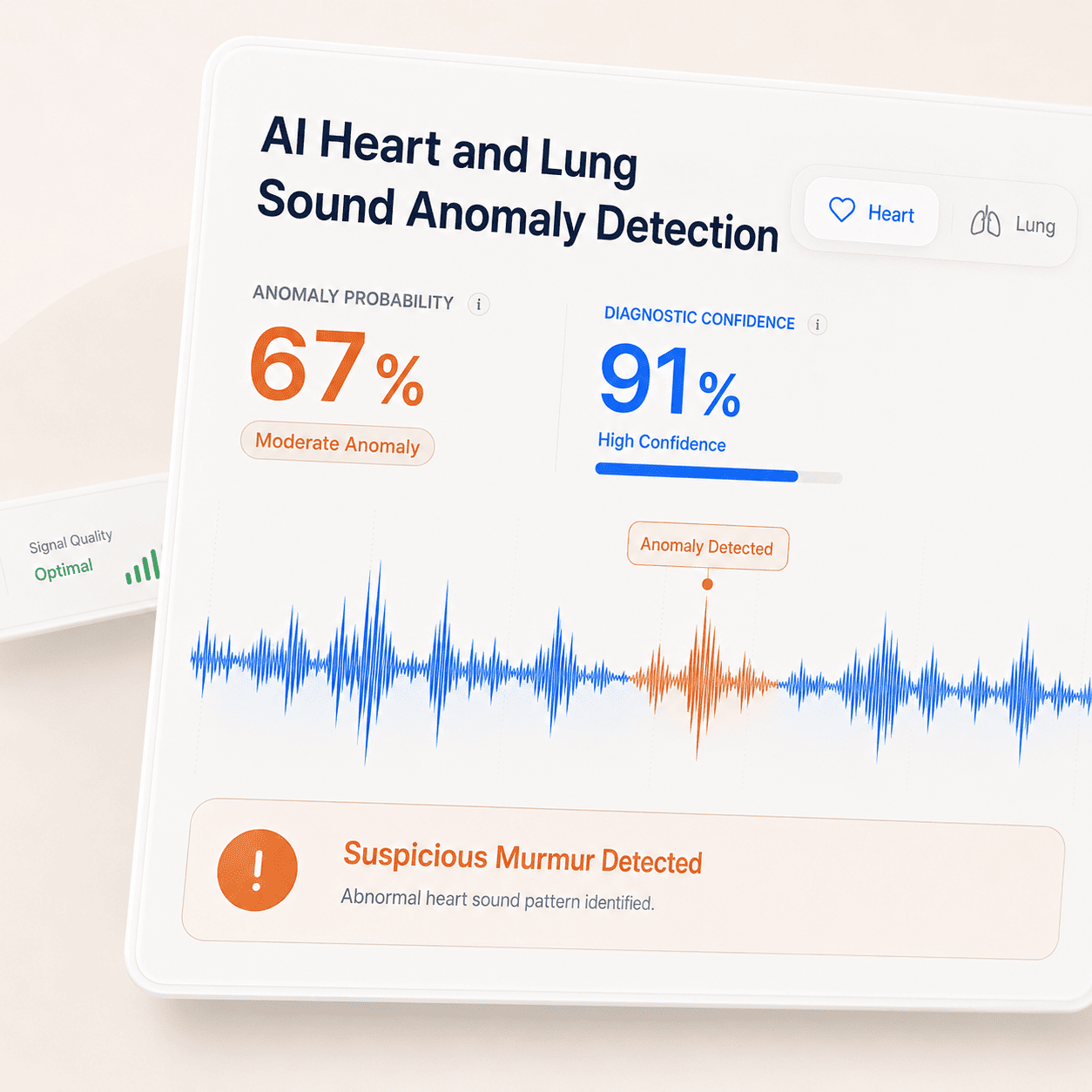
AI model for medical audio classification and anomaly probability scoring.
Noise reduction, background filtering, loudness normalization, and audio segmentation.
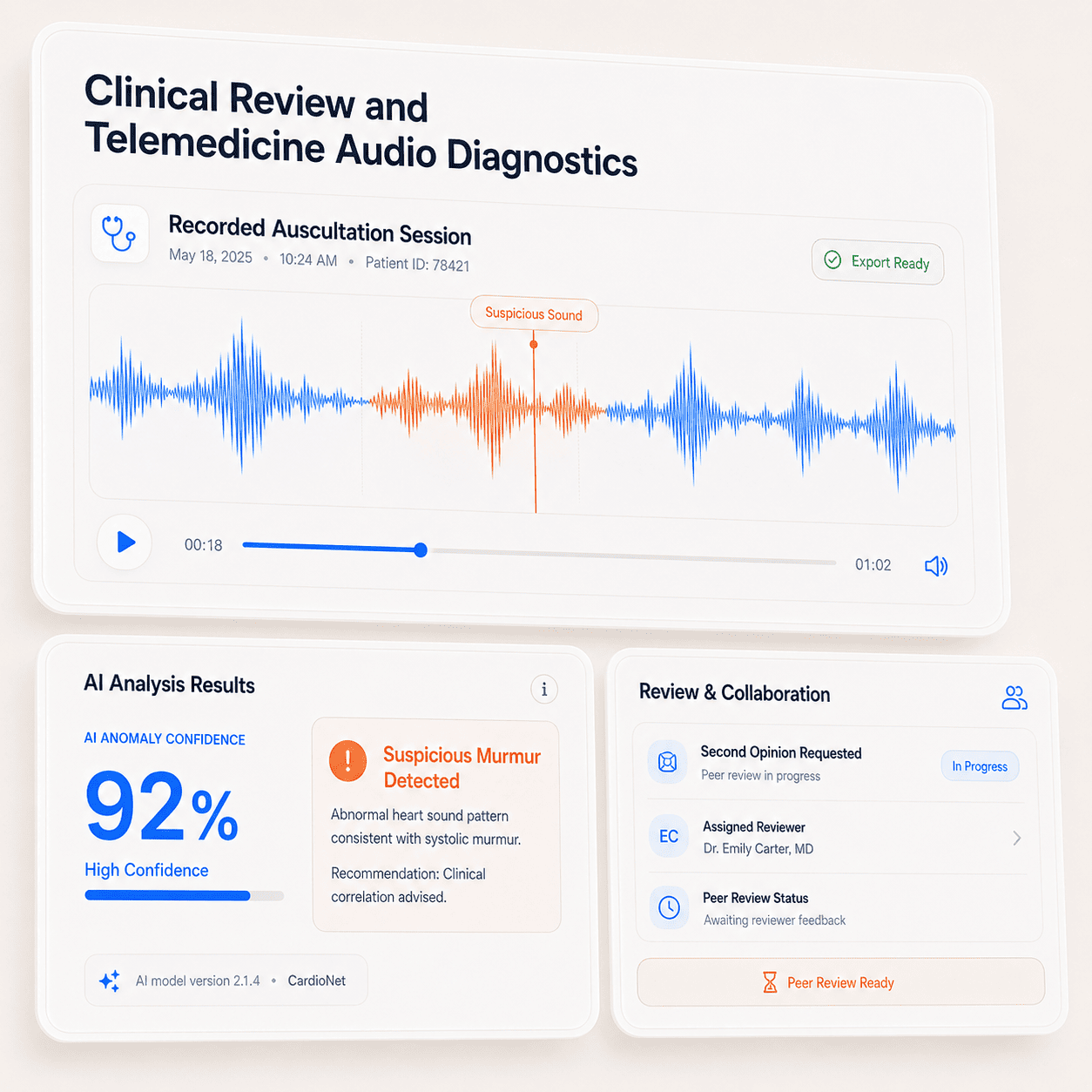
Clinician interface with waveform display, anomaly indicators, real-time status, and study history.
Recording, storage, export, and re-review of auscultation sessions.
Integration readiness for HIMS, EHR/EMR, telemedicine, mobile apps, and cloud services.
Support for local, server-side, or hybrid AI inference modes.
Connect & Stream: The platform connects to the digital stethoscope and receives heart and lung audio in real time.
Clean & Segment: The system reduces noise, normalizes audio, filters interference, and isolates diagnostically relevant sections of the signal.
Analyze & Detect: AI models classify audio patterns, highlight suspicious areas, and produce confidence scores for potential anomalies.
Visualize & Review: The clinician sees a clear interface with waveform data, AI results, anomaly markers, and access to recorded study history for re-evaluation, second opinion, or training.
Supports real-time auscultation workflows without requiring offline post-processing.
Suitable for hospitals, telemedicine providers, mobile care settings, and remote diagnostics.
Works as a modular component inside broader healthcare platforms.
Designed for low-latency inference and scalable deployment.
Can support clinical review, second-opinion workflows, staff training, and longitudinal patient observation.
Architecture Overview
Audio Ingestion Layer: Streaming sound capture from the digital stethoscope feeds the platform in real time.
Signal Processing Layer: Noise reduction, filtering, loudness normalization, and segmentation improve signal quality before AI analysis.
AI Inference Layer: Machine learning models classify heart and respiratory sounds, estimate anomaly likelihood, and generate confidence scores.
Clinical Interface Layer: Waveform visualization, anomaly indicators, study history, and real-time analysis state are shown in a clinician-friendly UI.
Storage & Review Layer: Auscultation sessions can be recorded, stored, replayed, and exported for remote consultations, second opinions, and training use cases.
Integration Layer: The platform is designed for API integration with HIMS, EHR/EMR systems, telemedicine platforms, mobile apps, and cloud medical services.

Value
Delivering cleaner clinical audio, stronger anomaly detection support, and more reliable auscultation workflows
The platform improves raw auscultation audio through noise reduction, filtering, normalization, and segmentation.
The AI layer helps clinicians notice suspicious audio segments faster.
Session storage and replay support second opinion, education, and longitudinal comparison workflows.
The system expands digital diagnostics into telemedicine and remote-care scenarios.
Benchmarks
Built to support real-time auscultation, low-latency audio inference, and scalable healthcare deployment
The system continuously analyzes live auscultation audio without waiting for offline processing.
It can operate locally, on the server, or in hybrid mode depending on infrastructure needs.
The platform is built as a module for broader medical ecosystems.
The architecture supports diagnosis, training, remote consultation, and ongoing patient observation.
Data Protection
Enterprise-grade protection for medical audio, study records, and healthcare system integrations
Recorded sessions and diagnostic results can be stored and accessed within governed medical workflows.
Results and recordings can be transferred into healthcare systems through API-driven integration patterns.
Stored sessions and repeated review improve transparency in AI-assisted auscultation workflows.
Innovative Experience
AI-assisted auscultation platforms for clinical care, telemedicine, and digital diagnostics
Delivery Crew
High-performing developers for growing companies

Eugene Katovich
Sales Manager
Plavno builds AI healthcare solutions that turn medical devices into intelligent diagnostic support systems for clinics, telemedicine, and digital care platforms.
Talk to an ExpertCompetitive Ability
Demonstrating how Plavno transforms a digital stethoscope into an AI-assisted diagnostic support system
Capture Heart & Lung Sounds
Receive streaming audio from the digital stethoscope during the examination.
Clean & Normalize the Signal
Reduce noise, filter interference, normalize volume, and segment the stream into useful diagnostic fragments.
Run AI Analysis
Classify audio patterns, detect potential abnormalities, and calculate confidence scores.
Support Clinical Interpretation
Display waveforms, anomaly indicators, and recorded session history to help the clinician interpret the findings faster and more confidently.
Continuous live analysis.
Clinician-facing visualization.
Session recording and replay.
API-based healthcare integration.
Low-latency audio processing.
Local, server, or hybrid inference.
Telemedicine-ready operation.
Scalable digital diagnostics foundation.
Real-time audio inference.
Medical sound classification.
Noise filtering and segmentation.
Confidence-based anomaly support.
Measurable outcomes delivered by an AI-powered digital stethoscope platform
Clinicians can identify suspicious audio patterns more quickly.
The platform creates a base for future AI-assisted diagnostic product development.
The solution broadens access to high-quality diagnostics in remote and distributed care environments.
The platform reduces overreliance on hearing alone and adds an intelligent interpretation layer.
Medical organizations can improve the quality and consistency of early-stage auscultation-based diagnostics.
Tools We Used
Project Estimator
The estimated time to launch the product
Clear vision of functionality you need
15% discount on your first sprint

Frequently Asked Questions
Find answers to your common concerns
Yes. It is designed to process and analyze both cardiac and respiratory audio in real time.
Yes. It was designed as a module for HIMS, EHR/EMR, telemedicine platforms, mobile apps, and cloud healthcare services.
Yes. The platform supports recording, storage, export, and repeated review of auscultation sessions.
Yes. It supports local, server-side, or hybrid inference depending on the scenario.
About Plavno

Senior engineers + proven AI components to accelerate time-to-value.

From MVPs to enterprise platforms at global scale.

From extension UX to GPU pipelines and global scale.
Testimonials
Contact Us
Discuss your project details
Plavno experts contact you within 24h
Submit a comprehensive project proposal with estimates, timelines, team composition, etc
We can sign NDA for complete secrecy
Plavno has a team of experts that ready to start your project. Ask me!

Vitaly Kovalev
Sales Manager

Fill in the form
to access the case study.