Introduction
This week, Oracle announced a significant convergence of its AI data stack, explicitly targeting the fragmentation that plagues enterprise AI agents. The signal is clear: the market is realizing that throwing an LLM at a fragmented database ecosystem does not produce a reliable autonomous system. What changed is the recognition that for agents to move from demos to production, they require a single, synchronized version of the truth—combining vector search, relational integrity, and graph context into one coherent pipeline. If your data tier is disjointed, your agent is hallucinating, and in regulated industries like insurance or finance, that isn’t just a bug; it is a compliance failure.
Plavno’s Take: What Most Teams Miss
At Plavno, we see a critical architectural mistake that most teams make when deploying agentic systems: they treat the data layer as an afterthought, relying on basic Retrieval-Augmented Generation (RAG) pipelines that sync data to a vector store via batch jobs. This approach works for a prototype chatbot that answers FAQ questions, but it breaks catastrophically when an agent needs to execute a transaction. The core issue is data staleness. If an agent retrieves a policy document or a pricing record that was updated in the CRM four hours ago but hasn’t yet been re-embedded and indexed in the vector database, the agent will act on obsolete information. In production systems, this “sync lag” is a primary source of failure. Teams underestimate the complexity of maintaining transactional consistency between their operational stores and the inference layer. When you build agents that can write emails, move money, or update claims, “good enough” data retrieval is not enough.
What This Means in Real Systems
Architecturally, this shift demands a move away from isolated vector databases as the sole source of truth. We are seeing a requirement for hybrid search architectures that combine semantic search (embeddings) with structured keyword filtering and graph-based traversal. In a real-world stack, this means the agent’s orchestration layer—whether built with LangChain or a custom controller—must be able to query multiple data sources simultaneously and reconcile the results.
For example, an agent processing a loan application cannot just look for “similar documents.” It must query the relational database to check the user’s current debt-to-income ratio (exact match), query the vector store for relevant regulatory guidelines (semantic match), and traverse a knowledge graph to see if the user is connected to high-risk entities (relationship match). This requires a sophisticated routing layer. The failure mode here is latency; querying three different backends and reconciling the results can push response times beyond acceptable limits for real-time interaction. To mitigate this, we see engineers implementing aggressive caching strategies and pre‑computed graph embeddings, but this adds operational overhead. You are trading off system complexity for response speed and accuracy.
Furthermore, the concept of a “single version of truth” implies strict governance over the ingestion pipeline. You cannot simply scrape data and dump it into an index. You need metadata hygiene—tracking source systems, timestamps, and confidence scores. If an agent retrieves conflicting information (e.g., a price from a 2023 catalog vs. a 2024 catalog), it needs a deterministic way to decide which one to trust. Without this, the agent’s reasoning becomes probabilistic noise.
Why the Market Is Moving This Way
The industry is pivoting because the initial wave of “chat with your PDF” applications has hit a wall. Businesses are realizing that LLMs do not actually “know” their business; they only know the context provided in the prompt. As companies attempt to deploy agents for high‑value workflows—like the insurance agents highlighted by Notch’s recent funding—the limitations of unstructured retrieval become obvious. The market is moving toward Agentic RAG, where the agent doesn’t just retrieve context but iteratively queries data to refine its understanding.
This shift is technically driven by improvements in multimodal models and the availability of APIs that allow LLMs to execute function calls (e.g., writing SQL). However, the bottleneck is no longer the model’s reasoning capability; it is the data infrastructure’s ability to serve that reasoning quickly and accurately. Oracle’s move to converge the stack is a response to the operational nightmare of managing separate pipelines for vector, relational, and graph data. Organizations are tired of stitching together five different niche databases to support one AI workflow. They want a unified platform where the vector index is just another column type, updated transactionally alongside the data it represents.
Business Value
Solving the data tier bottleneck has direct economic implications. Consider a typical insurance claims processing pilot. A basic RAG‑based agent might automate 30% of claims but flag 70% for human review due to “low confidence” or conflicting data. By implementing a unified data stack that provides real‑time access to policy history, fraud graphs, and unstructured notes, we typically see automation rates jump to 60–70% in controlled pilots. The value isn’t just in labor reduction; it is in the velocity of decision‑making. A claim that takes three days to settle can be settled in minutes.
However, there is a cost trade‑off. Building a unified data layer is expensive. It requires refactoring legacy data warehouses and implementing real‑time streaming pipelines (e.g., using Kafka or CDC tools). According to typical enterprise benchmarks, the initial infrastructure setup for a high‑fidelity agentic data layer can run 2–3 times the cost of a basic prototype. But the ROI comes from reduced maintenance and lower error rates. In a financial context, a single bad decision based on stale data can cost far more than the infrastructure required to prevent it. We estimate that for high‑volume transactional environments, the cost of data inconsistency—reversals, customer support tickets, and regulatory fines—can exceed $50 per 1,000 transactions, dwarfing the compute cost of the AI itself.
Real‑World Application
Regulated Industries (Insurance & Finance)
Companies like Notch are targeting insurance because the complexity of the data is high. An agent needs to read a policy document (unstructured), cross‑reference it with the customer’s transaction history (structured), and check for exclusions (logic). A unified stack allows the agent to “see” the entire picture without jumping between disconnected systems. The outcome is faster underwriting and fewer leaks due to overlooked clauses.
Supply Chain & Logistics
In logistics, agents manage inventory and routing. They need to query real‑time sensor data (time‑series), supplier contracts (unstructured), and route maps (graph). If the vector store has outdated contract terms, the agent might authorize a shipment that violates a new supplier agreement. A converged data stack ensures the agent always operates on the current contract terms, reducing legal risk.
Enterprise Knowledge Management
Beyond transactions, internal operations benefit. A sales agent needs to pull the latest pricing from the CRM (structured) while simultaneously referencing the latest competitive battle cards (unstructured). By unifying these, the agent doesn’t just quote a price; it justifies the price with the most current competitive intelligence, directly improving win rates.
How We Approach This at Plavno
We do not start with the model. We start with the data lineage. When a client engages us for AI consulting, our first step is to audit the “truthfulness” of their data. We map out where the critical data lives, how often it changes, and what the latency is between a change in the source system and when that change is visible to an AI agent.
We architect systems that prioritize deterministic retrieval. We often implement a “caching with invalidation” pattern, where structured data is fetched via API calls at runtime rather than being embedded, while unstructured data is retrieved via vector search. This hybrid approach ensures that facts like “account balance” are always accurate, while context like “customer sentiment” is derived from embeddings. We also enforce strict schema validation on the data ingested into the vector store to prevent “schema drift” from degrading retrieval quality over time. Our goal is to build custom software engineering solutions that treat the AI agent as a stateless compute layer sitting on top of a rigorously managed stateful data layer.
What to Do If You’re Evaluating This Now
- Audit your sync latency: Measure the time it takes for a data change in your ERP/CRM to appear in your vector index. If it is longer than a few minutes, you have a staleness risk.
- Avoid “Vector‑Only” architectures: Do not try to force all your data into embeddings. Relational data should stay relational. Use the LLM to generate SQL queries for structured data and use vector search for unstructured context.
- Plan for Hybrid Search: Ensure your infrastructure supports keyword, vector, and filter‑based search simultaneously. Pure semantic search often fails on specific identifiers like part numbers or policy IDs.
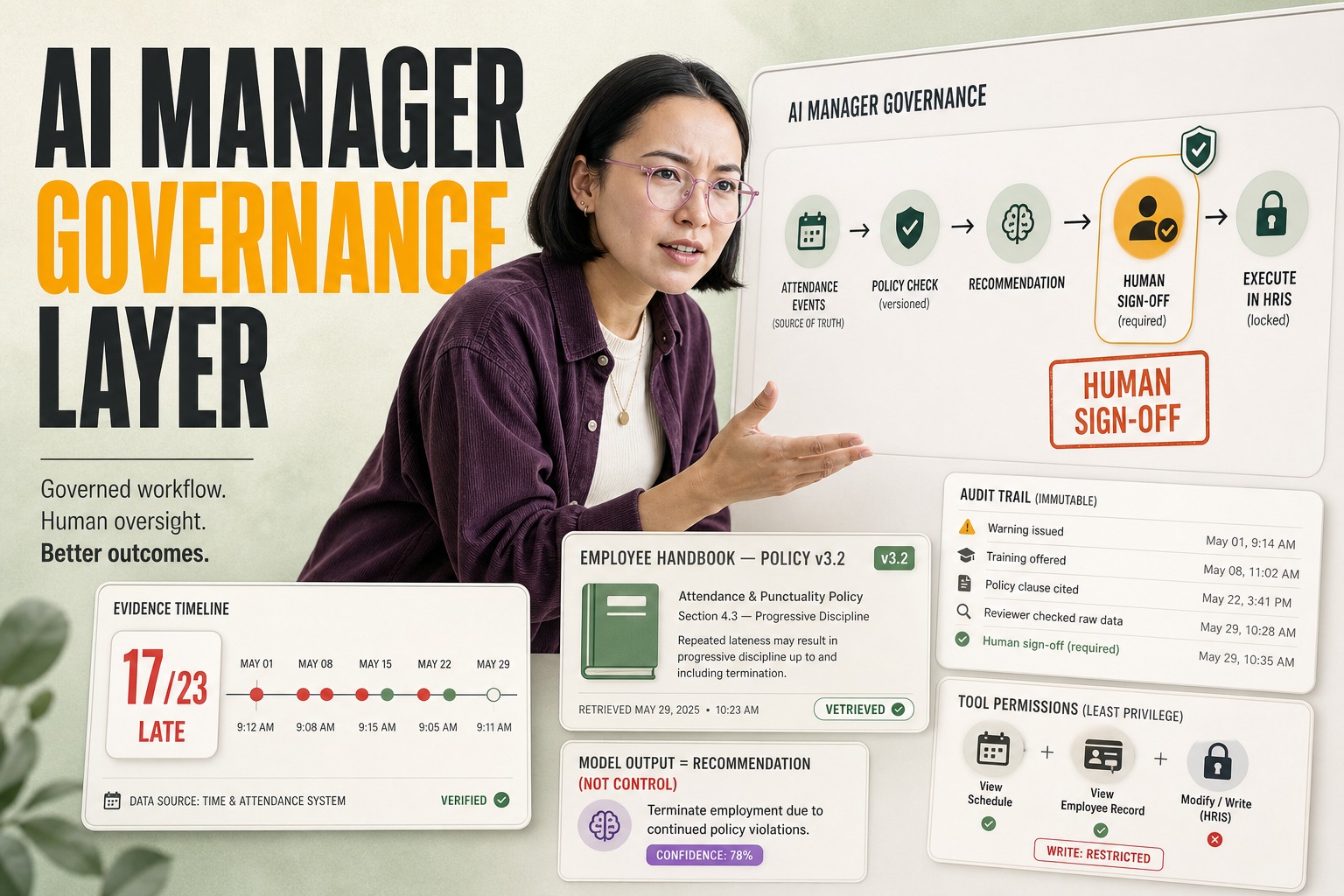
- Implement Observability: You need to know which data source the agent used for a decision. Log the retrieval step as rigorously as you log the inference step.
Conclusion
The news isn’t just that Oracle is releasing new features; it is that the industry is admitting that digital transformation via AI requires a foundational overhaul of data infrastructure. Agentic AI cannot run on fragmented, stale data. The winners in this space will not be those with the best prompts, but those with the most unified, real‑time, and accessible data layers. If your agent can’t trust your data, it can’t act on your behalf.
 Chat GPT
 Perplexity
 Claude
 Gemini