What is ultra‑low latency voice AI? → Voice AI that responds in under 200 ms, eliminating perceptible pauses.
Why is latency more critical than model size now? → Human conversation breaks at 250 ms; any longer feels unnatural, regardless of model quality.
How does Gradium claim to achieve this speed? → By engineering a serving stack optimized for real‑time inference and edge deployment.
What decision does this force on a CTO today? → To invest in inference infrastructure rather than simply selecting the newest model.
Will other vendors catch up without architectural changes? → Unlikely, because latency is bound by serving stack, not model parameters.
Why Ultra‑Low Latency Shifts the Engineering Focus from Model Choice to Inference Stack
At Plavno we see Gradium’s emphasis on sub‑200 ms response times as a decisive signal that the primary bottleneck for voice AI is no longer the model itself but the surrounding inference pipeline. The claim is that even the most advanced neural voice generators become irrelevant if the serving layer cannot deliver results instantly. Consequently, enterprises must allocate budget and talent to real‑time serving frameworks, edge‑optimized hardware, and network topology before they chase the latest model headline. This shift reorders the traditional AI stack, making infrastructure the strategic priority for any organization that wants conversational experiences to feel natural.
| Provider | Latency Focus | Deployment Model |
|---|---|---|
| Gradium | Ultra‑low (sub‑200 ms) | Edge‑first, cloud‑hybrid |
| ElevenLabs | Standard (≈300 ms) | Cloud‑centric |
| Google Gemini | Variable (≈250 ms) | Cloud‑centric |
Quick Answer: Architecture for Ultra‑Low Latency Voice AI
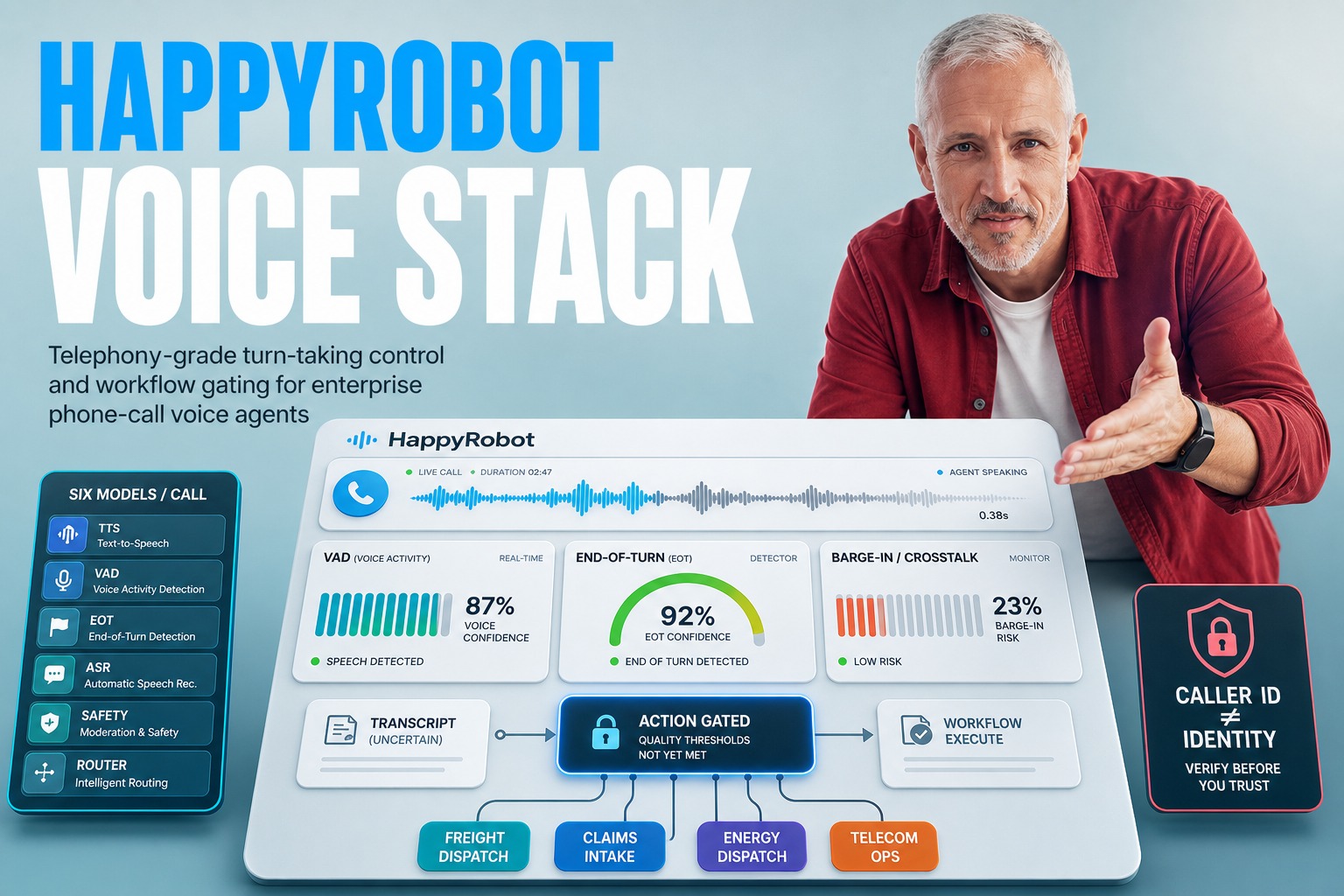
To achieve sub‑200 ms voice responses, a CTO should build a pipeline that places the inference engine on edge nodes as close to the user as possible, leverages a lightweight model container, and couples it with a high‑throughput, low‑latency transport layer such as gRPC over HTTP/2. The serving stack must include a model‑warm‑up cache, a real‑time scheduler, and a hardware‑accelerated inference runtime (GPU or ASIC) that can process audio frames within a few milliseconds. By prioritizing these components, the overall system latency drops dramatically, delivering the seamless conversational experience that end‑users expect.
Key rule: In ultra‑low latency voice AI, the serving stack determines user experience more than the model’s raw performance.
Core Components of an Ultra‑Low Latency Inference Stack
The architecture that delivers instant voice responses consists of four tightly coupled layers. First, a lightweight model container must be compiled for the target hardware, stripping away any unnecessary layers to reduce initialization time. Second, a real‑time scheduler orchestrates inference calls, ensuring that audio frames are processed in a deterministic order without queuing delays. Third, a high‑speed transport protocol such as gRPC over HTTP/2 minimizes network overhead between client and edge node. Finally, a hardware accelerator—whether a GPU, TPU, or custom ASIC—executes the model within a few milliseconds, completing the end‑to‑end loop.
- Model containerization: Tailor the model binary to the edge hardware, removing extraneous dependencies.
- Real‑time scheduler: Guarantees deterministic execution order and prevents request backlog.
- Low‑latency transport: Use gRPC over HTTP/2 to shave milliseconds off network round‑trip.
- Hardware acceleration: Deploy GPUs, TPUs, or ASICs optimized for audio inference.
- Warm‑up cache: Keep model weights resident in memory to avoid cold‑start penalties.
Edge vs. Cloud: The Latency Trade‑Off in Voice AI Deployments
While cloud providers offer massive scalability, the physical distance between user devices and data centers introduces unavoidable propagation delays that can push response times beyond the conversational threshold. Edge deployment, by contrast, brings compute resources within milliseconds of the user, effectively eliminating the majority of network latency. However, edge nodes have limited compute capacity and require careful workload partitioning. Organizations must therefore evaluate the cost‑benefit curve of distributing inference workloads across edge and cloud, balancing the need for instant responsiveness with the desire for centralized model management.
Gradium’s Strategic Bay‑Area Expansion Signals a Talent‑Centric Play for Latency Mastery
Gradium’s recent $100 million seed round, bolstered by Nvidia and other heavyweight investors, includes a plan to open an office in the Bay Area. This move underscores the startup’s belief that proximity to the world’s leading AI research hubs—Anthropic, Google, Meta, OpenAI—will accelerate its ability to recruit engineers skilled in low‑latency inference and edge deployment. By embedding its team among the top talent pool, Gradium aims to refine its ultra‑low latency voice stack, positioning itself ahead of competitors that still rely on traditional cloud‑centric pipelines.
Talent Acquisition as a Latency Advantage
The Bay Area’s concentration of experts in real‑time systems, GPU programming, and network optimization provides Gradium with a pipeline of engineers who can fine‑tune inference runtimes to the sub‑200 ms target. This talent advantage translates directly into product performance, as each new hire brings specialized knowledge that shortens the feedback loop between research and production. For enterprises evaluating voice AI vendors, the depth of a provider’s engineering talent becomes a critical factor, often outweighing headline model metrics.
Competition Landscape: From ElevenLabs to Google Gemini
Gradium’s claim of ultra‑low latency places it in direct competition with established players such as ElevenLabs, valued at $11 billion, and Google’s Gemini, which already integrates voice capabilities. While these rivals boast large model families and extensive cloud infrastructure, their primary focus remains on model quality and scale rather than sub‑200 ms responsiveness. Consequently, enterprises seeking instantaneous voice interactions may find Gradium’s edge‑first approach more aligned with their user‑experience goals, even if the competing models offer broader language coverage.
Model size vs. latency: Larger models often increase inference time, making them unsuitable for real‑time voice.
Infrastructure focus: Gradium invests heavily in edge serving, whereas competitors prioritize cloud scaling.
Talent depth: Access to low‑latency specialists differentiates Gradium from firms with broader but shallower engineering teams.
Investor backing: Nvidia’s involvement signals confidence in Gradium’s hardware‑accelerated roadmap.
Customer traction: Early adoption by Renault showcases real‑world validation of the latency promise.
Practical Steps to Evaluate Latency in Voice AI Projects
When assessing a voice AI solution, engineers should first define the end‑to‑end latency budget that aligns with human conversational thresholds—typically 200 ms for seamless interaction. Next, they must benchmark the provider’s inference pipeline using realistic audio payloads, measuring both cold‑start and steady‑state performance. It is essential to examine the provider’s deployment model: does it offer edge nodes, what hardware accelerators are used, and how does it handle model warm‑up? Finally, validate the consistency of latency under load, ensuring that spikes do not breach the defined budget during peak usage.
Principle: Latency budgets must be set before model selection; otherwise, performance guarantees are meaningless.
Measuring End‑to‑End Latency: A Methodical Approach
To capture true user‑perceived latency, engineers should instrument the full request path—from microphone capture through network transport, inference, and audio playback. Timing markers placed at each stage allow isolation of bottlenecks, revealing whether delays stem from network jitter, model warm‑up, or hardware saturation. By aggregating these measurements across diverse device types and network conditions, teams can build a latency profile that informs capacity planning and guides optimization efforts.
- Capture timestamp at audio input: Record the moment the user’s speech enters the system.
- Log network round‑trip: Measure the time taken for the audio packet to reach the inference node.
- Track inference start/end: Use high‑resolution timers inside the model container.
- Record playback start: Note when synthesized audio begins playing on the client device.
- Aggregate statistics: Compute median, 95th percentile, and worst‑case latency across runs.
Cost Implications of Edge‑Centric Inference
Deploying inference workloads to edge locations incurs additional capital expenses for hardware, as well as operational overhead for monitoring distributed nodes. However, the cost of latency—measured in user churn, reduced conversion, and lower satisfaction scores—often outweighs these expenditures. Enterprises should therefore model the total cost of ownership (TCO) by incorporating hardware acquisition, edge‑node licensing, and maintenance against projected revenue gains from improved user experience.
Scaling Ultra‑Low Latency Voice AI to Millions of Requests
Achieving sub‑200 ms latency at scale requires a combination of horizontal edge node replication and intelligent traffic routing. Load balancers must direct requests to the nearest node with sufficient compute capacity, while autoscaling mechanisms provision additional accelerators as demand spikes. Moreover, model sharding—splitting a large voice model across multiple devices—can further reduce per‑request processing time, ensuring that latency remains within the target envelope even under massive concurrent loads.
Caching Strategies for Consistent Latency
Effective caching reduces the need to reload model weights for each request, eliminating cold‑start delays that would otherwise breach latency budgets. By maintaining a warm model instance in memory and pre‑loading frequently used audio snippets, the system can respond instantly. Additionally, result caching for repeated queries can bypass inference entirely, delivering near‑zero latency for common phrases while still preserving naturalness for novel inputs.
Security, Compliance, and Latency: Balancing Safety with Speed
Enterprise deployments must reconcile stringent security requirements with the need for ultra‑low latency. Encrypting audio streams, enforcing authentication, and adhering to data residency regulations can introduce processing overhead. To mitigate this, security functions should be co‑located with inference nodes, allowing encryption and de‑cryption to occur at the edge without adding network hops. Moreover, employing hardware‑based trusted execution environments (TEEs) can protect model integrity while preserving performance.
- Edge encryption: Apply TLS termination at the edge to avoid extra hops.
- Authentication tokens: Use lightweight JWTs to validate requests quickly.
- Data residency: Store audio buffers locally to comply with regional regulations.
- Trusted execution: Deploy models within TEEs to protect intellectual property.
- Audit logging: Capture minimal metadata to satisfy compliance without impacting latency.
Vendor vs. In‑House: Deciding Where to Build the Low‑Latency Stack
Enterprises must choose between integrating a third‑party solution like Gradium’s ultra‑low latency offering or constructing a bespoke stack internally. The decision hinges on internal expertise, time‑to‑market pressures, and the strategic importance of voice AI to the business. If the organization already possesses a team versed in edge deployment, GPU programming, and real‑time systems, building in‑house may yield greater control and cost efficiency. Conversely, leveraging a specialist vendor accelerates deployment, reduces operational risk, and provides immediate access to a proven low‑latency pipeline.
Assessing Vendor Lock‑In Risks
When evaluating a vendor, scrutinize the portability of the model and the openness of the serving APIs. Proprietary runtimes that lock you into a single cloud provider can impede future migrations and increase long‑term costs. Opt for solutions that expose standard inference endpoints (e.g., ONNX Runtime) and support deployment across multiple edge locations, ensuring that you retain flexibility as requirements evolve.
Plavno’s Approach to Ultra‑Low Latency Voice AI Projects
At Plavno we combine deep expertise in real‑time inference with a proven delivery framework that spans edge provisioning, model optimization, and compliance engineering. Our teams partner with clients to design a latency‑first architecture, selecting the right hardware accelerators and integrating them with robust orchestration pipelines. By leveraging our experience in AI agents development, we help organizations achieve sub‑200 ms response times without sacrificing model quality or security. Our services include AI agents development, AI automation, AI consulting, and AI voice assistant development.
Assess latency requirements: Define the conversational threshold and map it to system components.
Select hardware accelerators: Choose GPUs, TPUs, or ASICs that meet the performance budget.
Design edge topology: Position inference nodes strategically to minimize network hops.
Implement real‑time scheduling: Ensure deterministic execution and warm‑up caching.
Validate end‑to‑end latency: Conduct rigorous testing under realistic load conditions.
Emerging Trends: Adaptive Models and Dynamic Edge Allocation
Future voice AI systems will likely incorporate adaptive models that adjust their computational footprint based on device capabilities and network conditions. Coupled with dynamic edge allocation—where workloads migrate in real time to the most optimal node—these advances promise to further shrink latency while preserving model fidelity. Organizations that invest now in flexible, latency‑centric architectures will be well positioned to adopt these innovations without costly overhauls.
Takeaway: Latency‑first design is the decisive factor for next‑generation voice AI, not the sheer size of the model.
Final Recommendation for Enterprise Decision‑Makers
If your organization prioritizes seamless conversational experiences, allocate your Q3 budget to upgrade inference infrastructure, adopt edge‑first deployment, and partner with a vendor that demonstrates proven sub‑200 ms performance. Model selection should become a secondary consideration, evaluated only after the latency budget is satisfied. By rebalancing resources toward real‑time serving stacks, you future‑proof your voice AI initiatives against the inevitable rise of latency‑sensitive applications.
Take the Next Step with Plavno
We can help you architect and deploy an ultra‑low latency voice AI solution that meets your business goals. Reach out to discuss a tailored roadmap that aligns with your performance targets and compliance requirements.
 Chat GPT
 Perplexity
 Claude
 Gemini