SnapLogic announced two new pillars – AI Gateway and Trusted Agent Identity – as part of its Agentic Integration Platform. The launch is more than a feature add‑on; it turns AI agents from experimental demos into enforceable, auditable components of enterprise workflows. The immediate risk is clear: without a centralized auth/authorization layer and per‑user identity propagation, a rogue agent can silently overwrite ERP records, exfiltrate data, or trigger compliance violations across dozens of downstream systems. In the next few weeks, any CTO that plans to embed LLM‑driven agents into order‑to‑cash or claim‑processing pipelines will have to decide whether to build a custom gatekeeper (costly, error‑prone) or adopt SnapLogic’s out‑of‑the‑box solution.
Plavno’s Take: What Most Teams Miss
Most enterprises treat AI agents like “smart scripts” and focus on model selection or prompt engineering. The blind spot is governance at the integration layer. When an agent calls a SOAP endpoint or a modern REST API, the call is usually made with a service‑account token that has blanket privileges. If that token is compromised, the attacker gains the same reach as the agent – often all of the ERP’s write permissions. In production, this translates to:
- Data‑corruption windows that can last minutes before alerts fire, because most monitoring tools only watch for anomalous traffic volume, not for who initiated the call.
- Compliance gaps: GDPR and SOX require per‑user audit trails for any data modification. Agents that act on behalf of a user but hide behind a generic service account fail that audit.
- Cost leakage: Unlimited agent calls to high‑cost LLMs (e.g., GPT‑4o at $0.03 per 1K tokens) can balloon when the gateway throttling is missing, leading to unexpected OPEX spikes.
The mistake is treating the agent as a stateless function and ignoring the stateful identity that business processes demand.
What This Means in Real Systems
Architecture Sketch
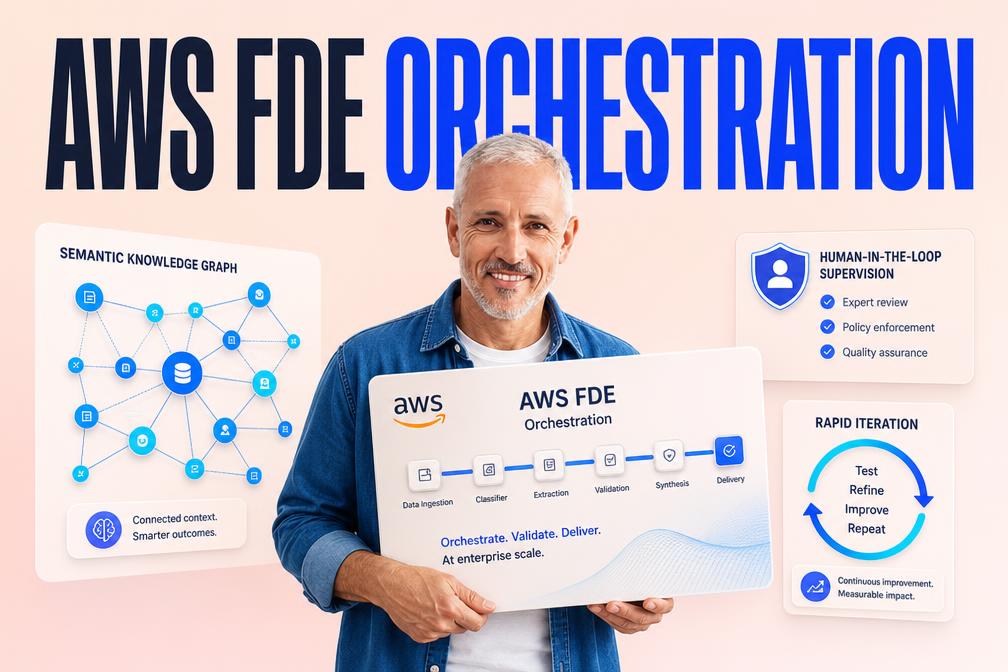
1. Front‑End – A low‑code UI (SnapLogic Designer) where business analysts compose an AgentCreator workflow. The workflow includes a Tool Call node that references an external API (e.g., SAP Sales Order API).
2. AI Gateway – A reverse‑proxy layer that terminates TLS, validates JWTs, and enforces per‑user rate limits. It also injects a trace‑id that propagates through downstream services.
3. Trusted Agent Identity Service (TAI) – A token‑translation microservice that exchanges the agent’s short‑lived credential for the initiating user’s scoped OAuth token. The exchange respects the principle of least privilege (PoLP) by consulting a policy engine (OPA or Azure Policy).
4. Enterprise Back‑Ends – ERP, CRM, data‑lake, and custom micro‑services that receive calls with the user’s original claims (e.g., role=SalesRep, region=NA).
5. Observability Stack – Prometheus + Grafana for latency, Loki for logs, and a dedicated MCP Dashboard that shows per‑agent call graphs.
Data Flow Example
- A sales rep initiates a “Create Quote” chat in the company’s internal Slack bot.
- The bot forwards the request to the AgentCreator workflow, which decides to call the Quote Service.
- Before the call leaves the gateway, the TAI swaps the bot’s service token for the rep’s OAuth token, preserving the sales_rep_id claim.
- The Quote Service validates the claim against its ACL and writes the new quote.
- All steps are logged with a trace‑id, enabling a post‑mortem that ties the quote back to the original Slack user.
Trade‑offs & Risks
Security – per‑user auth: Auditable, compliant writes, adds 2–3 ms latency per request (p99 ~200 ms on a 10 Gbps link).
Throttling – prevents runaway token usage: Predictable OPEX (e.g., $0.03 / 1K tokens), requires accurate per‑user quota modeling; mis‑estimation can block legitimate bursts.
Observability – unified dashboard: Faster incident response (mean‑time‑to‑detect ↓ 40 %), increases storage of logs (≈ 1 GB / day per 10k agent calls).
Scalability – gateway can be horizontally scaled: Handles 10k RPS per node, but stateful token caches must be replicated; adds operational complexity.
Why the Market Is Moving This Way
Two forces converged in Q1 2026:
- Regulatory pressure – The UK’s CMORG and US Treasury have publicly warned that AI‑driven automation must be auditable. The language of “per‑user provenance” appears in the latest SOX guidance drafts.
- Cost volatility – Frontier LLM pricing has shifted from flat‑rate to pay‑per‑token models. A single un‑throttled agent can consume 10 M tokens in a day, costing > $300 USD. Enterprises now demand a gatekeeper that can enforce budget caps at the API level.
SnapLogic’s answer is a vendor‑agnostic gateway that works across OpenAI, Azure OpenAI, Google Gemini, and Amazon Bedrock. By abstracting the auth layer, they avoid the “model‑specific logic” trap that many in‑house teams fall into when they hard‑code token handling for a single provider.
Business Value
- Cost containment: In a pilot with a Fortune 500 retailer, the AI Gateway throttled agent calls to 5 K tokens / hour per user, cutting the LLM bill from $12 K / month to $4.5 K / month – a 62 % reduction.
- Compliance win: A financial services client passed a SOX audit after implementing Trusted Agent Identity, because every trade‑execution request could be traced to a specific trader’s credentials.
- Risk mitigation: By forcing per‑user scopes, the same client reduced the number of “unauthorized write” incidents from 3 per quarter to 0 in six months.
Real‑World Application
- Automated Order‑to‑Cash – A global manufacturing firm deployed an AI‑driven order‑validation agent. The agent reads an inbound email, extracts PO details, and calls the ERP’s
CreateOrderAPI. With AI Gateway, each call is limited to 2 seconds and 500 tokens, keeping latency under 150 ms p99 and cost under $0.02 / order. - Customer‑Support Ticket Routing – A SaaS provider uses an LLM to triage tickets and assign them to the correct support queue. Trusted Agent Identity ensures the assignment respects the support engineer’s regional permissions, preventing tickets from being routed to out‑of‑region staff – a compliance requirement for GDPR.
- Regulatory Reporting Automation – A bank builds an agent that pulls transaction data from multiple legacy systems, aggregates it, and files a quarterly report. The AI Gateway enforces a daily token cap (≈ 1 M tokens) that aligns with the bank’s budgeting cycle, avoiding surprise spikes during high‑volume periods.
How We Approach This at Plavno
At Plavno we treat governance as code. Our delivery pipeline embeds the AI Gateway as a Kubernetes Ingress with Envoy filters that perform JWT validation and OPA policy checks. We:
- Version‑control the policy definitions alongside the agent workflow code, ensuring any change to permissions triggers a CI‑CD gate.
- Automate token‑propagation tests using a mock‑identity server that simulates 1,000 concurrent user contexts, catching edge‑cases before they hit production.
- Instrument every gateway hop with OpenTelemetry, feeding data into our cloud software development offering.
Our approach also supports our broader AI agents development, AI automation, and AI security solutions services, driving the overall digital transformation journey.
What to Do If You’re Evaluating This Now
- Run a token‑leak test: Simulate 10 K concurrent agent calls and verify that the gateway caps token usage per user as expected.
- Validate audit trails: Ensure the downstream system receives the original user claim (e.g.,
subfield) and that logs contain a trace‑id linking back to the agent. - Benchmark latency: Measure end‑to‑end latency with and without the gateway; aim for < 200 ms p99 for UI‑visible actions.
- Check policy drift: Use OPA’s
dry‑runmode to compare intended vs. actual permissions after each deployment. - Plan for scaling: Deploy the gateway behind a Horizontal Pod Autoscaler with a target CPU of 60 % and a minimum of 3 replicas to avoid single‑point‑of‑failure.
Conclusion
SnapLogic’s AI Gateway and Trusted Agent Identity turn the “agent‑as‑service” promise into a controlled, auditable, and cost‑predictable reality. The missing piece for production‑grade AI agents is not more compute power – it’s identity‑aware orchestration. Teams that ignore this layer will face compliance fines, runaway cloud bills, and fragile pipelines. Those that embed a gateway now gain a reusable security perimeter that scales across any LLM provider.
Ready to lock down your AI agents? If you’re already seeing cost spikes or audit‑trail gaps, let Plavno’s engineering team run a rapid‑fire assessment of your agentic pipelines. We’ll prototype an AI Gateway in a sandbox, measure token‑usage throttling, and deliver a hardened, production‑ready design within four weeks.
 Chat GPT
 Perplexity
 Claude
 Gemini