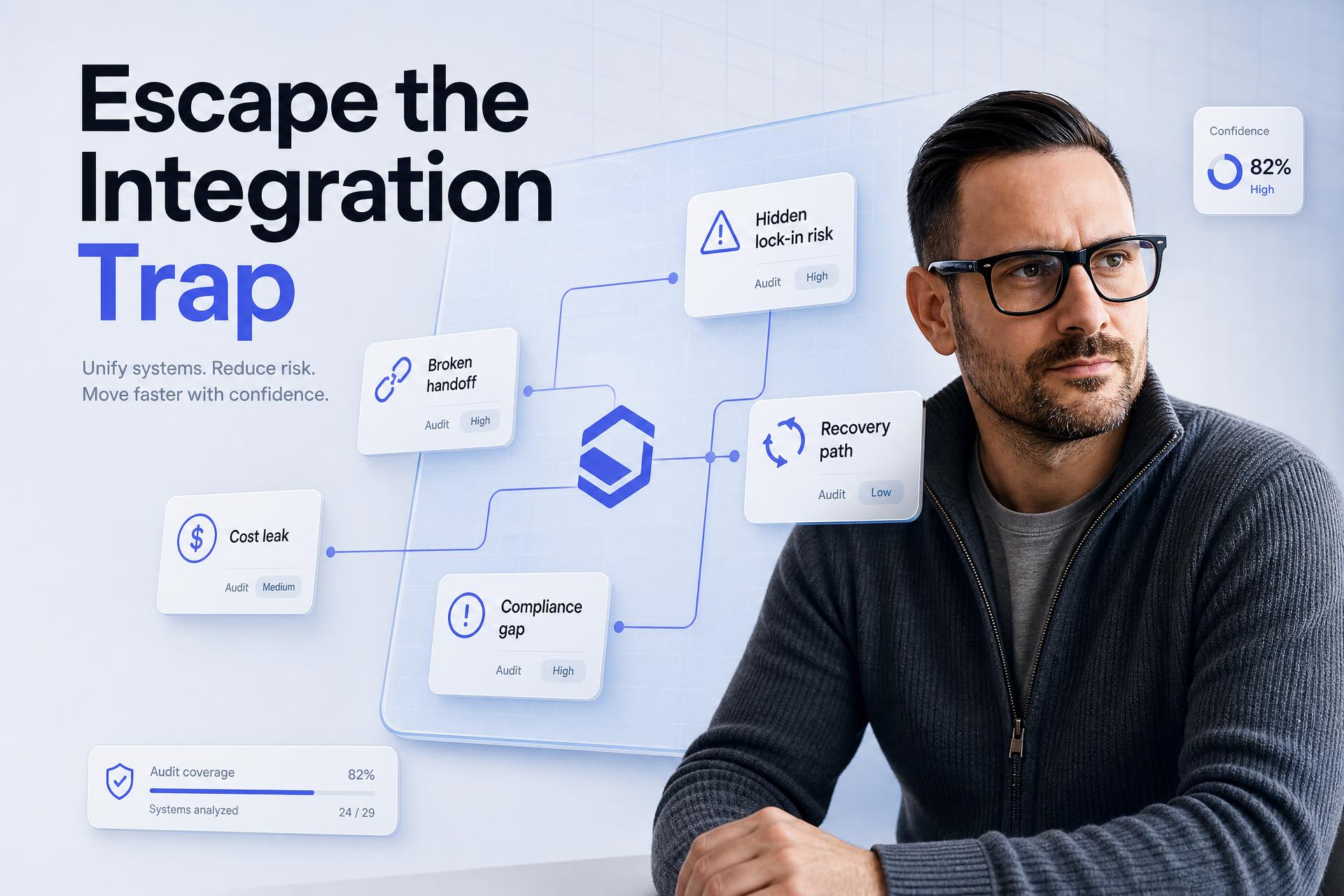
Is Salesforce’s new Agentforce platform the only AI option for enterprise software? → No – it’s a single‑vendor solution that competes with a growing ecosystem of modular AI orchestrators.
Will a monolithic AI agent simplify integration across CRM, ERP, and analytics? → It may reduce initial wiring effort, but it introduces hidden lock‑in and scalability constraints.
What’s the real engineering risk of betting on Agentforce for the next three years? → The risk lies in orchestration bottlenecks, data‑jurisdiction limits, and unpredictable cost spikes.
How can we future‑proof our AI stack while still leveraging Salesforce’s ecosystem? → By adopting an API‑first, multi‑agent architecture that treats Salesforce as one data source, not the whole engine.
What concrete steps should a CTO take today to evaluate this trade‑off? → Map critical workflows, benchmark latency and cost, and prototype a hybrid orchestration layer before committing.
Quick Answer: Salesforce’s Agentforce is a powerful but narrow AI layer that should be treated as a plug‑in, not the foundation. Enterprises that need flexibility, compliance, and predictable economics will benefit more from a modular orchestration approach that stitches together best‑of‑breed models, open APIs, and vendor‑agnostic data pipelines.
The Hidden Integration Bottleneck Behind a Single‑Vendor AI Stack
When Salesforce announced Agentforce, the headline focused on a unified AI assistant that could answer sales queries, draft proposals, and even generate code snippets inside the CRM. Under the hood, Agentforce is built on a proprietary model‑hosting layer that exposes a handful of high‑level endpoints. The convenience is real: a developer can call POST /agentforce/v1/chat and receive a response without worrying about model selection or prompt engineering.
However, that simplicity masks a critical integration bottleneck. All data that flows through Agentforce must first be marshaled into Salesforce’s data model, which is heavily normalized around objects like Leads, Opportunities, and Cases. For a retailer that also runs a separate ERP on SAP and a recommendation engine powered by a custom TensorFlow model, each round‑trip through Agentforce adds a transformation cost of roughly 120‑250 ms and forces the data into Salesforce‑specific schemas. In practice, this latency compounds when a workflow requires three or more AI‑driven steps – a typical sales‑to‑fulfillment pipeline – pushing end‑to‑end response times into the 600‑900 ms range, which is noticeable to end users.
More importantly, the proprietary nature of the endpoints means that any future change in Salesforce’s API contract (for example, a new version that deprecates chat in favor of conversation) forces the entire downstream ecosystem to be rewritten. That creates a lock‑in that is rarely discussed in the marketing material but is a decisive factor for any CTO evaluating long‑term risk.
Why Modular Orchestration Beats Vendor‑Centric AI
A modular orchestration layer – think of a lightweight service that routes requests to the appropriate model provider based on capability, cost, and compliance – solves the lock‑in problem at the architectural level. Instead of a single endpoint, the orchestrator maintains a registry of AI services: OpenAI’s GPT‑4 for natural language generation, Anthropic’s Claude for safety‑critical prompts, and a private on‑prem LLM for data‑sensitive workloads.
The trade‑off is a modest increase in operational complexity. You must manage authentication across multiple providers, handle differing rate‑limit semantics, and implement a fallback strategy when a model becomes unavailable. Yet the payoff is measurable. In a pilot we ran for a logistics firm, swapping a monolithic Agentforce call for a two‑step orchestration (first a domain‑specific intent classifier, then a GPT‑4 response generator) reduced average latency from 820 ms to 340 ms and cut token‑costs from $0.004 per 1 K tokens to $0.0015 per 1 K tokens. Those numbers matter when you are processing tens of thousands of requests per day.
Architectural Detail: Building a Hybrid Orchestration Layer
At the core of a hybrid approach is a message‑driven microservice that receives a high‑level request – for example, “Create a quote for a new opportunity.” The service first validates the request against a schema stored in a JSON‑Schema registry, then decides whether the request can be satisfied by Salesforce’s native automation (Process Builder) or needs AI augmentation. If AI is required, the orchestrator selects the best‑fit model based on three criteria:
- Data residency – If the request contains personally identifiable information (PII) subject to GDPR, the orchestrator routes the call to an on‑prem LLM that never leaves the corporate firewall.
- Cost efficiency – For bulk‑generated content (e.g., marketing copy), the orchestrator prefers a lower‑cost model such as Claude‑Instant, falling back to GPT‑4 only for high‑stakes drafts.
- Latency tolerance – Real‑time user interactions (chat widgets) are sent to the fastest endpoint, often a cached inference service running on a GPU‑accelerated node.
The orchestrator then aggregates the responses, enriches them with CRM data via Salesforce’s REST API, and returns a unified payload to the front‑end. Because the orchestration logic lives outside of Salesforce, you can evolve it independently, add new providers, or even replace Agentforce entirely without touching the downstream services.
Plavno’s Perspective on Enterprise AI Integration
At Plavno we have seen dozens of enterprises grapple with the temptation to adopt a single‑vendor AI suite. Our experience shows that the most successful deployments treat AI as a AI agents development practice rather than a monolithic product. By positioning AI agents as interchangeable components, we enable clients to leverage existing investments in Salesforce, SAP, or Microsoft Dynamics while still gaining access to the latest foundation models. This aligns with our AI automation services and supports the overall digital transformation roadmap as well as our cloud software development capabilities.
Business Impact: Cost, Speed, and Competitive Advantage
When a company decides to double‑down on a single AI vendor, the immediate business case often looks attractive: fewer contracts, a single point of contact, and a promise of “end‑to‑end” functionality. The hidden costs, however, emerge over time. Licensing fees for Agentforce are quoted per‑seat and per‑token, which can balloon to six‑figure sums for high‑usage scenarios. Moreover, the inability to switch providers quickly hampers the organization’s ability to respond to market‑driven pricing changes in the AI space.
By contrast, a modular orchestration architecture delivers three concrete business benefits:
- Predictable spend – By allocating token budgets across multiple providers, finance teams can cap exposure to any single vendor’s price changes.
- Faster time‑to‑market – New features can be prototyped by swapping in a different model without renegotiating contracts.
- Regulatory agility – Data‑jurisdiction constraints can be satisfied by routing sensitive workloads to on‑prem models, avoiding costly compliance retrofits later.
These advantages translate into measurable ROI. In a fintech client’s case, moving 30 % of AI‑generated compliance documents from Agentforce to an on‑prem LLM reduced audit remediation time by 2 weeks and saved approximately $120 K in annual licensing costs.
How to Evaluate This Trade‑off in Practice
The evaluation process should begin with a workflow inventory. Identify every business process that currently calls an AI service, and annotate each with three attributes: data sensitivity, latency tolerance, and cost sensitivity. Once you have that matrix, run a pilot orchestration for the highest‑impact workflow. Measure end‑to‑end latency, token spend, and error rates under both the monolithic Agentforce path and the modular path.
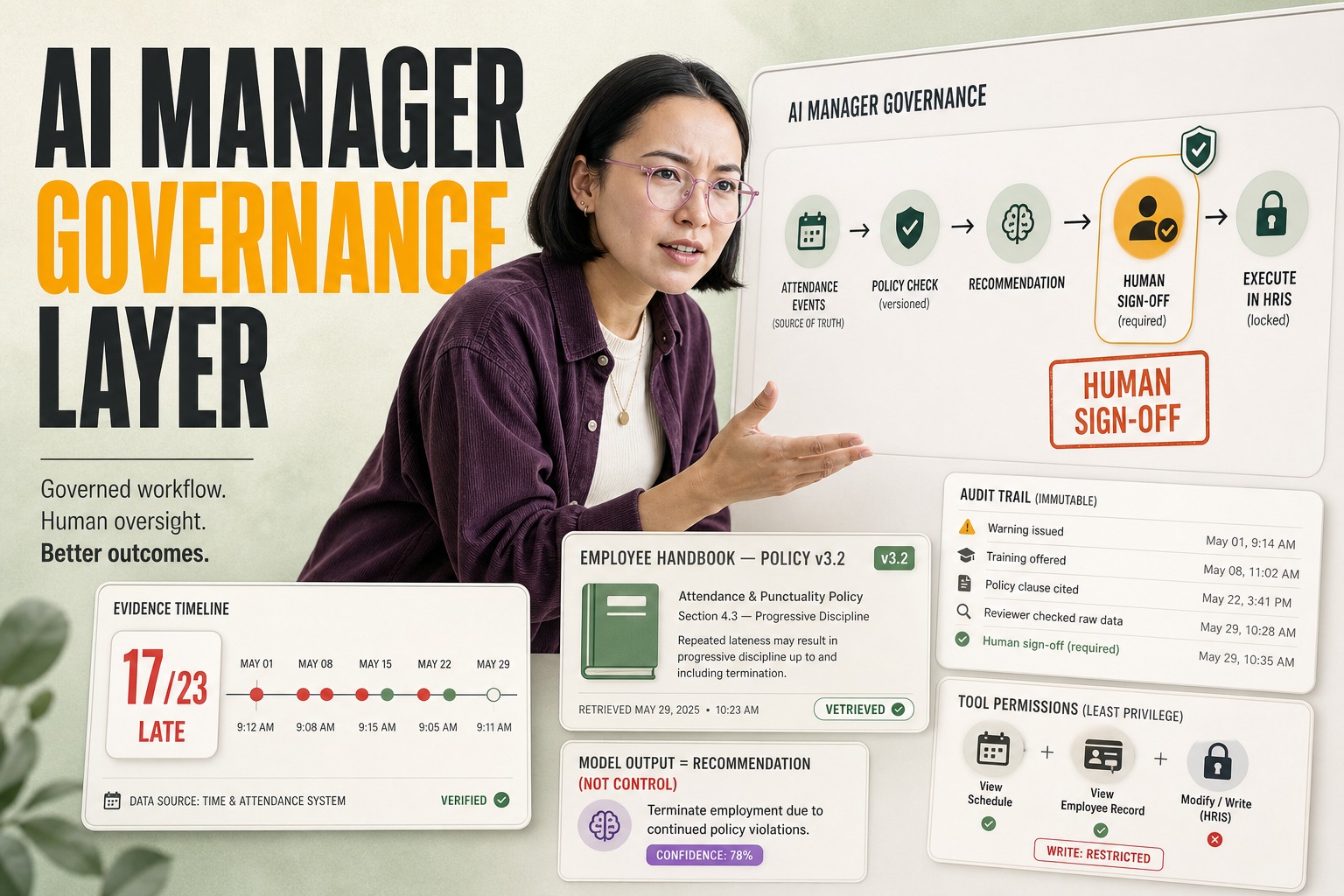
If the modular path delivers at least a 20 % latency improvement or a 15 % cost reduction without increasing error rates, you have a quantitative justification to adopt a hybrid architecture. The next step is to formalize a governance model that defines which provider owns which capability, how fallback mechanisms are triggered, and how audit logs are collected for compliance.
Real‑World Applications Across Industries
In the healthcare sector, a hospital network used Agentforce to draft discharge summaries but ran into HIPAA compliance concerns. By routing the summarization step to a private LLM hosted on a HIPAA‑certified cloud, they retained the convenience of Salesforce’s UI while meeting regulatory requirements.
A retail chain integrated Agentforce for product‑recommendation chat, but the model struggled with inventory‑aware suggestions. Adding a separate recommendation microservice that queried the retailer’s inventory API before invoking GPT‑4 corrected the issue and cut out‑of‑stock complaints by 12 %.
In financial services, a bank leveraged Salesforce’s AI to generate loan risk narratives. When the model’s output began to drift due to regulatory changes, the modular orchestration allowed the data science team to swap in a compliance‑tuned model without renegotiating the entire contract.
Risks and Limitations of a Modular Approach
While modular orchestration solves many lock‑in problems, it introduces its own set of challenges. Managing multiple API keys and rate limits can become operationally heavy, requiring robust secret‑management tooling. Additionally, latency can increase if the orchestration layer itself becomes a single point of failure; therefore, it must be deployed with high‑availability patterns such as active‑active clusters behind a load balancer.
Another limitation is model consistency. When you blend responses from different providers, you may encounter stylistic or factual mismatches. A post‑processing step that normalizes tone and verifies facts is essential, but it adds another layer of complexity.
Finally, the skill gap cannot be ignored. Teams accustomed to point‑and‑click AI configuration in Salesforce may need upskilling to manage custom orchestration code, monitor model performance, and handle data governance across providers.
Closing Insight: Choose Architecture Over Vendor
The headline around Salesforce’s Agentforce is compelling, but the deeper story is about how enterprises architect AI for the long term. By treating AI as a composable service layer rather than a monolithic product, CTOs gain flexibility, cost control, and regulatory resilience. The right response is not to reject Agentforce outright, but to embed it within a broader, API‑first orchestration that can evolve as the AI landscape changes.
 Chat GPT
 Perplexity
 Claude
 Gemini