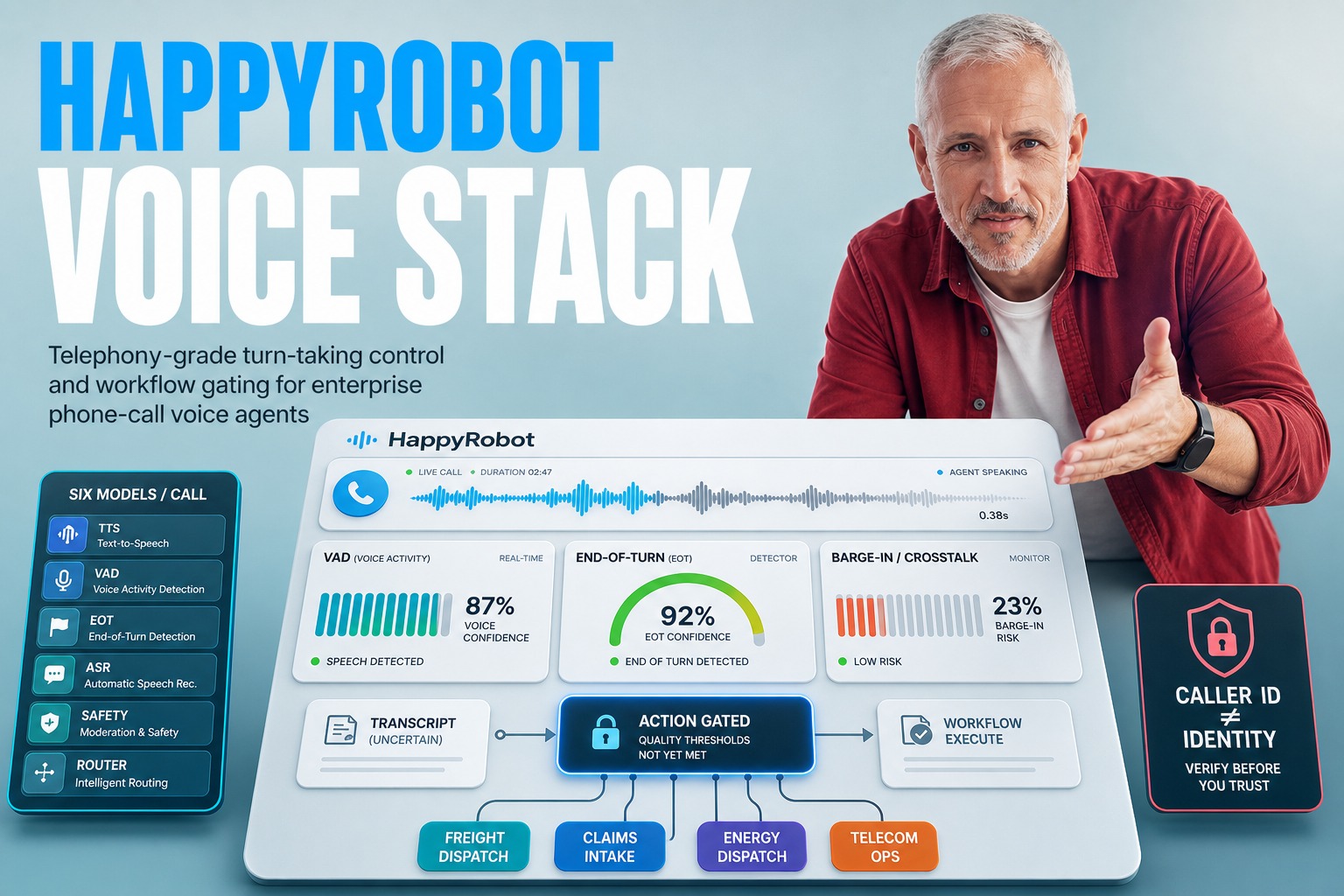
The release of native streaming audio APIs—most notably the recent push toward real-time, duplex voice models—marks a definitive end to the "chatbot with a voice skin" era. This isn't just an incremental update to text-to-speech (TTS) latency; it is a fundamental shift in how AI systems ingest and generate data. The technology has moved from a chained, three-step process (Speech-to-Text -> LLM Inference -> Text-to-Speech) to a unified, streaming audio pipeline where the model processes acoustic tokens directly.
For engineering leaders, this changes the calculus of production AI. The immediate risk is architectural debt: teams building voice agents on legacy "text-first" stacks will find themselves unable to compete on user experience. A conversational agent that takes 2.5 seconds to respond feels broken; one that responds in 400ms feels intelligent. The difference is not just speed—it is the ability to handle interruption, tone, and overlapping speech, which are impossible to engineer effectively with a chained STT-LLM-TTS architecture. If you are evaluating voice automation today, the news is clear: the latency bottleneck has moved from the network to the model architecture, and the old rules for building bots no longer apply.
Plavno's Take: What Most Teams Miss
At Plavno, we see a critical failure pattern in how teams approach voice AI: they treat audio as just another input modality for a text-based LLM. They wrap a standard GPT-class model with Whisper and ElevenLabs, hoping that faster hardware will solve the latency problem. It won't. The fundamental issue is the serialization of state. In a chained architecture, the system must finish hearing the user, transcribe it completely, generate a full text response, and only then begin audio synthesis. This creates a "dead air" gap that destroys conversational flow.
What teams miss is that the new wave of native audio models changes the state machine of the conversation. You are no longer managing a request-response cycle; you are managing a continuous audio stream. The biggest operational risk we see is the lack of "barge-in" handling—the ability for the user to interrupt the AI. In a text-first pipeline, handling an interruption requires killing the TTS process, flushing the buffer, and re-prompting the LLM, often resulting in a jarring glitch or a 2-3 second recovery lag. Native audio models handle this at the token level, but they require a completely different client-side implementation and WebSocket management strategy. If you build your voice agent on REST APIs and synchronous calls, you have already failed the latency test.
What This Means in Real Systems
Moving to real-time voice AI forces a re-architecture of the data pipeline. The old stack relied on synchronous REST calls or simple queues. The new stack requires persistent, bidirectional WebSocket connections that can handle binary audio streams at 16kHz or 24kHz.
The Chained Architecture (Legacy):
- Client: Records audio buffer (e.g., 1s).
- Server: Receives file, sends to STT API.
- STT: Returns text (latency: 300–600ms).
- LLM: Processes text, generates completion (latency: 500–1500ms).
- TTS: Synthesizes audio (latency: 200–500ms).
- Client: Plays audio.
Total Latency: Often >3 seconds. This is unusable for natural conversation.
The Native Audio Architecture (Current):
- Client: Streams raw PCM audio via WebSocket.
- Server: Model ingests audio tokens in real-time, performing Voice Activity Detection (VAD) internally.
- Model: Generates audio tokens directly, streaming them back to the client while the user is still speaking (predictive turn-taking).
- Client: Plays audio as it arrives.
Total Latency: Target <500ms (Time to First Audio).
This shift introduces new complexity. You lose the "intermediate text" layer that made debugging easy. In a native audio pipeline, you can't just read the logs to see exactly what the model "heard" unless you run a parallel transcription stream for observability. Furthermore, the infrastructure must handle jitter. If a packet drops in a REST API, you retry. If a packet drops in a 500ms duplex audio stream, the conversation stutters. We have to implement buffering strategies that balance latency against robustness, often using jitter buffers on the client side to smooth out network inconsistencies without adding perceptible delay.
Why the Market Is Moving This Way
The market pivot is driven by the failure of "voice assistants" to penetrate high-value workflows. IVR systems and basic chatbots have high abandonment rates because they feel robotic. The technical catalyst is the availability of models that can infer emotional intent and prosody directly from audio, rather than relying on text sentiment analysis which misses sarcasm, urgency, and hesitation.
Technically, the barrier to entry has lowered regarding the model, but it has raised regarding engineering. Vendors are now offering "real-time endpoints" that abstract the WebSocket management, but the integration burden remains high. Businesses are moving this way because the ROI on voice agents in sales and support is directly correlated to "latency to hello." Industry benchmarks suggest that sub-800ms response times can double engagement in cold outreach scenarios compared to 2-second delays. The technology is finally catching up to the biological reality of human speech, which operates on overlapping turn-taking, not serial data exchange.
Business Value
The primary business driver is conversion and containment. In sales, a voice agent that can interrupt and be interrupted creates a sense of urgency and rapport that text bots cannot match. In customer support, real-time voice reduces Average Handle Time (AHT) by resolving issues faster, without the awkward pauses that cause users to repeat themselves.
Key Insight: Consider a typical pilot scenario: a high-volume B2C support line handling 10,000 calls a week. Moving from a standard IVR to a real-time AI voice agent can potentially automate 40–60% of calls. However, the quality of that automation depends on latency. If the latency is poor, containment drops to 20%. If the latency is sub-500ms with proper barge-in, containment can exceed 50%. The cost differential is massive. At a blended rate of $0.05 per minute for audio tokens (a rough industry estimate including infrastructure), versus $1.00+ per minute for a human agent, the savings are immediate, but only if the system doesn't frustrate the customer. The value isn't just "automation"; it is "high-fidelity automation" that preserves brand trust.
Real-World Application
1. High-Volume Inbound Sales (Fintech & Insurance)
Companies are deploying real-time voice agents to handle initial qualification for insurance quotes or loan applications. The agent guides the user through a dynamic form, asking for name, address, and income. Because the model can process audio in real-time, it can detect hesitation or confusion in the user's voice and immediately switch to a reassuring tone or simplify the question. This dynamic adaptation increases lead conversion rates by an estimated 15–25% compared to static forms.
2. Emergency Triage and Dispatch (Healthcare & Logistics)
In logistics or healthcare dispatch, speed is the metric. A voice agent that can listen to a driver describe a vehicle breakdown or a patient describe symptoms, and simultaneously transcribe and categorize the urgency, reduces the "time to dispatch." The architecture allows the system to trigger an API call to a dispatch system while the AI is still confirming the details with the human, shaving critical seconds off the response time.
3. Internal IT Helpdesk
Enterprises are replacing tier-1 support with voice agents that can walk employees through password resets or software installation. The key value here is the "hands-free" aspect. The employee can be on their laptop while talking to the AI. Real-time latency ensures that if the employee says "Wait, that didn't work," the AI stops immediately and pivots, avoiding the frustration of listening to a 30-second irrelevant monologue.
How We Approach This at Plavno
We do not treat AI voice assistant development as a wrapper around an API. We approach it as a distributed systems problem. When we design these solutions, we implement a "Sidecar" pattern for observability. We run a lightweight, asynchronous transcription process alongside the real-time audio stream. This ensures that we have a text log for compliance, auditing, and debugging without blocking the low-latency audio path.
Security is also paramount. Streaming audio often contains PII (Personally Identifiable Information). We architect systems where audio is processed in memory streams and discarded immediately after use, or encrypted and stored with strict access controls if retention is required. We leverage our expertise in custom software development to build custom WebSocket gateways that can handle the specific load balancing requirements of persistent connections, which differ significantly from standard HTTP request handling. We also focus on the "fail-fast" mechanism: if the latency spikes above a certain threshold (e.g., 800ms), the system must gracefully degrade—perhaps playing a generic "processing" audio cue—rather than leaving the user in dead air, which is the primary cause of drop-offs.
What to Do If You're Evaluating This Now
If you are looking to pilot a real-time voice agent, stop testing with text-based simulators. You must test with audio.
Audit your network: Can your infrastructure handle thousands of concurrent WebSocket connections with low jitter? Standard load balancers often struggle with persistent connections.
Prioritize interruption handling: The "hello world" of voice AI is answering a question. The production test is interrupting the answer. If the agent keeps talking for 2 seconds after you say "stop," it is not production-ready.
Budget for audio tokens: Audio inference is computationally more expensive than text. Calculate your costs based on minutes of audio, not text tokens. A typical pilot (4–8 weeks) should focus on a specific, high-value workflow (e.g., "password resets") rather than general "chitchat" to manage costs.
Plan for the "Uncanny Valley": If the voice sounds too human but pauses like a machine, users will hate it. Invest in high-quality voice synthesis and ensure your latency budget allows for natural turn-taking.
Conclusion
The shift to real-time, native audio AI is the most significant infrastructural change in conversational AI since the introduction of the transformer. It decouples the user experience from the constraints of text processing, enabling fluid, human-like interaction. However, this capability comes with a steep engineering curve. It requires abandoning RESTful patterns for streaming architectures and rethinking observability and state management. For businesses, the prize is a level of automation that actually feels like service, rather than a barrier. The technology is here; the challenge is building the robust, low-latency pipes required to deliver it.
 Chat GPT
 Perplexity
 Claude
 Gemini