Is the AI agent market shifting from model APIs to owned infrastructure? → Yes, investors are backing stacks that give companies control over data, rewards, and evaluation.
Do enterprise teams need to own their evaluation sandboxes to achieve reliability? → Owning the sandbox is now the primary lever for dependable agent behavior.
Will the choice of frontier model matter more than the post‑training loop? → Model choice is secondary; the loop determines real‑world performance.
Can the $130 million Prime Intellect round change procurement priorities? → It signals that firms should prioritize control over the entire agent lifecycle.
Why Controlling the Post‑Training Loop Is the New Competitive Edge for Enterprise AI Agents
The surge of funding behind Prime Intellect makes clear that the real value proposition is no longer the raw horsepower of a frontier model, but the ability to steer that model through a proprietary post‑training loop. Companies that can inject their own data, craft domain‑specific reward signals, and evaluate agents in sandboxed workflows gain reliability that generic APIs cannot promise. In practice, this shifts engineering focus from chasing leaderboard scores to building a repeatable, auditable pipeline that lives inside the enterprise.
Learn more about our AI automation services here.
Owning the evaluation stack is the only way to guarantee that an agent will behave predictably when it encounters production data.
Quick Answer: Owning the Evaluation Stack Beats Chasing Model Benchmarks
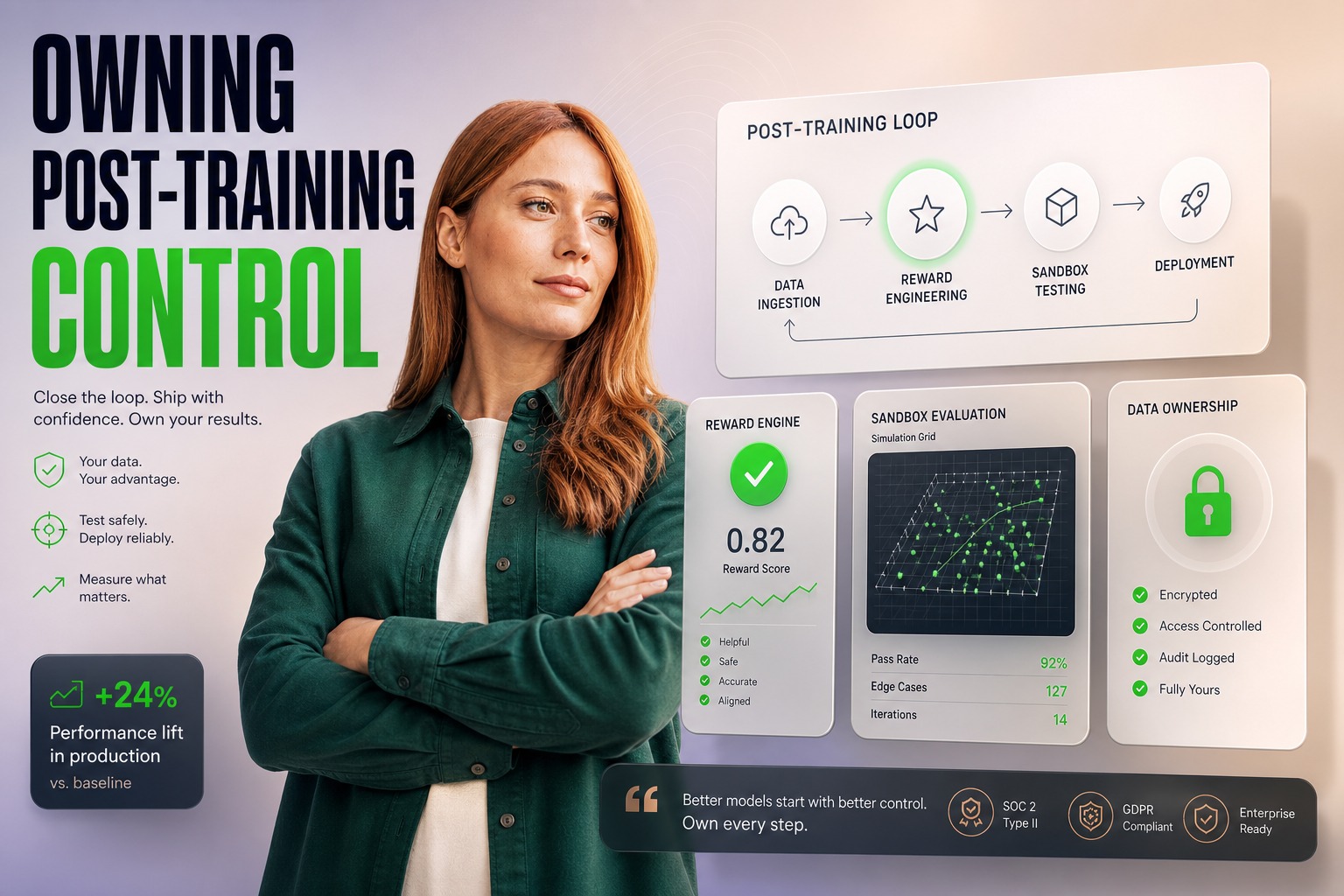
When a CTO asks whether to buy the latest GPT‑4‑style API or to invest in an in‑house agentic platform, the answer is to prioritize ownership of the evaluation and deployment layers. The post‑training loop—comprising data ingestion, reward engineering, sandboxed testing, and controlled rollout—determines the agent’s reliability, auditability, and cost profile. Selecting a model based purely on benchmark scores ignores the hidden costs of integration, compliance, and ongoing monitoring.
In short, the decisive factor is not which model scores highest on a public leaderboard, but whether your organization can close the loop on its own terms. That means building or buying tools that let you fine‑tune smaller, task‑specific models, define custom reward functions, and run rigorous evaluations before any production release.
Explore our AI agents development capabilities here.
| Dimension | Frontier API (off‑the‑shelf) | Owned Agent Stack |
|---|---|---|
| Reliability | Limited to provider testing | Full control via custom sandboxes |
| Auditability | Black‑box logs | End‑to‑end traceability |
| Cost | Pay‑per‑token, unpredictable | Predictable compute budgeting |
| Deployment Control | Vendor‑managed rollout | In‑house CI/CD integration |
The Illusion of Model‑Centric Procurement
Many enterprises still evaluate AI agents as if they were a single commodity, comparing raw model metrics like perplexity or token throughput. This illusion collapses under real‑world constraints: compliance regimes, latency budgets, and domain‑specific safety requirements cannot be satisfied by a generic API alone. The true procurement question becomes whether the vendor supplies a framework that lets you own the entire post‑training lifecycle.
Read more about our cloud software development services here.
From Prompt Wrappers to Full‑Lifecycle Agent Platforms
Early deployments treated large language models as stateless prompt engines, adding thin orchestration layers on top. The market is now moving toward platforms that bundle compute access, reinforcement learning tooling, evaluation environments, and deployment pipelines. Prime Intellect’s $130 million Series A round is a direct endorsement of this shift, indicating that enterprises value a turnkey stack that can be customized to narrow workflows rather than a one‑size‑fits‑all API.
This aligns with broader digital transformation initiatives here.
What Prime Intellect’s Funding Reveals About Market Priorities
Prime Intellect announced a $130 million Series A raise on July 8, 2026, led by Radical Ventures with participation from NVIDIA Ventures, Intel Capital, and Dell Technologies Capital. The round pushes total funding above $150 million and values the company at $1 billion, while reporting a $100 million annualized revenue run rate. This capital infusion is not merely a financial milestone; it signals investor confidence that the next wave of AI agents will be delivered as an enterprise‑grade stack, not as a simple API wrapper.
The emphasis on infrastructure—compute, reinforcement learning loops, evaluation sandboxes, and deployment support—means that buyers must now assess vendors on their ability to hand over control of the post‑training loop. In other words, the market is rewarding those who can guarantee that an agent will behave correctly in a specific business context, rather than those who can boast the highest model scores.
Our AI agents development team can help you evaluate such platforms here.
- Data Ownership – Controlling the raw training corpus ensures compliance with privacy regulations and aligns the model with proprietary business knowledge.
- Reward Engineering – Custom reward signals let you shape agent behavior toward business‑critical outcomes rather than generic language fluency.
- Sandbox Fidelity – High‑fidelity simulated environments let you test agents against realistic edge cases before any live deployment.
- Evaluation Suite – A curated set of metrics and test cases provides a repeatable gauge of reliability across releases.
- Deployment Hooks – Integrated CI/CD pipelines enable seamless rollout and rollback, reducing operational risk.
How the Post‑Training Loop Redefines Vendor Evaluation
When evaluating AI vendors, the first question should be: *Can we plug our own data, reward functions, and evaluation suites into their platform?* If the answer is yes, the vendor offers a genuine enterprise stack; if not, the solution is limited to a prompt wrapper that may break under domain‑specific stress. This distinction reshapes procurement criteria from “Which model is the most capable?” to “Which platform gives us end‑to‑end control?”
In practice, teams that adopt an owned post‑training loop report higher success rates in production, because they can iterate on reward design, run regression tests in sandboxed environments, and enforce compliance checks before any user‑facing release. The trade‑off is additional engineering effort, but the payoff is a measurable reduction in costly production failures.
Our cloud software development services support seamless integration here.
- Audit Trails – Full visibility into data provenance and reward adjustments satisfies regulatory audits.
- Cost Predictability – Owning the compute budget lets you forecast expenses rather than reacting to per‑token pricing spikes.
- Latency Guarantees – On‑premise or dedicated cloud resources can meet strict latency SLAs that public APIs cannot promise.
- Version Control – Integrated model versioning ensures reproducible results across deployments.
- Security Posture – Isolated environments reduce attack surface compared to shared public endpoints.
The Role of Specialized Models in Narrow Workflows
Specialized, smaller models trained on domain‑specific data often outperform larger, generic models when the task is tightly scoped. By feeding proprietary datasets into a reinforcement‑learning loop, organizations can sculpt agents that excel at niche functions—such as legal document summarization or medical triage—while consuming far less compute than a full‑scale GPT‑4 deployment.
This approach also mitigates the risk of hallucination, because the model’s knowledge base is bounded by curated, verified information. Engineers can therefore prioritize reliability over raw capability, aligning the technology stack with concrete business outcomes.
Learn more about AI agents development here.
Why Model Scores No Longer Dictate Procurement
Leaderboard rankings are a useful research benchmark but they do not capture the nuances of enterprise deployment. An agent that scores marginally higher on a public benchmark may require extensive fine‑tuning, custom reward shaping, and sandbox development to reach production readiness. Consequently, the procurement decision shifts toward platforms that provide the tooling to close that gap efficiently.
- Reliability over Leaderboard – Real‑world uptime and error rates matter more than abstract perplexity scores.
- Custom Reward Signals – Tailoring incentives to business KPIs drives purposeful behavior.
- Domain‑Specific Eval Suites – Testing against industry‑relevant scenarios uncovers hidden failure modes.
- Iterative Feedback Loops – Continuous reinforcement learning shortens the time to stable performance.
- Governance Frameworks – Built‑in compliance checks ensure ethical and legal alignment.
Engineering Implications of Owning the Sandboxing Layer
Building a sandboxed evaluation environment introduces new architectural considerations. Teams must provision isolated compute clusters, manage synthetic data pipelines, and integrate monitoring tools that capture agent decisions at each step. This overhead is offset by the ability to simulate production traffic, inject adversarial inputs, and validate safety constraints before any live release.
Moreover, sandbox ownership enables rapid A/B testing of reward tweaks, allowing product managers to quantify the impact of each change on key performance indicators without exposing end users to unstable behavior.
Our digital transformation services can guide you through this process here.
Define Domain Data – Curate a representative dataset that reflects the target workflow and compliance requirements.
Design Reward Functions – Translate business objectives into measurable signals that guide the agent’s optimization.
Build Evaluation Suite – Assemble test cases, edge‑case scenarios, and performance metrics aligned with operational goals.
Provision Sandbox Infrastructure – Deploy isolated compute resources with monitoring and logging for safe experimentation.
Integrate CI/CD Pipelines – Automate model training, evaluation, and rollout to ensure repeatable, auditable releases.
Cost and Performance Trade‑offs of In‑House Agent Stacks
Running an owned post‑training loop incurs upfront compute and engineering expenses, but it delivers predictable cost structures and performance guarantees that per‑token API pricing cannot match. By allocating dedicated GPU clusters, firms can amortize hardware costs over multiple projects, achieving economies of scale that offset the higher initial investment.
Performance‑wise, a custom stack allows fine‑grained latency tuning, batch optimization, and model quantization strategies that are invisible to a public API consumer. The result is a tighter alignment between SLA commitments and actual service delivery, which is critical for latency‑sensitive domains such as voice assistants and real‑time decision support.
Explore our cloud software development expertise here.
Compute Allocation – Dedicated GPU resources enable predictable budgeting and avoid surprise token fees.
Data Labeling Overhead – Curating high‑quality domain data requires upfront labor but improves model fidelity.
Engineering Time – Building the loop demands skilled ML engineers, yet reusability across projects amortizes the effort.
Maintenance Costs – Ongoing monitoring and model updates are essential to sustain reliability over time.
When to Choose an External API vs Building Your Own Stack
If your use case is a short‑lived prototype, low‑volume chatbot, or a scenario where compliance is not a concern, a third‑party API may be the fastest path to market. Conversely, for mission‑critical workflows—such as financial transaction processing, legal document analysis, or regulated healthcare interactions—owning the post‑training loop becomes a non‑negotiable requirement.
The decision matrix hinges on factors like data sensitivity, required latency, expected transaction volume, and the need for auditability. In many enterprise contexts, the long‑term benefits of control outweigh the short‑term convenience of a managed API.
Our AI automation services can help you evaluate options here.
Strategic Roadmap for Q4: From Evaluation to Deployment
Quarterly planning should begin with a gap analysis of existing AI workflows: identify where current APIs lack domain fidelity, map out data ownership constraints, and catalog compliance checkpoints. Next, prototype a reward‑engineered loop on a small subset of the workflow, using the sandbox to validate safety and performance. Finally, scale the solution across the organization, integrating the engineered stack into the existing CI/CD pipeline.
This phased approach mitigates risk while delivering tangible business value. By the end of Q4, teams should have a production‑ready agent that operates within a controlled evaluation environment, complete with audit logs, cost dashboards, and rollback mechanisms.
Read about our digital transformation guidance here.
| Risk Category | External API | Owned Agent Stack |
|---|---|---|
| Model Drift | Vendor‑managed updates | Continuous RL loop |
| Sandbox Integrity | No sandbox (black‑box) | Automated validation |
| Operational Overload | Limited support channels | In‑house incident response |
Measuring Success: Metrics That Matter
Success should be measured against business‑aligned KPIs rather than generic AI benchmarks. Key indicators include task‑completion accuracy, compliance breach rate, latency SLA adherence, and total cost of ownership. Tracking these metrics over multiple release cycles provides a clear picture of whether the owned stack is delivering the promised reliability and cost benefits.
In addition, qualitative feedback from end‑users—such as reduced friction in workflow automation or increased trust in AI‑generated recommendations—offers valuable insight that pure quantitative metrics may miss.
Our AI agents development team can assist you in defining these metrics here.
Governance and Auditing Practices
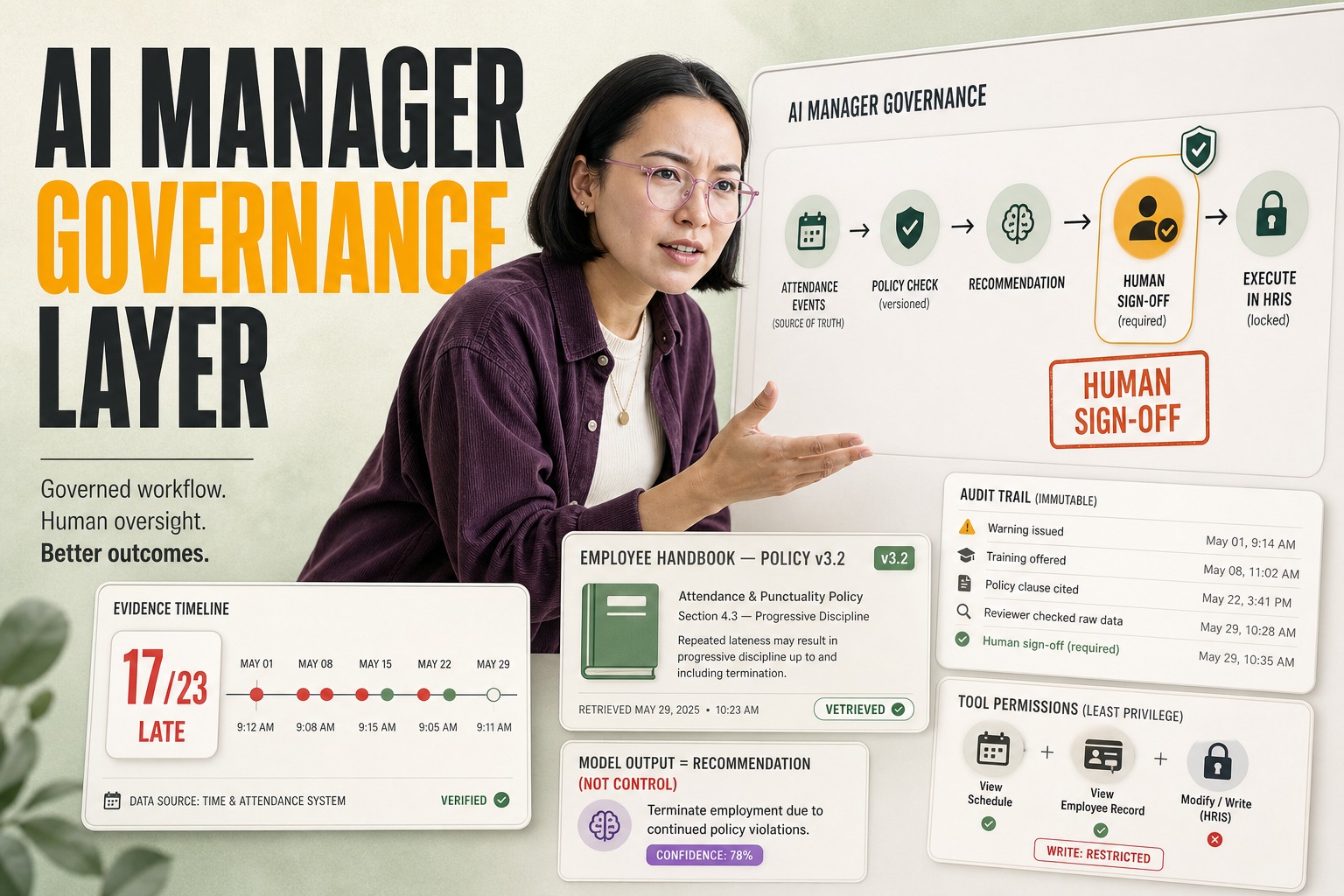
Robust governance requires versioned data pipelines, immutable reward definitions, and traceable evaluation results. Implementing a centralized metadata catalog ensures that every model iteration can be linked back to its source data and reward configuration, facilitating audits and regulatory reviews.
Auditing tools should surface discrepancies between sandbox predictions and production outcomes, flagging any divergence for immediate investigation. This closed‑loop governance model reinforces confidence in the agent’s behavior across its lifecycle.
Learn more about our cloud software development services here.
- Metadata Catalog – Store lineage of data, rewards, and model versions.
- Immutable Reward Definitions – Lock reward functions to prevent silent drift.
- Traceable Evaluation Results – Record metrics for each test run.
- Discrepancy Alerts – Notify when sandbox and production outputs diverge.
- Regulatory Reporting – Generate audit‑ready reports on demand.
Scaling the Stack Across Business Units
Scaling an owned agent stack involves standardizing the sandbox framework, abstracting reward engineering into reusable components, and providing self‑service portals for non‑ML teams. By exposing a catalog of pre‑validated reward templates and evaluation suites, organizations can accelerate adoption while maintaining governance.
Cross‑unit collaboration also benefits from shared observability dashboards, enabling each department to monitor its agents’ performance against common SLAs and cost targets.
Our digital transformation services can help you scale here.
- Standardized Sandbox Templates – Reusable environment configurations for common use cases.
- Reward Library – Pre‑built incentive modules aligned with corporate KPIs.
- Self‑Service Portal – UI for non‑technical teams to launch experiments.
- Shared Observability – Unified dashboards for latency, cost, and accuracy.
- Cross‑Unit Governance – Central policies applied uniformly across departments.
Our Perspective at Plavno
At Plavno we have seen enterprises wrestle with the same dilemma: whether to rely on a generic API or to invest in a proprietary agentic infrastructure. Our experience shows that teams that secure ownership of the post‑training loop achieve higher reliability, lower long‑term costs, and stronger compliance posture. We help organizations design, build, and operate these stacks, leveraging our expertise in AI automation, AI agents development, and cloud software engineering.
By partnering with us, companies gain access to a proven framework for data ownership, reward engineering, sandbox creation, and deployment automation. This enables them to focus on delivering business value rather than managing the intricacies of model procurement.
Explore our services: AI Agents Development, AI Automation, Cloud Software Development, Digital Transformation.
- AI Automation Services – End‑to‑end pipelines for reinforcement learning and evaluation.
- AI Agents Development – Custom agent creation tailored to niche workflows.
- Cloud Software Development – Scalable infrastructure for sandbox environments.
- Consulting & Strategy – Guidance on building governance and audit trails.
- Managed Deployment – CI/CD integration and monitoring for production agents.
The decisive engineering move this quarter is to shift from model‑centric procurement to owning the entire post‑training lifecycle.
Take the Next Step
If your organization is ready to move beyond prompt wrappers and gain true control over AI agent reliability, we invite you to explore how Plavno can accelerate that journey. Our team can conduct a readiness assessment, prototype a custom reward loop, and outline a roadmap that aligns with your quarterly objectives.
Contact us to schedule a strategic workshop and start building the infrastructure that will keep your AI agents reliable, auditable, and cost‑effective for the long run.
 Chat GPT
 Perplexity
 Claude
 Gemini