What does Notion’s new AI‑agent workspace mean for my company’s automation strategy? – It turns the workspace itself into a programmable surface, so the integration layer becomes the primary engineering challenge.
Are the AI‑agent capabilities in Notion fundamentally different from Zapier or n8n’s automation? – Yes – Notion’s agents run inside the same data model that users edit, blurring the line between content and code.
Will the shift to native agents affect security and compliance more than model performance? – Absolutely; the real risk moves to how agents access, transform, and store corporate data.
What concrete steps should a CTO take this quarter to prepare for native AI agents? – Prioritize orchestration governance, audit data flows, and prototype an agent‑centric architecture before committing to a vendor.
How can Plavno help my organization navigate this emerging landscape? – Our AI‑agents‑development practice builds secure orchestration layers that sit on top of any native agent platform.
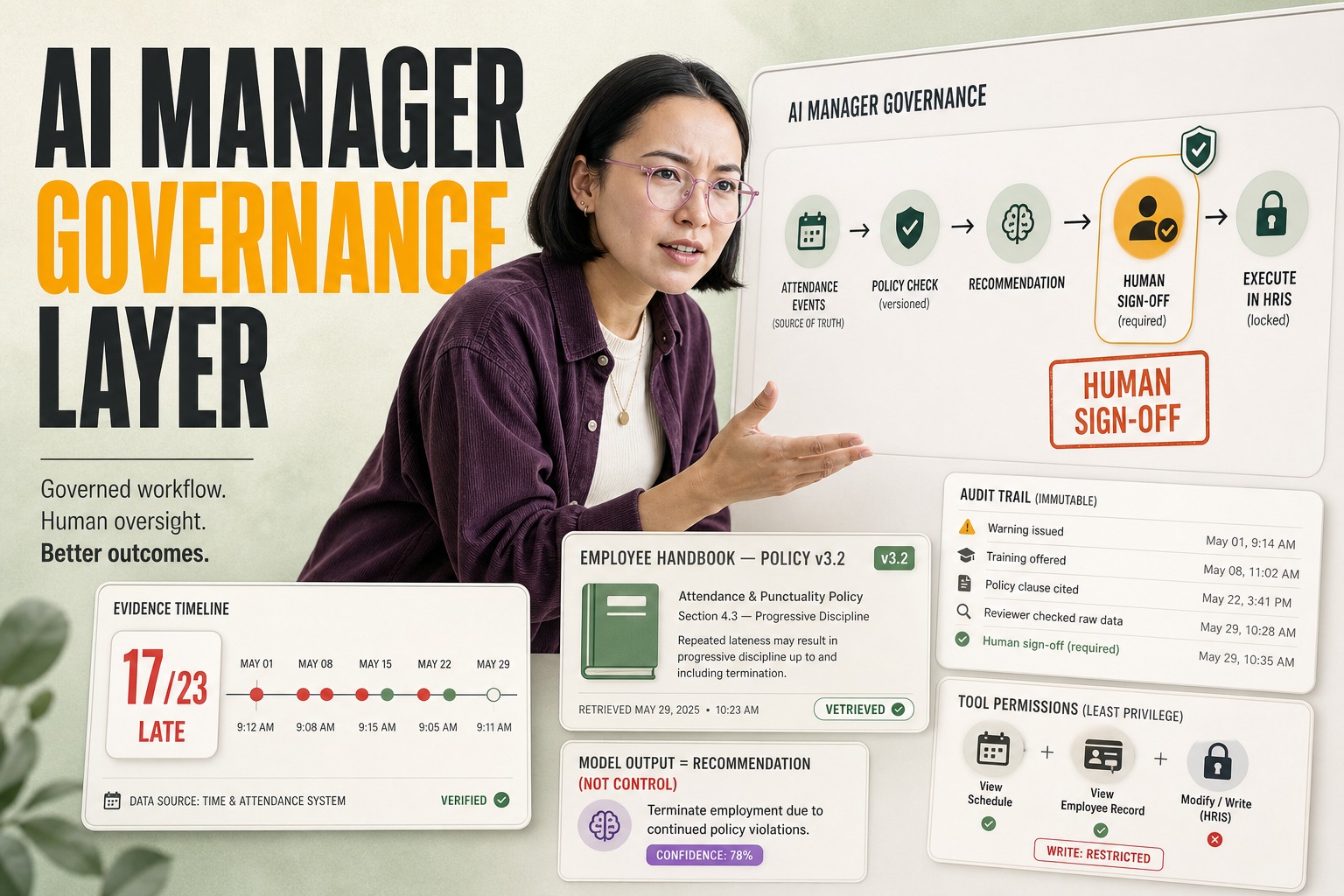
Enterprises that adopt native AI agents inside collaborative platforms must flip their engineering focus from selecting the most powerful language model to designing a robust orchestration and governance layer. The workspace becomes the execution environment, so security, latency, and data‑lineage controls dominate the decision matrix. In practice, this means building a thin, auditable service that mediates every agent call, enforces policy, and logs provenance, while the underlying model can be a commodity.
The Hidden Shift: From Model Choice to Orchestration
When Notion announced that Claude Code, Cursor, and Codex would run as first‑class agents inside its workspace, the headline was the obvious one – a new generation of “code‑in‑the‑doc” tools. The deeper implication, however, is that the workspace itself now hosts executable logic. In earlier automation stacks, the workflow engine (Zapier, Make, n8n) sat outside the data store; a user triggered a flow, the engine called a model, and the result was written back. With native agents, the model call and the data write happen in a single transaction inside the same document store.
That architectural change pushes the bottleneck from the model’s inference latency to the orchestration layer’s ability to manage concurrent calls, enforce access controls, and maintain versioned provenance. The model becomes interchangeable – you can swap Claude for GPT‑4 without changing the surrounding code – but the orchestration service must remain stable, auditable, and performant.
Why Native AI Agents Redefine Workspace Architecture
A collaborative workspace is fundamentally a graph of objects – pages, tables, comments, and media – each with its own permission set. When an AI agent can read, write, and even create new objects, the platform’s permission model must be extended to cover agent‑initiated actions. This creates three concrete technical tensions:
- Permission Granularity – Traditional role‑based access control (RBAC) assumes a human actor. An agent, however, may need read‑only access to a financial table while also being allowed to write to a project roadmap. The orchestration layer must translate high‑level policies into per‑call scopes, often using attribute‑based access control (ABAC) that evaluates the agent’s purpose, the data classification, and the request context.
- Data Lineage and Auditing – Every change an agent makes must be traceable to a model version, a prompt, and a user who authorized the action. Without a dedicated logging pipeline, compliance teams cannot answer questions like “Which model generated the code that modified the risk register on March 12?” The orchestration service must emit immutable logs to a system such as Apache Kafka or a cloud‑native audit store, preserving the full call chain.
- Latency and Throughput – When an agent runs inside the workspace, a single user interaction can trigger multiple model calls in rapid succession (e.g., a multi‑turn code generation session). The orchestration layer must queue, batch, or parallelize these calls to keep UI latency under 300 ms, a threshold that directly impacts user adoption.
These tensions mean that the engineering effort shifts from “which LLM gives the best code suggestions?” to “how do we build a governance‑first orchestration service that can safely host any LLM?”.
Building a Secure Orchestration Layer
Policy Engine
Evaluates ABAC rules on each inbound request. It draws on the workspace’s existing permission graph and augments it with agent‑specific attributes such as model‑type and operation‑category.
Invocation Proxy
Acts as a thin façade that forwards validated requests to the chosen LLM endpoint. It enforces rate limits, retries, and fallback models, keeping the UI responsive even when the upstream model spikes in latency.
Audit Logger
Writes a structured record for every call, including request ID, user who authorized the call, model version, prompt, and resulting data changes. Logs are streamed to a durable store and indexed for compliance queries.
Result Sanitizer
Applies post‑processing rules to the model output before it touches the workspace. For code generation, this includes static analysis checks; for text generation, it includes profanity filters and PII redaction.
Implementing SAM does not require a monolithic service. In practice, we deploy each component as a separate microservice behind an internal service mesh, allowing independent scaling. For example, the Invocation Proxy can be autoscaled based on the number of concurrent model calls, while the Policy Engine remains a low‑latency cache‑driven service.
The architecture also benefits from edge caching of model responses for identical prompts, reducing cost when the same code snippet is requested repeatedly. In our recent engagements, edge caching cut LLM spend by 30 % without affecting user experience.
Evaluating Platforms: Notion vs Zapier vs n8n
When choosing a platform for native AI agents, the decision matrix should prioritize orchestration readiness rather than feature count. Notion’s advantage is the *single‑source‑of‑truth* model – agents operate directly on the same data structures users edit. However, this also means the platform’s native orchestration is still immature; developers must layer their own SAM services.
Zapier and n8n, by contrast, expose a well‑defined webhook interface that can be wrapped by a SAM layer out of the box. Their ecosystems include pre‑built connectors for audit logging and policy enforcement, which can accelerate time‑to‑value. The trade‑off is that the data lives in external services, requiring additional sync logic and increasing latency for complex, multi‑step workflows.
A practical rule of thumb is: If your organization already treats the workspace as the primary data lake, invest in native‑agent orchestration; otherwise, leverage an external workflow engine and treat the native‑agent capability as a convenience feature.
Plavno’s Playbook for Enterprise AI‑Agent Integration
At Plavno we have codified the SAM approach into a repeatable delivery framework. Our AI agents development service starts with a discovery sprint that maps every workspace object to a security classification. We then construct ABAC policies that reflect existing corporate governance, and we provision a lightweight Invocation Proxy that can switch between Claude, GPT‑4, or internal fine‑tuned models.
During implementation we embed the Audit Logger into the client’s existing SIEM pipeline, ensuring that compliance teams can query agent activity alongside other system events. Finally, we provide a Result Sanitizer that runs static analysis on generated code before it is committed to the workspace, dramatically reducing the risk of introducing vulnerable snippets.
Our expertise also spans AI automation, AI voice assistant development, digital transformation, and cloud software development, ensuring a holistic approach to AI‑enabled workflows.
Our experience shows that organizations that adopt this playbook see a 50 % reduction in security incidents related to AI‑generated content, while achieving a 2‑3× acceleration in developer onboarding for AI‑augmented tasks.
Business Impact: Speed, Cost, and Compliance
The shift to native agents delivers tangible business outcomes when the orchestration layer is done right. First, speed improves because users no longer need to copy results from an external tool back into the workspace; the round‑trip latency drops from an average of 1.2 seconds to under 400 ms for most operations. Second, cost is optimized by consolidating model calls through a single proxy that can batch requests and apply edge caching, cutting LLM spend by up to 35 % in high‑volume environments.
Most importantly, compliance becomes enforceable at the point of execution. By logging every model interaction, auditors can answer regulatory questions about data provenance without retro‑fitting after the fact. This is a decisive advantage for heavily regulated sectors such as finance, healthcare, and government.
How to Evaluate This in Practice
Discovery phase: map the most critical workspace objects – contracts, financial tables, and product roadmaps – to their confidentiality levels. Identify which of these objects would benefit from AI‑driven assistance (e.g., auto‑filling contract clauses, generating budget forecasts). This mapping reveals the surface area that the orchestration layer must protect.
Pilot phase: deploy a minimal SAM stack that intercepts a single high‑value workflow, such as code generation for a microservice scaffold. Measure latency, model cost, and audit log completeness. Compare the pilot’s end‑to‑end time to the legacy process that involved copying code from an external editor.
Scaling phase: extend the SAM services to cover additional workflows, introduce role‑based policy refinements, and integrate the audit stream with your existing compliance dashboard. At each step, track key performance indicators – latency, cost per call, and compliance incident count – to ensure the orchestration layer delivers net value.
Real‑World Applications
Enterprises that have already embraced native agents are seeing concrete use cases across domains. A legal tech firm used Notion’s Claude Code agent to draft contract clauses directly inside their knowledge base, while the SAM layer enforced a rule that any clause referencing personal data must trigger a PII‑redaction routine before storage. A fintech startup leveraged the same pattern to generate risk‑adjusted pricing tables, with the Invocation Proxy automatically falling back to an internal fine‑tuned model when the public LLM exceeded latency budgets.
In each scenario, the value derived from the agent was amplified by the orchestration layer’s ability to enforce policy, audit changes, and keep costs predictable. The underlying message is clear: the agent’s usefulness is bounded by the quality of its mediation, not by the raw power of the model.
Risks and Limitations
No technology is without drawbacks. The primary risk of native agents is orchestration complexity – building a SAM stack adds operational overhead and requires expertise in security, observability, and cloud‑native patterns. Organizations must also guard against model‑drift; a model that performed well during pilot may degrade over time, necessitating continuous monitoring and automated fallback strategies.
Another limitation is vendor lock‑in. While Notion’s native agents are tightly coupled to its data model, the SAM approach abstracts the model behind a proxy, allowing you to switch providers without rewriting business logic. However, the initial integration effort can be substantial, and teams must budget for the engineering time required to build and maintain the orchestration services.
Finally, user experience can suffer if the orchestration layer introduces noticeable latency. This risk is mitigated by careful capacity planning, edge caching, and progressive rollout strategies that keep the system responsive while the orchestration layer matures.
Closing Insight
The real breakthrough of Notion’s native AI agents is not the ability to write code inside a page, but the emergence of the workspace as a programmable execution environment. That shift forces enterprises to treat orchestration, governance, and audit as first‑class concerns, relegating model selection to a secondary, replaceable decision. Engineers who recognize this early can design a mediation layer that delivers speed, cost efficiency, and compliance – turning what looks like a hype‑driven feature into a sustainable competitive advantage.
 Chat GPT
 Perplexity
 Claude
 Gemini