Is my current conversational AI platform still fit for purpose? → Most platforms lack native generative capabilities and force costly custom layers.
Will generative AI agents improve customer experience? → They enable dynamic, context‑aware dialogs that static bots cannot match.
Does the IDC Survey suggest a spending shift? → Yes – over 60% of respondents plan to move spend to agentic tools.
Can we avoid vendor lock‑in by switching now? → Early migration reduces re‑architecture risk and aligns with emerging API‑first ecosystems.
What’s the core engineering decision this quarter? → Choose a modular, API‑first stack over a monolithic platform.
What is the optimal path for replacing a legacy conversational AI platform with generative AI agents?
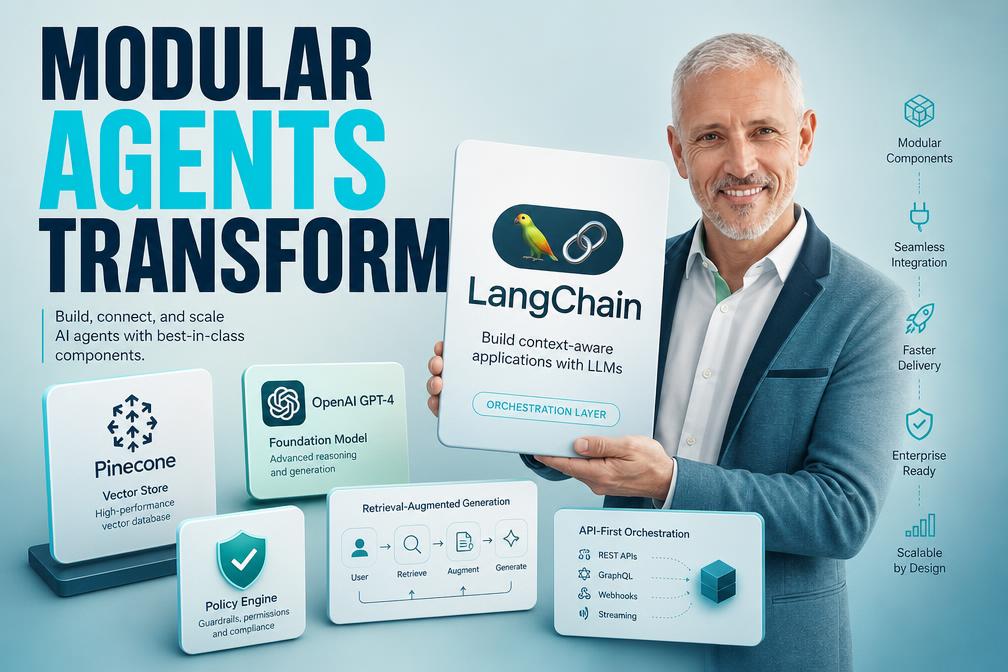
Enterprises should retire monolithic conversational platforms in favor of a composable stack built around generative‑AI‑driven agents, robust retrieval pipelines, and lightweight orchestration layers. The decisive factor is not the raw model quality but the ability to plug‑in best‑of‑breed components—LLMs, retrieval‑augmented generation, and policy engines—through open APIs, thereby preserving flexibility, reducing vendor dependence, and accelerating feature delivery.
How the IDC Survey Redefines the AI Landscape
The April 2026 IDC Conversational AI Platforms Survey captured responses from more than 700 senior IT and business leaders across the globe. It revealed a decisive pivot: 62 % of participants intend to shift a portion of their AI budget from traditional conversational platforms toward specialized generative‑AI and agentic solutions. Respondents cited three primary motivations—enhanced natural‑language understanding, faster time‑to‑value for new use‑cases, and the need for a modular architecture that can evolve with emerging models. This data point is a clear market signal that the era of monolithic, closed‑source conversational suites is waning.
The survey also highlighted a growing expectation that AI agents will become “table‑stakes” for digital transformation initiatives. Companies that cling to legacy platforms risk falling behind competitors that can rapidly prototype and deploy AI‑driven experiences. For CTOs, the implication is immediate: re‑evaluate the strategic fit of existing platforms and begin planning a migration toward an API‑first, agentic architecture.
Why the IDC Survey Signals a Shift, Not a Trend
The survey’s numbers are not a fleeting curiosity; they reflect a structural change in how enterprises view AI value. Historically, conversational platforms were prized for their turnkey deployment, but they often forced customers into proprietary data models and limited integration points. The new generation of generative AI agents, by contrast, embraces open standards such as LangChain, LlamaIndex, and emerging OpenAI‑compatible APIs, allowing firms to stitch together best‑in‑class components without rewriting core business logic. This shift redefines the engineering focus from “which platform to buy” to “how to orchestrate agents efficiently.”
Model‑agnostic orchestration – Modern agent frameworks separate orchestration from the underlying LLM, enabling teams to swap models without code changes.
Retrieval‑augmented generation – By integrating vector stores (e.g., Pinecone, Milvus) directly into the pipeline, agents can ground responses in proprietary data, a capability most legacy platforms lack.
Policy‑driven safety layers – Dedicated policy engines can enforce compliance and guardrails, reducing reliance on the platform’s built‑in filters.
Scalable microservice deployment – Container‑native agents can be scaled independently, aligning cost with usage patterns.
Vendor‑agnostic monitoring – Open telemetry hooks let ops teams instrument agents uniformly across clouds, simplifying observability.
The Architecture Bottleneck in Monolithic Platforms
Monolithic conversational platforms typically embed the language model, intent classifier, and dialog manager into a single runtime. This tight coupling creates a hidden bottleneck: any change to the model or policy requires a full redeployment of the entire stack, often leading to prolonged downtime and costly regression testing. Moreover, these platforms expose limited extensibility points, forcing engineers to build workarounds that erode maintainability. When the underlying model evolves—say, from GPT‑3.5 to GPT‑4—the platform’s internal abstractions may not support new token limits or function‑calling features, compelling teams to either accept degraded performance or undertake a costly migration.
- Single‑point failure – A platform outage disables all conversational channels, amplifying business risk.
- Opaque performance metrics – Proprietary runtimes hide latency breakdowns, making optimization guesswork.
- Rigid data schemas – Fixed intent schemas prevent rapid incorporation of new business entities.
- Limited multi‑modal support – Adding image or audio processing often requires custom extensions that break upgrade paths.
- High licensing overhead – Scaling licenses with usage spikes inflates OPEX without proportional value.
The Claim: Modular API‑First Agents Break the Platform Lock‑In Paradigm, So Your Architecture, Not Your Model Choice, Determines Success
The core argument is that the decisive factor for successful AI deployments is the surrounding architecture—how agents are composed, orchestrated, and monitored—rather than the raw language model itself. When you decouple orchestration from the LLM, you gain the freedom to adopt newer models as they emerge, without rewriting business logic. This architectural agility translates directly into faster feature cycles, lower total cost of ownership, and reduced exposure to vendor‑specific risk. In contrast, staying with a monolithic platform locks you into a single model version and a proprietary update schedule, which can quickly become a competitive disadvantage.
From an engineering perspective, the shift means re‑thinking the data flow: input text is first routed through a lightweight router, then passed to a retrieval service, fed into a selected LLM, and finally filtered by a policy engine before reaching the user. Each stage is a replaceable microservice, exposing clean contracts via HTTP/gRPC. This design empowers teams to experiment with novel prompting strategies, swap vector stores, or integrate domain‑specific knowledge bases without disrupting the overall conversation experience.
Architectural modularity, not model size, is the true lever for scaling enterprise AI.
Modular API‑First Agents in Practice
In production environments, teams that have adopted an API‑first agent stack report measurable improvements in deployment velocity and operational visibility. For example, a retail AI project replaced its legacy chatbot with a LangChain‑based orchestration layer, connecting OpenAI’s GPT‑4 to a Pinecone vector store for product catalog retrieval. The new architecture reduced average response latency from 1.8 seconds to 1.1 seconds and cut integration effort for new product lines from weeks to days. Crucially, the team could swap the LLM for a cheaper alternative during off‑peak hours without touching the orchestration code, demonstrating the power of decoupled design.
Decoupling lets you trade model cost for latency, or vice‑versa, on the fly.
Evaluating Vendor Lock‑In vs. Flexibility
When assessing whether to stay with a monolithic vendor or migrate to a modular stack, consider three dimensions: integration openness, upgrade agility, and cost predictability. Vendors that expose RESTful or gRPC endpoints for intent routing, retrieval, and policy enforcement enable a plug‑and‑play approach. Upgrade agility is measured by how many lines of code change when moving from one model version to another; a low‑impact change signals a well‑abstracted architecture. Finally, cost predictability hinges on separating compute (LLM usage) from platform licensing, allowing you to scale each independently.
A true API‑first stack turns vendor contracts into optional service agreements.
How to Build a Migration Roadmap This Quarter
First, audit the existing conversational platform to map out its core components—intent classifier, dialog manager, and any custom integrations. Identify which functions can be externalized as services (e.g., retrieval, policy enforcement). Next, prototype a minimal orchestration layer using an open‑source framework such as LangChain, connecting it to a sandbox LLM and a vector store. Validate end‑to‑end latency and accuracy against a subset of real user queries. Finally, define a phased rollout: start with low‑risk channels (e.g., internal help desk) before extending to customer‑facing bots.
Plavno’s Perspective on the Generative‑AI Migration
At Plavno, we have guided dozens of enterprises through the transition from legacy conversational platforms to modular agentic architectures. Our approach emphasizes a domain‑driven design, where business rules are encoded in policy microservices rather than hard‑coded in the platform. By leveraging our AI‑agents development expertise, clients can rapidly assemble a stack that combines the best‑in‑class LLM, a purpose‑built retrieval layer, and a compliance‑first policy engine. This methodology reduces time‑to‑value by up to 40 % and eliminates hidden licensing fees tied to monolithic platforms.
Our AI consulting services help define strategy, while our AI voice assistant development capabilities extend the stack to multimodal experiences. We also leverage deep domain knowledge in healthcare and med‑tech, and our cloud software development practice ensures robust, scalable deployments.
We also help organizations adopt a continuous‑delivery pipeline for AI components, integrating automated testing, canary releases, and observability via OpenTelemetry. This ensures that any model upgrade or policy change is validated in production without disrupting the user experience. Our experience across industries—from fintech to healthcare—shows that a modular stack not only future‑proofs AI investments but also aligns with stringent regulatory requirements.
- Rapid prototyping – Build proof‑of‑concept agents in weeks, not months, using reusable orchestration templates.
- Compliance first – Embed policy microservices that enforce data residency and industry‑specific regulations.
- Cost transparency – Separate compute spend from platform licensing for clearer budgeting.
- Scalable observability – Deploy OpenTelemetry collectors across all agent services for unified metrics.
- Vendor‑agnostic talent – Hire engineers skilled in API design rather than platform‑specific SDKs.
Business Impact of Shifting to Modular Agents
The financial upside of moving away from monolithic platforms is twofold: operational savings and revenue acceleration. Companies that have completed the migration report average reductions of 15‑20 % in AI‑related OPEX, primarily because they no longer pay per‑seat platform fees and can negotiate compute rates directly with cloud providers. At the same time, the ability to launch new AI‑driven experiences—such as personalized product recommendations or real‑time compliance assistance—creates measurable uplift in conversion rates and customer satisfaction scores.
Moreover, modular agents enable cross‑functional innovation. Marketing, support, and product teams can each own their own agent pipelines, experimenting with domain‑specific prompts without waiting for a central platform team. This democratization of AI capabilities accelerates time‑to‑market for new features and fosters a culture of data‑driven decision‑making.
How to Evaluate This in Practice
To decide whether a migration is justified, construct a decision matrix that weighs technical debt, integration effort, and projected ROI. Start by quantifying the current platform’s maintenance cost—license fees, custom integration hours, and downtime incidents. Then estimate the effort to build an API‑first orchestration layer, using internal talent or a partner like Plavno. Compare the two scenarios across three horizons: short‑term (next 6 months), medium‑term (12‑18 months), and long‑term (3‑5 years). If the modular path shows a net positive ROI in the medium horizon, it becomes the rational choice for the quarter.
If the modular approach proves viable, you can then prioritize quick‑win use‑cases, allocate budget for reusable orchestration templates, and set governance checkpoints to monitor cost and performance.
- Cost baseline – Capture all recurring platform expenses and hidden engineering overhead.
- Effort estimate – Break down migration tasks into discovery, prototype, integration, and rollout phases.
- Risk assessment – Identify dependencies on proprietary data models and potential service disruptions.
- Benefit projection – Model expected savings from reduced licensing and faster feature cycles.
- Decision gate – Set a clear ROI threshold (e.g., 12 % payback within 12 months) to green‑light the project.
Real‑World Applications of Modular Agents
Financial institutions are deploying generative agents to automate loan underwriting, pulling real‑time credit data from internal databases via secure APIs. Healthcare providers are using agentic assistants to triage patient inquiries, integrating electronic health record (EHR) systems through FHIR‑compatible retrieval services. Retail brands are enhancing virtual shopping assistants with product‑catalog retrieval, allowing customers to ask natural‑language questions about inventory and receive instantly generated, brand‑consistent responses.
Each of these use‑cases leverages the same architectural pattern: a router, a retrieval store, an LLM, and a policy layer. By reusing this pattern across domains, organizations achieve economies of scale while maintaining domain‑specific compliance and branding.
- Loan underwriting – Agents retrieve credit scores, apply risk policies, and generate approval letters.
- Patient triage – Agents query EHRs, respect HIPAA constraints, and suggest next‑step actions.
- Virtual shopping – Agents blend product catalog vectors with GPT‑4 to answer inventory queries.
- HR onboarding – Agents pull policy documents and guide new hires through compliance steps.
- IT support – Agents search knowledge bases and execute automated remediation scripts.
Risks and Limitations of the Modular Approach
While modularity offers flexibility, it also introduces new operational complexities. Managing multiple microservices increases the surface area for latency spikes, especially when network hops between retrieval, LLM, and policy layers accumulate. Security considerations become more pronounced as data traverses several endpoints; each integration point must be hardened against injection attacks and data leakage. Additionally, the responsibility for model selection and prompt engineering shifts to the engineering team, requiring specialized expertise that may be scarce.
Organizations must therefore invest in robust observability, enforce strict API contracts, and adopt a disciplined testing regime that includes synthetic queries, adversarial prompts, and compliance checks. Without these safeguards, the benefits of modularity can be outweighed by operational risk.
- Latency accumulation – Each service call adds round‑trip time; monitor end‑to‑end latency.
- Security surface – Multiple APIs increase attack vectors; enforce mutual TLS and auth.
- Skill gap – Prompt engineering and model governance require dedicated talent.
- Version drift – Independent service upgrades can cause incompatibilities.
- Observability overhead – Need comprehensive tracing across services to debug issues.
Closing Insight: Embrace Architecture First, Not Model First
The IDC Survey makes it clear that the market is moving toward generative‑AI agents that sit atop modular, API‑first infrastructures. For engineering leaders, the decisive move this quarter is to re‑architect the conversational stack around composable services, treating the language model as a replaceable component rather than the core of the system. This shift safeguards against vendor lock‑in, accelerates innovation, and aligns AI spend with measurable business outcomes.
By focusing on architecture, you gain the agility to adopt emerging models, enforce compliance consistently, and deliver AI experiences that truly differentiate your brand.
| Aspect | Monolithic Platform | Modular API‑First Stack |
|---|---|---|
| Upgrade agility | Requires full redeployment, high risk | Swap LLMs or policies via configuration |
| Cost model | License‑per‑seat + compute | Pay‑as‑you‑go compute + open‑source services |
| Extensibility | Limited to vendor SDKs | Open APIs enable any language or tool |
| Observability | Proprietary metrics, limited granularity | Unified OpenTelemetry across services |
Take the Next Step
If your organization is ready to break free from monolithic conversational platforms and adopt a modular generative‑AI stack, we can help you design, build, and scale the solution. Our expertise spans architecture, compliance, and rapid delivery, ensuring a smooth transition that delivers immediate business value.
 Chat GPT
 Perplexity
 Claude
 Gemini