What makes Gradium’s voice platform different from other AI voice startups? → It is built by the original creators of EnCodec, SoundStream, and Moshi, giving it a research‑grade foundation.
Why does the $100 million seed round matter for enterprise buyers? → The funding, led by NVIDIA, signals a commitment to GPU‑accelerated, low‑latency infrastructure that will shape product roadmaps.
Which engineering decision does this signal most directly affect? → Choosing between cloud‑centric speech services and on‑device, edge‑optimized models.
What is the core question this article answers? → How should CTOs evaluate real‑time voice AI platforms for production deployments?
Quick Answer: Prioritize Edge‑Optimized, GPU‑Accelerated Voice Stacks
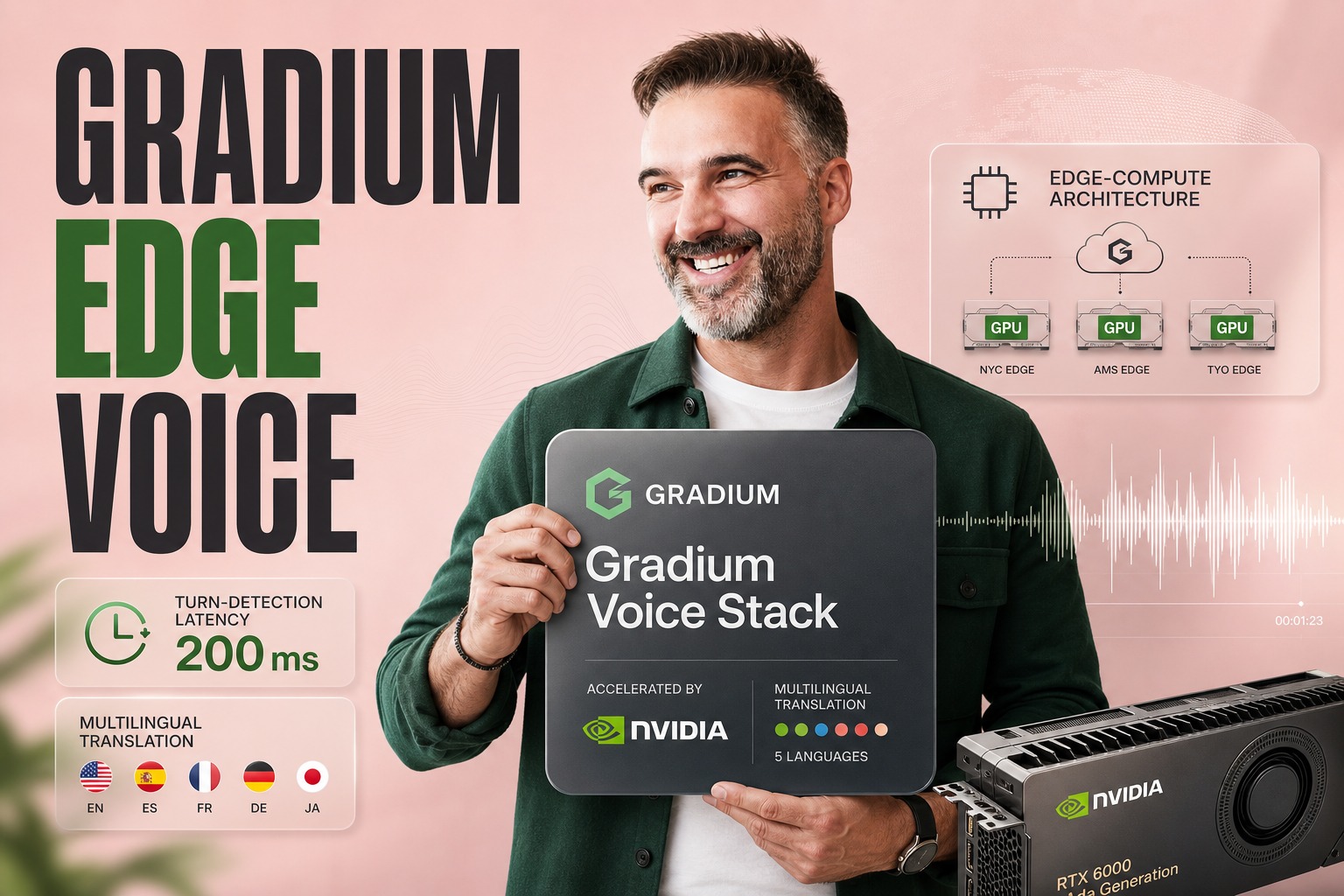
For enterprises that need sub‑second latency, reliable turn detection, and multilingual speech‑to‑speech, the decisive factor is not the model’s raw quality but the ability to run the stack on edge hardware with NVIDIA‑backed acceleration. Gradium’s research‑first architecture delivers on‑device codecs and a full‑duplex model that keep round‑trip times under 200 ms, meaning CTOs should allocate budget now for GPU‑enabled edge nodes rather than relying solely on cloud APIs.
Key rule: In real‑time voice AI, latency at the orchestration layer dominates user experience, so architecture matters more than model size.
The Market Pulse Behind Gradium’s Funding Surge
Gradium’s $100 million seed extension, with NVIDIA as headline investor, is the clearest market signal that the next wave of voice AI will be tightly coupled to specialized hardware. The voice AI market, projected to reach $20.7 billion by 2031, is growing at a 30.7 % CAGR, and investors are betting on platforms that can deliver enterprise‑grade performance without the bandwidth constraints of pure cloud solutions. This shift forces engineering teams to reassess the cost‑benefit balance of on‑premise GPU clusters versus traditional SaaS speech services.
- Research pedigree matters – The founders authored EnCodec, SoundStream, and Moshi, establishing the compression and full‑duplex foundations.
- Latency‑first design – Gradium’s turn‑detection works in 200 ms, a benchmark that outpaces many cloud‑only offerings.
- Multilingual real‑time translation – Gradium Translate supports five languages, demonstrating a production‑ready pipeline.
- On‑device execution – Models can run without cloud connectivity, reducing data‑transfer costs and latency spikes.
- Strategic NVIDIA backing – Access to the latest GPU kernels and developer tools accelerates roadmap delivery.
Why Traditional Cloud‑Only Speech APIs Falter at Scale
When a voice assistant must handle thousands of concurrent sessions, the cumulative round‑trip latency and bandwidth consumption become prohibitive. Cloud‑only APIs introduce variable network jitter, and scaling costs rise sharply as each request traverses the internet. In contrast, an edge‑deployed stack like Gradium’s can keep processing local, leveraging NVIDIA GPUs to compress audio with EnCodec and decode with SoundStream in milliseconds, preserving a smooth conversational flow even under heavy load.
Assess latency budgets – Measure end‑to‑end latency for your use case; if sub‑250 ms is required, prioritize edge‑ready stacks.
Map compute requirements – Identify whether your workload needs GPU acceleration for codecs and full‑duplex models.
Evaluate multilingual support – Determine if real‑time speech‑to‑speech translation is a core feature.
Consider connectivity constraints – For on‑premise or remote locations, on‑device execution reduces reliance on stable internet.
Factor investor backing – Platforms backed by hardware leaders like NVIDIA often receive early access to performance‑critical updates.
Architectural Implications of Full‑Duplex Voice Models
Gradium’s Moshi‑derived full‑duplex architecture processes speech directly, bypassing the traditional text‑intermediate step. This design eliminates the latency penalty of separate speech‑to‑text and text‑to‑speech pipelines, but it also demands a tightly integrated compute stack. Engineers must provision GPUs capable of handling simultaneous encoding and decoding streams, and they need to orchestrate turn‑detection logic that can reliably signal when a speaker has finished. The result is a more responsive user experience, but it raises the bar for infrastructure readiness.
Competitive Landscape: Gradium vs. Established Players
ElevenLabs dominates brand recognition with a full audio stack that includes cloning and dubbing, while LiveKit supplies real‑time infrastructure for OpenAI and Tesla. Deepgram focuses on speech‑recognition APIs. Gradium differentiates itself by embedding the research breakthroughs of EnCodec and Moshi directly into its platform, offering a unified stack that includes streaming STT, expressive TTS, semantic turn detection, and on‑device execution. This depth of integration reduces the number of moving parts and simplifies vendor management for enterprises.
- ElevenLabs – Strong in voice cloning and dubbing, but relies heavily on cloud processing.
- LiveKit – Provides real‑time voice infrastructure for large tech firms, yet does not bundle full‑duplex models.
- Deepgram – Specializes in speech‑recognition APIs, lacking integrated TTS and translation.
- Gradium – Offers a research‑grade, end‑to‑end stack with on‑device capabilities and multilingual translation.
- NVIDIA partnership – Guarantees early access to GPU optimizations that benefit all stack components.
How Gradium’s On‑Device Models Change Deployment Economics
Running models on edge devices eliminates the recurring bandwidth fees associated with streaming audio to the cloud. It also reduces the risk of service outages caused by network disruptions. However, the upfront capital expense for GPU‑enabled hardware rises, and teams must develop expertise in containerizing and orchestrating these workloads. The trade‑off is a predictable cost structure and consistent latency, which are critical for enterprise‑grade voice assistants.
- Cost predictability – Fixed hardware spend versus variable per‑request cloud charges.
- Latency consistency – Edge processing guarantees sub‑200 ms round‑trip times.
- Data sovereignty – On‑device models keep audio data local, easing compliance.
- Scalability – GPU clusters can be scaled horizontally with familiar orchestration tools.
- Maintenance overhead – Requires ongoing firmware updates and GPU driver management.
The Role of NVIDIA in Accelerating Voice AI Adoption
NVIDIA’s investment in Gradium is not merely financial; it signals a strategic intent to embed voice AI workloads into its GPU ecosystem. By aligning Gradium’s stack with NVIDIA’s TensorRT and CUDA libraries, the platform can exploit hardware‑level optimizations that reduce inference time by up to 30 % (as reported by Gradium’s internal benchmarks). This synergy shortens the path from prototype to production, enabling enterprises to meet aggressive go‑to‑market timelines.
| Feature | Gradium (Edge‑Optimized) | ElevenLabs (Cloud‑Centric) | Deepgram (Speech‑Only) |
|---|---|---|---|
| Latency (typical) | 150‑200 ms (on‑device) | 300‑500 ms (network) | 250‑400 ms (network) |
| Multilingual Speech‑to‑Speech | 5 languages, real‑time | Limited to text‑to‑speech | No translation |
| On‑Device Execution | Supported | Not supported | Not supported |
| GPU Acceleration | NVIDIA‑backed | Cloud GPUs (opaque) | CPU‑focused |
| Pricing Model | Capital‑expenditure + SaaS | Pure SaaS per request | SaaS per request |
Business Impact: From Revenue to Risk Mitigation
Gradium’s early revenue generation within weeks of launch demonstrates that enterprises value the ability to embed voice AI directly into their products without latency penalties. For a car manufacturer like Renault, the platform enables voice‑driven customer service that feels instantaneous, improving satisfaction scores and reducing call‑center costs. Simultaneously, on‑device processing mitigates regulatory risk by keeping personal audio data within local boundaries, a growing concern under GDPR and emerging U.S. privacy statutes.
Revenue acceleration – Faster time‑to‑value translates into quicker ROI for voice‑enabled services.
Cost reduction – Lower bandwidth and per‑request fees shrink operational expenses.
Compliance advantage – On‑device processing eases data‑privacy obligations.
Brand differentiation – Low‑latency experiences set products apart in competitive markets.
Future‑proofing – GPU‑optimized stacks can adopt upcoming model improvements without major re‑architecting.
Evaluating Gradium in Practice: A Decision Framework
When assessing whether to adopt Gradium’s platform, CTOs should map their product requirements onto three axes: latency tolerance, compute availability, and multilingual ambition. If the use case demands sub‑250 ms conversational latency and spans multiple languages, the edge‑optimized stack is a clear fit. Conversely, if an organization lacks GPU resources and can tolerate higher latency, a cloud‑only provider may be more cost‑effective in the short term. The framework also calls for a pilot that measures end‑to‑end latency under realistic load, ensuring that the theoretical 200 ms figure holds in production.
Define latency targets – Set measurable thresholds for user‑perceived responsiveness.
Inventory GPU resources – Audit existing edge hardware or plan for acquisition.
Run a controlled pilot – Deploy Gradium’s SDK in a sandbox to capture real‑world metrics.
Compare cost structures – Model CAPEX versus OPEX for edge versus cloud.
Iterate based on data – Refine the deployment strategy as performance data emerges.
Real‑World Applications: From Automotive to Healthcare
Gradium’s platform is already powering Renault’s voice‑driven customer service, illustrating how automotive OEMs can embed low‑latency assistants into infotainment systems. In healthcare, on‑device speech processing can enable secure patient interactions without transmitting PHI to the cloud, aligning with HIPAA requirements. The same stack can be repurposed for enterprise call‑center bots, multilingual support desks, and smart‑home devices, demonstrating its versatility across regulated and high‑throughput domains.
Risks and Limitations: What Can Go Wrong
While Gradium’s research pedigree offers performance advantages, the shift to edge compute introduces new failure modes. GPU driver incompatibilities, firmware bugs, and the need for specialized monitoring tools can increase operational complexity. Moreover, the current product suite supports only five languages, which may limit global rollouts. Enterprises must also guard against vendor lock‑in, as the deep integration with NVIDIA hardware could make migration to alternative accelerators costly.
Plavno’s Perspective: Guiding Clients Through the Edge Transition
At Plavno, we help enterprises navigate the architectural shift from cloud‑centric speech services to edge‑optimized voice AI stacks. Our consultancy combines expertise in GPU‑accelerated pipelines, container orchestration, and compliance‑first design. By leveraging our experience in building AI agents AI agents development and deploying custom software on the cloud cloud software development, we ensure that clients can extract maximum value from Gradium’s platform while mitigating operational risk. Our digital transformation services digital transformation help organizations modernize their voice AI capabilities.
| Consideration | Edge‑Optimized (Gradium) | Cloud‑Centric (Competitors) |
|---|---|---|
| Initial CAPEX | High (GPU hardware) | Low (no hardware) |
| Ongoing Ops | Complex (GPU maintenance) | Simple (managed services) |
| Latency | Sub‑250 ms guaranteed | Variable, network‑dependent |
| Data Privacy | Local storage, compliant | Cloud storage, jurisdictional concerns |
| Scalability | Horizontal GPU scaling | Elastic cloud scaling |
Closing Insight: The Edge Is Not Optional, It Is Strategic
The infusion of $100 million into Gradium, coupled with NVIDIA’s backing, makes it clear that the next generation of voice AI will be anchored in edge compute. Enterprises that ignore this shift risk falling behind in user experience, cost efficiency, and regulatory compliance. The prudent engineering response is to begin piloting edge‑ready stacks now, securing the hardware, talent, and observability frameworks needed to deliver truly real‑time voice interactions.
Bottom line: Latency‑critical voice AI forces a hardware‑first strategy, and the window to act is closing.
Take the Next Step with Plavno
If your organization is ready to evaluate a low‑latency, GPU‑accelerated voice AI platform, our team can design a proof‑of‑concept that measures real‑world performance, aligns with your compliance posture, and maps a clear migration path. We combine deep research insight with production engineering to turn cutting‑edge voice technology into reliable business value.
Call to Action
Partner with Plavno to assess your voice AI roadmap, prototype an edge‑optimized solution, and secure a competitive advantage in latency‑sensitive markets. Let’s transform your conversational interfaces from a cloud‑bound afterthought into a core, high‑performance capability.
 Chat GPT
 Perplexity
 Claude
 Gemini