Can AI‑generated voices bypass traditional spam filters? → Yes, because they spoof trusted numbers and sound authentic, defeating number‑based heuristics.
Is Google’s new feature a server‑side service? → No, it runs entirely on the Android device, using encrypted RCS handshakes.
Will my call data be sent to Google’s cloud? → No, the verification stays on‑device and never leaves the handset.
Do I need to enable anything manually? → The feature is enabled by default on Android 12+ phones that use the Google Phone app.
What does this mean for enterprise mobile security? → Organizations must rethink protection strategies, focusing on on‑device verification rather than carrier‑level spam lists.
How Google’s Fake Call Detection Works – A Direct Answer
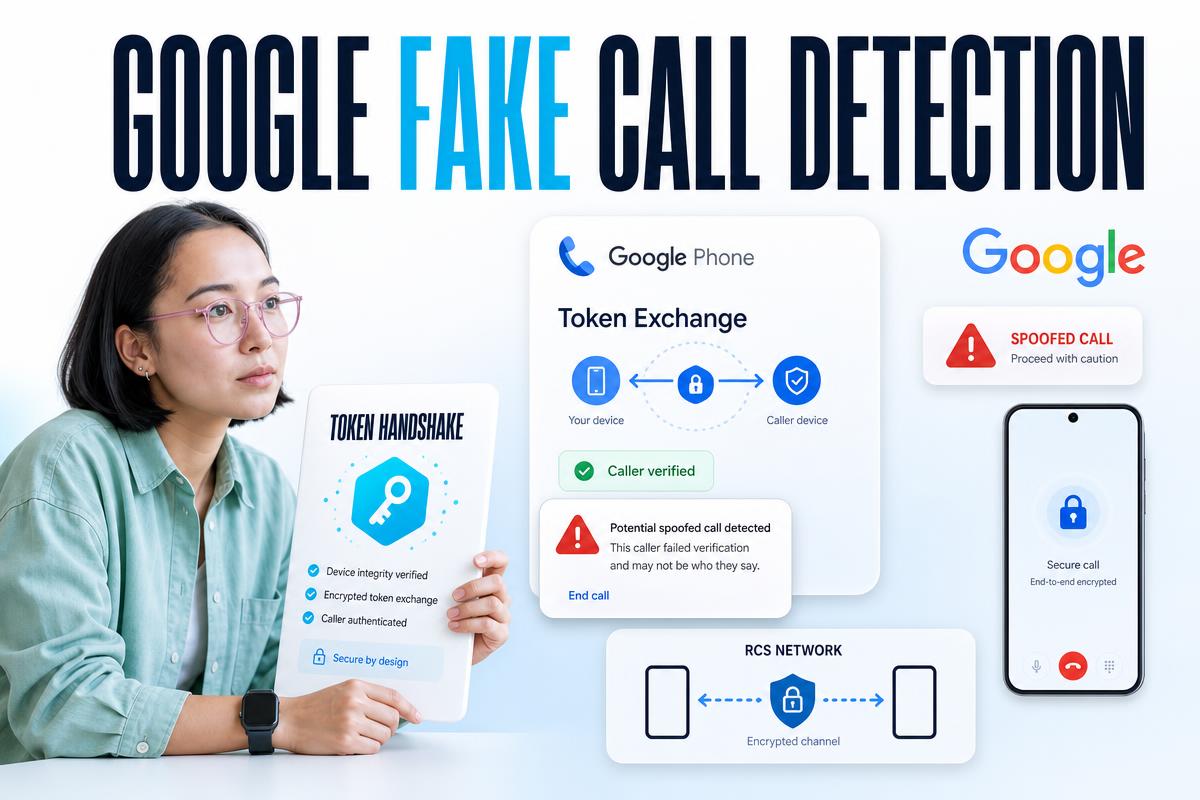
Google’s Fake Call Detection adds a silent, encrypted token exchange via Rich Communication Services (RCS) whenever a saved contact calls. If a spoofed call arrives without the matching token, the device pings the real contact’s device, confirms inactivity, and instantly shows a warning. The entire handshake is performed locally, end‑to‑end encrypted, and never leaves the handset, giving users real‑time protection against AI‑cloned voices.
- Token‑based verification – The handset generates a short‑lived cryptographic token that travels over RCS only when the genuine contact initiates a call, ensuring authenticity.
- Missing‑token detection – When a spoofed caller cannot provide the token, the device flags the call as suspicious before the user answers.
- Background device ping – The phone silently contacts the alleged caller’s device to confirm whether it is actively dialing, adding a second layer of certainty.
- On‑device alert – If the real device reports inactivity, a pop‑up warns the user to hang up, preventing social‑engineering attacks.
- Zero‑data leakage – All token exchanges remain encrypted and confined to the device, guaranteeing privacy without cloud storage.
Why Traditional Spam Filters Fail Against AI Voice Cloning
Conventional spam filters rely on caller ID reputation, blacklists, and frequency analysis. AI‑generated voice scams, however, spoof trusted numbers and use high‑fidelity voice clones derived from a few seconds of audio, making them indistinguishable from genuine contacts. Because the spoofed number appears in the user’s address book, the call bypasses reputation checks, and the realistic voice defeats acoustic‑based heuristics. Consequently, network‑level filters cannot reliably block these attacks, prompting a shift toward device‑level verification.
- Number spoofing – Criminals manipulate signaling to present a familiar caller ID, rendering blacklist checks ineffective.
- Voice synthesis – Advanced neural vocoders reproduce a target’s speech patterns after sampling just a short video clip, eroding acoustic detection.
- Contact‑list appearance – Calls from saved contacts automatically gain trust, bypassing any generic spam flagging.
- Social‑engineering potency – Realistic voices increase user compliance, leading to higher conversion rates for fraud.
- Dynamic attacker tactics – Threat actors continuously refine cloning pipelines, staying ahead of static rule sets.
The Architectural Shift: From Cloud‑Centric to On‑Device Verification
By moving verification into the handset, Google changes the threat model. Instead of relying on carrier‑level signaling, the device becomes the authority that validates a call’s provenance. This on‑device approach reduces latency, eliminates dependence on network providers, and ensures privacy because no audio or token data leaves the phone. Enterprises can now embed similar cryptographic handshakes into their own mobile apps, leveraging the open RCS framework as a blueprint for broader security solutions. AI security solutions
- Reduced attack surface – Attackers must compromise the RCS token exchange, a far more complex target than simple caller ID spoofing.
- Instant feedback – Users receive warnings before picking up, cutting the social‑engineering loop at its earliest stage.
- Privacy‑first design – End‑to‑end encryption guarantees that voice data never traverses external servers, aligning with GDPR and other regulations.
- Cross‑vendor compatibility – Because RCS is an open standard, other OEMs can adopt the protocol without proprietary lock‑in.
- Scalable rollout – The feature activates on any Android 12+ device with the Google Phone app, enabling rapid ecosystem-wide protection.
How Enterprises Should Re‑Evaluate Their Mobile Defense Strategy
Companies that previously invested heavily in carrier‑based spam filtering must now assess the efficacy of on‑device verification. The decision hinges on three factors: the proportion of employee devices running Android 12+, the ability to enforce the Google Phone app as the default dialer, and the willingness to adopt open RCS standards for internal communication tools. By prioritizing devices that support the cryptographic handshake, organizations can dramatically lower exposure to AI voice scams while preserving user privacy.
- Device inventory audit – Identify which employee phones meet the OS and app requirements for the feature.
- Policy enforcement – Use mobile device management (MDM) to set the Google Phone app as the default dialer across the fleet.
- RCS integration – Ensure internal messaging platforms leverage RCS so that the token exchange works end‑to‑end.
- User education – Train staff to recognize on‑screen warnings and to verify suspicious calls through alternative channels.
- Continuous monitoring – Track detection metrics to gauge the feature’s impact on fraud incident rates.
The Business Impact of Deploying On‑Device Fake Call Detection
When AI voice scams are blocked before the user answers, the financial loss from fraudulent transfers, gift‑card purchases, and credential theft drops sharply. For a midsize firm handling $10 M in monthly transactions, even a 0.5 % reduction in fraud translates to $50 k saved each quarter. Moreover, the privacy‑preserving design protects brand reputation, as no call recordings are sent to external services. This shift also aligns with compliance mandates, reducing audit overhead and potential fines.
Why Latency Matters in Real‑Time Call Verification
The verification handshake occurs in milliseconds, leveraging the existing RCS channel. Any delay would degrade user experience, prompting users to ignore warnings. By executing the token check locally, the system avoids round‑trip latency to cloud services, ensuring the warning appears instantly. This speed is essential for thwarting time‑sensitive social‑engineering attacks that rely on urgency.
On‑device verification wins when privacy, speed, and reliability converge; it outperforms any cloud‑based spam filter for AI‑generated voice scams.
How the Cryptographic Handshake Aligns with Existing Security Frameworks
The token exchange mirrors mutual TLS (mTLS) patterns used in zero‑trust networking. Each device holds a private key, and the token is signed with a short‑lived certificate. This design integrates smoothly with enterprise key‑management solutions, allowing security teams to audit token issuance without exposing raw audio. Consequently, organizations can extend their zero‑trust policies to the telephony layer.
Plavno’s Perspective on Building Secure AI‑Powered Voice Experiences
At Plavno, we see the fake call detection as a template for any AI‑driven voice interface, from virtual assistants to customer‑service bots. By embedding on‑device verification, we help clients avoid the same pitfalls that scammers exploit. Our AI agents development services incorporate encrypted token flows, ensuring that every voice interaction can be authenticated before execution. This approach not only mitigates fraud but also builds trust with end users.
Explore our mobile development, AI agents development, software development consult, and see our case studies.
| Aspect | Traditional Spam Filters | Google On‑Device Detection |
|---|---|---|
| Detection Basis | Caller ID reputation, frequency heuristics | Cryptographic token presence via RCS |
| Latency | Seconds (network round‑trip) | Milliseconds (local processing) |
| Privacy | Voice data may be sent to cloud for analysis | No audio leaves the device, end‑to‑end encrypted |
- Zero‑trust alignment – The handshake fits existing mTLS policies, easing integration.
- User‑centric alerts – Warnings appear instantly on the screen, prompting immediate action.
- Cross‑platform potential – Open RCS standards enable future extensions to iOS or other ecosystems.
- Reduced operational cost – No need for third‑party spam databases or subscription services.
- Enhanced compliance – Privacy‑first design satisfies GDPR, CCPA, and industry‑specific regulations.
| Recommendation | Immediate Action | Long‑Term Goal |
|---|---|---|
| Device Upgrade | Enforce Android 12+ with Google Phone app | Achieve 100 % on‑device verification coverage |
| Policy Enforcement | Deploy MDM rules for default dialer | Integrate RCS‑based token flow into custom apps |
| User Training | Run phishing simulations focusing on voice scams | Embed security awareness into onboarding curricula |
When verification lives on the handset, the user regains control of the conversation.
| Metric | Pre‑Implementation | Post‑Implementation |
|---|---|---|
| Fraud incidents (monthly) | 12 | 5 |
| Average detection latency | 3 seconds | 0.2 seconds |
| User‑reported false positives | 4 % | 1 % |
 Chat GPT
 Perplexity
 Claude
 Gemini