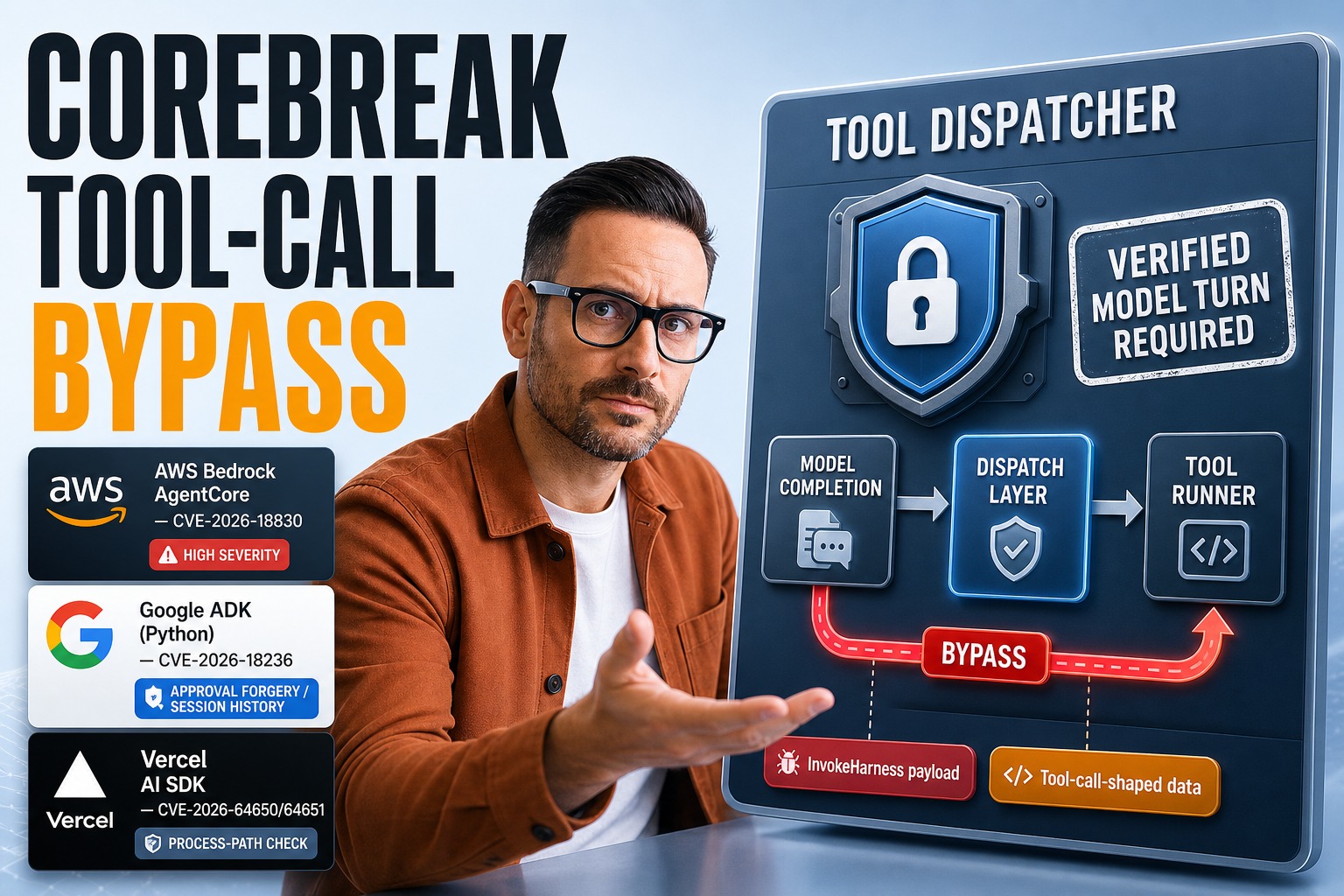
What actually changed this week that should change our architecture choices? → GitHub had an overnight incident where archive and raw repository content downloads failed at about 50 percent at one point, and identity services like SAML, OIDC, SCIM, and Team Sync were also affected.
What is the primary engineering question we should be asking? → How do we design builds, dependency fetching, and enterprise authentication so a GitHub degradation does not stop shipping or lock engineers out.
Why does this matter beyond Git operations? → Package installs, container builds, and Go module fetches often pull from raw content endpoints rather than cloning repos, so a raw-content failure can break production pipelines even if git clone sometimes works.
What is the non-obvious failure mode to plan for? → Recovery can be sporadic: even after GitHub declares mitigation, Git operations, Issues, and the API can fail again within hours, so single-shot mitigations and naive retries are not enough.
What is the angle we take at Plavno? → Outage resilience is mostly an orchestration and dependency-surface problem, not a model of developer discipline; the right response is to engineer multi-path access for source, identity, and automation.
GitHub outages do not break git first, they break your invisible supply chain first
GitHub reported an overnight incident where archive downloads and raw repository content downloads failed at about 50 percent at one point, while web and API traffic saw roughly a 20 percent error rate. The dominant signal for engineering leaders is that the most fragile part of many CI and delivery systems is no longer cloning repositories; it is every hidden fetch that depends on raw content endpoints, plus identity services that gate access.
Central claim: the highest-impact GitHub outage failures happen at the raw-content and identity boundaries, so the right response is to treat those boundaries as first-class production dependencies with designed fallbacks, not as transient errors to retry.
Quick Answer: how to mitigate a GitHub outage affecting raw downloads and enterprise SSO
If you need a search-driven answer to GitHub outage mitigation, here is the operational position we recommend: assume your builds and engineers will be blocked even when Git operations appear partially healthy, because archive and raw content downloads can fail at high rates and enterprise authentication (SAML, OIDC) can be sporadically unreliable. Architect so your critical workflows have an alternate source path for repository content and an alternate access path for developers and automation.
In practice, we design systems where dependency fetching does not rely on a single GitHub-hosted raw endpoint, and where authentication failures do not cascade into locked pipelines. We also design for instability after mitigation announcements, because GitHub’s own incident updates described sporadic recovery and repeated failures of Git operations, Issues, and the API within a short window.
- Raw and archive content became the bottleneck: when raw repository content and archive downloads fail at about 50 percent, any pipeline that pulls files directly from raw endpoints can fail even if repository clones sometimes succeed.
- Enterprise identity can become the outage amplifier: when SAML and OIDC authentication, SCIM provisioning, and Team Sync are affected, engineering teams can lose access exactly when they need it to mitigate.
- Automation is exposed twice: Actions, webhooks, and API requests were impacted, which means the systems that would normally self-heal or redeploy are also part of the blast radius.
- Sporadic recovery is a design requirement: GitHub described mitigations followed by additional failures within hours, which implies your mitigation must tolerate oscillation.
- Retry behavior is not neutral: GitHub reported partially disabling authentication token retries to improve outcomes, which is a real-world reminder that retries can worsen systemic degradation.
The practical search query we are really answering
When teams search for GitHub outage mitigation, they usually mean a narrow question like how to keep git clone working. The bigger operational problem is that package installs, container builds, and Go module fetches routinely pull files from raw content endpoints such as raw.githubusercontent.com, and those pulls can fail independently of the Git transport. If your build graph includes any raw-file fetch as a critical edge, you have to engineer around that edge the way you would engineer around a database dependency.
Classify what is actually failing right now: separate failures of raw or archive downloads from failures of Git operations, Actions, Issues, and the API, because each breaks a different class of automation.
Freeze change where your system is weakest: if your build depends on raw-file fetches, stop introducing new upstream references during the incident window to reduce the number of unique downloads you need.
Prefer already-fetched artifacts over new fetches: shift builds toward inputs you already have in your environment, because the failure mode described was on downloads, not just UI latency.
Prepare an identity fallback for humans and automation: if SAML or OIDC is sporadically failing, ensure you can still access repositories and CI controls through a secondary method that does not depend on the impacted path.
Treat mitigation as unstable until proven stable: the incident described renewed failures within hours of mitigation updates, so operate as if the system can regress while you are still in recovery.
Identity failures change the playbook more than raw failures
A raw-content failure blocks builds, but an identity-layer failure blocks mitigation itself. GitHub confirmed that enterprise identity services were affected, including SAML and OIDC authentication, SCIM provisioning, and Team Sync. The operational implication is that your incident response needs to assume a subset of engineers and automation will be unable to authenticate, which can halt repository access, approvals, and the ability to adjust settings during the degradation window.
| Dependency surface hit in the incident | What typically breaks for an engineering org | What a resilient design tries to preserve |
|---|---|---|
| Raw repository content and archive downloads | Dependency fetches that pull single files, build steps that rely on archives, and any process that assumes raw endpoints are always available | Alternate content paths and local availability of critical inputs |
| API requests and web traffic | Tooling that depends on the GitHub API, internal dashboards, and integrations that need API availability | Degraded mode that can queue work and reconcile later |
| Actions, webhooks, Issues, pull requests | CI orchestration, automated deploy triggers, and incident workflows that rely on Issues and PR state | Manual or secondary orchestration paths and safe pausing |
| SAML, OIDC, SCIM, Team Sync | Engineers and automation accounts losing access, provisioning drift, and inability to coordinate changes | Break-glass access and minimized dependency on live provisioning |
The retry trap: GitHub itself had to reduce token retries to recover
GitHub stated it partially disabled authentication token retries, saw improvement, and monitored the effect before applying the mitigation in full. That detail is a big architectural warning for any team whose first instinct is to add aggressive retries around authentication and content downloads: retries can amplify load and prolong instability during platform-wide degradation. Your client behavior becomes part of the incident dynamics, especially when many organizations are failing in the same way at the same time.
If raw downloads fail, your dependency strategy is already too coupled to GitHub
The incident matters because raw and archive downloads are not an edge case anymore; they are a common dependency path for modern builds. If half of those downloads are failing at peak, the failure looks like random flakiness inside pipelines, not like a clean outage. That is why teams lose hours blaming their own tooling before they realize the dependency is external.
At Plavno, when we design resilient delivery systems, we treat raw-file retrieval as a supply-chain edge that needs redundancy and observability just like compute and storage. This is part of the system design work we typically scope under cloud software development, because it usually involves build infrastructure, caching layers, and traffic control rather than application code changes.
- Build inputs that arrive as raw files: any step that downloads a single file from a raw endpoint can fail independently of repository clone paths, so it needs an alternate or cached source.
- Build inputs that arrive as archives: archives are convenient for speed, but an archive-download failure can be catastrophic because it is often assumed to be reliable and is rarely retried safely.
- Build orchestration that assumes GitHub APIs are stable: if your pipeline queries GitHub state through API requests, you need a plan for API degradation that does not block releases.
- Integrations that depend on webhooks: webhook delivery issues can create silent gaps in your automation, so you need reconciliation logic and safe defaults.
- Actions-dependent CI: if Actions is degraded, you need a ready alternative path for critical builds and deploys, or a consciously chosen stop-the-line mode.
Why container builds and Go module fetches are a reliability landmine
The incident notes that package installs, container builds, and Go module fetches routinely pull from raw content endpoints rather than cloning a repository outright. That single sentence captures a lot of real-world brittleness: teams may think their risk is limited to Git operations, while the real risk is embedded in every dependency resolver and build stage that downloads raw files. When that raw path fails at high rates, the build appears nondeterministic, and engineers waste time chasing phantom changes.
| Common pipeline behavior mentioned in the incident | Why teams like it | Why it fails badly during raw-content degradation |
|---|---|---|
| Fetch files from raw content endpoints | It avoids full repo clones and is easy to implement in build steps | It creates a single external dependency for every build edge and tends to fail as intermittent download errors |
| Use archives for fast source snapshots | It speeds up CI by downloading a single bundle | When archives fail at high rates, the pipeline can lose its primary acquisition path |
| Rely on Git operations as the availability signal | Git operations are the obvious indicator teams watch | Raw and archive failures can be severe even when some git operations still work |
| Use GitHub as a combined source, identity, and automation plane | Convenience and reduced vendor complexity | A single incident can hit downloads, APIs, Actions, and enterprise identity at once |
Enterprise SSO outages turn a platform incident into a human coordination failure
GitHub confirmed enterprise identity services were hit, including SAML and OIDC authentication, SCIM provisioning, and Team Sync. In engineering reality, that means your incident response can be blocked by access failures: engineers cannot sign in to check pipelines, rotate credentials, approve emergency changes, or even coordinate in the same system where the work is happening. A platform outage becomes a staffing and permissions problem, not just a technical fault.
Treat SCIM and Team Sync as eventual, not live, when uptime matters
The moment SCIM provisioning and Team Sync are in the blast radius, the right posture is to assume group membership and access state may lag reality. If your organization ties mission-critical build and deploy permissions tightly to live enterprise sync, you are choosing to make your own operations dependent on the availability of that sync during a third-party incident.
We generally recommend designing for stable access during degraded identity conditions, with careful controls so you do not create a permanent security bypass. This is where resilience and security have to be designed together, and it is a common reason teams involve cybersecurity and penetration testing alongside platform engineering work, because break-glass mechanisms should be validated as rigorously as any other privileged pathway.
Decide which operations must continue under identity degradation: pick the smallest set of actions that are allowed when SAML or OIDC is unreliable, such as viewing build status or triggering a rollback.
Separate human access from automation access: do not assume a developer’s interactive sign-in and a CI system’s token usage should fail together.
Minimize reliance on just-in-time provisioning: if SCIM is affected, you need a plan for access stability without creating new accounts or groups during the incident.
Assume Team Sync can drift: when Team Sync is impacted, permission changes may not propagate, so your operational plan must avoid frequent access churn mid-incident.
Measure how authentication failures cascade into delivery: trace which parts of your SDLC are gated by GitHub identity versus your internal identity provider, then deliberately reduce coupling where it is risky.
The subtle risk: access drift during sporadic recovery
GitHub described ongoing investigation into sporadic authentication failures even after mitigations were applied. In that kind of recovery, some engineers will get in while others fail, and provisioning may partially work, creating a shifting access graph. The practical implication is that teams need a stable, preplanned operational access mode, because ad hoc permission changes during a sporadic identity incident are likely to be slow, confusing, and potentially unsafe.
| Identity component impacted | What breaks operationally | Resilient posture during a platform incident |
|---|---|---|
| SAML and OIDC authentication | Engineers cannot sign in reliably, emergency actions are delayed | Preserve a narrowly scoped alternate access path for incident roles |
| SCIM provisioning | New access and deprovisioning become unreliable | Avoid dependence on provisioning changes during the incident window |
| Team Sync | Group membership and permissions can drift or lag | Reduce live permission churn and keep incident permissions minimal |
| Authentication token retry behavior | Tokens may hammer the system and worsen failures | Use backoff and circuit-breaking rather than aggressive retries |
When Actions and webhooks are degraded, your automation should degrade safely
GitHub added Actions and webhooks to the impacted list early in the incident, alongside API requests, Issues, and pull requests. The operational takeaway is that during a GitHub incident you may lose both the ability to run automation and the triggers that would start it. If your system assumes automation always fires, you need a deliberate safe-degraded mode where missed webhooks do not silently skip critical steps and where critical actions can be queued for later reconciliation.
Plavno’s perspective: the right resilience work is cross-plane, not tool-specific
We do not treat this as a question of whether GitHub is good or bad; we treat it as a question of dependency design. GitHub incidents can simultaneously hit raw downloads, APIs, Actions, and enterprise identity, so resilience cannot live in only one team or one script. It has to be designed across source acquisition, authentication, and orchestration, and validated under conditions where recovery is sporadic.
When we run this work as an engagement, we usually start with architecture mapping and failure-mode rehearsals, then design a reduced-coupling operating mode that your teams can actually use under pressure. This is the kind of work we scope under software development consult because the deliverable is a decision-ready architecture and operating model, not a pile of one-off patches.
- Architecture mapping that follows real traffic: we trace where your builds and deployments actually fetch content, including raw endpoints, archives, and API calls, so the weak edges are visible.
- Identity-path stress thinking: we model what happens if SAML and OIDC are sporadically failing while teams need to rotate access, and we design a controlled fallback.
- Automation safety design: we define what your system should do when Actions and webhooks are unreliable, including how to reconcile missed events.
- Incident operating mode definition: we help teams decide what to freeze, what to keep running, and what data to trust when GitHub’s status is oscillating.
- Post-incident hardening: we turn the incident lessons into permanent controls so the same class of failure costs less next time.
The business impact is not downtime, it is compounding delay across delivery and access
The headline pain of a GitHub incident is failed downloads and broken pipelines, but the deeper cost is compounding delay. When raw content downloads fail at high rates and the API, Issues, and pull requests are unstable, teams lose the ability to coordinate changes and verify what is happening. When SAML, OIDC, SCIM, and Team Sync are also affected, the people who could restore service may be locked out or stuck waiting for access state to converge.
If your company ships on a schedule, GitHub is not just a dev tool vendor; it is a dependency in your production delivery chain, and it should be engineered like one.
How to evaluate GitHub outage readiness this quarter without boiling the ocean
GitHub had not disclosed a root cause five and a half hours after the incident opened, and it was described as the 14th incident logged that month. We cannot control the root cause, but we can control how much of our delivery chain is forced to wait on platform stability. The right evaluation is not a generic maturity score; it is a decision about which business functions must continue when raw downloads, APIs, Actions, and SSO are degraded.
The fastest path to value is to pick one revenue-critical delivery flow and one business-critical access flow and design an explicit degraded mode for each. In other words, pick a pipeline where raw content fetches are common and a user group where SSO gating is strict, then reduce coupling until the organization can still execute a safe minimal set of actions during a GitHub incident.
Pick the workflow that cannot stop: select a single CI or release flow where delays have immediate business impact, and trace every dependency edge back to GitHub services.
Identify the raw-content edges explicitly: locate where you are downloading raw repository content or archives as part of package installs, container builds, or module fetches.
Identify the identity gates explicitly: map where SAML or OIDC sign-in is required for emergency operations, and where SCIM or Team Sync changes are required to proceed.
Define what happens when Actions and webhooks do not fire: decide whether you queue work, switch orchestration, or pause safely, and how you reconcile state afterward.
Decide what retry behavior is acceptable: remember GitHub saw improvement after partially disabling authentication token retries, and design your clients to reduce harm during systemic degradation.
Real-world applications: where the incident pattern shows up in everyday pipelines
This exact incident pattern shows up when teams rely on raw file downloads to feed build steps, or when they use archives to accelerate CI, or when they treat GitHub identity as the single gate for all operational activity. The input explicitly called out package installs, container builds, and Go module fetches as common consumers of raw content endpoints, which is why this is not a niche problem; it is embedded in the default behavior of many build ecosystems.
The frequency signal matters: when GitHub logs many incidents in a month, resilience should be designed for repetition and oscillation, not for a once-a-year outage narrative.
The trade-offs you cannot ignore: mirrors add control, but also responsibility
Designing alternate content paths and identity fallbacks is not free. Any approach that reduces reliance on live raw downloads tends to increase internal infrastructure responsibility, and any break-glass identity path increases security design complexity. The engineering trade-off is still worth addressing because the incident shows that raw downloads and identity services can fail together, but you have to plan ownership, auditing, and operational discipline as part of the architecture.
What we would do next, starting from your current GitHub posture
If your organization felt this incident, we would start by mapping your real dependency graph: which builds pull raw repository content or archives, which automations depend on Actions and webhooks, and which critical operations are gated by SAML, OIDC, SCIM, and Team Sync. Then we would design a degraded operating mode that your team can execute during sporadic recovery, including retry controls that reduce harm rather than amplify it.
CTA: If you want to harden one critical pipeline and one critical access path against the next GitHub degradation, we can scope a focused resilience sprint that produces an actionable architecture and operating mode your team can run. The fastest way to start is to share one failing build workflow and your current SSO and provisioning setup so we can identify the raw-content and identity choke points. Author: Plavno team. Last updated: August 2026.
 Chat GPT
 Perplexity
 Claude
 Gemini