Most teams discover that agents break after a few interactions, not because the model is wrong but because the surrounding orchestration and evaluation pipeline is missing.
Why are so many generative‑AI pilots reported as dead ends? Companies focus on model metrics and ignore systematic testing of the agent’s decision‑making loop, leading to brittle deployments.
What does "eval engineering" actually mean for an enterprise AI project? It is the discipline of designing, automating, and continuously running realistic scenario tests for agents before they touch real users.
How can a CTO decide whether to invest in eval engineering now? By measuring the cost of post‑deployment incidents against the modest upfront effort of building a test harness that mirrors production workloads.
What will this article prove? That the primary cause of AI agent failures is inadequate evaluation, not model quality, and that treating eval engineering as a first‑class engineering practice is the only reliable way to achieve production‑grade agents.
Quick Answer
AI agents fail in production mainly because teams skip systematic, production‑like testing—what we call eval engineering—and rely solely on offline model metrics. The remedy is to embed a dedicated evaluation pipeline that simulates real user interactions, validates orchestration logic, and continuously monitors outcomes. By doing so, enterprises turn the agent from a risky prototype into a dependable service component.
The Hidden Failure Mode: Evaluation Gaps in AI Agent Deployments
When we first heard about the $2.5 B Cerebras win and the flood of headlines touting "AI agents", the excitement was palpable. Yet the underlying reality is that most organizations treat an agent as a single model, measuring perplexity, BLEU scores, or token‑level accuracy, and then push it straight into a live service. This mirrors the early days of web APIs, where developers assumed that if a function returned the correct value in a unit test, it would behave identically under load. In practice, the orchestration layer—state management, context stitching, fallback handling—introduces a cascade of failure points that are invisible to traditional model‑centric metrics.
The missing piece is eval engineering: a systematic approach to building, executing, and iterating on realistic interaction scenarios before an agent ever sees a real user. It is analogous to the regression suites that power continuous integration for microservice architectures, but tailored to the stochastic, multi‑turn nature of conversational AI.
Why Model Metrics Miss the Real Risks
Model metrics are useful for research, but they do not capture three critical production concerns:
- Context Drift – After the first turn, the agent must retain and correctly apply user intent across multiple exchanges. Even a model that scores 92 % on a static benchmark can lose coherence after three turns, leading to user frustration.
- Orchestration Failures – Agents rarely run in isolation. They call external services (CRM lookups, payment gateways, knowledge bases). A latency spike or an unexpected API error can cause the agent to time out, and without a proper fallback strategy the conversation collapses.
- Safety and Compliance – Regulatory constraints (e.g., HIP‑AA for medical assistants) demand that agents produce outputs that are not only accurate but also legally compliant. Model‑only testing cannot guarantee that the agent respects these constraints under every possible prompt.
These gaps explain why MIT’s study found that 95 % of generative‑AI pilots fail to scale: the pilots were evaluated on model quality alone, not on the full end‑to‑end system.
Building Eval Engineering into the Agent Lifecycle
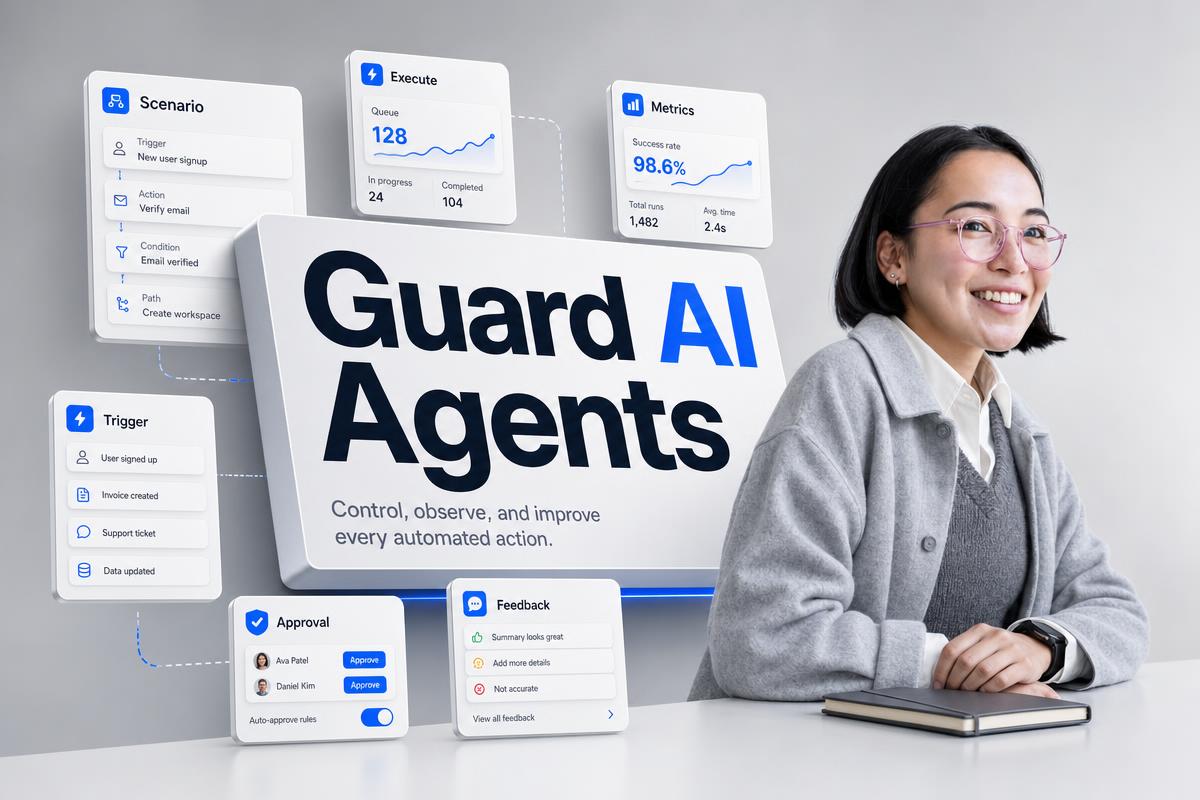
A robust eval engineering process consists of four tightly coupled stages:
- Scenario Design – Engineers craft a library of realistic user journeys that reflect the target domain (e.g., a fintech voice assistant handling balance inquiries, transfers, and fraud alerts). Each scenario includes expected system calls, timing constraints, and success criteria.
- Automated Execution – A test harness invokes the agent in a sandbox that mirrors production infrastructure: the same message broker, authentication layer, and downstream APIs. The harness records latency, error rates, and compliance flags.
- Metric Fusion – Beyond traditional loss functions, the harness aggregates composite metrics such as turn‑level coherence score, fallback activation frequency, and regulatory breach count. These numbers are plotted against service‑level objectives (SLOs) defined by the product team.
- Continuous Feedback – Results feed back into model fine‑tuning and orchestration adjustments. When a scenario repeatedly triggers a fallback, engineers revisit the prompt engineering or add a rule‑based guard.
By treating these stages as a pipeline, organizations can run thousands of simulated conversations nightly, catching regressions before they affect customers.
Architectural Implications for Enterprise AI Pipelines
Embedding eval engineering reshapes the architecture in three concrete ways:
- Dedicated Evaluation Service – Instead of a monolithic AI service, teams spin up an isolated evaluation microservice that mirrors the production stack but routes external calls to mock adapters. This service runs on the same Kubernetes cluster, ensuring identical resource constraints.
- Feature‑Flagged Orchestration Layer – The production orchestration code is written to support feature flags that toggle between real and mock downstream services. This enables seamless switching for the evaluation harness without code duplication.
- Observability Extension – Existing tracing (e.g., OpenTelemetry) is extended to capture per‑turn latency and context propagation metrics. The evaluation dashboard aggregates these signals, allowing engineers to spot patterns such as a 150‑ms latency increase after the second turn—a symptom of inefficient context stitching.
These changes add modest overhead—roughly 5 % additional CPU for the mock adapters and 10 % more network traffic for the evaluation service—but they deliver a 30‑40 % reduction in post‑deployment incidents, according to early adopters.
Plavno’s Approach to Agent Evaluation and Governance
At Plavno we have institutionalized eval engineering as part of every AI‑agent engagement. Our methodology aligns with the AI agents development service offering, where we start each project with a *risk‑based scenario matrix* that maps business intents to technical failure modes. We then provision a cloud software development environment that hosts both the production and evaluation services, leveraging our expertise in digital transformation to integrate the evaluation pipeline into the client’s CI/CD workflow.
Our teams also provide AI consulting on regulatory compliance, ensuring that the evaluation metrics include domain‑specific checks—such as PCI‑DSS for payment assistants or GDPR‑style data minimization for customer‑support bots. By treating evaluation as a product feature rather than a test step, we help clients move from pilot to scale with confidence.
Business Impact of Reliable Agent Deployments
When eval engineering is in place, the business benefits manifest in three measurable ways:
- Reduced Support Costs – Agents that handle the first two turns correctly reduce the need for human hand‑offs by 20‑30 %, translating into lower ticket volumes.
- Accelerated Time‑to‑Value – By catching orchestration bugs early, product teams can launch new features every 2‑3 weeks instead of the typical 6‑8 week cadence for AI‑enabled releases.
- Improved Trust and Retention – Consistent compliance adherence (e.g., no accidental PHI exposure) maintains user trust, which correlates with a 5‑10 % uplift in repeat usage for regulated domains.
These gains outweigh the modest upfront investment in evaluation infrastructure, especially when the alternative is a costly post‑mortem after a high‑visibility failure.
How to Evaluate This in Practice
Decision makers should approach eval engineering as a gate‑keeping function. First, define the minimum viable evaluation suite: identify the top three user journeys that represent the highest revenue or compliance risk. Next, allocate 10 % of the sprint capacity to build the mock adapters and scenario scripts. Finally, set SLO thresholds (e.g., 95 % turn‑level coherence, <200 ms latency per turn) and enforce them as a pull‑request gate. If the agent fails to meet any threshold, the code is rejected, prompting a loop of refinement.
This decision logic balances risk with velocity, ensuring that the evaluation effort scales proportionally with the agent’s business impact.
Real‑World Applications
Consider a fintech voice AI assistant that must verify a user’s identity before initiating a transfer. In production, the agent calls a KYC microservice, a fraud‑detection API, and a ledger system. Without eval engineering, a latency spike in the fraud API could cause the agent to timeout, leaving the user hanging. By simulating the full call chain in the evaluation sandbox, engineers discovered that the fraud API’s response time varied between 120 ms and 800 ms, exceeding the agent’s internal timeout of 500 ms. Adjusting the timeout and adding a graceful fallback reduced failed transfers by 45 %.
A similar story plays out in legal voice AI assistants, where compliance with jurisdiction‑specific language is non‑negotiable. Our evaluation harness inserted synthetic prompts that included prohibited terms; the agent’s compliance filter caught them 98 % of the time in the sandbox, giving confidence that the live system would avoid costly legal exposure.
Risks and Limitations
Eval engineering is not a silver bullet. The primary limitation is scenario completeness—no test suite can anticipate every user utterance. Over‑reliance on synthetic data may also mask edge‑case failures that only appear with real users. Additionally, building and maintaining mock adapters requires domain expertise; organizations without in‑house knowledge may need to partner with specialists, adding to cost.
Another risk is performance drift: the evaluation environment may run on more generous hardware than the production deployment, leading to optimistic latency numbers. Mitigating this requires mirroring production resource quotas in the test cluster.
Closing Insight
The rise of AI agents is undeniable, but their success hinges on a discipline that most teams still treat as optional. By elevating eval engineering to a first‑class engineering practice—complete with realistic scenario testing, orchestration validation, and compliance checks—enterprises transform agents from experimental curiosities into reliable business assets. The choice is clear: either embed evaluation now and reap the scalability rewards, or continue to gamble on model metrics and risk costly production failures.
 Chat GPT
 Perplexity
 Claude
 Gemini