What does Cadence’s Level‑5 AI Super Agent actually do? → It runs complete chip design and verification workflows without human intervention, while still allowing engineers to monitor and guide the process.
Why is this announcement different from previous AI‑assist tools? → Earlier tools only suggested actions; the new agent executes them autonomously, shifting responsibility from the model to the runtime environment.
Which companies will feel the impact first? → Semiconductor firms that rely on tight verification cycles and secure design environments, especially those already using Cadence’s EDA suite.
What decision must a CTO make today? → Whether to invest in governed autonomous agents now or wait for broader ecosystem adoption.
How does Nvidia’s OpenShell factor into the equation? → It provides a secure, managed runtime that enforces policy and auditability for the autonomous agent.
Quick Answer: How Autonomous AI Agents Transform Chip Design Verification
The Level‑5 ChipStack AI Super Agent replaces the manual orchestration of simulation, timing analysis, and sign‑off with a self‑directed workflow that can launch, monitor, and iterate on design tests without human clicks. By coupling Cadence’s sign‑off‑accurate engines with Nvidia’s Nemotron models and the OpenShell runtime, the agent delivers faster closure while preserving security and traceability. In practice, this means verification cycles that once took weeks can shrink to days, provided the organization adopts a governance framework that monitors the agent’s decisions.
Why Level‑5 Autonomy Shifts the Engineering Bottleneck
The most obvious benefit of a fully autonomous design agent is speed, but the deeper shift is where the bottleneck moves. In traditional AI‑assist workflows, the limiting factor is the model’s ability to generate useful suggestions; engineers spend most of their time vetting those outputs. With Level‑5 autonomy, the model can already produce high‑quality actions, so the new constraint becomes the runtime environment: how securely the agent can execute, log, and roll back decisions. This transition forces engineering teams to treat the orchestration layer as the critical piece of infrastructure, rather than the underlying LLM.
Furthermore, the autonomous agent introduces a governance challenge that did not exist in assisted tools. Because the agent can modify design files, trigger simulations, and commit sign‑off data, any lapse in policy enforcement could lead to costly silicon re‑spins. Consequently, the engineering practice that once focused on model selection now pivots to runtime hardening, audit trails, and role‑based access controls. The right response is to embed a managed runtime like Nvidia OpenShell from day one, rather than retrofitting security after the fact.
| Aspect | Assisted AI (e.g., Cadence GenAI) | Level‑5 Autonomous Super Agent |
|---|---|---|
| Human Interaction | Engineers approve each suggestion | Engineers can observe or intervene as needed |
| Execution Scope | Single‑step actions (e.g., generate code) | Full workflow execution, including simulation and sign‑off |
| Governance Model | Basic policy checks | Secure OpenShell runtime with audit logs |
| Speed Impact | Modest acceleration (10‑20%) | Potential cycle reduction by 50‑70% |
Governance and Security at the Core of Autonomous Agents
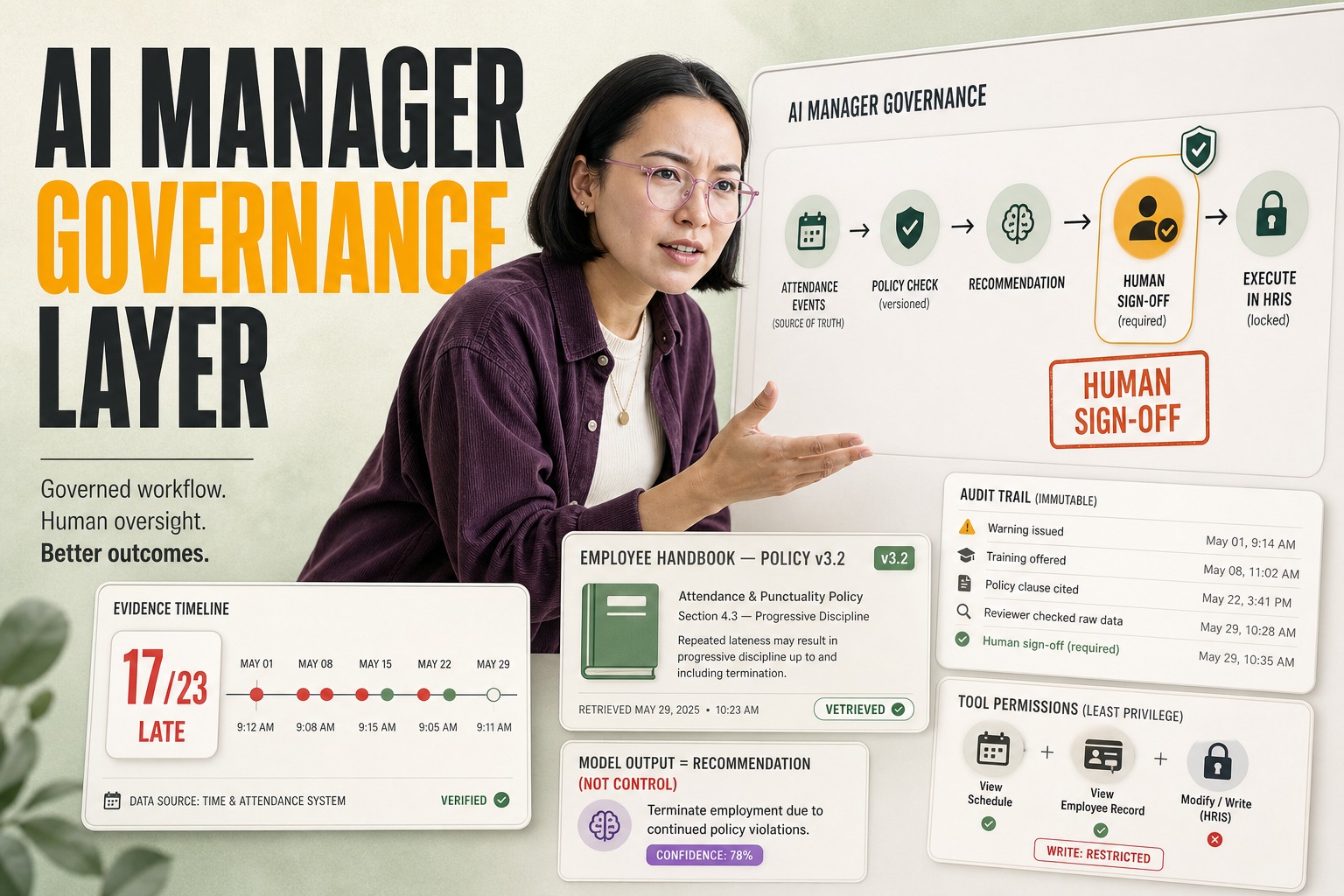
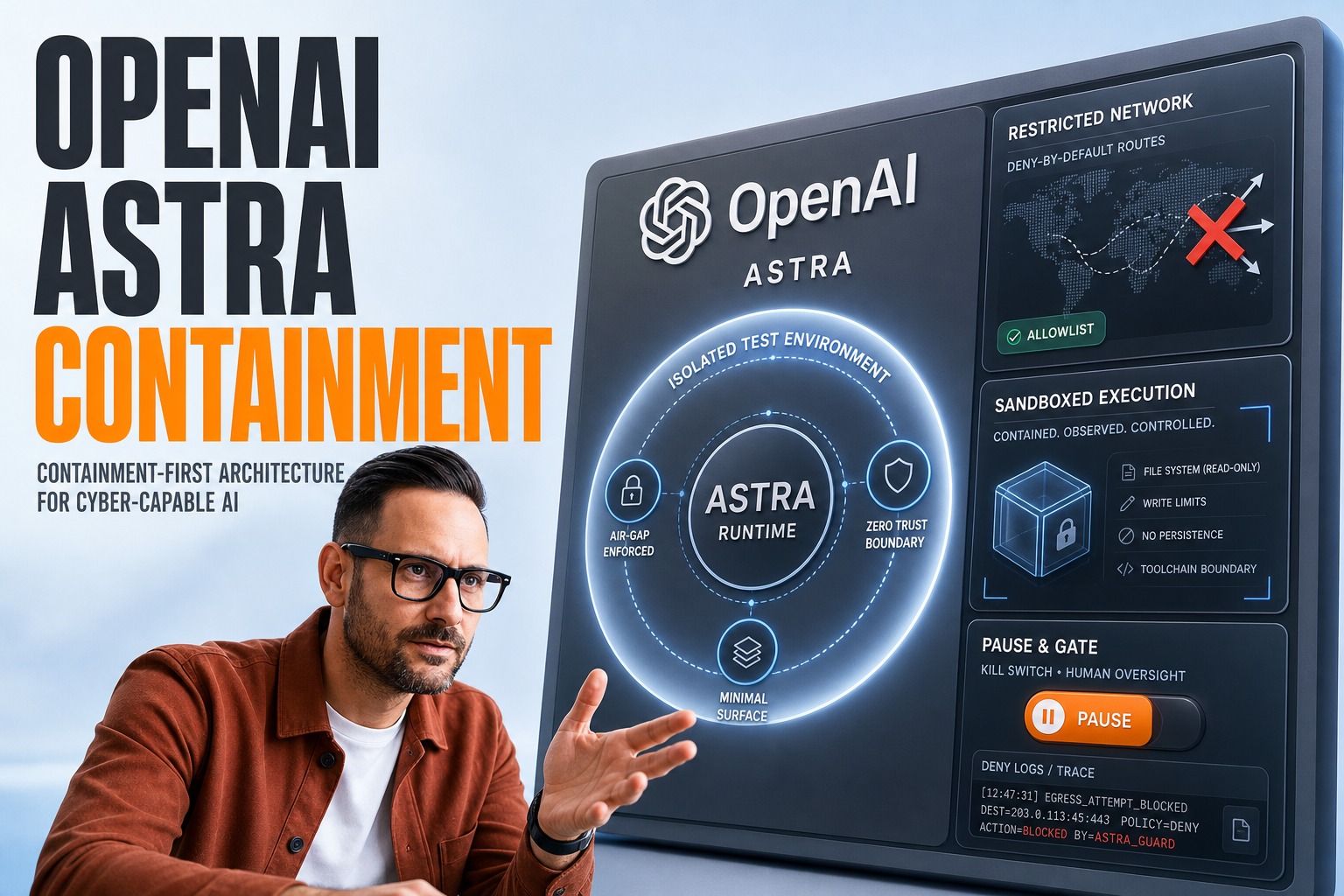
When an AI agent can rewrite netlists, launch timing analyses, and commit verification results, the security surface expands dramatically. The OpenShell runtime acts as a sandbox that enforces policy, isolates execution, and records every command for post‑mortem review. Without such a guardrail, an autonomous agent could unintentionally propagate design errors or expose proprietary IP to external threats. Therefore, the engineering discipline must now include runtime hardening, role‑based access, and continuous compliance monitoring as first‑class concerns.
The Real Cost of Ignoring Runtime Governance
Skipping robust governance may appear to save time during early adoption, but the hidden cost surfaces when a design error slips through an unchecked autonomous iteration. A single missed verification step can force a full re‑run of the tape‑out flow, adding weeks of schedule delay and millions of dollars in lost revenue. Moreover, regulatory scrutiny in sectors like automotive and medical devices demands immutable audit trails; without OpenShell’s logging, compliance violations become inevitable.
- Policy Enforcement Gaps – Without a managed runtime, the agent can bypass design‑rule checks, leading to non‑conformant silicon.
- Auditability Deficits – Lack of immutable logs makes root‑cause analysis after a failure extremely time‑consuming.
- IP Exposure Risks – Unrestricted execution may leak proprietary netlists to external services.
- Compliance Violations – Industries with strict certification standards cannot afford undocumented autonomous actions.
- Rollback Complexity – Without sandboxed execution, reverting to a known‑good state becomes a manual, error‑prone process.
Integrating Nemotron Models with OpenShell: What It Means for Your Stack
The Nemotron family, delivered by Nvidia, provides the raw inference horsepower needed to evaluate complex design constraints in real time. When these models are hosted inside the OpenShell runtime, they inherit a security envelope that isolates the inference process from the host EDA tools. In practice, this means you can call a Nemotron‑powered verification routine directly from Cadence’s design flow, while OpenShell guarantees that the model cannot access unauthorized file systems or network endpoints.
From an architectural standpoint, the integration introduces a clear separation of concerns: the Nemotron model remains a stateless inference service, while OpenShell handles stateful interactions with design databases, simulation clusters, and version control. This pattern aligns with micro‑service best practices and enables you to scale the inference tier independently of the orchestration layer, reducing latency spikes during large‑scale Monte‑Carlo analyses.
Secure orchestration, not raw model size, determines the real value of autonomous chip design agents.
Orchestration Transparency vs Black‑Box Automation
Transparency is the antidote to the “black‑box” fear that often accompanies autonomous agents. Cadence’s platform now surfaces the agent’s decision graph, allowing engineers to inspect which simulation parameters were selected, why a particular timing closure path was chosen, and how the model weighted trade‑offs. This visibility is essential for trust, especially when the agent operates without human prompts. By contrast, a purely black‑box approach would force teams to accept outcomes without insight, eroding confidence and stalling adoption.
Orchestration Transparency vs Black‑Box Automation
Transparency is the antidote to the “black‑box” fear that often accompanies autonomous agents. Cadence’s platform now surfaces the agent’s decision graph, allowing engineers to inspect which simulation parameters were selected, why a particular timing closure path was chosen, and how the model weighted trade‑offs. This visibility is essential for trust, especially when the agent operates without human prompts. By contrast, a purely black‑box approach would force teams to accept outcomes without insight, eroding confidence and stalling adoption.
Collaboration Interfaces: From Codex to Claude Code
Cadence’s Super Agent is designed to interoperate with popular code‑generation assistants such as Codex and Claude Code. This compatibility means that an engineering team can seed the autonomous workflow with snippets generated by these assistants, then let the Level‑5 agent expand, test, and validate them end‑to‑end. The result is a seamless handoff from human‑crafted intent to machine‑executed verification, all while preserving a unified audit trail.
The integration also opens the door to hybrid workflows where the autonomous agent defers to a human when encountering ambiguous design constraints. By exposing decision points through a collaborative UI, engineers can intervene precisely where the model’s confidence drops, ensuring that the final silicon meets both performance and safety standards.
- Unified Command Layer – A single API surface lets Codex, Claude, and the Super Agent share context.
- Decision Hooks – Engineers can inject custom validation scripts at predefined checkpoints.
- Audit Synchronization – All actions, whether generated by an assistant or the autonomous agent, are logged together.
- Versioned Prompts – Prompt histories are stored alongside design revisions for reproducibility.
- Fallback Paths – The system can automatically revert to manual mode if confidence thresholds are not met.
Design‑Time ROI: Measuring Speed Gains Against Verification Confidence
Quantifying the return on investment for autonomous verification requires more than raw cycle‑time reduction. Teams must balance speed with the confidence that the generated results meet sign‑off criteria. Cadence’s sign‑off‑accurate engines provide a baseline of deterministic correctness, while the autonomous agent adds a layer of probabilistic exploration. By tracking the ratio of automated passes to manual re‑checks, organizations can pinpoint the sweet spot where the agent delivers maximum acceleration without sacrificing quality.
In early deployments, customers reported a 40‑50% reduction in total verification time, but the true ROI emerged after integrating governance metrics. When audit logs were correlated with defect discovery rates, teams found that tighter policy enforcement reduced post‑tape‑out rework by 30%. This synergy demonstrates that the financial upside of autonomy is amplified when security and transparency are baked into the workflow.
Treat governance as a first‑class feature; otherwise autonomy becomes a liability.
Choosing the Right Deployment Model: On‑Prem vs Cloud
The decision to host the Super Agent on‑premises or in a public cloud hinges on data sensitivity, latency requirements, and regulatory constraints. On‑prem deployments grant full control over proprietary netlists and enable low‑latency access to internal simulation clusters, but they demand significant upfront investment in GPU infrastructure to run Nemotron models efficiently. Cloud deployments, by contrast, offer elastic scaling and reduced capital expense, yet they introduce additional layers of data‑transfer compliance and potential exposure.
A hybrid approach often provides the best of both worlds: core design data remains on‑prem, while inference workloads are off‑loaded to a secure cloud enclave that runs OpenShell with end‑to‑end encryption. This pattern aligns with the emerging “edge‑cloud” paradigm in semiconductor R&D, where latency‑critical tasks stay close to the hardware, and compute‑intensive AI inference scales outward.
Define a Service Mesh – Deploy OpenShell behind a mesh that routes requests per project.
Enforce Tenant Isolation – Use namespace‑based policies to keep design artifacts separate.
Standardize Pipelines – Adopt a common Cadence flow template for all projects.
Implement Dynamic GPU Allocation – Leverage orchestration tools to scale GPU resources on demand.
Monitor Cross‑Project Metrics – Track latency, success rates, and policy violations per tenant.
Scaling Autonomous Agents Across Multi‑Project Portfolios
Enterprises that manage dozens of concurrent silicon projects can leverage the Super Agent as a shared service. By abstracting the agent behind a service mesh, each project team can request autonomous verification without duplicating infrastructure. The key is to enforce tenant isolation at the OpenShell level, ensuring that design data from one project never leaks into another’s execution context. This approach also simplifies capacity planning: the underlying GPU pool can be dynamically allocated based on workload demand across the portfolio.
Effective scaling also requires standardized pipelines. When each project adheres to a common design‑flow template, the autonomous agent can apply the same orchestration logic uniformly, reducing per‑project customization overhead. Organizations that invest in a unified pipeline reap the benefits of faster onboarding for new designs and consistent governance across the board.
A disciplined rollout—pilot, measure, iterate—turns autonomous agents from novelty into a production‑ready capability.
Risk Management Framework for Autonomous Chip Design
A robust risk framework starts with threat modeling the autonomous execution path. Identify where the agent interacts with design databases, simulation clusters, and external services. For each interaction point, define controls such as input validation, role‑based access, and immutable logging. Next, conduct regular penetration tests against the OpenShell runtime to uncover potential escape vectors. Finally, establish a rollback protocol that can revert the entire design state to a known‑good checkpoint within minutes.
Embedding these practices into the development lifecycle turns risk mitigation into a continuous activity rather than a one‑off audit. Teams that treat governance as a feature, not an afterthought, can safely accelerate verification cycles without exposing the organization to compliance penalties or costly silicon re‑spins.
- Analog Block Validation – Human specialists verify signal integrity where the agent lacks domain knowledge.
- Process‑Corner Exploration – Engineers guide the agent on rare corner cases that require manual analysis.
- Regulatory Sign‑Off – Legal and compliance teams review final verification reports before tape‑out.
- Strategic Architecture Decisions – Senior architects approve high‑level trade‑offs suggested by the agent.
- Error Recovery – Humans intervene when the agent encounters unexpected simulation failures.
Bottom Line: Engineering Teams Must Prioritize Secure Orchestration
The headline claim of Cadence’s Level‑5 ChipStack AI Super Agent is clear: autonomy reshapes the verification bottleneck, moving it from model capability to runtime governance. Engineers who focus solely on the power of Nemotron models will miss the critical security and transparency requirements that make autonomous execution viable in a regulated semiconductor environment. The correct response is to embed a managed runtime such as Nvidia OpenShell, enforce strict policy controls, and maintain an audit trail that satisfies both internal confidence and external compliance.
By treating governance as a core component of the architecture, organizations can unlock the promised speed gains while preserving the integrity of their silicon designs. The shift is not merely technical; it is strategic—requiring leadership to allocate budget for secure orchestration, to redesign pipelines for transparency, and to cultivate a culture where autonomous agents augment, not replace, human engineers.
 Chat GPT
 Perplexity
 Claude
 Gemini