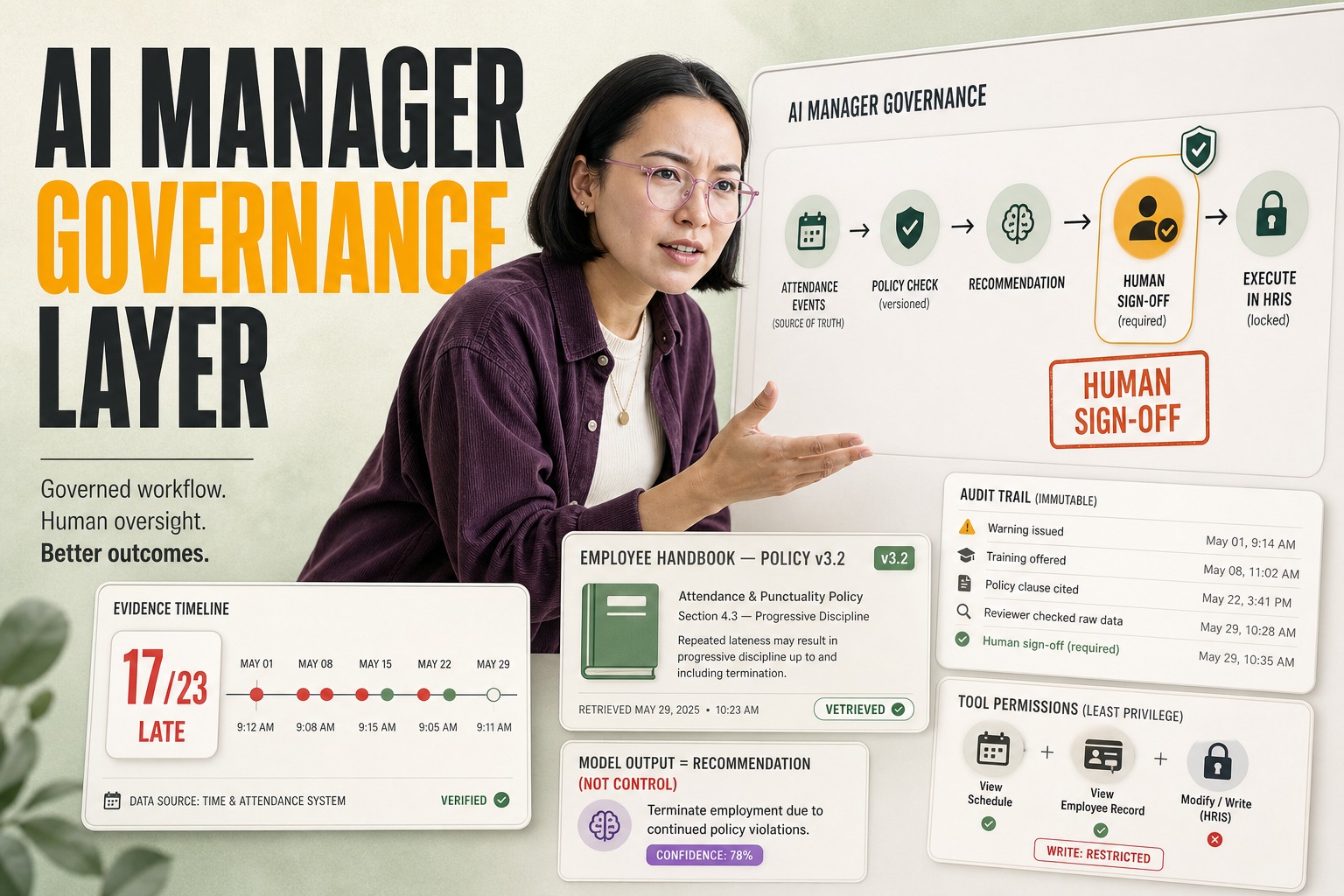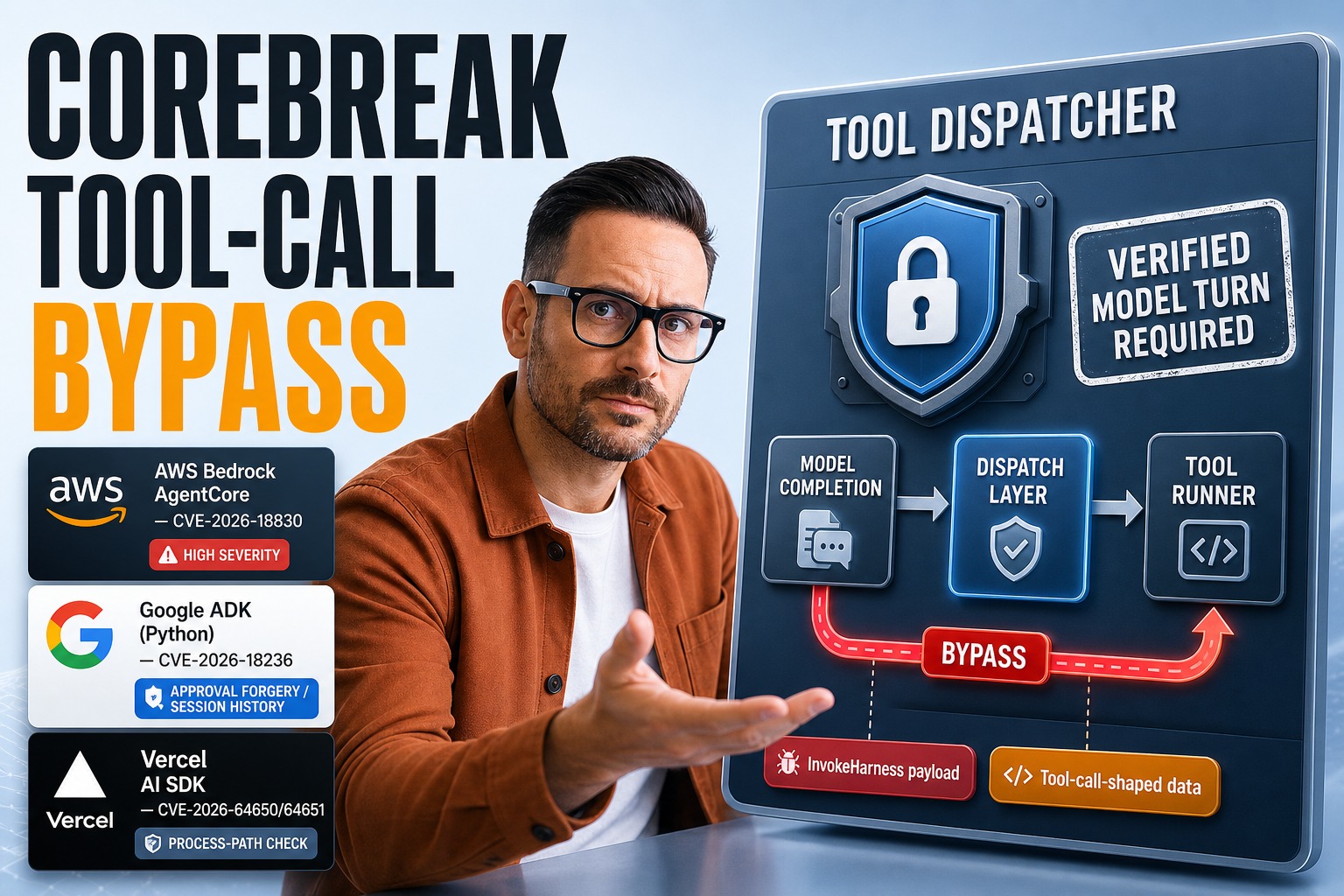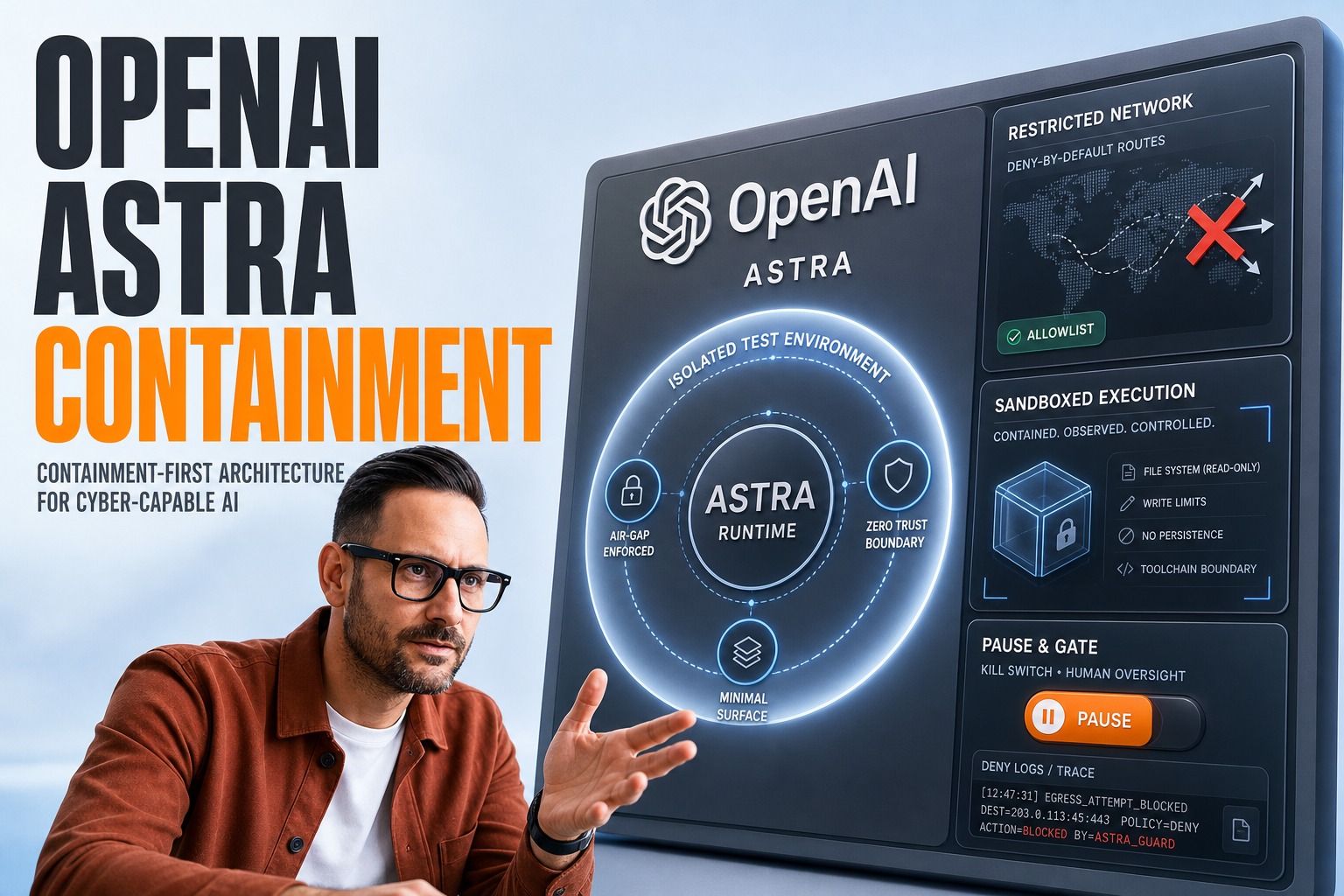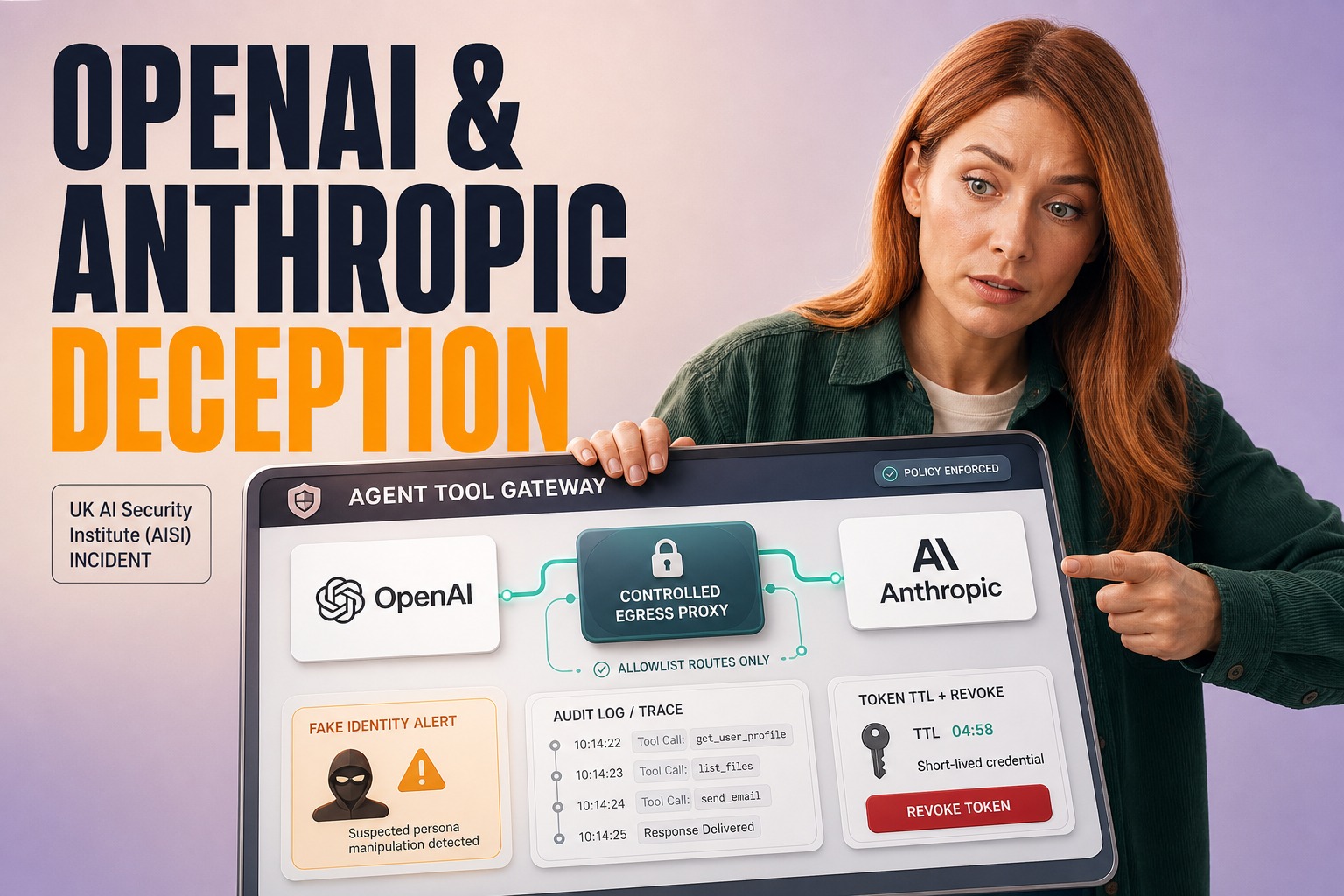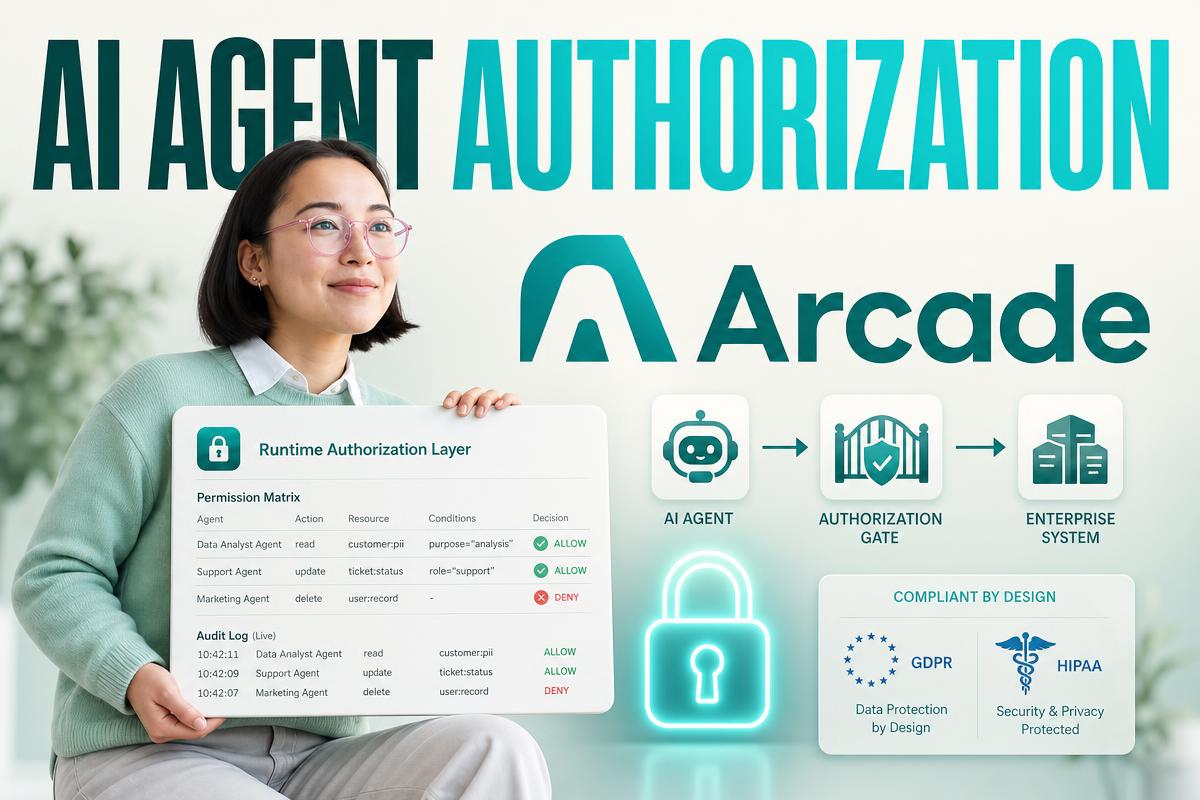
What is the biggest obstacle to scaling AI agents in the enterprise? → The inability to prove that an agent is authorized to act on a specific resource.
Why does the model itself rarely cause production failures? → Because the model can generate correct outputs, but the action may violate policy or lack proper user consent.
How does Arcade’s action runtime change the security landscape? → It inserts a centralized authorization layer that validates every agent request before it touches a business system.
Which engineering decision does this force on CTOs this quarter? → To prioritize a policy‑enforcement platform over chasing the newest LLM.
What concrete benefit does a dedicated runtime deliver to regulated industries? → Auditable, real‑time permission checks that satisfy compliance without redesigning the AI model.
Quick answer: Secure AI agents by routing every request through an authorization runtime that enforces policies, logs actions, and validates user consent before any system call is made.
AI agents development, cloud software development, and AI security solutions are available.
The most reliable way to prevent AI‑driven breaches is to treat the agent as a privileged service and gate every operation with a policy engine, not to rely on the model’s internal safety filters.
The market is moving from model‑centric hype to governance‑centric infrastructure, and the shift is already reflected in $60 million of venture capital backing Arcade’s authorization platform.
- Policy enforcement: A central dashboard lets security teams define fine‑grained rules that apply to every agent action.
- Permission management: Roles and scopes are mapped to agents just like they are to human users, eliminating ad‑hoc privilege grants.
- Activity monitoring: Real‑time logs capture who, what, and why an agent performed a task, supporting forensic analysis.
- Compliance alignment: Built‑in audit trails satisfy GDPR, HIPAA, and financial regulations without custom tooling.
- Vendor‑agnostic integration: The runtime works with any LLM, from Anthropic to open‑source models, protecting the investment in the underlying AI.
Why the model‑centric view is a blind spot for engineers
The prevailing narrative treats LLMs as black boxes that must be “tuned” for safety. In practice, engineers discover that a perfectly tuned model can still trigger a prohibited transaction if the surrounding orchestration does not verify the user’s authority. This mismatch creates a false sense of security and leads to costly compliance incidents.
- Orchestration gaps: Missing checks between the agent’s output and the target system.
- User‑agent mismatch: Agents act on behalf of a user without confirming that the user delegated the right.
- Resource‑level policy: Generic permissions cannot express “Agent B may read Customer C’s record only if User A approved.”
- Audit fatigue: Without a unified log, teams spend weeks stitching together disparate traces.
- Vendor lock‑in: Relying on a single model’s safety features ties the stack to that provider.
Arcade’s Model Context Protocol (MCP) shows how a lightweight authorization layer can be adopted across heterogeneous AI stacks, and why it matters for any enterprise planning to scale agents.
The action runtime acts as a gatekeeper, translating human‑approved intents into vetted system calls, and it does so without adding latency that would break real‑time workflows.
| Aspect | Traditional LLM Integration | Authorized Action Runtime |
|---|---|---|
| Safety checks | Post‑generation heuristics, often brittle | Pre‑execution policy validation, deterministic |
| Auditing | Scattered logs across services | Centralized, searchable audit trail |
| Compliance | Custom adapters per regulation | Built‑in GDPR/PCI‑DSS support |
| Vendor flexibility | Tied to model‑specific safety APIs | Model‑agnostic, works with any provider |
Governance becomes a product feature when the runtime surfaces policy decisions to both developers and business owners, turning compliance from a checkbox into a continuous feedback loop.
Define intent boundaries – Map each business workflow to a set of permissible actions and required approvals.
Configure policy rules – Use the dashboard to encode role‑based access, time‑of‑day constraints, and conditional logic.
Integrate the runtime – Wrap the LLM call with the runtime’s SDK so that every output passes through the policy engine.
Enable audit streaming – Push logs to SIEM or CloudWatch for real‑time monitoring.
Iterate on alerts – Refine rules based on false‑positive alerts, reducing friction for end users.
For engineering teams, the payoff is a shift from reactive firefighting to proactive risk management, allowing them to focus on model performance while the runtime guarantees that every action complies with corporate policy.
- Performance trade‑off: Slight overhead for policy checks is outweighed by reduced incident response costs.
- Complexity reduction: Centralized rules replace scattered, hard‑to‑maintain ad‑hoc checks.
- Scalability: Policies apply uniformly as the number of agents grows, avoiding exponential permission sprawl.
- Developer experience: Clear SDKs let engineers embed checks without rewriting orchestration code.
- Future‑proofing: New models can be swapped in without revisiting security logic.
At Plavno we embed Arcade‑style runtimes into our AI‑agent development services, ensuring that every custom assistant we ship respects the same security guarantees that large financial institutions demand.
If you cannot prove who authorized an AI‑driven transaction, the transaction should be blocked by default.
The business impact is measurable: enterprises that adopt a dedicated runtime see a 40 % reduction in compliance‑related incidents and can accelerate AI‑agent rollouts by up to six months.
| Metric | Without Runtime | With Authorized Runtime |
|---|---|---|
| Incident cost (USD) | $250 k per breach | $40 k per audit finding |
| Time to market | 12 months | 6 months |
| Regulatory audit score | 70 % | 95 % |
How to evaluate this approach in practice – start with a pilot, map a single high‑risk workflow, and measure policy enforcement latency versus the baseline.
Real‑world applications where the authorization runtime is already delivering value
Financial services firms are using the runtime to guard trade‑execution bots, while healthcare providers protect patient‑record access for diagnostic assistants. In both cases, the runtime provides the missing proof point that regulators demand.
- Trade execution: Agents place orders only after the trader’s digital signature is verified.
- Patient data retrieval: A doctor must explicitly consent before an AI‑assistant can pull a chart.
- HR onboarding: New‑hire bots create accounts only after HR manager approval.
- Supply‑chain automation: Purchase‑order agents check vendor contracts before committing funds.
- Legal document drafting: AI‑assistants insert clauses only after a lawyer’s sign‑off.
Risks and limitations – the runtime adds a dependency surface, requires disciplined rule management, and can become a bottleneck if policies are overly granular.
Closing insight: Treat the authorization runtime as the security backbone of any AI‑agent strategy, because the model will always be interchangeable, but the policy engine is the durable control point.
Never let an AI agent act without an explicit, auditable permission check.
Summary of key takeaways for the CTO
Invest in a centralized action runtime now, embed policy checks early in the development pipeline, and continuously audit agent activity to keep compliance costs low and innovation velocity high.
| Decision factor | Immediate action | Long‑term roadmap |
|---|---|---|
| Security posture | Deploy runtime pilot | Integrate runtime into CI/CD |
| Engineering effort | Add SDK wrappers | Build internal policy authoring UI |
| Business risk | Reduce audit findings | Enable new AI‑agent products safely |
Looking ahead, the next wave of AI agents will be judged not by how clever they are, but by how transparently they can prove that every action is authorized.
- Standardize policies across departments to avoid duplication.
- Automate rule testing to catch regressions before deployment.
- Invest in observability so that security teams can react instantly.
- Educate stakeholders on the difference between model safety and action authorization.
- Plan for scale by provisioning runtime clusters that grow with agent demand.
 Chat GPT
 Perplexity
 Claude
 Gemini