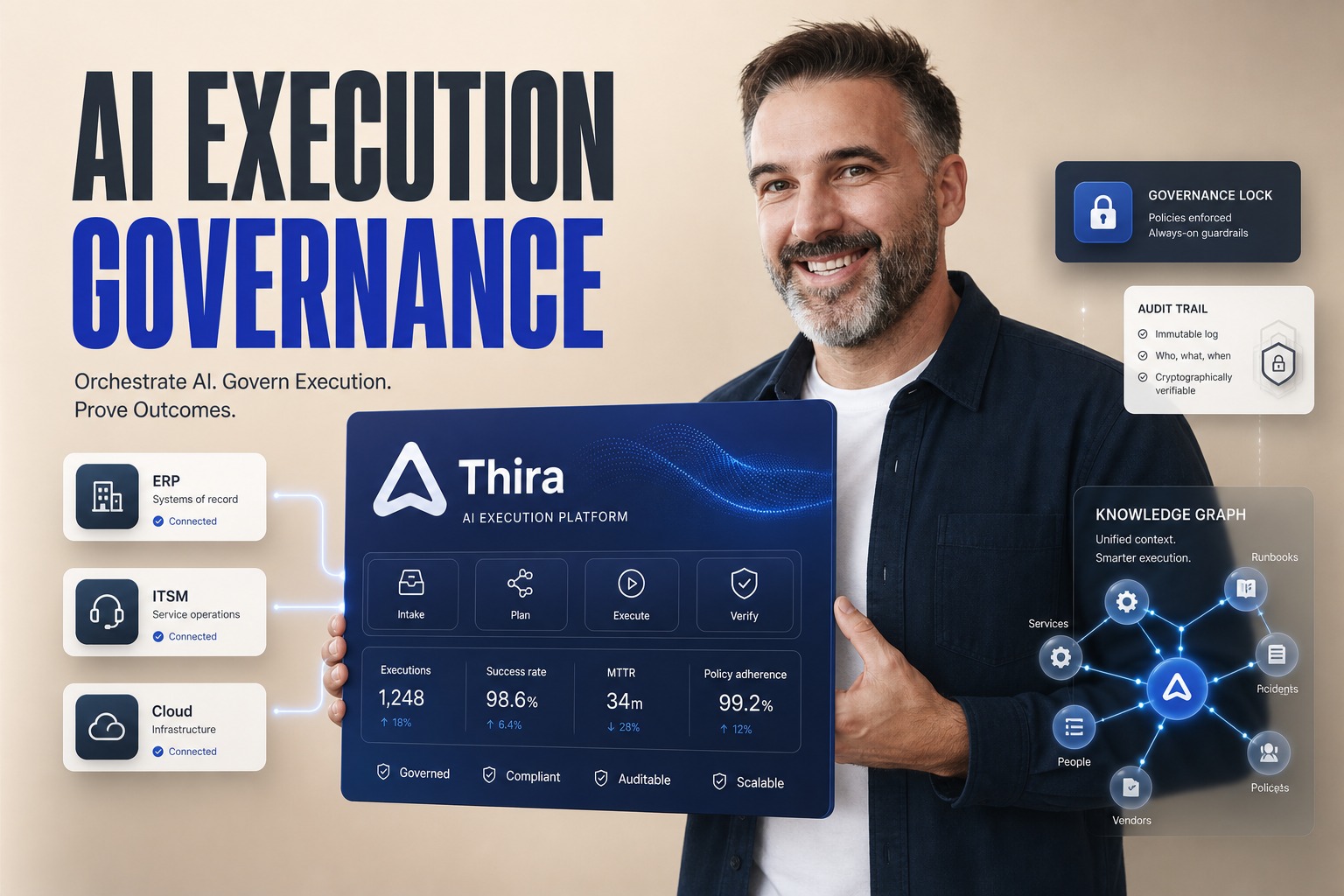
Is AI moving beyond insights to actually execute back‑office tasks? → Yes, startups like Thira are building platforms that act on data across multiple systems.
Do CIOs need new criteria for selecting automation platforms? → They must evaluate integration, security, and governance as much as model performance.
Will AI‑native execution replace traditional scripting? → It will reduce manual code but still requires robust orchestration layers.
What’s the immediate impact on quarterly IT budgets? → Automating repetitive processes can free up billions for innovation, according to Thira’s $1 trillion target.
The Core Question CIOs Face When Evaluating AI Workflow Engines
Enterprises are no longer satisfied with AI that merely surfaces insights; they demand systems that execute complex, cross‑application processes. The decisive question becomes: How should a CIO choose an AI platform that can reliably automate back‑office workflows while preserving security and compliance? This article argues that the real differentiator is not the underlying model but the platform’s orchestration architecture, governance controls, and integration fabric. By focusing on these layers, leaders can avoid costly re‑engineering later and unlock the promised trillion‑dollar efficiency.
The decisive factor for AI‑driven automation is the platform’s ability to coordinate secure, multi‑system actions—not the raw intelligence of its models.
Why Traditional AI Assistants Fall Short in Enterprise Operations
Most AI assistants excel at generating recommendations but lack the authority to act on them across heterogeneous enterprise stacks. Thira’s approach, as described in their recent seed round announcement, combines self‑learning agents with a knowledge graph, security controls, and deep system integrations. This shift from “suggest‑and‑wait” to “act‑and‑audit” forces CIOs to rethink procurement: the focus moves from model vendors to orchestration platforms that can embed compliance checks at every step.
- Integration depth matters – Platforms must natively speak APIs of ERP, ITSM, and cloud services.
- Governance baked in – Role‑based access, audit trails, and policy enforcement are non‑negotiable.
- Scalable agent learning – Self‑learning agents should improve without breaking existing contracts.
- Vendor lock‑in risk – Open standards reduce future migration costs.
- Operational visibility – Real‑time dashboards enable rapid issue resolution.
How Thira’s Architecture Illustrates the New Decision‑Making Paradigm
Thira’s seed‑funded platform layers a secure AI system of execution atop an enterprise knowledge graph, linking disparate applications through a unified data model. The platform’s self‑learning agents orchestrate workflows while the governance layer enforces compliance. For a CIO, this means evaluating three concrete components: the integration layer, the governance engine, and the agent learning loop. Each component can be assessed against existing tooling and compliance frameworks before committing capital.
Map existing APIs – Catalog every system the automation must touch and verify native support.
Validate governance hooks – Ensure the platform can enforce your organization’s access policies.
Pilot agent learning – Run a limited workflow to observe how agents adapt without manual re‑coding.
Measure latency and reliability – Track end‑to‑end execution times under realistic loads.
Assess exit strategy – Confirm data export and API compatibility for future migrations.
The Immediate Business Rationale Behind Investing in AI‑Native Execution
Thira estimates that global IT spending exceeds $6.3 trillion annually, with a large portion devoted to repetitive operational tasks. By automating these workflows, enterprises could redirect up to $1 trillion toward innovation. For a mid‑size enterprise, even a 5 % efficiency gain translates into multi‑million‑dollar savings within a fiscal year, justifying the upfront investment in a platform that can guarantee secure execution.
Evaluating Platform Security and Governance: A Pragmatic Lens
Security is not an add‑on; it is the foundation of any AI execution platform. Thira’s model embeds enterprise‑grade controls, but CIOs must still verify that the platform integrates with existing identity providers, supports audit logging, and respects data residency requirements. In practice, this means conducting a security integration sprint where the platform is hooked into your SSO, IAM, and SIEM tools, then measuring compliance coverage.
Integration Fabric: The Unsung Hero of Workflow Automation
A robust integration fabric abstracts the heterogeneity of legacy systems, allowing agents to invoke actions without custom code for each endpoint. When evaluating vendors, look for pre‑built connectors, schema mapping tools, and event‑driven architectures that can scale as new applications are added.
| Evaluation Dimension | Thira’s Offering | Typical Alternative |
|---|---|---|
| API Coverage | Native connectors for major ITSM and ERP tools | Custom adapters required |
| Governance Hooks | Built‑in role‑based policies and audit trails | Add‑on security modules |
| Knowledge Graph | Enterprise‑wide data model for context | Ad‑hoc data stitching |
Agent Learning Loop: From Static Scripts to Adaptive Orchestration
Self‑learning agents continuously refine their decision logic based on observed outcomes. This reduces the need for manual rule updates, but it also introduces a new risk surface: drift. Effective platforms provide visibility into agent decisions and allow rollback to prior states, ensuring that learning does not compromise compliance.
If the platform cannot surface why an agent took a specific action, you cannot trust it in regulated environments.
Governance Engine: Embedding Compliance at Every Step
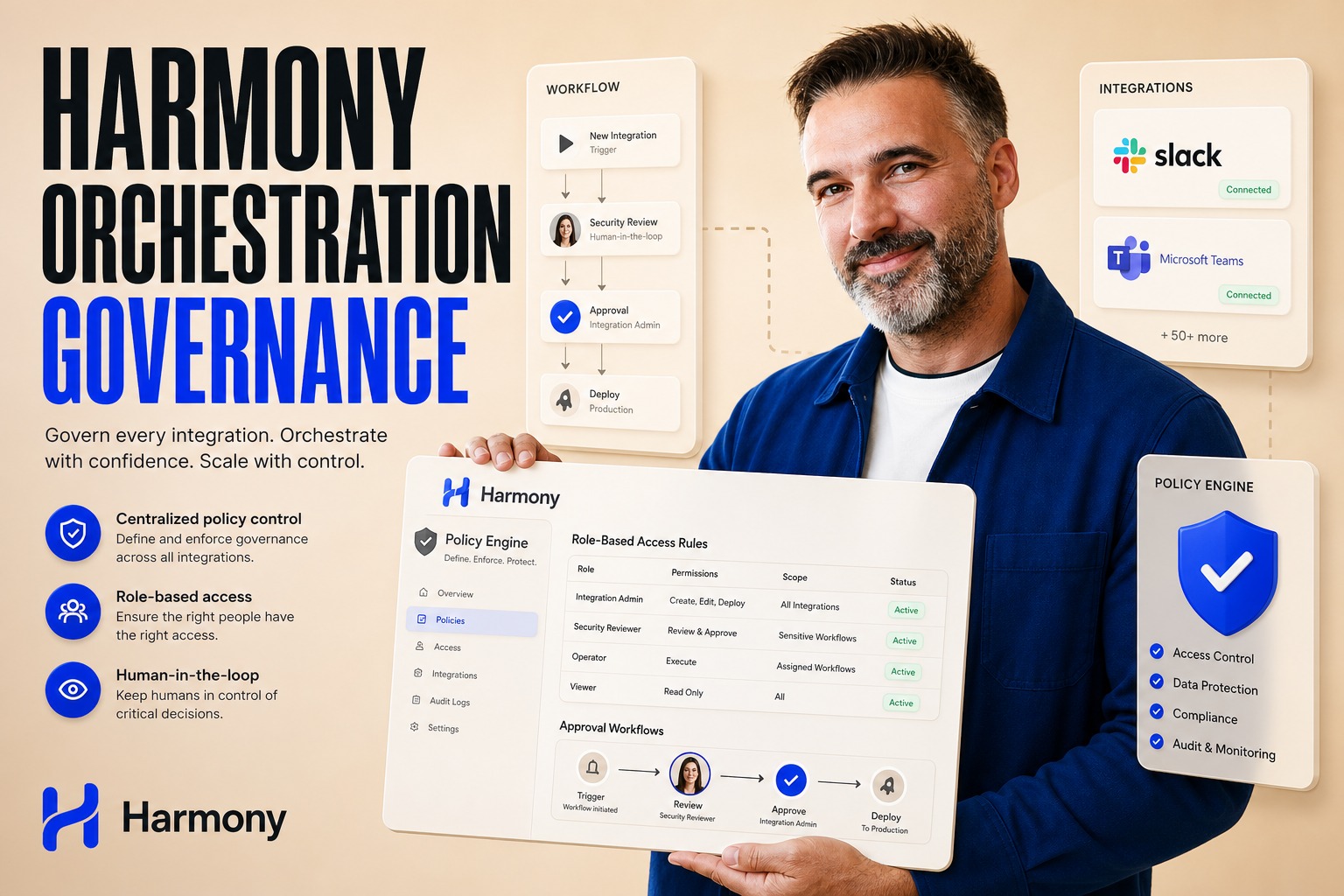
Compliance is enforced through policy engines that intercept agent actions. These engines must be configurable to reflect industry standards (e.g., GDPR, HIPAA) and internal controls. A platform that treats governance as a first‑class citizen reduces the overhead of building separate compliance layers.
- Policy configurability – Ability to define granular rules per workflow.
- Auditability – Immutable logs that can be queried for investigations.
- Real‑time enforcement – Immediate blocking of non‑compliant actions.
- Scalable rule engine – Handles high‑throughput environments without latency spikes.
- Integration with existing GRC tools – Seamless data flow to risk management platforms.
Real‑World Scenario: Automating IT Incident Resolution
Imagine an incident where a server exceeds CPU thresholds. Traditional monitoring triggers an alert that a human must triage. With an AI execution platform, the workflow automatically queries the CMDB, isolates the affected instance, applies a remediation script, and logs the action—all while respecting change‑management policies. This end‑to‑end automation reduces mean‑time‑to‑resolution from hours to minutes, directly impacting service‑level agreements.
- Detect – Monitoring tool pushes metric breach event.
- Correlate – Knowledge graph links metric to affected assets.
- Authorize – Governance engine checks remediation permissions.
- Execute – Self‑learning agent runs remediation script.
- Document – Audit log records action for compliance review.
Risks and Limitations: When AI Execution Can Backfire
Even the most sophisticated platform can falter if the underlying data is stale or if governance policies are overly restrictive. Agents may enter infinite loops, or a misconfigured policy could block critical remediation, leading to service outages. Therefore, continuous monitoring, fallback procedures, and human‑in‑the‑loop safeguards remain essential.
- Stale knowledge graph – Inaccurate asset relationships cause wrong actions.
- Policy over‑restriction – Prevents necessary emergency fixes.
- Agent drift – Unintended behavior emerges from unsupervised learning.
- Integration failures – API changes break connectors silently.
- Compliance gaps – Missing audit fields expose regulatory risk.
How Plavno Helps Enterprises Navigate This Transition
At Plavno, we specialize in building AI‑native execution solutions that embed security, governance, and deep integrations from day one. Our AI agents development service delivers custom orchestrations on top of existing enterprise stacks, while our digital transformation practice ensures that governance frameworks are aligned with industry standards. By partnering with us, CIOs gain a proven roadmap that mitigates the risks outlined above and accelerates time‑to‑value. Our AI automation capabilities streamline routine tasks, and our cloud software development team ensures scalable deployment. Explore our AI voice assistant development for conversational interfaces.
Summarizing the Decision Framework for Q4 2024
When selecting an AI workflow automation platform this quarter, prioritize integration depth, governance robustness, and agent adaptability over raw model size. Conduct a pilot that exercises the full governance loop, measure latency, and verify audit completeness. If the platform meets these criteria, the projected efficiency gains justify the investment, aligning with the broader industry shift toward AI‑native execution.
| Decision Factor | Evaluation Method | Success Indicator |
|---|---|---|
| Integration | Run API compatibility tests | >95 % endpoints respond without custom code |
| Governance | Review policy configurability and audit logs | Full compliance coverage in pilot |
| Agent Learning | Observe adaptation over 2‑week run | No regression in outcome quality |
Next Steps for CIOs Ready to Act
Begin by inventorying all back‑office processes that involve more than one system. Map these to potential AI‑driven workflows and identify the governance constraints that apply. Then, engage a partner like Plavno to prototype a secure execution layer, using the evaluation framework above. This disciplined approach ensures you capture the efficiency upside while safeguarding compliance.
- Audit existing processes – Identify cross‑system pain points.
- Define governance policies – Align with regulatory and internal standards.
- Select pilot workflow – Choose a high‑impact, low‑risk scenario.
- Run a controlled proof‑of‑concept – Validate integration and security.
- Scale based on metrics – Expand to additional processes once KPIs are met.
Closing Insight: The Real Competitive Edge Lies in Execution
The market is shifting from AI as an insight engine to AI as an execution engine. Companies that invest in platforms where orchestration, governance, and integration are first‑class citizens will outpace competitors that focus solely on model performance. The strategic decision for CIOs this quarter is clear: choose the platform that can securely act, not just suggest.
Choosing an AI workflow platform is now a governance decision, not a model selection.
Call to Action
If your organization is ready to move from insight‑only AI to secure, automated execution, let’s discuss how Plavno can accelerate your journey. Our expertise in AI‑native platforms, combined with deep integration capabilities, ensures you achieve measurable efficiency gains while staying compliant.
 Chat GPT
 Perplexity
 Claude
 Gemini