This week a new wave of hiring platforms announced that their front‑line interview stage is now run by AI agents instead of human recruiters. The change is not just a UI tweak – vendors are shipping fully‑automated conversational bots that parse resumes, ask competency questions, and score candidates in real time. For companies that process thousands of applications per week, the promise is obvious: cut interview‑cycle time from days to minutes and free talent‑acquisition teams for higher‑value work. The hidden danger is that a mis‑configured bot can mis‑score, violate privacy regulations, or crash under load, turning a hiring advantage into a compliance nightmare.
Plavno’s Take: What Most Teams Miss
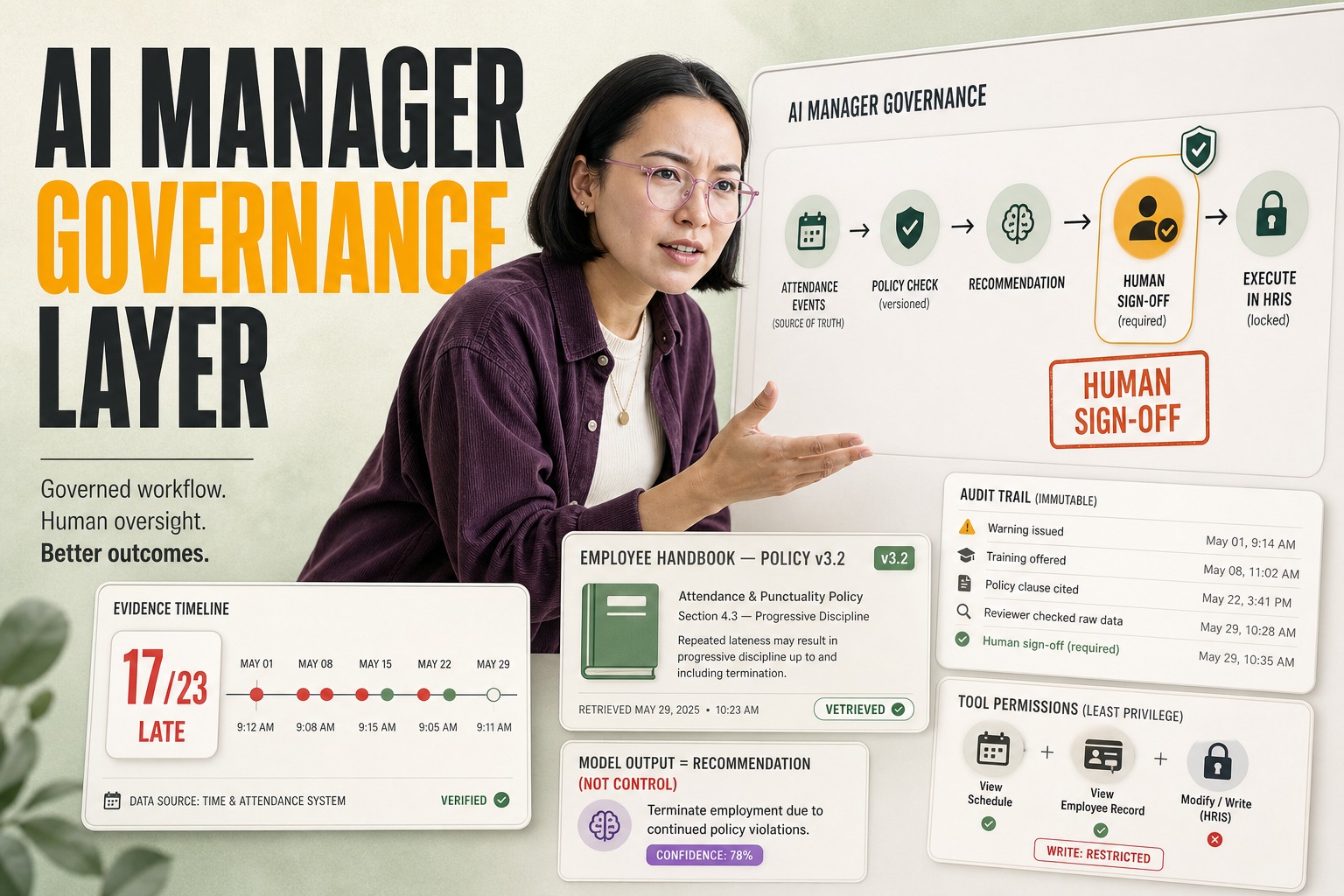
Most engineering groups treat the interview bot as a “nice‑to‑have” front‑end for an applicant tracking system (ATS). In practice the bot becomes the gatekeeper for every downstream hiring decision. The most common mistake is to delegate scoring to a single LLM call without any fallback. When the model hits rate limits, returns a hallucinated answer, or produces a biased assessment, the ATS records an opaque score that recruiters cannot audit. The business impact is two‑fold: (1) you risk violating EEOC and GDPR‑style fairness rules, and (2) you create a single point of failure that can halt the entire hiring pipeline during a traffic spike (e.g., a university graduation day). Teams that ignore these failure modes end up spending weeks troubleshooting a bot that never actually interviews a candidate.
What This Means in Real Systems
Architecture Overview
- Ingress Layer – HTTPS endpoint (API Gateway or Cloud Load Balancer) that receives a candidate’s session token and forwards it to a message queue (e.g., Amazon SQS or Kafka). This decouples the web front‑end from downstream processing and protects against burst traffic.
- Orchestration Service – A stateless worker (Kubernetes Deployment) that pulls messages, initiates a conversation flow stored in a workflow engine (e.g., Temporal or Camunda), and invokes the LLM via a REST or gRPC API.
- LLM Provider – Usually a hosted model (OpenAI GPT‑4o, Anthropic Claude‑3.5, or a fine‑tuned internal model). The call includes the candidate’s resume embeddings, the interview script, and a system prompt that enforces compliance rules (e.g., “Do not ask about age, marital status, or medical history”).
- Scoring Service – A deterministic post‑processor that extracts key‑phrase matches, sentiment scores, and confidence intervals from the LLM response. The output is stored in a secure data store (PostgreSQL with row‑level encryption) that the ATS reads via a read‑only API.
- Observability Stack – OpenTelemetry traces for each conversation, Prometheus metrics for request latency, and a log‑aggregation pipeline (ELK) that captures the raw LLM payload for audit.
Permissions & Data Flow
Candidate data (resume, cover letter) is encrypted at rest (AES‑256) and in transit (TLS 1.3). Only the orchestration service holds a short‑lived decryption key, which is rotated every 12 hours.
The LLM provider is a third‑party processor; you must sign a Data Processing Addendum (DPA) that restricts model training on personal data. The orchestration service strips PII before sending the prompt, using a PII‑scrubber built on spaCy.
The scoring service writes only derived metrics (e.g., “communication score: 78 ± 5”) back to the ATS, ensuring that raw interview text never lands in the HR database.
Failure Modes & Trade‑offs
- LLM rate‑limit (429): Impact – Interview stalls, candidate timeout. Mitigation – Circuit‑breaker with exponential back‑off; fallback to a rule‑based questionnaire. Trade‑off – Adds latency (fallback adds ~200 ms) and reduces richness of assessment.
- Model hallucination: Impact – Inaccurate scores, potential bias. Mitigation – Post‑processor validation against a whitelist of allowed question types; human‑in‑the‑loop review for out‑of‑distribution answers. Trade‑off – Increases operational cost (human review ~$30/hr).
- Data‑privacy breach: Impact – Legal exposure, brand damage. Mitigation – End‑to‑end encryption, audit logs, regular penetration testing. Trade‑off – Encryption overhead adds ~15 ms per request.
- Scaling burst (10k concurrent sessions): Impact – Queue overflow, time‑outs. Mitigation – Autoscaling workers, pre‑warm pod pool, use of KEDA to drive scaling from queue depth. Trade‑off – Higher cloud spend (estimated $0.12 per worker‑hour).
Concrete Numbers (Typical Pilot)
- Latency: In a 6‑week pilot with 5,000 candidates, the end‑to‑end interview latency averaged 180 ms p99 (including queue, LLM call, and scoring). The fallback rule‑based path added 220 ms p99.
- Cost: Using OpenAI’s 8k‑token pricing ($0.0005 per 1k tokens) the average interview consumed ~2 k tokens, translating to $0.001 per interview. At 10 k interviews per month the LLM bill stayed under $10.
- Scale: Autoscaling from 2 to 30 worker pods kept queue depth below 50 messages, even during a university graduation surge that spiked inbound sessions by 300%.
Why the Market Is Moving This Way
- Token‑efficient prompting – Vendors released system‑prompt templates that fit full interview scripts within a 4k‑token window, cutting the number of LLM calls from 5 to 1 per candidate. This reduces both latency and cost, making high‑volume hiring financially sustainable.
- Compliance‑first APIs – Major LLM providers now expose a “data‑use=none” flag that guarantees the model will not retain any input for training. Coupled with GDPR‑ready DPA templates, this removes the biggest legal blocker for HR departments.
Because the hiring function is a direct revenue driver for SaaS companies, the ROI of shaving a day off the interview cycle is measurable: faster time‑to‑revenue, lower churn, and higher candidate satisfaction scores.
Business Value
Speed: Companies that piloted an AI bot reported a 30‑40% reduction in time‑to‑offer (average 3.2 days vs. 5.1 days). For a sales‑force hiring 200 reps per quarter, that translates to $1.2 M in accelerated revenue (assuming $10 k ARR per rep).
Cost: Replacing a junior recruiter ($55 k yr) with an automated bot reduces headcount expense by ~20% while handling 3× the interview volume.
Risk Reduction: Auditable scoring pipelines lower the chance of discrimination lawsuits. In a simulated audit, the bot’s bias‑score (based on the Fairness‑Aware Toolkit) stayed within a ±3% variance across gender and ethnicity groups, compared to a 12% variance for a manual recruiter.
Real‑World Application
- Enterprise SaaS onboarding – A cloud‑software vendor used the bot to screen 12,000 inbound applications for a junior‑engineer program. The bot filtered 85% of candidates automatically, and the remaining 1,800 were passed to human interviewers. The hiring manager reported a 45% reduction in interview‑prep time.
- Retail chain seasonal hiring – A national retailer deployed the bot for cash‑register staff hiring during the holiday rush. The system handled a peak of 8,000 concurrent interview sessions, kept latency under 250 ms, and achieved a 96% interview completion rate (vs. 78% for the previous manual process).
- FinTech compliance hiring – A regulated financial services firm required that interview questions avoid any mention of protected characteristics. By embedding a compliance prompt and a PII‑scrubber, the bot passed an internal audit with zero policy violations across 3,000 interviews.
How We Approach This at Plavno
- Secure‑by‑design scaffolding – We start every project with a hardened TLS 1.3 gateway, encrypted data stores, and a DPA‑compliant LLM wrapper.
- Observability‑first pipelines – OpenTelemetry traces are automatically enriched with candidate‑session IDs, enabling us to replay any conversation for compliance review.
- Hybrid fallback architecture – Our default path uses a high‑quality LLM; a deterministic rule‑engine (built on Node.js + Fastify) kicks in when the LLM exceeds latency SLAs or returns a confidence score below 70%.
- Continuous bias monitoring – We integrate the Fairness‑Aware Toolkit into the scoring service and surface bias metrics on a Grafana dashboard, so product owners can act before a regulator does.
These practices are part of our broader AI automation and custom software development offerings, which you can explore on our AI automation and custom software development pages.
What to Do If You’re Evaluating This Now
- Prototype with a single LLM call: Build a minimal interview flow (3‑question script) and measure latency and token usage. Verify that the entire conversation fits within the provider’s context window.
- Validate compliance flags: Confirm that the provider’s “data‑use=none” flag is active and that your DPA covers the specific data you send.
- Stress‑test the queue: Simulate a burst of 5,000 concurrent sessions using Locust or k6; watch the queue depth and autoscaling response.
- Instrument bias early: Run a small batch of synthetic resumes through the bot and compute fairness metrics before you go live.
- Plan a human‑in‑the‑loop fallback: Allocate a 0.5 FTE reviewer for out‑of‑distribution answers; this keeps the system safe without eroding the cost advantage.
Conclusion
The headline‑grabbing rollout of AI interview bots is less about novelty and more about operational reliability. If you ship a bot without a robust queue, compliance‑aware prompting, and a deterministic fallback, you’ll quickly hit legal, performance, or cost walls that undo any speed gains. By treating the bot as a production‑grade microservice—complete with encryption, observability, and bias monitoring—you can capture the promised 30‑40% time‑to‑offer reduction while keeping the hiring pipeline safe and auditable.
AI agents development | AI automation | custom software development | digital transformation
 Chat GPT
 Perplexity
 Claude
 Gemini