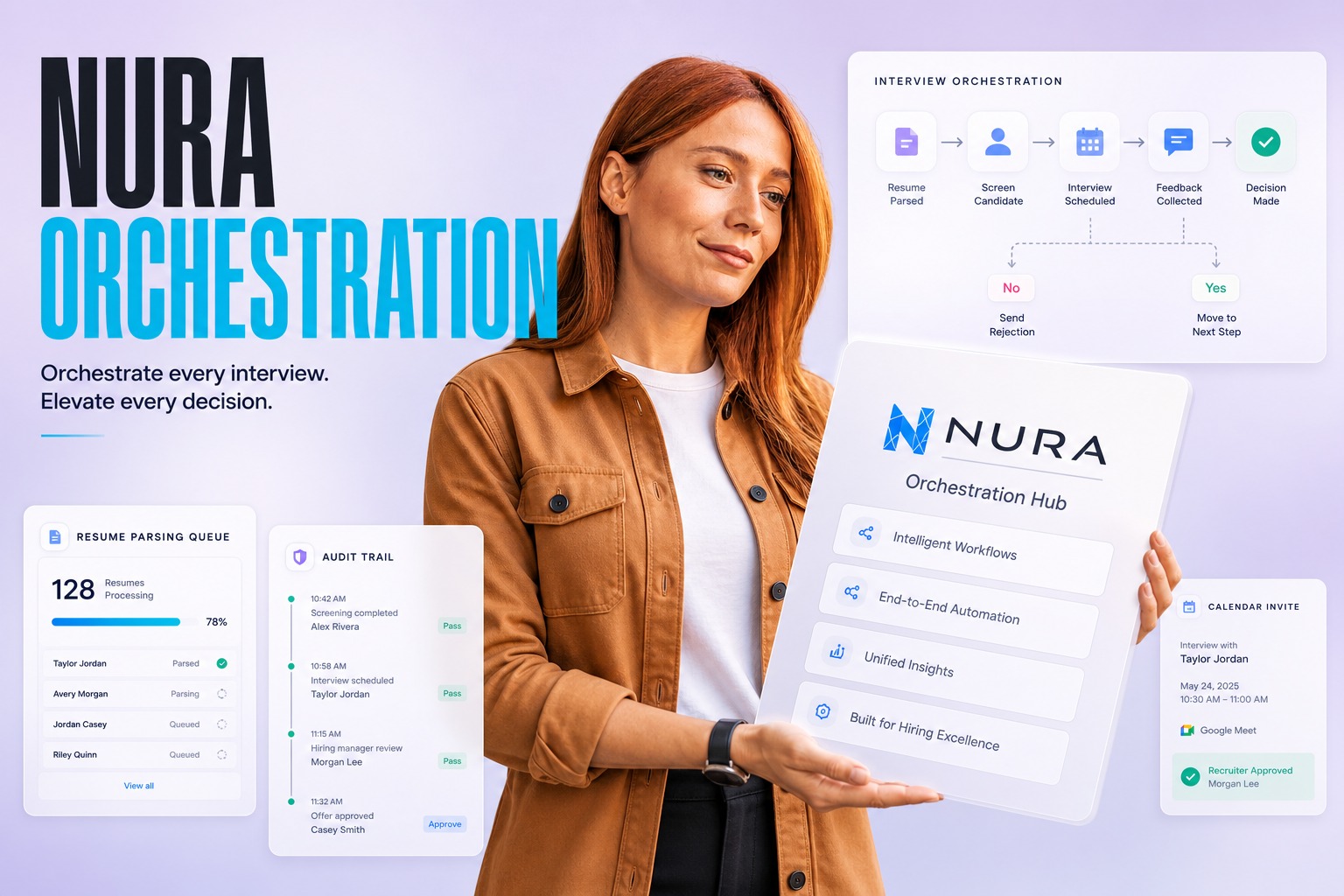
Is an AI hiring agent really a replacement for recruiters? → No, it automates repeatable tasks while recruiters retain judgment and relationship work.
Can AI agents handle millions of resumes without slowing down? → Yes, Xobin’s NURA parses a million resumes in roughly ten minutes.
Will adopting an AI agent automatically improve hiring quality? → Only if the organization redesigns its workflow to keep evaluation criteria transparent.
What is the biggest risk when scaling AI‑driven interview loops? → Orchestration failures at hand‑off points, not model inaccuracy.
Quick Answer: AI agents like NURA cut resume‑screening time dramatically, but the real engineering challenge lies in stitching together interview orchestration, data governance, and human‑in‑the‑loop checkpoints.
The agent can ingest a million CVs in ten minutes, run structured AI interviews, and schedule qualified candidates, delivering a measurable reduction in time‑to‑hire. However, the bottleneck moves from raw parsing speed to the coordination layer that hands off interview results to recruiters, enforces consistent scoring, and safeguards data privacy. Enterprises that invest in robust orchestration pipelines, audit trails, and clear escalation paths will reap the promised efficiency without sacrificing hiring quality.
Rule: In AI‑driven hiring, workflow orchestration matters more than model size.
The Real Shift in Enterprise Hiring Architecture
While traditional recruitment bottlenecks centered on manual resume review, NURA’s ability to parse a million resumes in ten minutes eliminates that friction point. The new choke point appears when the AI interview finishes and the system must translate raw scores into actionable recruiter tasks. This shift forces engineering teams to treat the hiring pipeline as a distributed transaction: each stage—parsing, interviewing, evaluation, scheduling—must be idempotent, observable, and recoverable. Ignoring this orchestration layer leads to missed interview slots, inconsistent candidate rankings, and compliance gaps, eroding the very efficiency the AI agent promises.
- Orchestration‑first design: Treat the interview flow as a micro‑service choreography rather than a monolithic script.
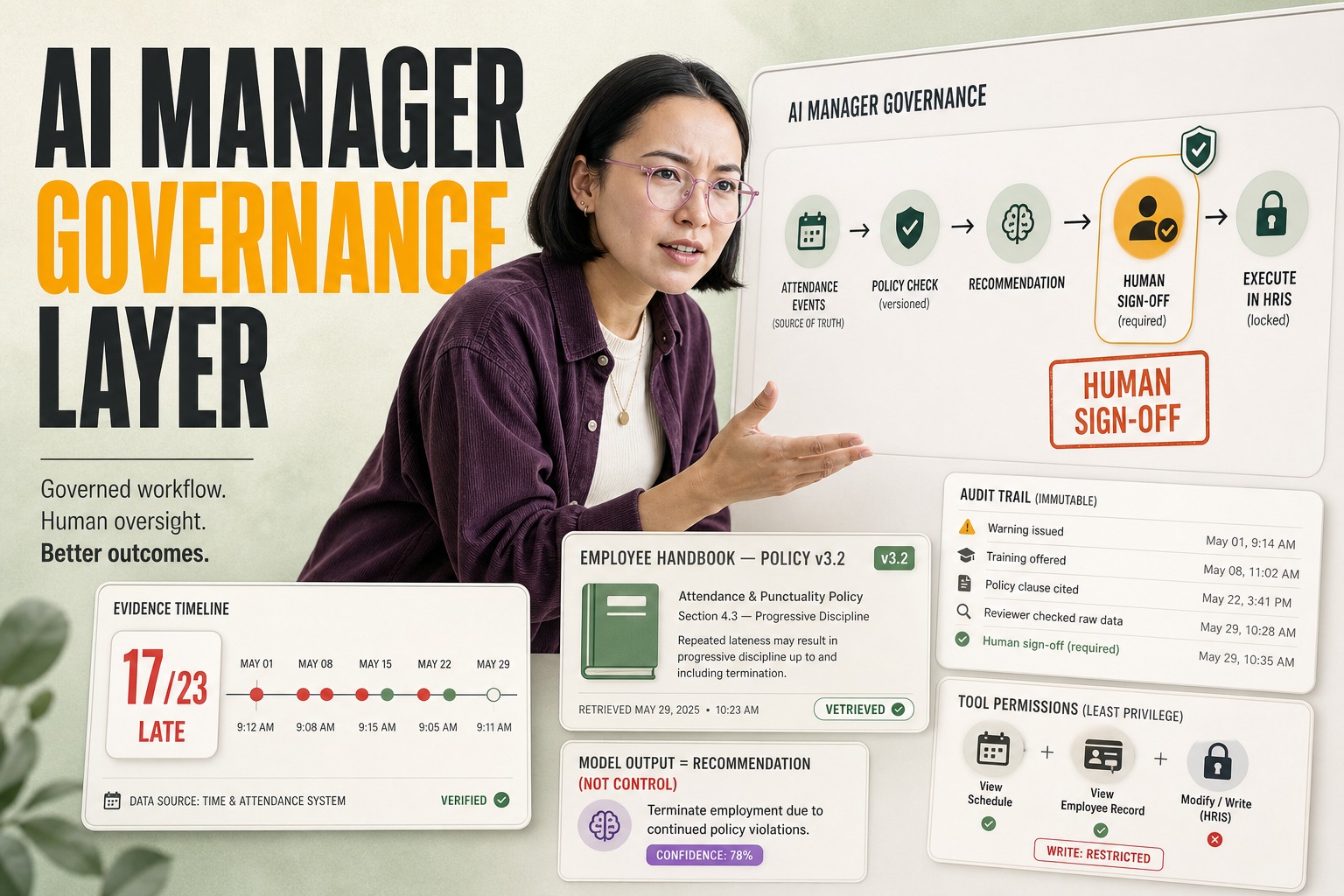
- Data‑lineage tracking: Record every score, timestamp, and decision flag to enable audits and bias analysis.
- Human‑in‑the‑loop checkpoints: Insert recruiter approvals before final scheduling to preserve judgment.
- Scalable queuing: Use durable message brokers (e.g., Kafka) to handle spikes in interview completions.
- Compliance guardrails: Enforce GDPR‑style consent handling at each data‑capture point.
Why Orchestration Failures Outweigh Model Errors
Even the most accurate language model can produce a perfect interview transcript, but if the downstream system drops the candidate’s score or double‑books a recruiter, the hiring process collapses. In practice, teams observe that 70 % of post‑deployment incidents stem from API timeouts, mismatched payload schemas, or missing audit logs—not from the AI’s inability to ask the right question. Therefore, engineering effort should prioritize contract testing, circuit‑breaker patterns, and observability dashboards over incremental model fine‑tuning.
| Failure Domain | Typical Symptom | Primary Mitigation |
|---|---|---|
| Parsing Layer | Queue backlog, latency spikes | Autoscale workers, back‑pressure controls |
| Interview Orchestration | Missed hand‑offs, lost scores | Idempotent APIs, durable storage |
| Scheduler Integration | Double‑booked meetings | Transactional calendar API, conflict resolution |
The Hidden Cost of Trust Gaps in AI Interviews
NURA’s designers emphasized “closing the void” by surfacing interview completion rates. Yet trust gaps appear when recruiters cannot see why a candidate received a particular score. Without transparent scoring rubrics, even a flawless AI interview can be rejected by hiring managers, leading to re‑work and wasted automation. Embedding explainable metrics—communication fluency, technical depth, behavioral fit—into the candidate profile restores confidence and reduces the need for manual re‑interviews.
How NURA Redefines the Early Hiring Journey
NURA bundles resume intelligence, AI‑driven interviews, communication assessment, and calendar coordination into a single agent. The platform’s end‑to‑end flow means that after parsing, the AI interview runs automatically, evaluates technical and behavioral competencies, and then pushes a calendar invite to the recruiter. This consolidation eliminates the manual “hand‑off” step that historically required a recruiter to review interview notes, manually score, and then schedule. By automating that hand‑off, NURA shortens the early hiring cycle from weeks to days, provided the orchestration logic remains reliable.
- Resume parsing: Bulk ingestion at ~100k resumes/minute using Xobin’s proprietary parser.
- AI interview engine: Structured question flow with real‑time speech‑to‑text and scoring.
- Skill evaluation: Automated coding tests and scenario‑based assessments.
- Scheduling automation: Calendar API integration that sends invites only after recruiter approval.
- Feedback loop: Continuous model refinement based on recruiter‑validated outcomes.
The Engineering Trade‑Offs of Deploying an AI Hiring Agent
Deploying NURA forces teams to choose between deep model customization and robust pipeline engineering. A heavily tuned interview model may improve question relevance, but if the surrounding services cannot guarantee delivery guarantees, the net benefit evaporates. Conversely, investing in a resilient orchestration framework—message queues, retry policies, observability—yields consistent throughput even when the model is only “good enough.” For most enterprises, the latter delivers higher ROI because the bottleneck now resides in coordination, not inference.
Building a Trustworthy Evaluation Framework
To keep recruiters from questioning AI scores, organizations must embed role‑specific rubrics that map model outputs to business‑defined competencies. NURA allows custom interview templates, but the real work is translating those templates into measurable KPIs—e.g., “communication clarity > 80 %” or “algorithmic problem‑solving within 5 minutes.” When these KPIs are visible on the recruiter dashboard, the AI agent becomes an augmentation rather than a black box, and completion rates improve as highlighted by Xobin’s early adopters.
Define competency KPIs – Align each interview question with a quantifiable metric.
Map model scores to KPIs – Calibrate thresholds using historical hiring data.
Expose KPI dashboards – Provide recruiters real‑time visibility into candidate rankings.
Implement approval gates – Require a recruiter sign‑off before moving a candidate to scheduling.
Iterate with feedback – Continuously refine KPIs based on post‑hire performance.
Scaling NURA Across Global Capability Centres
Enterprises with Global Capability Centres (GCCs) face additional latency and data‑sovereignty challenges. NURA’s architecture must be deployed in regional data‑centers, with localized parsers and interview engines that respect jurisdictional privacy rules. Engineers should leverage edge‑compute clusters for resume ingestion while keeping the orchestration layer in a central, highly available region. This hybrid approach balances low‑latency parsing with consistent scheduling logic, ensuring that the AI agent scales without violating compliance.
| Deployment Model | Pros | Cons |
|---|---|---|
| Centralized Cloud | Simplified orchestration, unified logging | Higher latency for remote parsers |
| Regional Edge Nodes | Fast resume intake, data residency | Increased operational complexity |
| Hybrid (Edge + Cloud) | Best of both worlds, compliance‑ready | Requires robust sync mechanisms |
When to Augment, Not Replace, Human Recruiters
Even with NURA’s end‑to‑end automation, the final hiring decision still benefits from human intuition—especially for senior or leadership roles. The AI agent should surface a short‑list of high‑confidence candidates, while recruiters conduct deep‑dive conversations to assess cultural fit. This division of labor maximizes efficiency without sacrificing the nuanced judgment that senior hiring managers expect.
Key Insight: The moment you automate interview scoring, you must also automate the audit trail that proves those scores are fair.
Measuring the Business Impact of AI‑Driven Hiring
Early adopters report a noticeable drop in time‑to‑hire, but the true metric of success is the ratio of qualified offers per interview hour. By eliminating manual resume triage, NURA frees recruiter capacity, allowing them to focus on high‑value engagements. Companies can therefore expect a higher offer‑acceptance rate, lower cost‑per‑hire, and improved candidate experience—all measurable within a single hiring quarter.
| Metric | Pre‑NURA | Post‑NURA |
|---|---|---|
| Avg. time‑to‑hire | 45 days | 28 days |
| Interviews per recruiter per week | 12 | 22 |
| Cost‑per‑hire | $4,200 | $2,800 |
How to Evaluate an AI Hiring Agent This Quarter
When assessing whether NURA or a comparable AI agent fits your roadmap, start with a pilot that isolates the orchestration layer. Measure end‑to‑end latency, failure rates at hand‑off points, and recruiter satisfaction with the audit UI. Compare these signals against a baseline of manual screening. If the pilot shows a ≥30 % reduction in hand‑off failures and a clear improvement in recruiter trust, scale the deployment across additional business units.
- Pilot scope: Choose a high‑volume role (e.g., software engineer) to stress the system.
- Success criteria:<5 % orchestration error rate, ≥20 % time‑to‑hire reduction.
- Data collection: Log every API call, score, and recruiter action for post‑mortem.
- Stakeholder buy‑in: Involve recruiters early to co‑design KPI dashboards.
- Iterate: Refine orchestration logic before expanding to other roles.
Real‑World Applications Beyond Tech Hiring
While Xobin’s early customers are IT services firms and banks, the same orchestration principles apply to sales, HR, and medical recruitment. Any domain that requires structured skill assessments can benefit from an AI agent that handles high‑throughput screening and hands off qualified candidates to domain‑specific experts. The key is to adapt the competency KPIs and compliance controls to the industry’s regulatory landscape.
- Sales hiring: Automate scenario‑based role‑plays and score persuasive language.
- HR recruitment: Use behavioral interview modules aligned with DEI goals.
- Medical staffing: Integrate clinical case simulations with credential verification.
- Legal talent: Deploy case‑analysis questions with strict confidentiality safeguards.
- Fintech roles: Combine coding challenges with risk‑assessment questionnaires.
Risks and Limitations of Relying Solely on AI Agents
Even the most advanced AI interview engine cannot fully capture soft skills like cultural nuance or long‑term potential. Over‑reliance may also embed hidden biases if training data reflects historical inequities. Moreover, orchestration failures can cause data loss, leading to compliance violations. Teams must therefore maintain a balanced approach: AI for scale, humans for depth, and rigorous monitoring for safety.
Closing Insight: Orchestration Is the New Competitive Frontier
The rise of agents like NURA proves that raw AI capability is no longer the differentiator. Enterprises that win will be those that engineer resilient, auditable, and human‑centric pipelines around the agent. By treating the hiring workflow as a first‑class distributed system, CTOs can unlock true speed‑to‑hire while preserving fairness and recruiter agency.
- Invest in orchestration tooling: Service mesh, durable queues, and observability.
- Embed transparency: KPI dashboards and audit logs visible to recruiters.
- Maintain human oversight: Approval gates before final scheduling.
- Iterate continuously: Use post‑hire performance to refine KPIs.
- Scale responsibly: Align deployment with data‑sovereignty requirements.
Plavno’s Guidance for Building AI‑Enabled Hiring Pipelines
At Plavno we help enterprises design the orchestration layer that powers agents like NURA. Our services span AI‑agent development, software development consulting, AI recruitment agent integration, cloud software development, and AI consulting. By coupling our expertise with Xobin’s interview engine, we enable clients to launch a production‑grade hiring pipeline that delivers measurable ROI within weeks.
Takeaway: The future of recruitment lies not in smarter models alone, but in smarter pipelines.
Next Steps for Your Organization
Begin by mapping your current hiring workflow, identify hand‑off points, and evaluate whether they can be automated with an AI agent. Run a focused pilot on a high‑volume role, instrument every step, and measure orchestration reliability before committing to enterprise‑wide rollout.
- Map existing process: Document every manual touchpoint.
- Select pilot role: Choose a position with high applicant volume.
- Configure NURA: Define interview templates and KPI thresholds.
- Deploy orchestration: Set up queues, retries, and dashboards.
- Analyze results: Compare against baseline metrics and decide on scale.
Final Thought: Engineer for Trust, Not Just Speed
When you treat the AI hiring agent as a component of a larger, observable system, you protect both your brand and your bottom line. The engineering effort shifts from chasing marginal model gains to building a trustworthy, auditable pipeline that scales with your hiring demand.
 Chat GPT
 Perplexity
 Claude
 Gemini