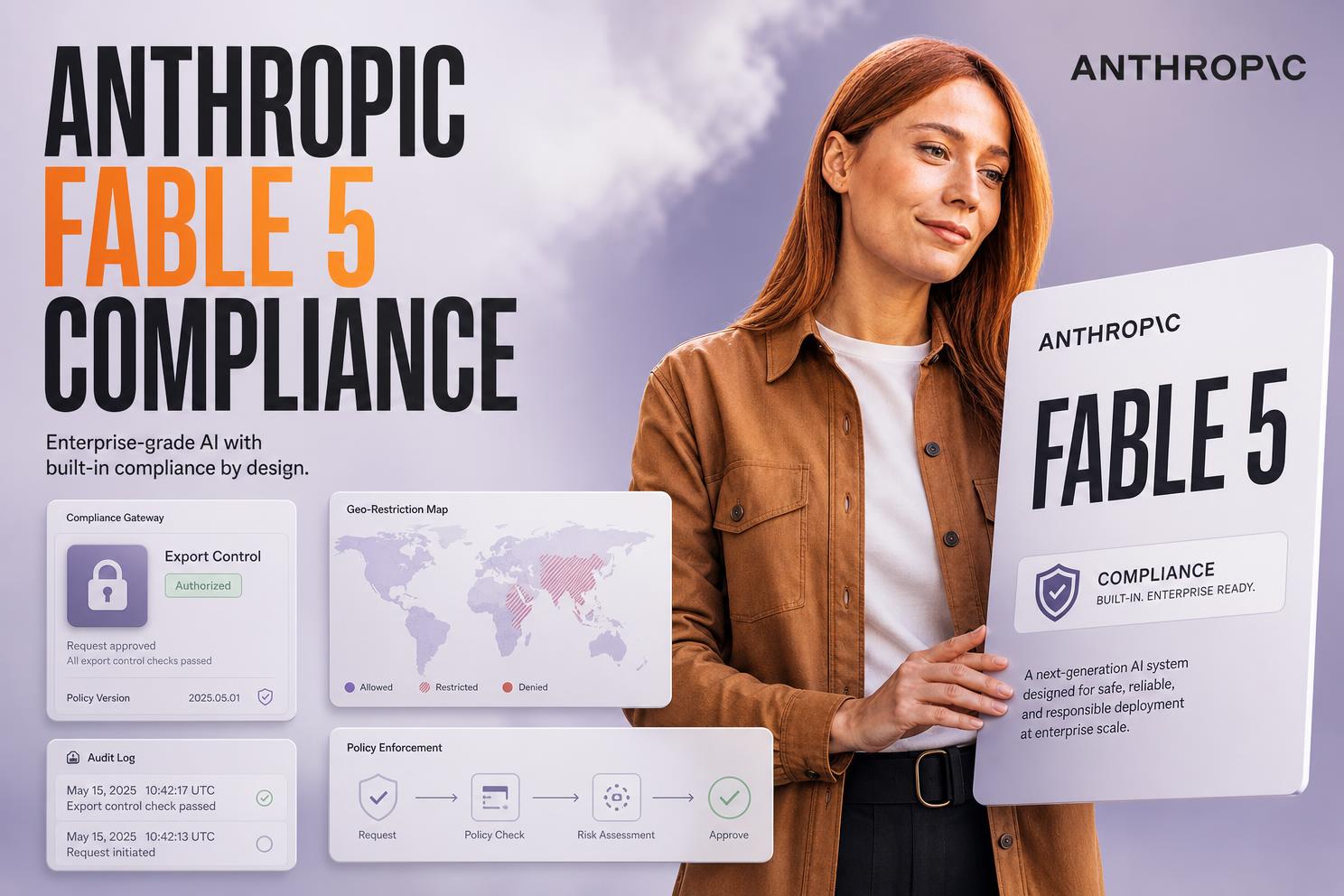
Will Anthropic’s Fable 5 be back on the market this week? → The administration’s partial thaw suggests a possible reinstatement within days, but the exact terms remain unclear.
Do export controls affect only government users? → No; the controls forced Anthropic to cut off all customers, including non‑American employees, until compliance mechanisms are in place.
What does the dispute mean for enterprises that rely on large language models? → Companies must now treat regulatory clearance as a first‑class dependency, not an afterthought.
Can we trust alternative models after a forced migration? → Alternatives may fill the gap, but they lack the proven integration and security posture of Anthropic’s flagship models.
Is there a longer‑term process for model vetting? → Both Anthropic and OpenAI are lobbying for a formal, codified review framework under the June 2 executive order.
The Core Question: When Will Fable 5 Return and How Should Enterprises Plan Around Government‑Driven Access Limits?
Enterprises that built critical pipelines on Anthropic’s Fable 5 now face a binary choice: redesign for compliance or double‑down on a model whose future availability is uncertain. The answer hinges on the administration’s next move, which will dictate whether access is restored wholesale, limited to pre‑approved agencies, or conditioned on new verification steps. For CTOs, the immediate priority is to map compliance checkpoints into their AI architecture, because the model’s technical merits are now secondary to regulatory clearance.
Compliance risk now outweighs raw model performance; architects must embed policy enforcement layers before choosing a provider.
Why the Government Intervention Is a Turning Point, Not a Temporary Glitch
The June 12 export‑control letter placed both Mythos 5 and its public counterpart Fable 5 under the same legal umbrella, forcing Anthropic to shut down access for all customers. This unprecedented step signaled that the U.S. government views advanced LLMs as strategic assets subject to national‑security scrutiny. The fallout forced high‑profile users like Stripe to abandon a 50‑million‑line code overhaul that relied on Fable 5, illustrating how quickly a single policy decision can cripple production workloads.
How Export Controls Translate Into Technical Barriers
Export controls require Anthropic to enforce identity verification, usage logging, and geographic restriction at the API gateway level. In practice, this means any client‑side SDK must negotiate a compliance handshake before sending prompts, adding latency and complexity to existing pipelines. Enterprises that previously called the model directly now need a proxy service that can enforce these checks, effectively turning a simple HTTP call into a multi‑stage compliance workflow.
The Hidden Cost of Switching to Competing Models
When Fable 5 vanished, many teams migrated to cheaper Chinese alternatives. While these models can generate text, they lack the hardened security features Anthropic built for government customers, such as classified‑data handling and audit trails. The switch also introduced data‑sovereignty concerns, as cross‑border data flows may violate GDPR or CCPA. Consequently, the apparent cost savings are offset by increased legal exposure and the need for additional data‑masking layers.
- Immediate compliance audit – Review existing contracts for export‑control clauses and map required verification steps.
- Proxy‑layer redesign – Insert a compliance gateway that can enforce identity checks before each model call.
- Fallback model assessment – Evaluate alternative LLMs for security features and data‑jurisdiction compliance.
- Stakeholder communication – Align legal, security, and engineering teams on the new access policy.
The Quick Answer: Fable 5 May Return Within Days, but Under Stricter Access Controls That Require Enterprises to Redesign Their Integration Pipelines
The administration’s latest letter indicates a partial thaw, allowing roughly 100 pre‑approved agencies to resume use of Mythos 5. While the public‑facing Fable 5 could be reinstated this week, it will likely come with additional verification steps, usage caps, and possibly fees. Companies must therefore treat the model’s availability as a regulated service, building compliance checks into their architecture now rather than waiting for a stable, unrestricted rollout.
| Aspect | Pre‑thaw (Unrestricted) | Post‑thaw (Regulated) |
|---|---|---|
| Access Scope | Open to all Anthropic customers | Limited to pre‑approved agencies + verification |
| Latency Overhead | Minimal – direct API calls | Added compliance handshake, potential extra 100‑200 ms |
| Cost Model | Standard usage‑based pricing | Possible fees for verification & audit services |
Why Architecture, Not Model Choice, Determines Success Now
The failure point in the Anthropic incident was not the model’s inference engine but the orchestration layer that lacked a policy enforcement mechanism. When the government mandated export controls, Anthropic’s blanket shutdown exposed the fragility of pipelines that assumed unrestricted access. Engineers who had built robust data‑validation and monitoring around the model’s output were better positioned to survive the outage.
The Strategic Advantage of a Compliance‑First Design
By front‑loading compliance checks, enterprises gain flexibility to swap providers without re‑architecting core business logic. A compliance proxy can translate policy requirements into a uniform interface, allowing teams to route requests to Anthropic, OpenAI, or alternative vendors based on real‑time clearance status. This approach also future‑proofs the stack against potential new regulations targeting AI models.
A compliance‑first proxy turns regulatory uncertainty into a controllable abstraction layer.
Plavno’s Perspective: Building Resilient AI Pipelines That Survive Policy Shocks
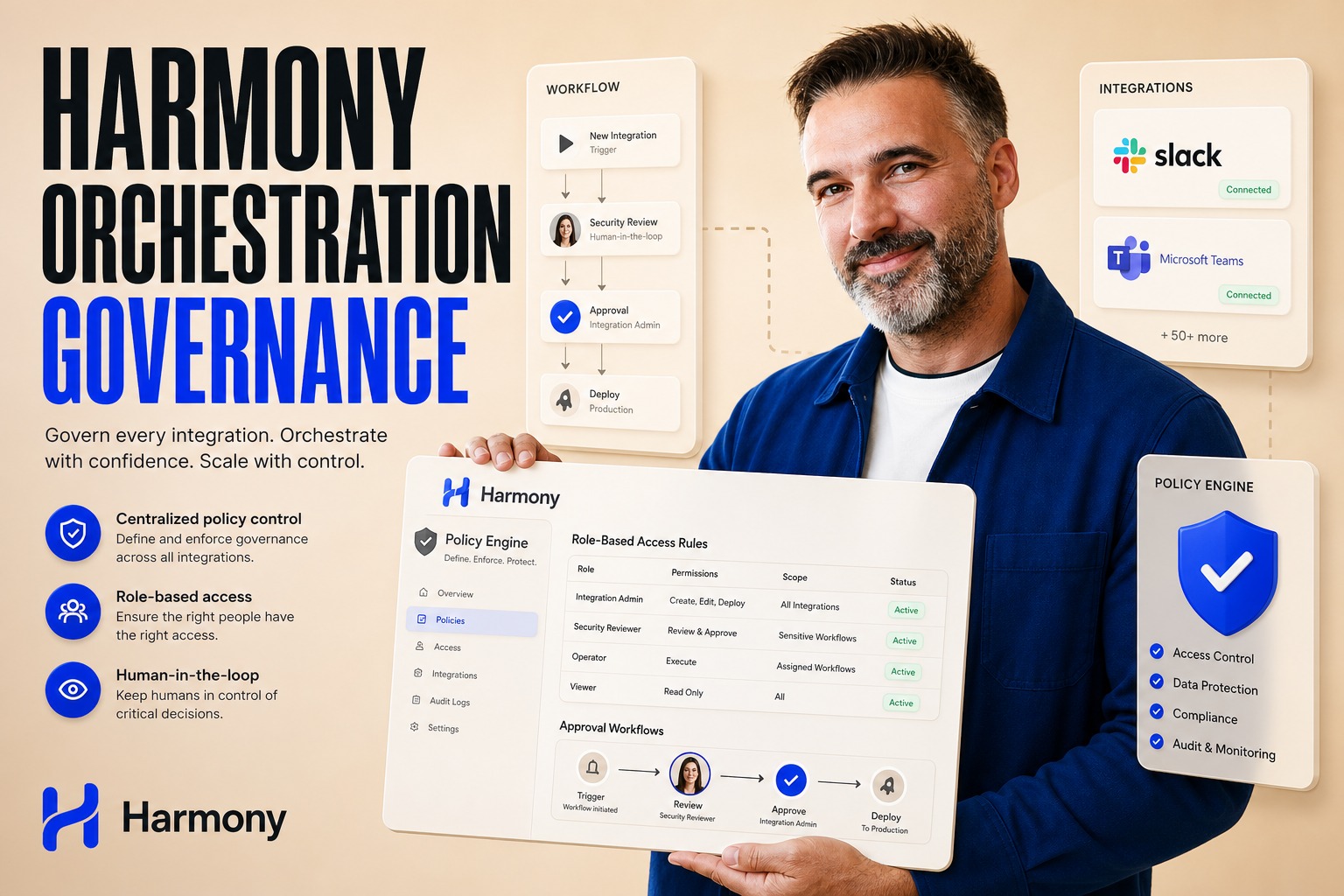
At Plavno we see the Anthropic episode as a catalyst for rethinking AI integration. Rather than treating LLMs as black‑box services, we advise clients to construct a policy enforcement layer that can dynamically route traffic, enforce usage caps, and log every request for audit purposes. Our AI‑agents development practice already embeds such controls, enabling rapid pivot to alternative models without breaking downstream workflows. Additionally, our AI‑automation services help teams automate compliance checks at scale.
Define compliance boundaries – Identify which data categories trigger export controls and tag them at ingestion.
Implement a policy gateway – Deploy a microservice that validates each request against the defined boundaries before forwarding to the LLM.
Instrument observability – Capture request metadata, response latency, and compliance outcomes for continuous audit.
Automate fallback routing – Configure the gateway to switch to a vetted backup model when clearance fails.
Iterate with legal – Keep the compliance rule set synchronized with evolving government guidance.
Business Impact: Risk Mitigation vs. Speed of Innovation
Companies that ignored compliance until after the shutdown suffered costly re‑engineering delays and lost competitive advantage. Those that had a compliance‑aware architecture could simply toggle a flag to resume operations, preserving time‑to‑market for new features. The trade‑off is clear: investing in policy layers adds upfront engineering effort but shields the business from abrupt access restrictions that can cripple revenue‑critical AI services.
- Reduced downtime – Automated compliance checks prevent manual shutdowns.
- Lower legal exposure – Auditable request logs satisfy regulator inquiries.
- Vendor flexibility – Ability to switch LLM providers without rewriting core logic.
- Scalable governance – Policy rules can be extended to future models.
How to Evaluate This in Practice: Decision Logic for the Next Quarter
When deciding whether to double‑down on Anthropic or diversify, evaluate three dimensions: regulatory certainty, integration complexity, and strategic fit. First, assess the likelihood that Fable 5 will be fully restored under the same terms; if the risk is high, prioritize models with existing compliance frameworks. Second, calculate the engineering effort required to insert a compliance proxy versus the cost of re‑architecting the entire pipeline. Finally, align the model’s capabilities with your product roadmap—if the unique features of Fable 5 are essential, allocate budget for the compliance layer; otherwise, consider a more open provider.
| Evaluation Factor | High‑Risk Scenario (Fable 5 Uncertain) | Low‑Risk Scenario (Alternative Model) |
|---|---|---|
| Regulatory Certainty | Low – dependent on government clearance | High – no export‑control constraints |
| Integration Effort | Moderate – add compliance gateway | Low – direct API integration |
| Strategic Fit | Strong if proprietary features needed | Adequate if generic LLM suffices |
Real‑World Applications: From Code Refactoring to Secure Customer Support
Stripe’s 50‑million‑line code overhaul illustrated the power of Fable 5 for massive code‑base transformations. In sectors like finance and healthcare, where data classification is strict, a compliant LLM can accelerate legacy‑system modernization while preserving security. Enterprises that embed compliance checks can safely deploy AI‑driven code assistants, document generators, and chatbots without exposing classified data to unchecked endpoints.
Why Waiting for a Stable Policy Is a Strategic Mistake
If you postpone compliance engineering until after the next government directive, you will be forced into a costly, reactive redesign. Proactive policy integration not only safeguards current investments but also positions your organization to capitalize on any future model releases without missing a beat.
How Plavno Can Help You Build a Future‑Proof AI Stack
Our team specializes in marrying AI innovation with rigorous security and compliance. From designing policy gateways to integrating audit‑ready LLMs, we help enterprises navigate the shifting regulatory landscape while delivering tangible business value. Explore our AI‑agents development and digital transformation services to accelerate your compliant AI journey.
Final Thought: The Real Winner Is the Organization That Engineers for Policy First
When the next AI model faces export controls, the teams that have already woven policy checks into their pipelines will continue delivering value uninterrupted. The alternative—reacting after the fact—means lost time, increased costs, and a tarnished reputation. Make compliance the cornerstone of your AI strategy today, and you’ll be ready for any regulatory curveball tomorrow.
- Audit existing LLM usage – Identify all endpoints and data flows.
- Prototype a compliance proxy – Use Plavno’s AI‑automation expertise.
- Define policy rules – Work with legal to codify export‑control requirements.
- Run performance tests – Measure latency impact and adjust architecture.
- Plan rollout – Align with product timelines and stakeholder expectations.
- Engage with Plavno’s AI‑consulting – Leverage our experience in regulated AI deployments.
- Iterate on policy enforcement – Continuously refine rules as regulations evolve.
- Scale responsibly – Ensure compliance mechanisms grow with traffic.
- Monitor compliance metrics – Track audit logs and usage caps.
- Communicate transparently – Keep internal teams informed of policy changes.
Quick Recap: Your Path Forward in a Regulated AI Landscape
In short, the imminent return of Anthropic’s Fable 5 will be conditioned by export‑control compliance, making the architecture of your AI pipeline the decisive factor. By building a policy‑first gateway, you protect your investment, retain flexibility across providers, and turn regulatory risk into a manageable engineering discipline.
 Chat GPT
 Perplexity
 Claude
 Gemini