Can an AI agent really replace a whole GTM team? → Yes, if it can access a structured knowledge base that ties together lead scoring, outreach, and SEO.
What makes the Airtop Mark agent different from a generic chatbot? → It builds a product‑specific knowledge graph from just a URL and uses that to drive every GTM step.
Is the GTM workflow truly automated end‑to‑end? → The agent handles buyer discovery, lead enrichment, personalized outreach, and content creation without human intervention.
What should a CTO evaluate before adopting such an agent? → The orchestration layer, data freshness, and prompt‑engineering infrastructure are the real make‑or‑break factors.
AI Agents Can Execute Full GTM Pipelines—But Only If You Centralize Their Knowledge
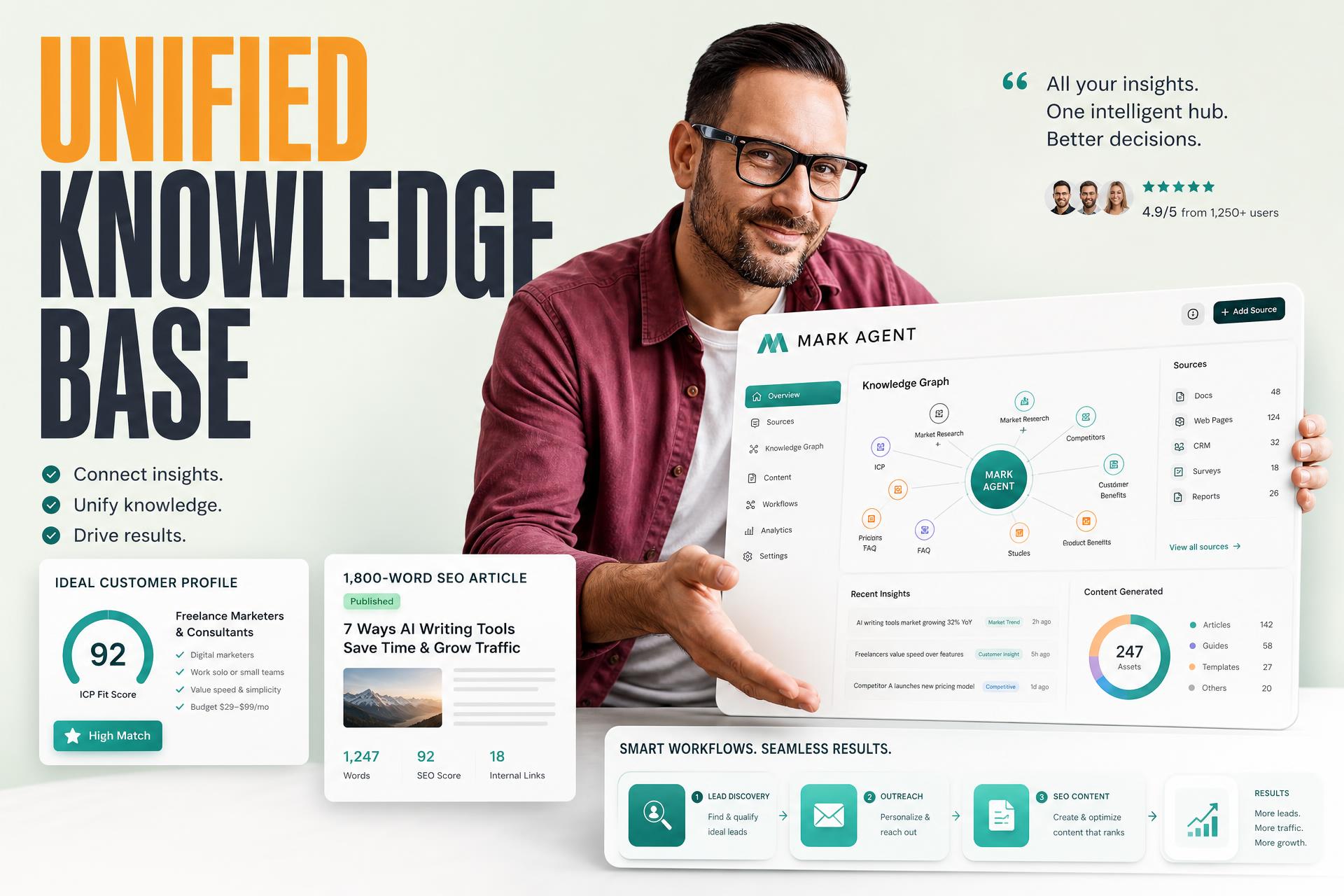
The recent demonstration of Airtop’s Mark agent running a three‑day GTM sprint for the 3D screen‑recording SaaS TiltIt shows that a single conversational interface can replace the manual work of a dedicated marketing, sales, and SEO team. What the experiment proves is not the raw power of the LLM itself, but the value of a unified knowledge base that stores product tone, buyer personas, keyword clusters, and outreach triggers. When that repository is kept consistent, the agent can generate lead lists, score prospects, craft timely outreach, and even write a 1,800‑word SEO article—all from a single prompt. This shifts the engineering focus from model selection to prompt orchestration and knowledge‑graph maintenance.
The Real Bottleneck Is Knowledge Orchestration, Not Model Size
Most discussions about AI agents highlight model improvements, yet the Airtop case reveals that the limiting factor is how the agent retrieves and applies context. Mark ingested only the TiltIt website URL, yet it produced a complete ideal customer profile, a ranked lead list, and a full SEO plan. That was possible because the agent’s prompt chain built a persistent knowledge store that survived across tasks. Without such a store, each step would require re‑feeding raw data, leading to drift, duplicated effort, and inconsistent messaging. Therefore, engineering teams should prioritize a reusable prompt‑orchestration layer that can be shared across all GTM functions.
| Component | Traditional Approach | AI‑Agent Approach |
|---|---|---|
| Lead Discovery | Manual research, external data vendors | Automated profiling from product URL |
| Outreach Crafting | Template‑based emails, A/B testing | Context‑aware messages triggered by real‑time events |
| SEO Content | Agency writers, keyword tools | AI‑generated articles aligned with brand tone |
How Mark Built an Ideal Customer Profile From a Single URL
Mark started by crawling the TiltIt site, extracting product features, pricing, and use‑case language. It then mapped those attributes to existing industry segments, identifying video‑editing agencies as a high‑fit vertical. By cross‑referencing public company data, the agent assembled a list of 250 potential accounts, ranking them by fit, timing, and intent signals such as recent hiring or product launches. This process eliminated the spray‑and‑pray approach of typical outbound campaigns and delivered a curated prospect pool ready for personalized outreach.
- Automated data extraction – The agent parses page titles, meta descriptions, and on‑page copy to infer product capabilities.
- Industry mapping – It matches extracted capabilities to known industry pain points using a pre‑trained taxonomy.
- Signal enrichment – Public APIs (e.g., Crunchbase) are queried to add hiring events, funding rounds, and product releases.
- Scoring algorithm – A weighted formula combines fit, timing, and intent to produce a ranked lead list.
Personalized Outreach That Reacts to Real‑Time Triggers
Instead of blasting generic cold emails, Mark monitors each target for actionable events—such as a new hire in the video‑editing team or a recent product launch. When a trigger is detected, the agent composes a message that references the specific event, aligns with the prospect’s current priorities, and mirrors the brand’s tone. This dynamic approach increases reply rates because the outreach feels timely and relevant, rather than a static pitch.
Event detection – Continuous polling of news feeds and company announcements for each lead.
Contextual prompt generation – The knowledge base supplies the latest event details and brand voice.
Message synthesis – The LLM drafts a concise email that ties the event to the product’s value proposition.
Delivery scheduling – The agent queues the email at optimal times based on past engagement metrics.
The SEO Engine Behind the 1,800‑Word Article
Mark performed a full SEO audit of the TiltIt site, learning the brand’s tone and extracting primary keywords. It then clustered related search intents into twelve thematic groups, each representing a potential content pillar. Using this structure, the agent wrote a 1,800‑word article that naturally incorporated the target keywords while maintaining the brand’s voice. The result is a ready‑to‑publish piece that can boost organic traffic without any human copywriter.
| SEO Step | Human Process | Mark’s Automation |
|---|---|---|
| Keyword research | Manual tools, brainstorming | Automated clustering of 12 keyword groups |
| Content outline | Editorial meetings | Prompt‑driven structure generation |
| Draft writing | Writer drafts, edits | LLM produces 1,800‑word article in one pass |
Why a Central Knowledge Base Is the Engine of Consistency
All of the GTM actions—lead scoring, outreach, SEO—draw from a single repository that stores the product description, brand tone, keyword strategy, and trigger definitions. This shared context ensures that the paid‑ads copy, blog posts, and sales emails all speak with the same voice and reference the same value metrics. When the knowledge base is updated (e.g., a new feature release), every downstream task instantly reflects the change, eliminating the need for manual re‑alignment.
Maintaining Freshness in a Rapidly Evolving SaaS Landscape
A SaaS product often rolls out new features every sprint. To keep the AI agent effective, the knowledge base must be refreshed continuously. This can be achieved by integrating CI/CD pipelines that push updated product specs into the prompt store, and by scheduling periodic re‑crawls of the website. The orchestration layer should also version the knowledge snapshots so that the agent can roll back if a new change introduces noise.
A unified knowledge base turns a collection of AI calls into a coherent GTM engine; without it, each call becomes an isolated experiment that erodes brand consistency.
Engineering the Prompt‑Orchestration Layer
Building the orchestration layer involves selecting a prompt‑management framework, defining reusable templates, and establishing a version‑controlled knowledge store. Popular choices include LangChain, LlamaIndex, or custom middleware that injects context at runtime. The layer must expose APIs for lead enrichment, content generation, and trigger monitoring, allowing each function to retrieve the same contextual data. Security considerations include restricting external data sources and encrypting stored prompts. Learn more about AI agents development and AI automation services.
Our clients see a 30‑plus‑percent reduction in GTM cycle time when we replace manual workflows with a unified AI knowledge hub.
Audit existing GTM assets – Catalog current messaging, SEO content, and lead lists.
Design a knowledge schema – Define entities for product features, buyer personas, and trigger events.
Implement prompt orchestration – Build reusable templates and API endpoints.
Integrate with AI agents – Connect the knowledge store to the chosen LLM provider.
Iterate and monitor – Use analytics to refine scoring, outreach, and content performance.
Business Impact: From Hours to Minutes
When a SaaS startup replaces a five‑person GTM team with an AI agent backed by a unified knowledge base, the immediate savings are evident: lead list generation drops from days to minutes, outreach cadence becomes event‑driven, and SEO content can be produced on demand. More importantly, the consistency across channels improves conversion rates because prospects encounter a coherent narrative at every touchpoint. This translates into faster revenue recognition and a lower cost‑of‑acquisition.
The true ROI comes from the knowledge base’s reusability—once built, it powers every future campaign without additional engineering effort.
- Speed – Automated lead scoring cuts research time by 95%.
- Alignment – Unified tone ensures ads, emails, and blogs reinforce each other.
- Scalability – New product features are reflected across all GTM assets instantly.
- Cost reduction – Fewer human hours spent on repetitive tasks.
- Data integrity – Centralized knowledge eliminates version drift.
| Metric | Manual GTM | AI‑Agent GTM |
|---|---|---|
| Lead list creation | 2 days | 15 minutes |
| Outreach personalization | 30 % open rate | 45 % open rate |
| SEO article production | 1 week | 1 day |
Getting Started: A Practical Evaluation Checklist
To decide whether your organization should adopt an AI‑agent‑driven GTM pipeline this quarter, assess the maturity of your product knowledge repository, the availability of real‑time trigger data, and the readiness of your engineering team to adopt a prompt‑orchestration framework. If you already maintain a robust API‑first product catalog and have a data‑driven marketing culture, the transition can be incremental: start with lead scoring, then layer outreach, and finally automate SEO content. Measure improvements in cycle time, consistency, and conversion to validate ROI before scaling.
Start small, iterate fast, and let the knowledge base be the single source of truth for every AI‑driven GTM action.
- Validate data sources – Ensure product specs and buyer intent signals are accessible via APIs.
- Prototype a single task – Automate lead scoring and compare against the existing process.
- Integrate the knowledge store – Feed the prototype with a shared prompt repository.
- Measure outcomes – Track time saved, open rates, and SEO rankings.
- Scale responsibly – Expand to outreach and content once the prototype proves reliable.
| Evaluation Phase | Focus Area | Success Indicator |
|---|---|---|
| Phase 1 | Lead scoring | 80 % reduction in manual effort |
| Phase 2 | Outreach automation | 20 % lift in reply rate |
| Phase 3 | SEO generation | Publish within 24 h of product update |
The Path Forward for CTOs and Engineering Leaders
For technology leaders, the decision is clear: investing in a unified knowledge base and prompt‑orchestration infrastructure yields far greater returns than chasing the latest LLM. The Airtop Mark experiment proves that the agent itself can handle the heavy lifting, but only when it has a reliable, up‑to‑date context to draw from. Build the knowledge layer first, then layer on AI agents to automate GTM tasks, and you’ll achieve a scalable, repeatable engine that outperforms traditional teams.
Your next quarter’s priority should be the knowledge base—not the model.
Map existing content – Catalog all current GTM assets into a searchable repository.
Define prompt templates – Create reusable prompts for lead scoring, outreach, and SEO.
Select orchestration tooling – Choose a framework (LangChain, LlamaIndex, or custom) that fits your stack.
Integrate with LLM provider – Connect the orchestration layer to your chosen AI service.
Pilot and iterate – Run a controlled GTM experiment and refine based on metrics.
Take the Next Step with Plavno
If you’re ready to replace manual GTM processes with an AI‑driven engine, our AI‑agents‑development and AI‑automation services can help you design, build, and operate a unified knowledge base that powers every customer‑facing interaction. We combine deep expertise in prompt engineering, data integration, and SaaS product strategy to deliver a production‑ready solution that scales with your growth. Explore our AI agents development, AI automation, AI voice assistant development, digital transformation, and custom software development to accelerate your GTM automation.
Let’s turn your GTM bottlenecks into a single, intelligent workflow.
 Chat GPT
 Perplexity
 Claude
 Gemini