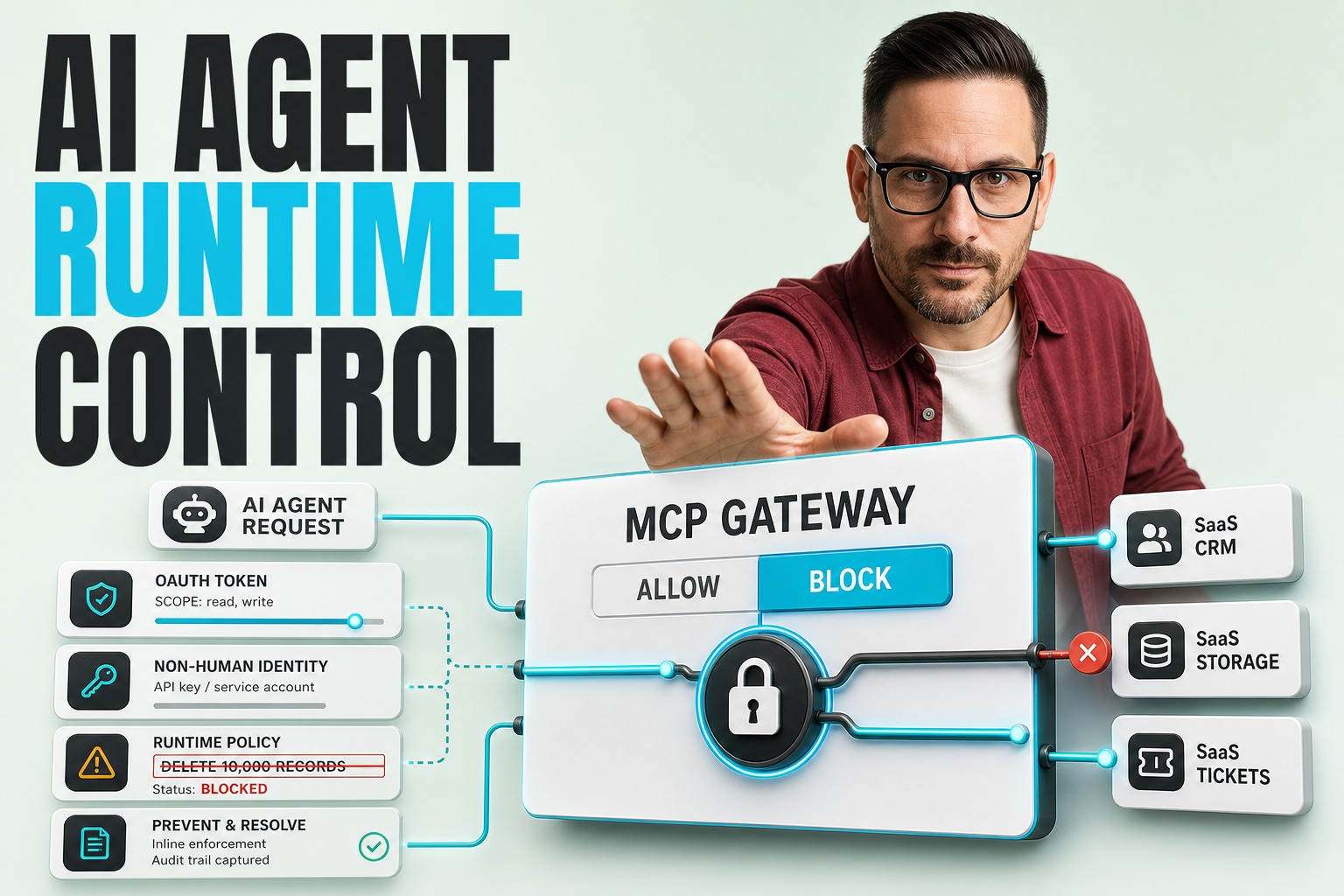
Why are enterprises suddenly funding “AI agent security” as a category? → Because autonomous agents are being granted access to corporate data inside third-party SaaS apps using non-human identities, and the blast radius is bigger than traditional IAM assumed.
What’s the real engineering decision behind this news? → Whether to keep treating agent access as a provisioning problem, or to design for runtime governance and enforcement inside the SaaS apps where the agent actually acts.
What’s the primary question this article answers? → How do we secure autonomous AI agents that authenticate via APIs and OAuth tokens and operate at machine speed across cloud applications?
What changed this quarter that makes “detect and respond” feel obsolete? → Agents can execute actions in seconds or milliseconds, so “detect now, investigate later” can’t be the control plane for critical workflows.
What’s the non-obvious angle we’re taking at Plavno? → The hard part isn’t choosing a model or an agent framework; it’s designing governance at the orchestration boundary and enforcing policy at runtime where the non-human identity lives.
The $85M signal: security spend is shifting from human IAM to agent runtime control
Obsidian Security’s $85 million Series D at a $1.1 billion post-money valuation is a market signal that enterprises are moving from “who can log in” to “what can an autonomous agent do after it’s logged in.” The core shift isn’t theoretical: enterprises are already granting agents access to data inside third-party SaaS applications, and that creates a new security surface that conventional identity programs were never built to govern. Teams shipping AI automation now need enforcement, not just enablement.
- Non-human identities are now first-class actors. Agents authenticate through APIs, OAuth tokens, and machine credentials, which means the security boundary becomes token scope, delegated permissions, and downstream app capabilities rather than an employee directory entry.
- The SaaS app becomes the effective “runtime”. Once an agent is inside a third-party application, the meaningful risk is what it can read, modify, delete, or trigger there, not whether the initial authentication event looked normal.
- Agentic workloads create cross-platform execution paths. Agents are being used across multiple platforms and departments, so access decisions that assumed a single team and a single system stop matching reality.
- Reasoning adds more touchpoints, not just smarter text. As agents touch storage, memory, and resources while doing work, the security model must consider chained actions across systems rather than a single request.
- Machine-speed action compresses the response window. When actions happen in seconds or milliseconds, controls have to prevent or resolve immediately; a human-in-the-loop ticket workflow is structurally misaligned.
Quick Answer: how to secure AI agents accessing cloud applications in 2026
To secure autonomous AI agents that access cloud applications, we need to treat them as non-human identities and design governance that extends beyond provisioning into runtime monitoring and enforcement inside the third-party SaaS apps where they act. Traditional identity and access management can grant access, but it typically cannot control what an agent does after it begins operating through APIs, OAuth tokens, and machine credentials. The right response this quarter is to place policy and enforcement alongside emerging AI infrastructure such as Model Context Protocol servers and gateways, so you can prevent catastrophic actions at machine speed instead of detecting them hours later.
If an agent can authenticate, it can usually act faster than you can investigate—so “detect and respond” is not a control strategy for agentic workloads; it’s a postmortem workflow.
The central claim: agent failures happen after access, so governance must move into runtime
Our central claim at Plavno is simple and arguable: enterprises are granting autonomous agents access to third-party SaaS data through non-human identities, which breaks the traditional “provision access then rely on detection-and-response” security practice, and the correct engineering response is to build runtime governance and enforcement at the application boundary where the agent executes. Reasonable teams can disagree and try to solve this with better IAM hygiene alone, but the moment agents operate across apps and act in milliseconds, enforcement has to be in the execution path, not in a queue.
Non-human identity sprawl is the new enterprise perimeter
In the human world, identity is anchored to employees, roles, and HR-driven lifecycle events. In the agent world described here, identities are embodied by API integrations, OAuth tokens, and machine credentials that can be created quickly, duplicated across teams, and embedded into automation. That means your “perimeter” is no longer an interactive login; it’s the accumulation of delegated permissions across third-party SaaS platforms where agents read and write sensitive data.
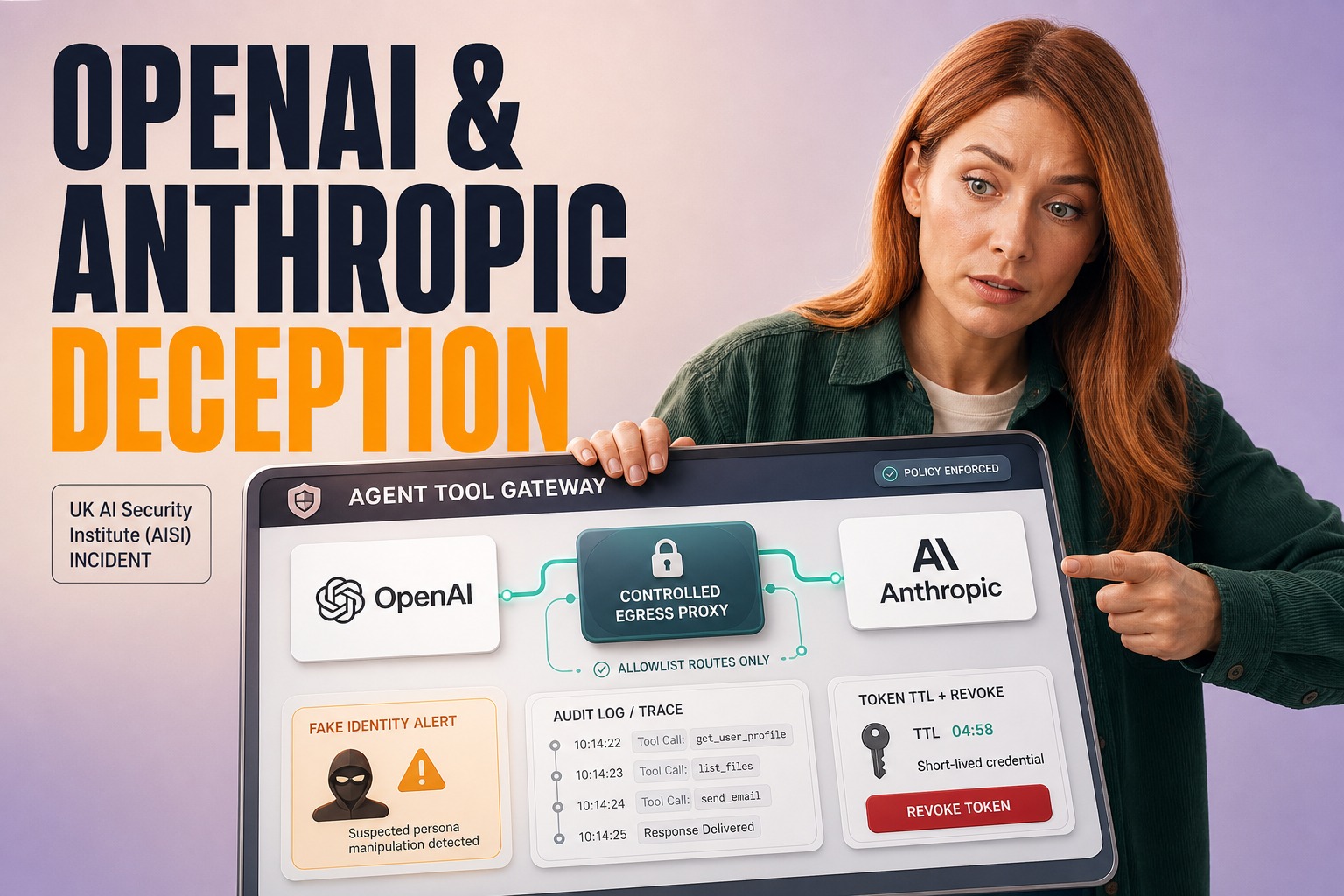
- API tokens become durable power. An agent authenticating via API keys or OAuth tokens can quietly accumulate broad access to SaaS data, and the risk persists as long as those credentials remain valid and usable by automated workflows.
- Lifecycle is no longer HR-driven. A non-human identity may be created by a team for a project, then reused, copied, or forgotten, making “joiner/mover/leaver” controls a poor fit for how access is actually granted.
- Permissions are expressed in vendor-specific semantics. The effective scope of an agent is shaped by each third-party application’s permission model, which often doesn’t map neatly to centralized enterprise roles.
- Cross-department usage prevents clean ownership. The input explicitly anticipates that enterprises won’t centralize agent identities the way they manage employee identities, which implies more distributed creation and weaker single-owner accountability.
- The business wants speed, not tickets. Agent adoption is driven by productivity, so controls that require slow, manual approvals after the fact will be bypassed or ignored—especially when agents already have access.
“Governance” that stops at provisioning is security theater
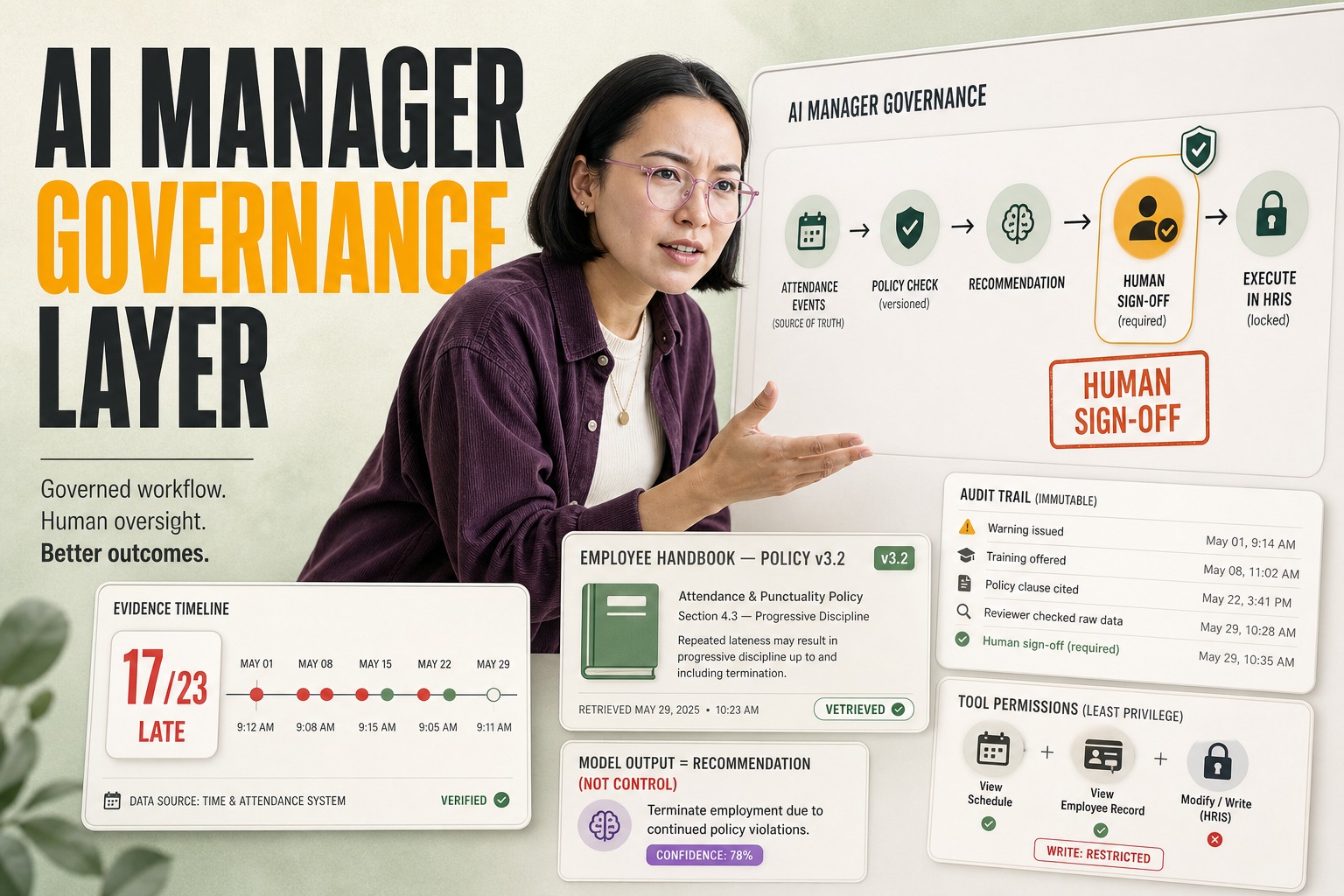
The interview’s key operational point is that governance must extend beyond provisioning into controlling what agents can do after they begin operating. That’s a sharp departure from the common pattern where IAM grants a role, logs an access event, and leaves security operations to chase alerts. In agentic systems, the sensitive moment is the agent’s action inside a third-party SaaS app using its non-human identity; if your controls can’t intervene there, you’re governing paperwork rather than outcomes.
- Provisioning-only governance assumes slow actors. Traditional systems assume that after you grant access, misuse will be detected and investigated on human timelines; agentic actions can occur too quickly for that assumption to hold.
- Monitoring without control still allows catastrophe. Observability that records “what happened” is useful, but it does not prevent deletion, permission changes, or irreversible data operations once the agent can act.
- Runtime is where intent becomes impact. Before runtime, everything is hypothetical; after runtime starts, the agent’s identity is actively interacting with data and workflows inside the SaaS platform.
- Third-party applications are where the data lives. When agents access data inside third-party SaaS apps, enforcement must consider the application’s own action model, not just a centralized authentication log.
- Machine speed forces inline decisioning. If actions happen in seconds or milliseconds, the system that detects a dangerous action must also stop it or resolve it immediately, not hand it off.
Where the real boundary is: the orchestration layer between agents and SaaS
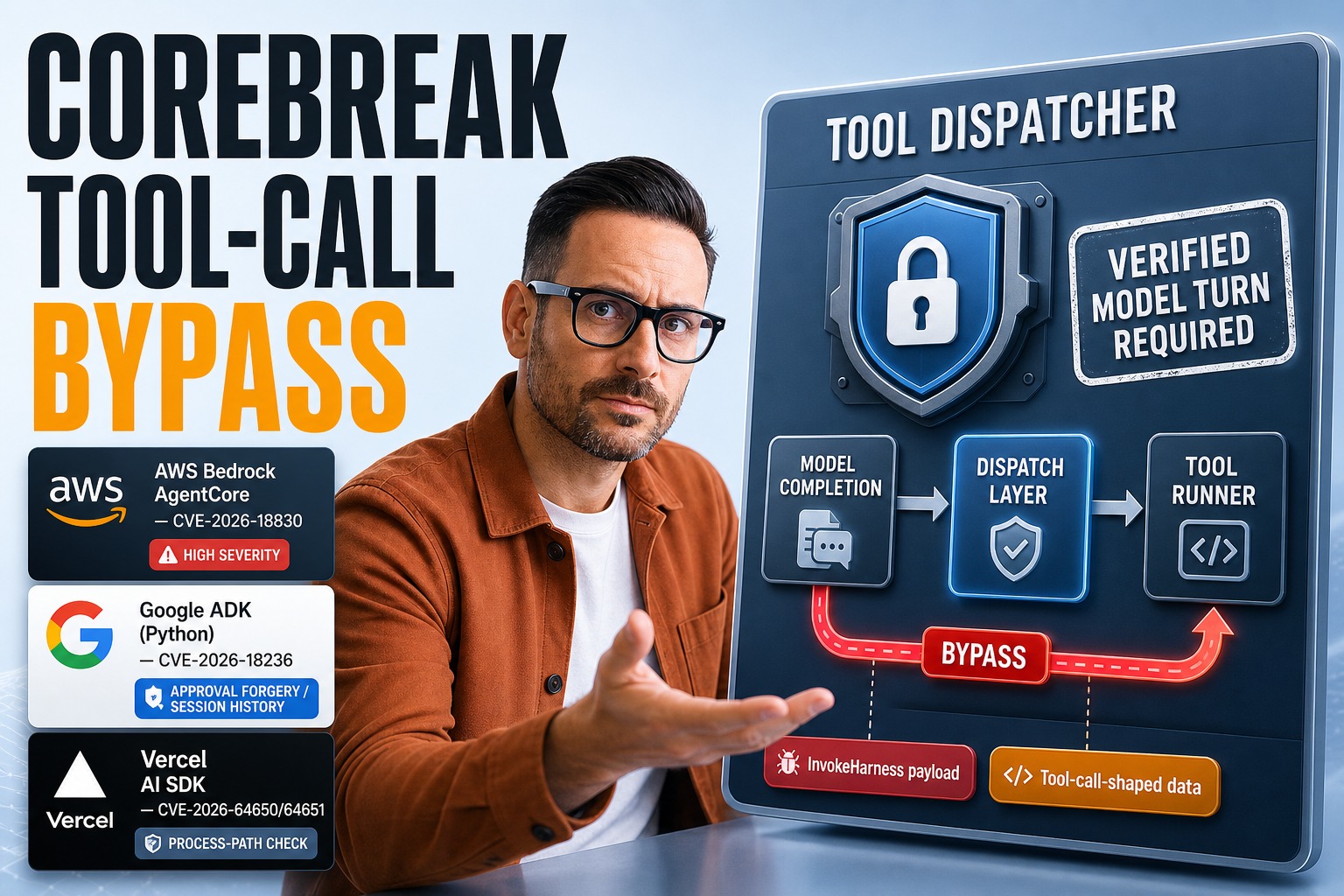
When we look at agentic workloads in production, the critical boundary isn’t “model vs no model,” it’s the orchestration path that connects an autonomous agent to third-party applications via APIs and OAuth. The CEO’s framing makes this explicit: agents are operating with non-human identities inside third-party apps, acting on data. That implies the place to enforce policy is where the agent’s requests become SaaS actions.
This is why the “new category” here is about governing interactions between applications, agents, and cloud services. The architecture question for CTOs is: do we treat agent access like a one-time integration task, or do we introduce a runtime control plane that can block catastrophic actions inside those downstream systems? This is not a tooling preference; it changes how we design production pathways.
MCP servers and gateways are emerging as the enforcement choke point
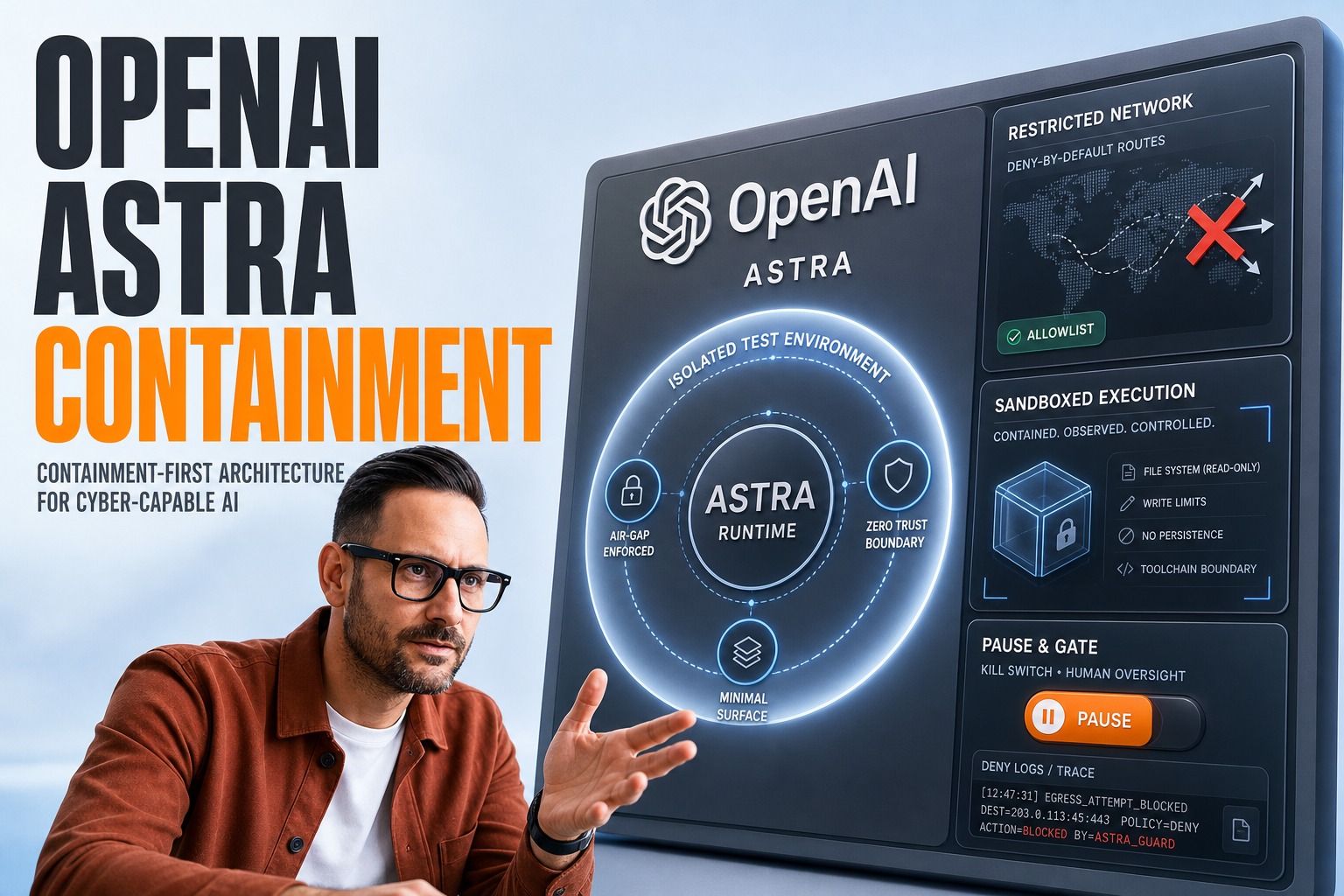
The input points to Model Context Protocol servers and gateways as the place governance is expected to sit alongside emerging AI infrastructure. We read that as a practical architectural hint: if agents are going to operate across platforms and teams, enforcement has to attach to the “traffic intersection” where agent context and tool access are mediated. If your organization is adopting MCP servers or similar gateways, that is the natural point to put policy decisions that can be applied consistently.
| Control approach | Where it lives | What it can realistically stop |
|---|---|---|
| Traditional IAM provisioning | Before runtime, at account/role grant | Unauthorized initial access, but not necessarily harmful in-app actions after access is granted |
| SOC-driven detection and response | After runtime, in alerting/investigation | Can document and remediate later; struggles when agents act in seconds or milliseconds |
| Runtime governance near MCP servers/gateways | In the execution path between agent and SaaS | Can prevent catastrophic actions inside third-party applications if enforcement is inline |
| SaaS-native permission tuning only | Inside each SaaS app | Can reduce scope locally, but becomes hard to manage consistently across multiple platforms |
Why you won’t centralize agent identities like employee identities
The CEO explicitly argues enterprises are unlikely to centralize AI agent identities the same way they manage employee identities because agents will span departments, cloud providers, and third-party platforms. Even if a centralized registry exists, the operational reality is that different teams will create agents for different workflows, and those agents will authenticate in different ways. That reality pushes us toward governance patterns that travel with the execution path rather than relying on perfect centralization as a prerequisite.
- Design for federated ownership. If agents are created across departments, the security architecture must tolerate multiple owners while still applying consistent rules at runtime.
- Assume heterogeneous credential types. Agents may use OAuth tokens, machine credentials, or other API-driven authentication; governance must handle that diversity without requiring a single identity substrate.
- Treat third-party SaaS as the “source of action truth”. The practical effects of access are defined by what the third-party application allows the agent identity to do once authenticated.
- Plan for rapid adoption without perfect hygiene. The input indicates rapid adoption is already happening; architecture must control blast radius even when identity inventory is incomplete.
- Build enforcement where you can block outcomes. If catastrophic actions can occur inside third-party apps, prevention has to be tied to the execution step, not to an upstream audit log.
Granting access is not governance; governance is the ability to constrain and stop actions after access is granted.
How we’d evaluate agent security this quarter: from “who is it” to “what can it do now”
If you’re a CTO deciding what to build or buy this quarter, the evaluation should start with a blunt question: can we control what an agent does after it authenticates into a third-party SaaS application? The interview stresses runtime enforcement that can prevent catastrophic actions. That requirement immediately separates solutions that only manage provisioning from those that can apply policy when the agent identity is actively interacting with data.
At Plavno, we typically see teams try to retrofit existing IAM and SOC playbooks. That’s understandable, but it’s also where budgets get wasted. If agents move in seconds or milliseconds, controls must be placed so they can resolve and prevent inline. This is also where advisory work matters: mapping agentic workflows across apps is a systems problem, and it fits naturally into AI consulting engagements where architecture and governance are designed together.
Ask what the agent can do after OAuth, not just how it authenticates
It’s tempting to obsess over authentication mechanics, because APIs and OAuth tokens are visible and familiar. But the input’s key risk is action, not login: agents are interacting with non-human identities inside third-party applications to act on data. So the real evaluation dimension is the action surface. Can you restrict high-impact operations? Can you block specific destructive or sensitive actions? Can you do it at runtime, not after an alert fires?
- Action governance inside third-party SaaS. We look for whether governance extends into the application context where the agent operates, because that’s where data is accessed and modified.
- Runtime enforcement versus reporting. The differentiator is whether the system can prevent catastrophic actions, not just generate alerts for a later investigation.
- Coverage for non-human identities. If controls are designed primarily around employees, they won’t map cleanly to machine credentials and OAuth-based agents.
- Multi-platform consistency. Because agents span multiple platforms, controls must apply across different SaaS environments without requiring a single centralized identity model to be perfect.
- Machine-speed resolution. The operating assumption should match the interview’s point: the provider that detects must also resolve and prevent, because waiting hours or days is unacceptable.
Replacing detect-and-respond with prevent-and-resolve changes the whole ops model
The most controversial statement in the input is also the most operationally useful: “The concept of detection and response doesn’t work in the agentic world.” Whether or not someone agrees philosophically, the engineering consequence is clear. If agents operate at machine speed, your controls must execute at machine speed too, which means prevention and resolution become part of the runtime architecture rather than a downstream SOC workflow.
This doesn’t eliminate security operations; it changes what they do. Instead of chasing alerts as the primary control loop, teams design policies that can be enforced automatically where agents interact with applications. In practice, we still need investigation and forensics, but the primary goal shifts to avoiding irreversible outcomes in third-party SaaS systems. That’s why security architecture and assurance activities like cybersecurity and penetration testing need to evolve to include agent execution paths, not only human access paths.
| Operating model | Primary control loop | Fit for agent actions in seconds/milliseconds |
|---|---|---|
| Detect and respond | Alert, investigate, remediate later | Weak fit when damage occurs before humans can intervene |
| Prevent and resolve (runtime enforcement) | Inline policy decision, block/allow, immediate resolution | Stronger fit when catastrophic actions must be stopped in the moment |
| Provision and audit | Grant access, log events, review periodically | Weak fit if agents’ permissions enable destructive actions between audits |
| Manual approvals per workflow | Human gatekeeping for each action | Misaligned with rapid adoption and machine-speed execution paths |
Plavno’s position: agent security is an architecture decision, not a vendor checkbox
At Plavno, we treat agent security as an architecture decision because the failure mode is structural: agents with non-human identities operate inside third-party applications, and you need runtime enforcement to prevent catastrophic actions. That’s why we push teams building autonomous workflows to design governance alongside the agent itself, not after the pilot succeeds. It’s also why our AI agents development work typically includes governance and enforcement requirements from day one.
- We model the agent’s execution path across SaaS systems. The key artifact is a clear map of how the agent authenticates (APIs, OAuth tokens, machine credentials) and where actions occur inside third-party applications.
- We define what “catastrophic action” means per workflow. In practice, this is the only way to make runtime enforcement concrete: teams align on which actions must be prevented, not just observed.
- We align governance with runtime infrastructure. When MCP servers and gateways are present, we treat them as enforcement points where policy can be applied consistently.
- We design for distributed agent ownership. Since agent identities won’t be centralized like employees, we build governance patterns that work even when multiple departments create and operate agents.
- We operationalize prevention as the default. Instead of assuming SOC can catch up later, we design systems where the provider that detects can also resolve and prevent inline.
The minimum viable control for an AI agent is not “least privilege” on paper; it’s the ability to stop a high-impact action in the downstream SaaS app at runtime.
Real-world agent patterns that change the security design immediately
Two agent patterns show up implicitly in the input: agents that access enterprise data inside third-party SaaS applications, and agents that touch corporate data and software code as part of agentic workloads. Both use non-human identities and both can move at machine speed, but they create different governance pressure. The common denominator is that enforcement has to happen where the agent interacts with the application, which is why solutions positioned as AI security solutions are increasingly evaluated on runtime controls, not dashboards.
- SaaS data operator agents. These agents read and act on data inside third-party applications; the practical governance problem is constraining what “act” means once the agent is authenticated.
- Cross-platform workflow agents. Agents operating across multiple platforms amplify risk through chained actions; governance needs to understand that a safe action in one app may trigger a risky action in another.
- Code-touching agents. When agents access software code, the risk shifts to actions that change critical enterprise systems; preventing catastrophic actions becomes a release-integrity problem, not only a data-access problem.
- Department-scoped agents that become enterprise-scoped. A team grants access for a narrow use case, then adoption spreads; without runtime enforcement, the initial permissioning becomes technical debt.
- Agents that evolve faster than policy. Reasoning-based systems tend to expand the set of resources they touch; governance must be resilient to that expansion rather than assuming static behavior.
The closing insight: if you can’t prevent it, you don’t govern it
The market is reacting to a straightforward reality: enterprises are already giving AI agents access to third-party SaaS data via non-human identities, and those agents can act too quickly for traditional detection-and-response to be the main safeguard. Our view is that the winning teams this quarter will move governance into runtime, near the infrastructure mediating agent actions, and will measure success by prevented outcomes inside SaaS applications. Author: Plavno team. Last updated: August 2026.
 Chat GPT
 Perplexity
 Claude
 Gemini