Plavno developed a headless multi-brand retail platform for a fashion holding company with four distinct brands, one shared backend, centralized inventory logic, and independent storefront experiences.
Overview
The client operated four fashion brands under one group. Each brand had its own positioning, audience, and design language, but all shared one inventory and logistics backbone. Their previous WordPress + WooCommerce setup could no longer support multi-brand complexity, content isolation, and operational scalability. The goal was to replace it with a headless commerce architecture that could serve all brands from one backend while preserving brand independence.
One development team now supports four retail brands from a shared backend platform
Brand content managers work independently without affecting other brands
Better reuse of catalog and operational logic across storefronts
Real-time stock synchronization across shared inventory workflows
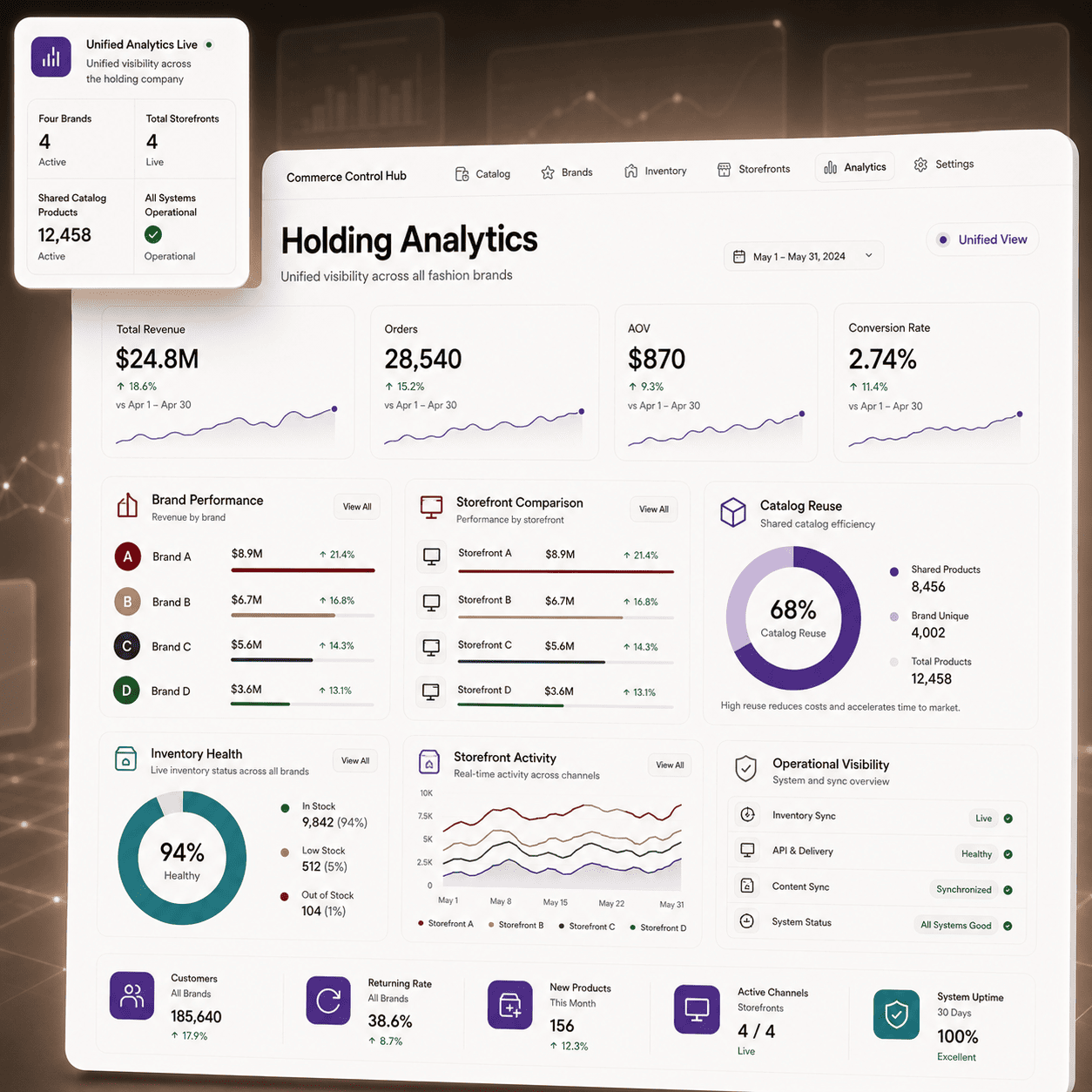
Unified analytics visibility across the entire retail holding structure
The retailer had grown into a multi-brand operation, but its ecommerce stack was still based on WordPress and WooCommerce.
Common challenges included:
Weak support for true multi-brand operations
Duplicated backend effort across storefronts
Limited separation between brand content teams
Difficulty managing one shared catalog with different brand presentations
Weak scalability for custom product attributes and cross-sell logic
Unreliable support for centralized inventory and logistics integration
As the business expanded, the old stack became harder to manage both technically and operationally.

The new platform needed to:
Support four independent retail brands with unique storefront designs
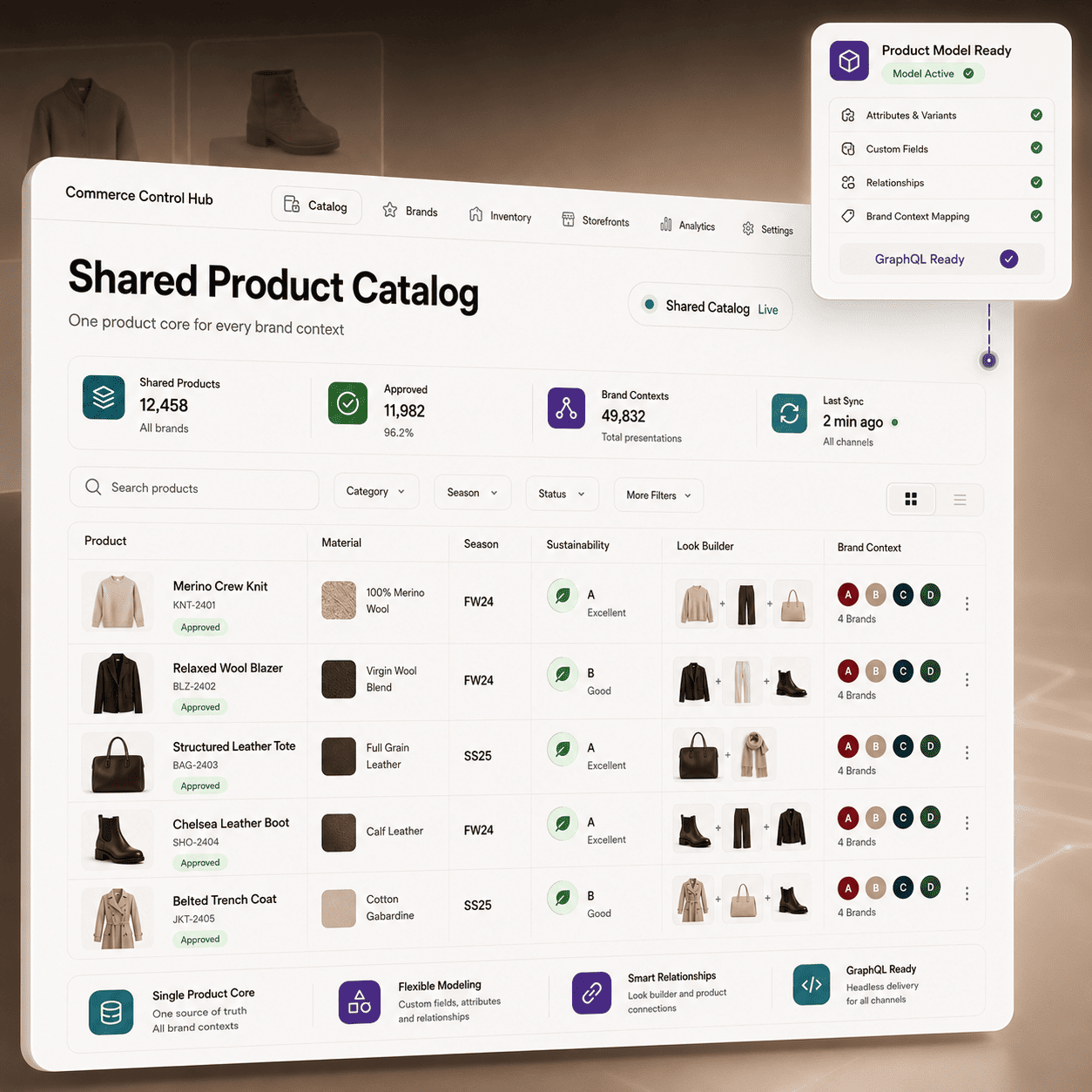
Maintain one shared backend and product catalog
Isolate editorial work so each brand team only saw its own content
Support custom product attributes and merchandising logic
Integrate with the shared warehouse and logistics system
Provide better operational visibility across the holding company
There were also important platform constraints:
Each brand needed full visual independence despite one backend
Catalog data had to serve multiple brand contexts without duplication
Stock levels needed to stay synchronized in real time
Brand editors had to work independently without content overlap or admin confusion

Solution
A headless Craft Commerce multistore solution delivering unified backend operations, brand-separated content management, and full frontend freedom across four distinct storefronts.
Craft Commerce Multistore setup for four brands
One backend with shared catalog and logistics logic
Channel-based brand isolation for editorial teams
Custom product fields for material, season, sustainability rating, and look-builder logic
GraphQL API for independent headless storefronts
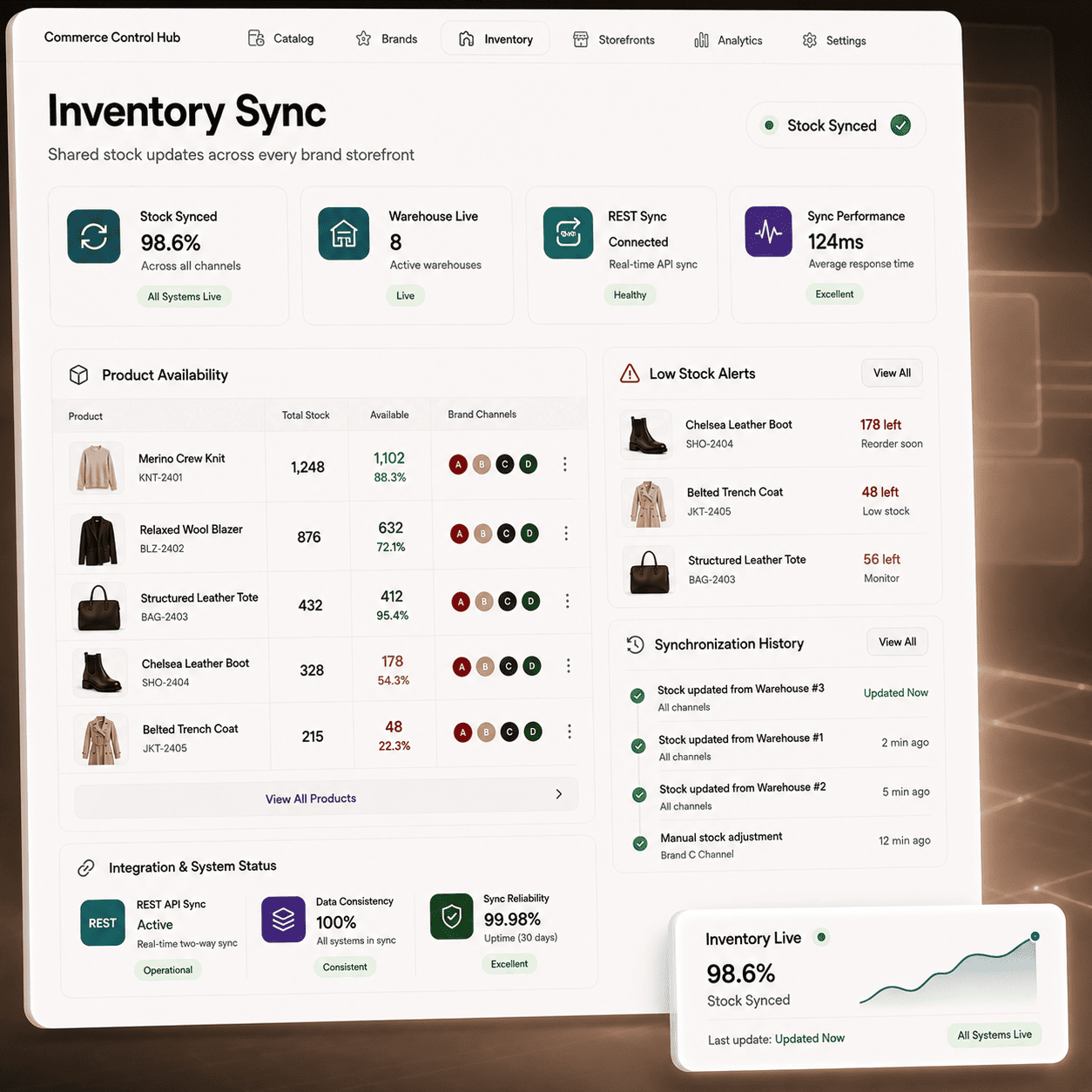
Real-time stock synchronization with 1C via REST API
Unified analytics across the holding company
Manage Shared Product Data: Product teams maintain catalog entries and shared operational data in one central backend.
Separate Brand Content Operations: Each brand team works only within its own content channel and storefront context.
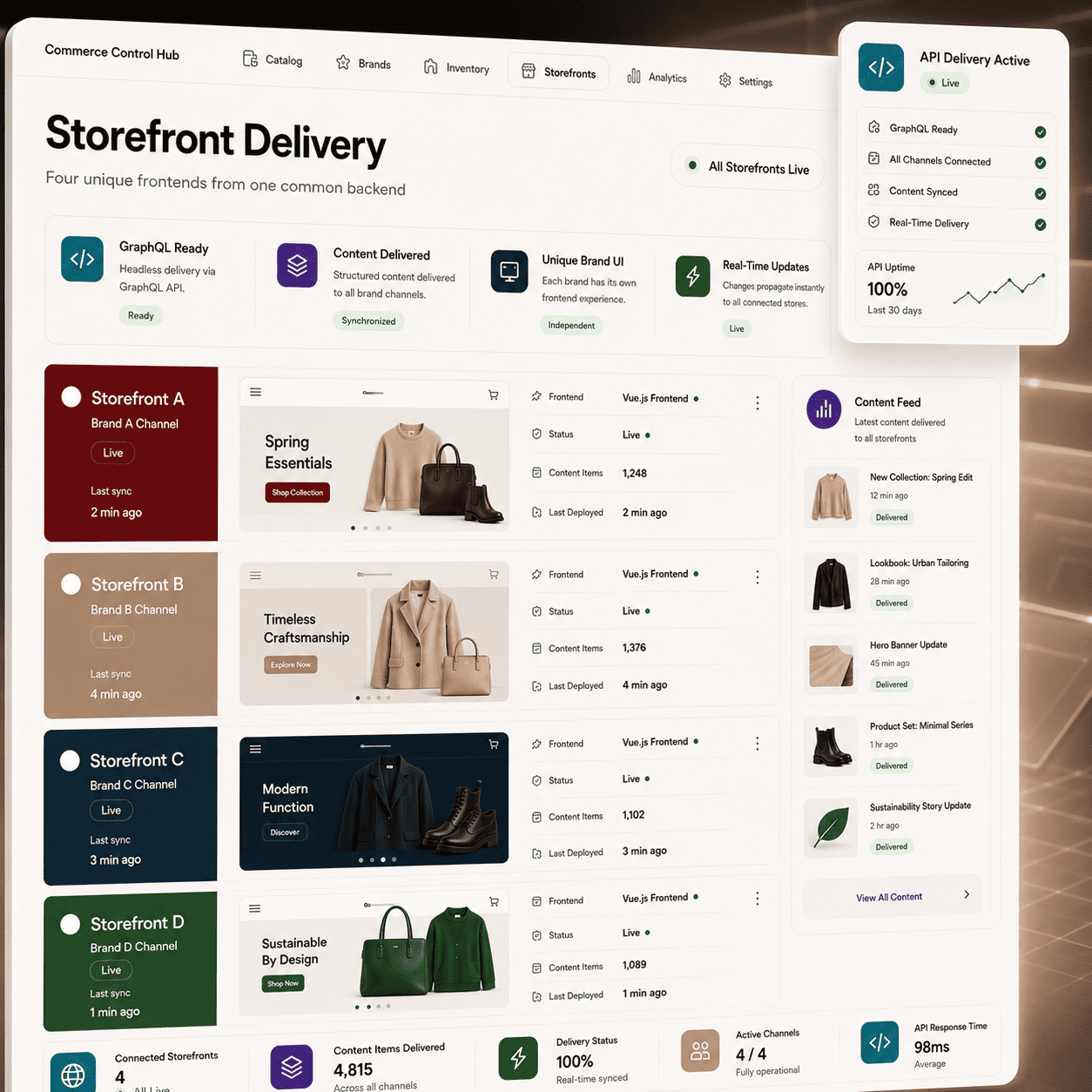
Deliver to Independent Storefronts: The platform exposes structured product and content data through GraphQL to four standalone Vue.js frontends.
Sync Inventory in Real Time: Stock levels are updated through REST API integration with 1C, ensuring all storefronts reflect current availability.
Supports four separate fashion brands from one backend — suitable for retail groups with shared stock and logistics operations.
Works for custom product storytelling and brand-specific UX, enabling editorial isolation for multiple internal teams.
Scalable for future brand expansion and commerce complexity.
Architecture Overview
Commerce Core Layer: Craft Commerce Multistore managed four stores inside one backend with shared commerce logic.
Product Content Layer: Products were structured with custom fields such as material, season, sustainability rating, and look-builder relationships.
Brand Content Isolation Layer: Channels were used to separate brand-specific content so editors from one brand only accessed their own environment.
API Delivery Layer: GraphQL powered four independent Vue.js storefronts, each with its own frontend design and UX.
Integration Layer: A REST API connection to 1C enabled real-time stock synchronization across the group's shared inventory system.
Analytics Layer: A centralized analytics view gave the holding company stronger visibility across all brands.

Value
Delivering brand isolation, shared commerce operations, and flexible fashion merchandising at scale
The platform supports one product and operations core while preserving full brand autonomy on the frontend.
Each content team works only with its own brand assets and pages, reducing conflicts and operational overlap.
Fashion-specific product fields support stronger merchandising and more structured storytelling.
Each brand has a unique storefront design while consuming data from one common backend.
Benchmarks
Built to support multi-brand retail growth, shared logistics, and repeatable storefront operations
The architecture supports four distinct stores from one centralized commerce backend.
Stock data is synchronized in real time across brands through external system integration.
The team can support multiple brands without duplicating backend effort.
Analytics and operational visibility are centralized across all brands.
Data Protection
Secure handling of brand operations, product data, and inventory-connected commerce workflows
Brand teams access only their own content and operational areas.
Catalog and stock synchronization processes are managed through protected platform integrations.
The shared backend supports better governance across multiple retail brands.
Innovative Experience
Craft Commerce development for retail groups that need shared operations and independent brand experiences
Delivery Crew
High-performing developers for growing companies

Eugene Katovich
Sales Manager
Plavno builds Craft Commerce solutions for retail groups that need shared catalog operations, independent brand storefronts, and real-time inventory synchronization.
Talk to an ExpertCompetitive Ability
Demonstrating how Plavno transformed a fragmented ecommerce stack into a scalable multi-brand retail architecture
Centralize Commerce Data
Manage products, inventory-linked data, and operational logic in one shared backend.
Separate Brand Operations
Use content channels and multistore logic to isolate brand workflows and storefront structures.
Deliver to Unique Frontends
Serve structured product and content data via GraphQL to four independent Vue.js storefronts.
Sync Inventory & Analyze Performance
Keep stock levels updated through 1C integration and monitor performance across all brands through unified analytics.
Centralized Commerce Core: One backend manages shared catalog, inventory, and logistics logic for all four brands, eliminating duplicated backend effort.
Structured Content Delivery: Product data and content are delivered via GraphQL to independent storefronts, automating the process of keeping brand experiences separate from shared data.
Real-Time Inventory Synchronization: Automated REST API integration with 1C ensures stock levels are updated in real time across all storefronts without manual intervention.
Isolated Brand Workflows: Content teams operate independently within their own channels, reducing administrative overhead and preventing operational conflicts.
Multi-Brand Platform Support: The architecture is built to support four distinct stores from a single commerce backend, handling the complexity of a holding company structure.
Reusable Backend Logic: A single development team can support all brands without duplicating backend work, enabling operational efficiency and team scalability.
Multi-User Collaboration: The system supports distinct user roles — product teams, brand editors, and developers — allowing simultaneous work across different brands and the shared catalog.
Unified Analytics Visibility: A centralized analytics layer provides the holding company with scalable oversight across all brands, supporting data-driven decisions for the entire group.
Rich Product Modeling: Custom product fields for material, season, sustainability rating, and look-builder logic support intelligent merchandising and structured storytelling tailored to fashion retail needs.
Context-Aware Content Logic: Channels are used to ensure editorial teams only see contextually relevant brand assets, preventing content overlap and admin confusion.
Headless Frontend Flexibility: Each brand has a unique Vue.js storefront design while consuming data from one common backend, preserving full brand autonomy on the frontend.
Continuous Governance & Oversight: Role-based brand access and protected inventory workflows ensure consistent, high-quality data management and governance across the retail group.
Measurable outcomes delivered by a multi-brand headless commerce platform
A single development team can now support four distinct brands without maintaining separate backend systems.
Content managers from each brand operate independently without interfering with one another.
Inventory and catalog logic are handled centrally, reducing platform fragmentation.
The holding company now has better visibility across all commerce operations from one analytics layer.
The platform is ready for future storefront changes, catalog growth, and additional brand complexity.
Tools We Used
Project Estimator
The estimated time to launch the product
Clear vision of functionality you need
15% discount on your first sprint

Frequently Asked Questions
Find answers to your common concerns
Craft Commerce supported a multistore architecture with one backend, which made it a strong fit for a multi-brand retail setup.
Yes. Each brand had its own independent Vue.js frontend with a unique design and customer experience.
Channels were used so each editorial team only had access to its own brand content.
Yes. All brands used one shared inventory and logistics model, with real-time stock synchronization through 1C integration.
About Plavno

Senior engineers + proven AI components to accelerate time-to-value.

From MVPs to enterprise platforms at global scale.

From extension UX to GPU pipelines and global scale.
Testimonials
Contact Us
We can sign NDA for complete secrecy
Discuss your project details
Plavno experts contact you within 24h
Submit a comprehensive project proposal with estimates, timelines, team composition, etc
Plavno has a team of experts that ready to start your project. Ask me!

Vitaly Kovalev
Sales Manager
Fill in the form to access the case study.