How to Hire Developers for a Startup?
Starting a new business is an exciting venture, full of challenges and opportunities. For many startups, one of the most crucial elements in turning ideas into reality is a team of skilled developers.

Starting a new business is exciting and full of potential. For many startups, having a team of developers is crucial to turning ideas into real, working products. But why exactly do startups need developers? Let's break it down in simple terms.
Bringing Ideas to life. Every startup starts with an idea. It could be a new app, website, or piece of software. Developers are the people who take these ideas and make them into actual products that people can use. Without developers, many great ideas would never become more than just thoughts.
Moving Quickly. In the world of startups, things move fast. Being able to create and update products quickly is very important. Developers help startups move fast by building and improving products based on feedback and market needs. This speed can make a big difference in staying ahead of the competition.
Custom Solutions. Sometimes, ready-made software isn't enough for a startup's needs. Developers can create custom solutions tailored specifically to what the startup needs. This means the startup can have exactly the tools it needs to succeed.
Growing with the Business. As startups grow, their technical needs get bigger and more complicated. Developers build systems that can handle this growth, making sure everything runs smoothly as more people start using the product.
Attracting Investors. Investors want to put their money into startups that show promise. A strong team of developers shows investors that the startup can handle technical challenges and grow successfully. This can lead to more investment and resources.
Improving Customer Experience. Good developers create products that are easy and enjoyable to use. By hiring skilled developers, startups can make sure their customers have a great experience, which leads to higher satisfaction and loyalty.
In simple terms, developers are essential for startups because they turn ideas into real products, help the business move quickly, create custom solutions, and build systems that grow with the company. They give startups a competitive edge, attract investors, support various business functions, improve customer experience, and prepare the business for the future.
Once you understand the importance of developers for your startup, the next step is figuring out where to find them. There are several places you can look, each with its own advantages.
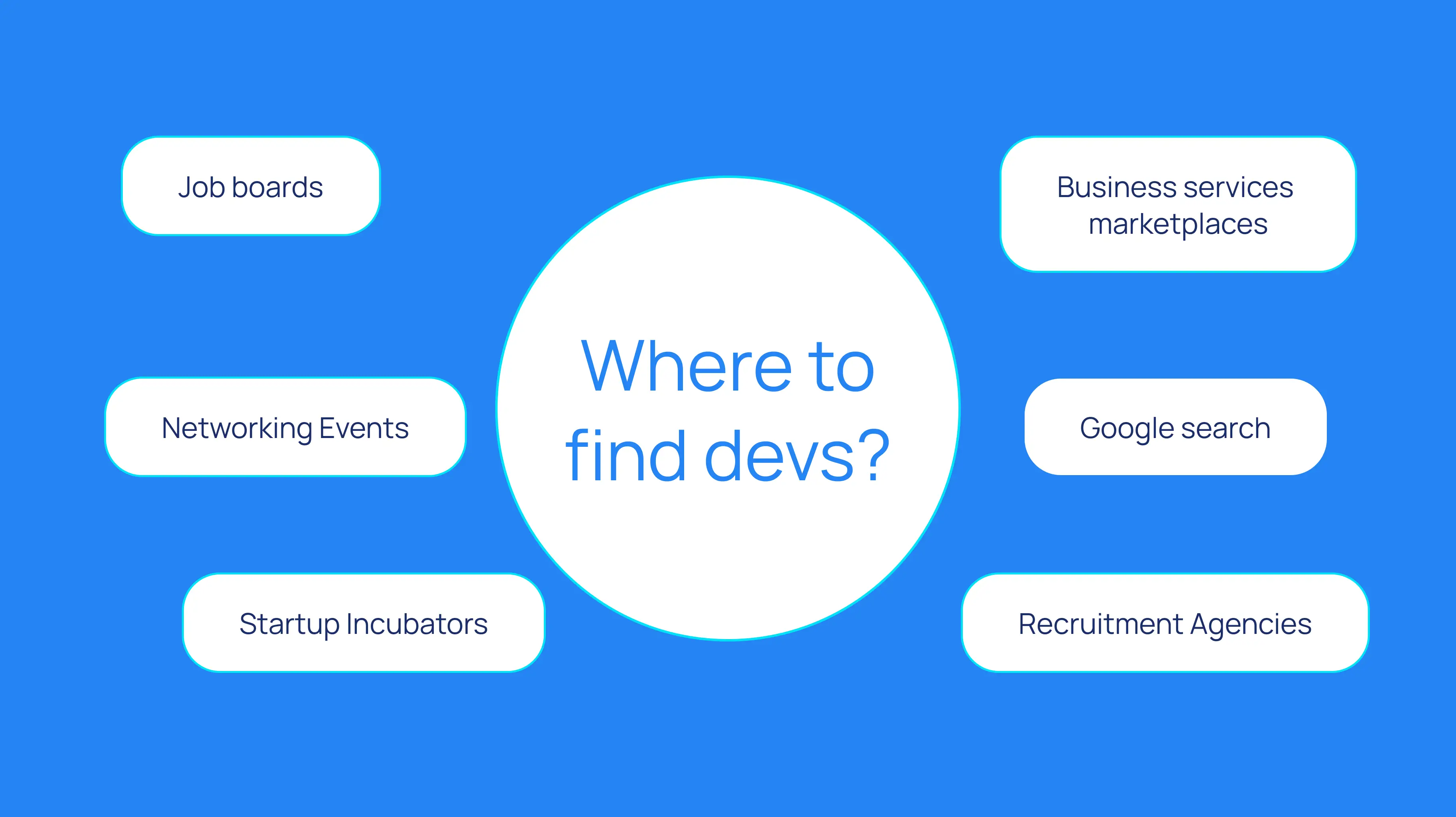
In-house developers are full-time employees who work directly for your startup. Here are some places to find them:
Hiring full-time talent often requires a solid foundation of internal processes, something supported by strong digital transformation services.
Freelance developers work on a contract basis and can be hired for specific projects. Here are some popular platforms to find freelancers:
Sometimes, it's better to hire a whole team from a software development company. These companies have experienced developers and can handle larger projects. Here’s where to find them:
For full-cycle support, you can also partner with a trusted provider like Plavno, which offers end-to-end custom software development.
If you need someone to join you as a partner and take charge of the technical side, a tech co-founder is the way to go. Here’s where to find them:
A Chief Technology Officer is crucial for startups that heavily rely on technology. Here’s how to find one:
Hiring developers is a crucial step that can greatly influence your startup's trajectory. Several factors need careful consideration to ensure you find the right talent that fits your needs and vision.
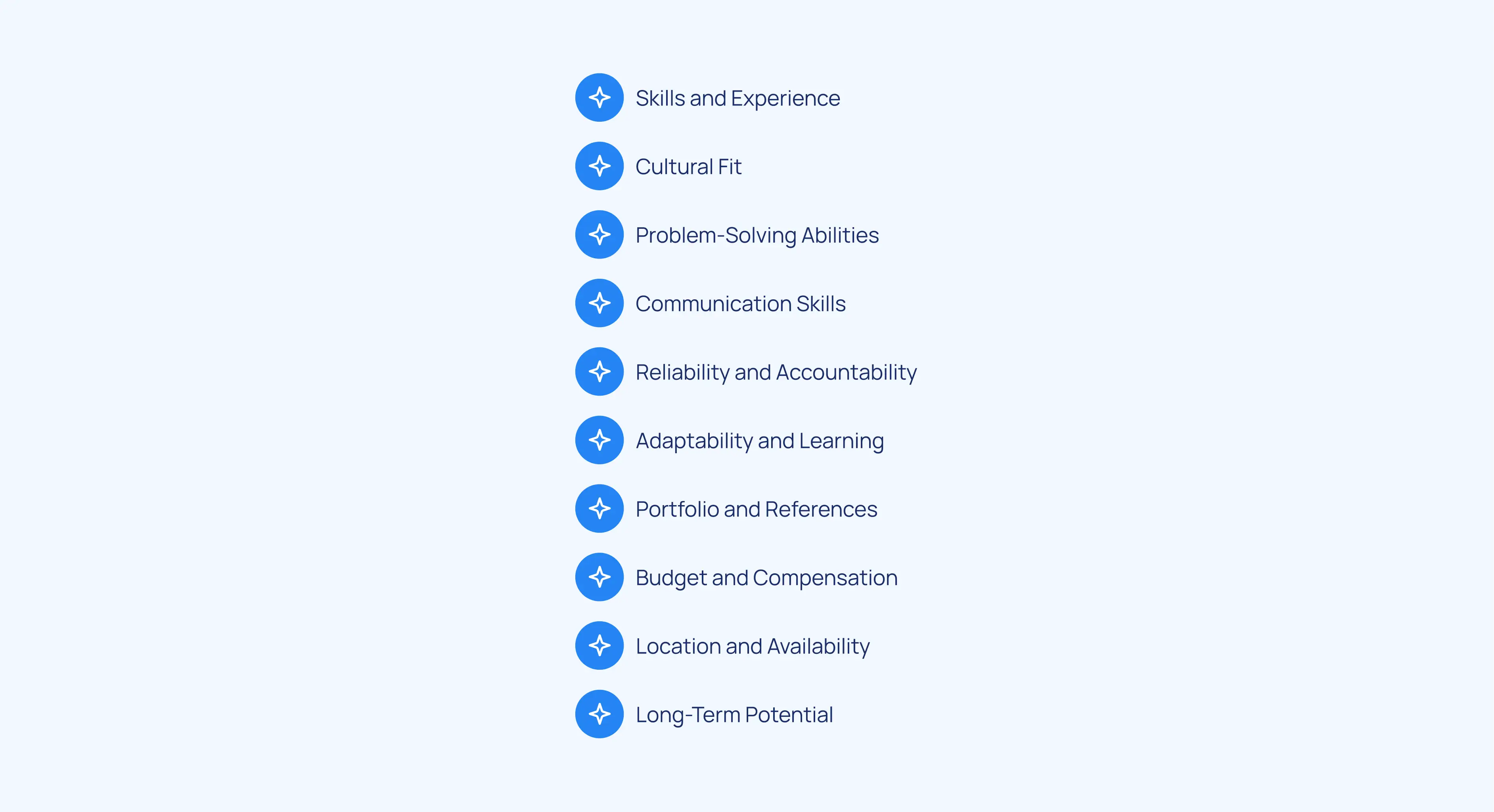
First and foremost, the technical skills of the developers must align with your project requirements. This includes proficiency in specific programming languages, frameworks, and tools that your product relies on. For instance, if you're building a mobile app, developers should be skilled in languages like Swift for iOS or Kotlin for Android. Beyond technical skills, experience plays a significant role. Developers with prior experience in similar projects or industries bring valuable insights and can navigate challenges more efficiently. Their familiarity with the common pitfalls and best practices can save your startup time and resources.
Cultural fit is another important consideration. Developers should resonate with your startup’s vision and be genuinely passionate about your product. This alignment fosters dedication and long-term commitment. Moreover, a good cultural fit ensures smooth collaboration and communication within the team. Developers who blend well with your startup’s culture are more likely to stay motivated and work harmoniously with others, which is crucial for maintaining a positive and productive work environment.
In the fast-paced world of startups, strong problem-solving abilities are essential. Developers need to possess sharp analytical skills to identify and resolve issues effectively. Their capacity to think critically and devise innovative solutions can significantly enhance your product's functionality and user experience. Additionally, creativity in problem-solving helps in finding unique approaches that can set your product apart in a competitive market.
Effective communication is vital, especially when bridging the gap between technical and non-technical team members. Developers should be able to explain complex technical concepts in simple terms that everyone can understand. This clarity ensures that all team members are on the same page, fostering better decision-making and project management. Furthermore, developers who are good communicators can collaborate more effectively with other departments, such as marketing and sales, enhancing overall team synergy.
Reliability is a key trait to look for in developers. They should be dependable and able to meet deadlines consistently, contributing to a smooth workflow and timely project completion. Equally important is accountability. Developers must take ownership of their tasks and be proactive in addressing any issues that arise. This sense of responsibility ensures that projects stay on track and that problems are swiftly resolved.
The tech landscape is constantly evolving, so developers must be willing to learn new skills and adapt to emerging tools and methodologies. This willingness to evolve ensures that your startup remains competitive and can leverage the latest technological advancements. Flexibility is also important, as startups often require team members to take on multiple roles. Developers who can adapt to changing responsibilities are invaluable in such dynamic environments.
A developer’s portfolio provides tangible evidence of their skills and creativity. Reviewing their past work allows you to assess the quality of their output and their ability to tackle projects similar to yours. Additionally, checking references from previous employers or clients can offer insights into their work ethic, reliability, and team collaboration skills. This feedback is crucial for making an informed hiring decision.
Budget constraints are a reality for most startups, so it's essential to ensure that the developer's salary or rate fits within your financial plan. While cost is important, offering competitive compensation helps attract top talent. Consider providing additional incentives like benefits or equity to make your offer more attractive. Balancing affordability with fair compensation can help you secure skilled developers without straining your budget.
If you’re considering remote developers, time zone compatibility becomes a crucial factor. Overlapping working hours facilitate better communication and collaboration, which is vital for maintaining project momentum. Additionally, ensure that the developer's availability aligns with your project timeline. Freelancers or part-time developers might have other commitments that could impact their availability, so clear communication about expectations is necessary.
Finally, consider the long-term potential of the developers. Look for candidates who are interested in growing with your startup. Long-term team members provide continuity and contribute to building a stable technical foundation. Offering opportunities for career growth and professional development can help retain talented developers and keep them motivated, contributing to the sustained success of your startup.
When hiring developers for your startup, it's important to evaluate their technical skills, experience, cultural fit, problem-solving abilities, and communication skills. Ensure they are reliable, adaptable, and have a strong portfolio with good references. Balance your budget with competitive compensation and consider location and availability. Finally, think about their long-term potential and how they can grow with your startup. By carefully considering these factors, you can build a strong technical team that will drive your startup's success.
Hiring a software development company can be a strategic move for your startup, providing you with the expertise and resources needed to bring your product to life. Here’s a step-by-step guide to help you through the process.
Start by clearly defining what you need from a development company. Consider the specific skills and experience required for your project. Are you building a mobile app, a web platform, or a complex software solution? Make a list of the technologies and programming languages that are essential. Also, think about the scope of your project and the level of expertise you require.
A well-prepared project brief is crucial when approaching development companies. It should include:
Look for software development companies that specialize in your type of project. Start by searching on platforms like Clutch.co, GoodFirms, and UpCity, which provide reviews and comparisons of various companies. Pay attention to companies with experience in your industry and those with positive client feedback.
Examine the portfolios and case studies of potential development companies. Look for projects similar to yours to gauge their expertise and quality of work. A good portfolio demonstrates the company’s ability to handle projects of similar complexity and scale.
Set up initial meetings with shortlisted companies to discuss your project in detail. These meetings can be conducted via video calls or in person. During these discussions, assess the company’s understanding of your project, their technical capabilities, and their approach to project management. Pay attention to how well they communicate and whether they ask insightful questions about your project.
After the initial meetings, ask the companies to submit detailed proposals. These proposals should include:
Evaluate these proposals based on their understanding of your project, the feasibility of their plan, and the overall cost.
Effective communication and collaboration are key to a successful partnership. Assess how responsive the companies are during your initial interactions. A good development company should be able to communicate complex technical details clearly and be open to feedback. They should also demonstrate a collaborative approach, working closely with you to ensure the project meets your expectations.
Before making a decision, check the references provided by the development companies. Speak with their previous clients to get an understanding of their work ethic, reliability, and ability to deliver on time and within budget. This step can provide valuable insights and help you make an informed decision.
Once you’ve evaluated all the proposals and checked references, choose the development company that best meets your needs. Consider their technical expertise, project plan, communication skills, and overall fit with your startup’s culture and vision.
Before starting the project, establish a detailed contract outlining the scope of work, timeline, costs, and payment terms. Include clauses for handling changes in project scope, delays, and other potential issues. A clear contract helps set expectations and protects both parties.
After the contract is signed, onboard the development company by providing them with all the necessary information and resources. Set up regular meetings to monitor progress and address any issues that arise. Establishing a strong working relationship from the start will help ensure the project runs smoothly.
By following these steps, you can hire a development company that will help bring your startup’s vision to life and drive your success.
When planning to hire a software developer or a development company for your startup, understanding the costs involved is crucial. Various factors influence the overall cost, including the type of developer, their location, and the complexity of your project. Here's a breakdown of what you can expect.
The cost of hiring a developer can vary significantly depending on their role and level of expertise.
Several factors influence the cost of hiring a software developer or development company.
The geographical location of the developer plays a significant role in determining the cost. Developers in North America and Western Europe generally have higher rates compared to those in Eastern Europe, Asia, or South America. For example, a developer in the United States might charge between $75 to $150 per hour, while a developer in Eastern Europe might charge between $30 to $60 per hour.
The complexity of your project impacts the overall cost. Simple projects with basic features will cost less, while complex projects requiring advanced functionalities, integrations, and custom solutions will be more expensive. Detailed project requirements and the time needed to complete various tasks are key cost drivers.
The duration and scope of the project also affect costs. Longer projects or those with a broader scope will naturally cost more due to the increased time and resources required. Additionally, fixed-price contracts might be more cost-effective for well-defined projects, whereas hourly rates could be better for projects with evolving requirements.
The hiring model you choose—whether it's an in-house developer, a freelance developer, or a development company—also influences costs.
Beyond the direct costs of hiring developers, there are additional expenses to consider:
The cost of hiring a software developer for your startup depends on various factors, including the developer’s experience, location, project complexity, and hiring model. While costs can range widely, it’s important to balance budget considerations with the need for quality and expertise. By understanding these cost factors, you can make informed decisions that align with your startup’s goals and financial capabilities, ensuring you get the best value for your investment.
Are you planning to hire developers for your startup? It can feel like searching for the perfect puzzle piece – it requires patience and persistence. However, with a solid strategy, enthusiasm, and a bit of luck, you'll find the right developers to propel your business forward.
If you're unsure where to start or want to avoid the hassle of finding and hiring developers, contact the Plavno team. We’re here to help you find the perfect fit for your company.
Contact Us
Plavno experts contact you within 24h
Discuss your project details
We can sign NDA for complete secrecy
Submit a comprehensive project proposal with estimates, timelines, team composition, etc
Plavno has a team of experts ready to start your project. Ask us!

Vitaly Kovalev
Sales Manager
