Every few months, a new AI demo goes viral.
A model writes code, passes exams, designs interfaces, even holds multi-step conversations.
It’s impressive.
But it leads to a dangerous misconception:
“AI can do everything. We just plug it in and it will figure things out.”
Reality check: AI isn’t magic — it’s engineering.
And when we forget that, we end up with systems that look smart in a demo, but fail in production… sometimes on very simple tasks.
The Problem: Raw AI Models Are Not Reliable Systems
Large language models and other generative AI tools are incredibly powerful. But on their own, they are:
Probabilistic, not deterministic
Brittle under edge cases
Sensitive to prompt phrasing and input context
Completely unaware of your business rules, constraints, and risk tolerance
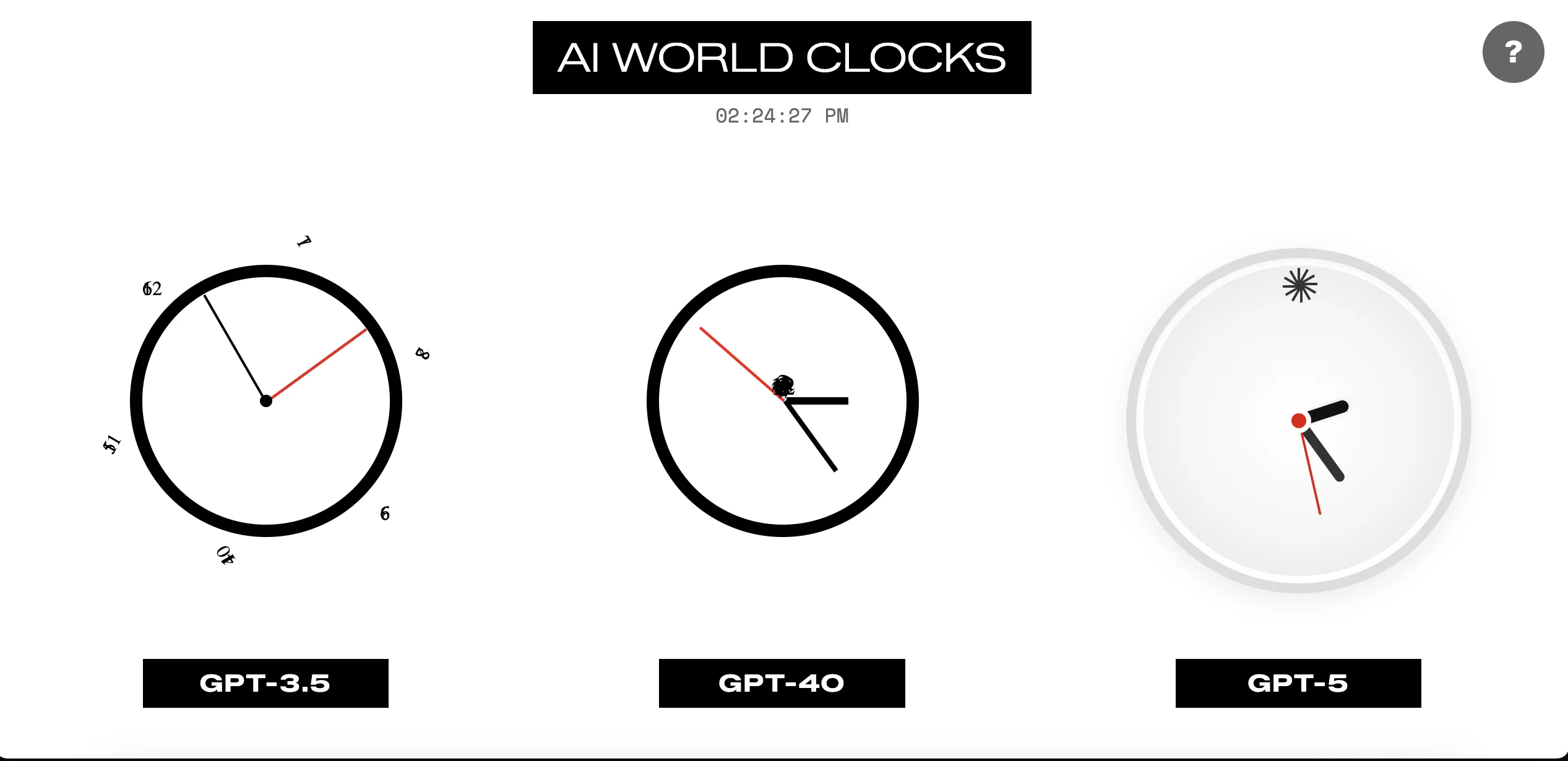
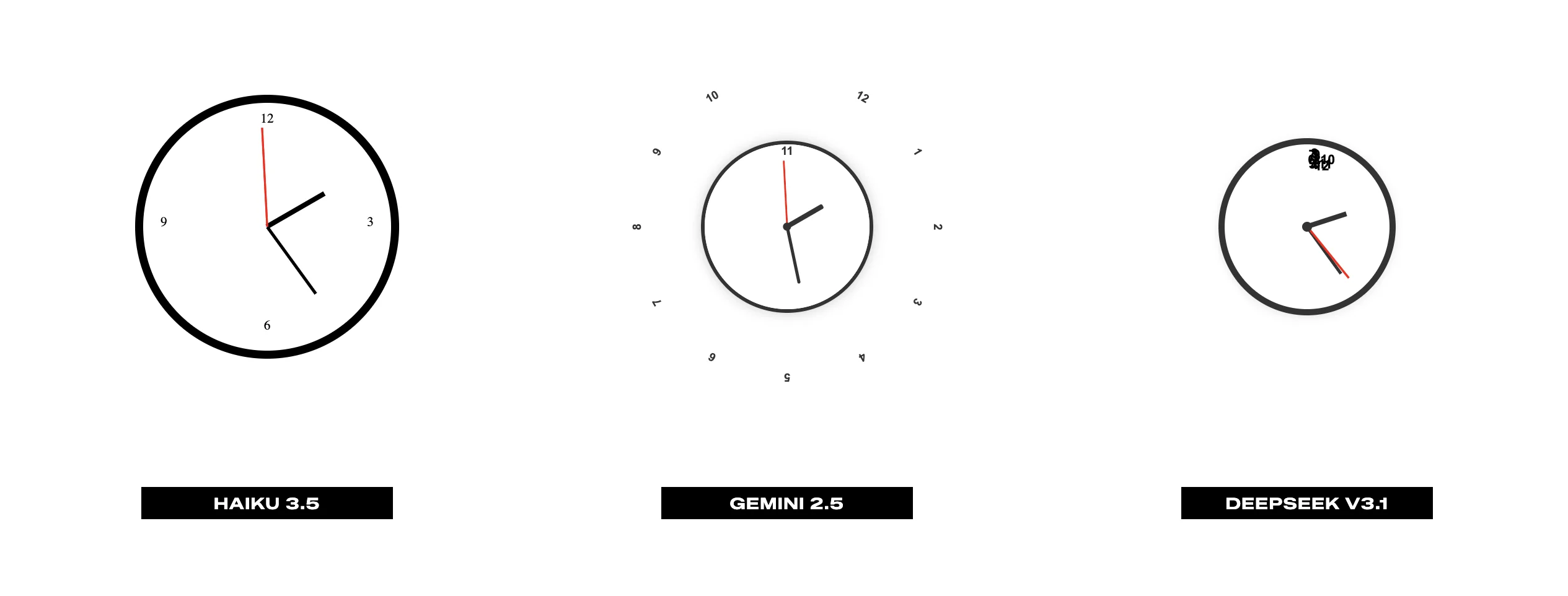
Give a raw model a slightly unusual task — like generating live world clocks, parsing regulatory text, or handling ambiguous customer requests — and you’ll often see:
Confident answers that are subtly wrong
Outputs that don’t follow your internal processes
Inconsistent formatting
Failure to handle exceptions or missing data
That’s not a “bad model.”
That’s an un-engineered system.
Link to try out : https://clocks.brianmoore.com/
Why “Just Use AI” Fails in Production
When companies treat AI like magic, projects usually fall into one of these traps:
1. The Impressive Demo That Never Scales
A team demos something cool internally, but:
There’s no logging, monitoring, or evaluation
No clear success metrics
No way to handle failures or recovery paths
No integration with existing tools and workflows
Result:the pilot dies quietly after a few weeks.
2. The “Helpful” AI That Causes Real Risk
Without guardrails and governance, AI can:
Hallucinate policies, legal clauses, or numbers
Give incorrect yet confident answers to customers
Suggest actions that violate your internal rules
In highly regulated domains (finance, healthcare, insurance, public services), this can’t be treated as “just a bug.” It’s a business and compliance risk.

3. The Tool That Nobody Really Trusts
If AI outputs are right sometimes and wrong other times — and there’s no clear way to tell the difference — people quickly stop relying on it.
You end up with:
AI that everyone is “supposed” to use
Real work still done manually
Frustrated teams and wasted budget
The core issue? No engineering around the model.
What It Really Takes to Build Reliable AI Systems
To move from “cool model” to production-grade AI, you need to treat AI like any other critical system — with architecture, testing, monitoring, and governance.
At Plavno, we focus on five pillars:
1. Architecture First, Model Second
A robust AI system usually includes:
Orchestration layer / agentic AI framework
Tools and APIs the agent can safely use
Retrieval and context management
Validation and fallback strategies
Role separation (system vs user vs tools)
The model is just one component in a larger architecture.
2. Data, Context, and Grounding
Reliable AI isn’t just “prompt engineering.” It’s:
Connecting to your data sources
Using retrieval-augmented generation (RAG)
Enforcing source-of-truth systems (CRMs, ERPs, policy docs)
Making the model cite or reference specific data where relevant
This turns AI from “guessing” into grounded reasoning, which is why professional machine learning development is critical for building reliable AI systems.
3. Guardrails and Governance
“Responsible use of AI” isn’t just a policy slide. It requires:
Clear boundaries on what AI can and cannot do
Human-in-the-loop in high-risk flows
Input and output validation
Role-based access controls
Audit logs and traceability
Evaluation frameworks and continuous testing
That’s AI governance, not just “we added an AI widget.”
4. Evaluation, Monitoring, and Iteration
You wouldn’t ship a core system without monitoring. The same goes for AI.
Production AI needs:
Quality benchmarks and success metrics
Automatic checks for regressions after model updates
Feedback loops from real users
A/B testing of prompts, tools, and flows
Alerting when outputs degrade or fail
AI systems improve over time — but only if you treat them as living products, not one-off experiments.
5. Integration into Real Workflows
AI has real impact when it’s embedded where work actually happens:
In your CRM, not just a playground chatbot
Inside your support stack, not just a standalone FAQ bot
Connected to your logistics, billing, or scheduling tools
Aligned with how your teams already operate
That’s where agentic AI systems shine: models that don’t just respond, but act using tools, API calls, workflows, and business rules.
The Goal Isn’t to Replace Everyone — It’s to Build Systems That Work
There’s a lot of fear around AI “replacing” people or “taking over everything.”
In practice, the most successful AI transformations we see are:
Augmenting teams, not eliminating them
Automating repetitive, low-value tasks
Giving humans better tools, insights, and interfaces
Reducing manual busywork across operations, support, logistics, finance, and more
The companies that win are not the ones that believe “AI is magic.”
They’re the ones that understand:
AI is a component.
The system around it is where the real value — and responsibility — lives.
And that is engineering.
How Plavno Helps You Build AI Systems You Can Trust
At Plavno, we work with companies across all U.S. states and globally to design, build, and scale production-grade AI systems, not just demos.
We help you:
Explore our AI services:
https://plavno.io/services/ai-solutions/ai-development-company
See real-world AI case studies:
https://plavno.io/cases
Get a free project estimation (Black Friday or not):
https://plavno.io/projectEstimate
U.S. Presence
Plavno supports AI initiatives across all U.S. states, with a local presence for communication and collaboration.
U.S. Office:
700 N Fairfax St, Suite 614, Alexandria, VA 22314