The narrative around Generative AI is shifting from capability to capacity. Recent headlines highlight a looming infrastructure bottleneck: the White House is pressuring AI firms to cover the cost of energy rate hikes, and Nvidia is reporting record capital expenditures as data centers scramble to secure hardware. This isn't just political posturing or financial news; it is a signal that the era of “unlimited compute” for AI is ending. For enterprises, this means the physics of power consumption and the economics of GPU utilization are now immediate board-level concerns. The risk is no longer just that your AI model hallucinates; it’s that your infrastructure costs will spiral out of control before the product ever reaches profitability, or that your latency targets will be missed because you’re fighting for power in a congested grid.
Plavno’s Take: What Most Teams Miss
At Plavno, we see a critical disconnect between prototype and production. Most engineering teams prototype on top-tier API models (like GPT-4 or Claude 3.5 Opus) assuming that inference costs will naturally decrease over time. They won’t—not at the scale enterprises need. The mistake is treating AI inference as a standard SaaS API call rather than a heavy industrial process. Teams often overlook the “hidden” costs of AI: the exponential compute required for long context windows, the energy overhead of constant re-embedding in RAG pipelines, and the latency penalties of routing requests through overloaded public clouds. If you are building a system that relies on calling a 70-billion parameter model for every low-stakes user interaction, you are building a cost structure that is fundamentally unsustainable. The winners in this next phase won’t be those with the smartest models, but those with the most efficient architectures.
What This Means in Real Systems
This energy and cost constraint forces a re-architecture of how we build AI systems. We can no longer rely on a single, monolithic Large Language Model (LLM) to handle every task. Instead, we must move toward cascading and routed architectures.
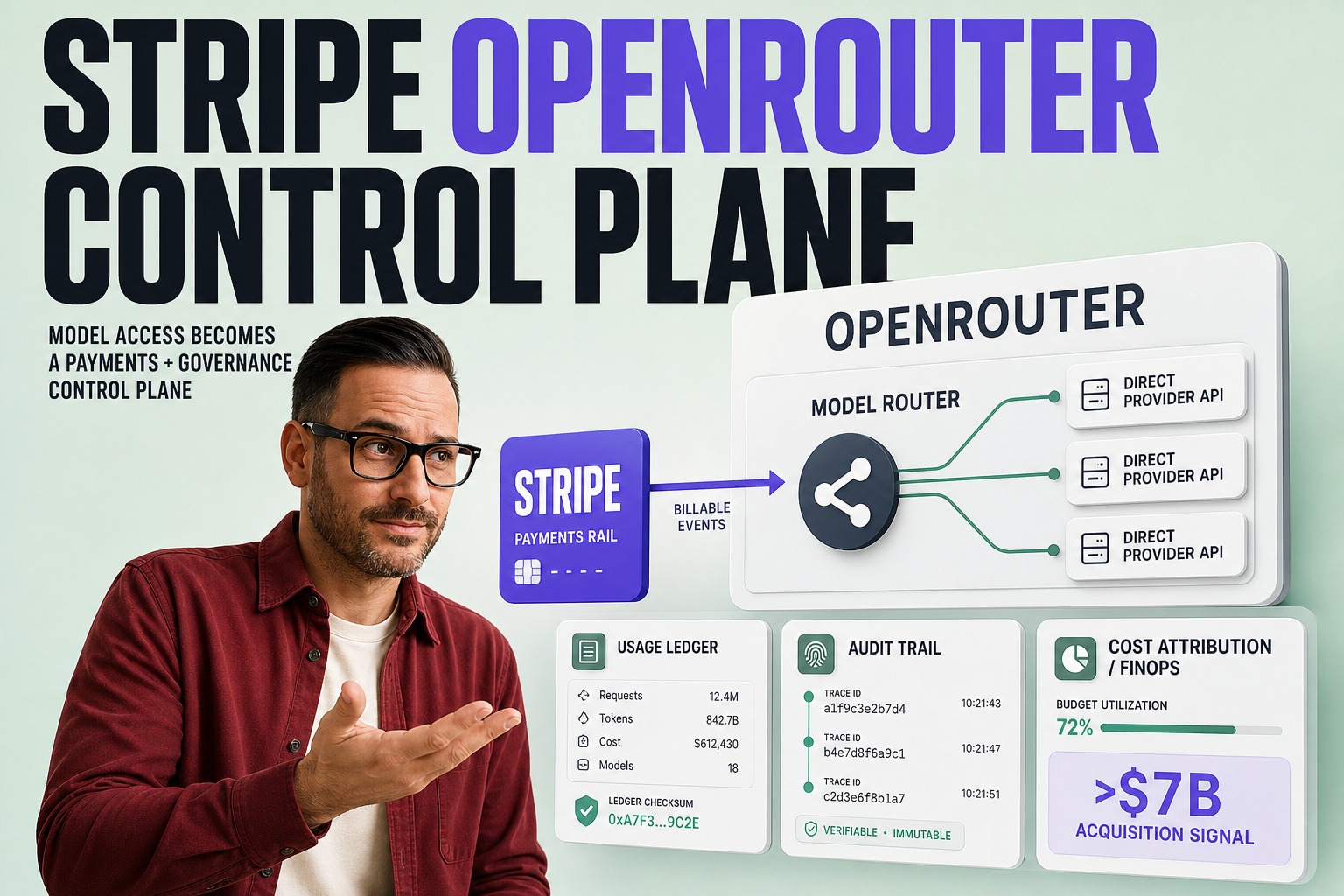
In a production environment, this means implementing an Model Router—a lightweight classifier that determines the complexity of an incoming query and routes it to the appropriate model size. A simple “reset password” request should never touch a high-parameter reasoning model; it should be handled by a 7B or 8B parameter model, or even a deterministic script, saving orders of magnitude in energy and cost.
Furthermore, we have to get serious about inference optimization. This involves moving beyond standard APIs and deploying inference engines like vLLM or TGI (Text Generation Inference) on Kubernetes clusters. We need to utilize techniques like quantization (running models in INT8 or FP4 precision rather than FP16) to reduce memory bandwidth and increase throughput. We also need to implement aggressive semantic caching. If a user asks a question that is 85% semantically similar to one asked five minutes ago, the system should retrieve the cached response rather than burn GPU cycles to regenerate it. These aren’t optimizations for later; they are requirements for now.
Why the Market Is Moving This Way
The shift is driven by the hard limits of physical infrastructure. Nvidia’s record capex indicates that demand for GPUs still outstrips supply, but the accompanying news about energy grids signals that supply is hitting a wall. Data centers are becoming power-constrained rather than space-constrained. In regions where energy costs are spiking, the OpEx of running inference 24/7 can eclipse the CapEx of the hardware itself.
Simultaneously, we are seeing a maturation of the model ecosystem. The gap between the largest “frontier” models and highly efficient “open” models is narrowing. Models like Llama 3 and Mistral are approaching the performance levels of proprietary giants for specific tasks, at a fraction of the inference cost. This allows enterprises to adopt a hybrid strategy: keeping sensitive or highly complex tasks on-premise or in reserved cloud instances using optimized open models, while routing edge cases to frontier APIs. This decoupling is necessary to mitigate the risk of vendor lock-in and rising API prices.
Business Value
The financial impact of architectural efficiency is massive. Consider a typical customer support AI pilot handling 50,000 queries a month. Relying solely on a premium API model at $15 per million input tokens and $75 per million output tokens could cost upwards of $20,000–$30,000 monthly in inference alone, not including infrastructure overhead. By implementing a routing layer that offloads 60% of traffic to a smaller, open-source model hosted on reserved instances (costing roughly $0.50 per million tokens), we can reduce that bill to under $5,000—a 70–85% cost reduction.
Beyond direct cost, there is the value of latency and user experience. Smaller models are faster. A 7B model can generate tokens significantly quicker than a 175B model, reducing Time To First Token (TTFT) to sub-200ms ranges. In high-volume trading or real-time customer interaction scenarios, this speed is the difference between a conversion and a drop-off. Efficiency isn’t just about saving electricity; it’s about enabling real-time responsiveness that monolithic models cannot physically achieve.
Real-World Application
- High-Frequency Fintech Analysis: A financial services firm needs to summarize news streams for trading signals. Sending every article to a frontier model is too slow and expensive. We architect a system where a lightweight model extracts key entities and sentiment on the edge. Only articles flagged as “high volatility” are sent to the larger model for deep reasoning. This reduces latency by 40% and cuts compute costs by half.
- Enterprise Knowledge Management: A large corporation deploys an internal AI assistant for HR and IT support. Instead of a single chatbot, we use a Mixture of Experts (MoE) approach. One specialized model handles policy documents (trained on specific PDFs), another handles technical troubleshooting (connected to Confluence/Jira), and a general model handles small talk. This specialization improves accuracy and reduces the context window size needed per query, lowering memory usage.
- E-Commerce Personalization: An online retailer uses AI for product recommendations. Rather than generating descriptions on the fly for every user session, we pre-compute embeddings and descriptions during the nightly batch process using cheaper, idle compute. During the day, the system simply retrieves these pre-generated assets. This shifts the load from expensive real-time inference to cheaper batch processing, smoothing out the demand curve on their data center.
How We Approach This at Plavno
We don’t just “build AI”; we build AI systems that respect the laws of physics and economics. When we engage in custom software development, our default stance is skepticism toward over-provisioning. We start every project by defining the Cost-Performance Ratio (CPR)—what is the maximum acceptable cost per transaction?
We implement strict observability from day one. We track not just latency and error rates, but token consumption per user session and energy estimates based on instance types. We utilize cloud software development best practices to auto-scale inference clusters to zero during off-hours, ensuring you aren’t paying for idle GPUs. We also prioritize data sovereignty and efficiency by helping clients evaluate on-premise or private cloud solutions using NVIDIA’s latest inference-optimized hardware (like the L40S) when data privacy or long-term cost stability is a priority. Our goal is to deliver AI solutions that remain viable as the company scales from 1,000 to 10 million users.
What to Do If You’re Evaluating This Now
- Benchmark Small Models: Don’t default to GPT-4 or Claude 3 Opus. Test Llama 3, Mistral, or Gemma for your specific use cases. You will likely find they perform adequately for 80% of tasks at a fraction of the cost.
- Implement Semantic Caching: If you haven’t already, add a vector cache layer (e.g., Redis or pgvector) before your LLM call. It is the easiest way to instantly cut costs and latency.
- Design for Routing: Plan your architecture so that the “brain” of your system is a router, not a single model. Assume you will swap models out as the market changes.
- Monitor Token Usage: Treat tokens like database rows. If your ORM is doing N+1 queries, your AI agent is doing N+1 token calls. Optimize your prompts to be concise.
- Consider the Edge: For mobile or IoT applications, explore running smaller models locally on the device. It eliminates cloud costs entirely and provides instant offline capabilities.
Conclusion
The news about data centers and energy caps is a wake-up call. The “gold rush” phase of AI, where compute was cheap and abundance was the strategy, is ending. The next phase is about efficiency, optimization, and architectural discipline. The companies that survive won’t be the ones with the biggest models, but the ones that build systems that are fast, cheap, and reliable enough to run in a power-constrained world. At Plavno, we are ready to help you navigate that transition, turning infrastructure constraints into competitive advantages.